Jia Lissa
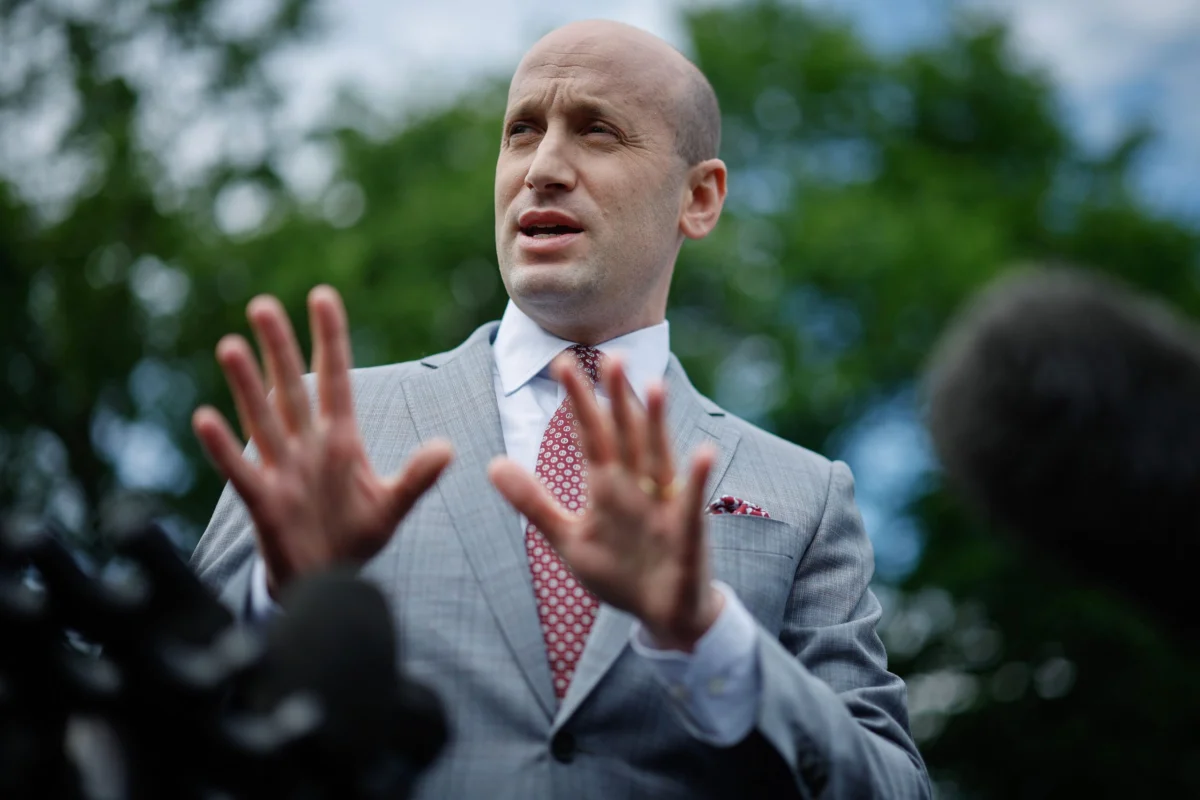
Last week, President Donald Trump officially appointed Stephen Miller, his long-serving senior advisor and the principal architect behind the administration’s controversial "America First" immigration agenda, as his new chief of staff. This elevation comes at a critical juncture for the Trump administration, immediately following midterm elections that saw the Democratic Party secure majorities in both the Senate and the House of Representatives. Miller, who previously held titles such as deputy chief of staff for policy and homeland security adviser, is now poised to play an even more central and influential role in shaping the White House’s strategic direction and policy initiatives over the remaining two years of the presidential term. His appointment signals a clear intent by President Trump to double down on the populist and nationalist themes that have defined his presidency, particularly in the face of legislative opposition.
Miller’s Ascendance and the Shaping of Trump’s Agenda
Stephen Miller’s journey to the pinnacle of White House power has been a rapid and consistent ascent within the Trump orbit. From his early days as a campaign aide, Miller quickly became indispensable, known for his zealous commitment to President Trump’s nationalist vision. He was instrumental in crafting many of the administration’s most defining and divisive policies, particularly those related to immigration and national security. These initiatives included the controversial travel ban targeting several Muslim-majority countries, the "zero tolerance" policy at the U.S.-Mexico border that led to family separations, and repeated efforts to restrict legal immigration pathways and asylum access.
Throughout the first administration, Miller’s influence often extended beyond his official titles. He was a constant presence, frequently seen alongside the President and recognized as one of his most trusted and loyal advisors. His ability to articulate and operationalize Trump’s often-broad political rhetoric into concrete, albeit often legally challenged, policies distinguished him within a frequently revolving White House staff. This track record, coupled with his unwavering loyalty, solidified his position as a key player, often operating behind the scenes to steer the administration’s most hardline policies. His appointment as chief of staff is widely interpreted not just as a promotion, but as a formal acknowledgment of the disproportionate power he has wielded and his enduring alignment with the President’s core ideologies.
The Architect of Contentious Immigration Policies
Miller’s tenure in the Trump administration has been synonymous with a significant overhaul of U.S. immigration policy. Prior to his elevation to chief of staff, his focus as Deputy Chief of Staff for Policy and Homeland Security Adviser placed him at the heart of efforts to implement stricter border controls, reduce legal immigration, and increase deportations. These policies were often framed under the umbrella of "America First," a nationalist ideology emphasizing border security and prioritizing the interests of current citizens.
Key initiatives spearheaded by Miller include:
- The "Zero Tolerance" Policy: Implemented in April 2018, this policy led to the separation of thousands of children from their parents at the U.S.-Mexico border, drawing widespread condemnation from human rights organizations, religious groups, and international bodies. Despite intense public backlash and a federal court order halting the practice, its legacy remains a contentious issue.
- Travel Bans: Miller was a principal architect of Executive Order 13769, colloquially known as the "Muslim Ban," which restricted entry for citizens from several Muslim-majority countries. After multiple legal challenges, a revised version of the ban was upheld by the Supreme Court in 2018, albeit with significant public disapproval.
- DACA Repeal Efforts: He was a vocal proponent of rescinding the Deferred Action for Childhood Arrivals (DACA) program, which protects young undocumented immigrants brought to the U.S. as children. These efforts faced legal hurdles and widespread opposition from immigrant advocates and many within the business community.
- Border Wall Construction: Miller consistently advocated for the construction of a physical barrier along the U.S.-Mexico border, a central promise of Trump’s 2016 campaign, pushing for funding and expedited construction.
These policies, while popular with a segment of President Trump’s base, have been widely criticized for their perceived cruelty, their economic impact on sectors reliant on immigrant labor, and their potential to damage America’s international standing. Polling data throughout the Trump presidency consistently showed that while border security remained a concern for many Americans, specific policies like family separation were broadly unpopular across the political spectrum.
Jean Guerrero’s Deep Dive into Miller’s Ideology
To understand the motivations behind Stephen Miller’s unwavering commitment to these policies, one need look no further than the investigative work of journalist Jean Guerrero. Guerrero, like Miller, grew up in Southern California, a region characterized by its diverse immigrant populations and generally liberal political leanings. This shared background fueled her fascination with Miller, prompting her to explore how someone from such an environment could become a leading proponent of hardline anti-immigrant views, especially given his own family’s history of fleeing antisemitic pogroms to find refuge in the United States.
Her extensive research culminated in "Hatemonger: Stephen Miller, Donald Trump, and the White Nationalist Agenda," a 2020 biography that meticulously chronicles Miller’s rapid rise to power and delves into the intellectual, mentorship, and experiential foundations of his beliefs. Guerrero’s work provides a critical lens through which to examine Miller’s trajectory from a conservative provocateur in high school and college to a pivotal figure in national policy-making.
Evolving Understanding: From White Nationalist to Class Supremacist
During a recent interview, Guerrero shared how her understanding of Miller has continued to evolve since the publication of her book. While she initially viewed him primarily as a white nationalist, her more recent analysis suggests a deeper, perhaps more foundational, ideology: that of a "class supremacist" and a "case study in oligarchic capture."
This shift in perspective emerged from observing the Trump administration’s foreign policy actions, particularly those that seemed to destabilize other nations, such as interference in Venezuela or Honduras. Guerrero noted that such actions often lead to increased migration, seemingly contradicting a purely anti-immigrant stance. However, Miller’s public statements, such as his assertion to Jake Tapper that "we live in a world… that is governed by strength, that is governed by force, that is governed by power," resonated with earlier anecdotes from his life.
Guerrero recounts instances from Miller’s youth—his reported habit of leaving trash for custodial staff to pick up in high school and college, and his perceived disdain for those he considered "less well-off"—as evidence of a deep-seated belief in a social hierarchy. She concluded that before aligning with white nationalist tenets, Miller harbored a fundamental animosity towards poor people and those he deemed inferior. In this view, immigrants are not just a racial or cultural threat, but also a segment of the population that, if not kept "in their place" as a subservient class, could challenge the established social and economic order favored by an elite few. This perspective suggests that by criminalizing and marginalizing a segment of the population, Miller aims to prevent broader solidarity among workers, ensuring the existence of a readily exploitable servant class rather than a unified working class demanding dignity and rights.
A significant intellectual influence on Miller, as highlighted by Guerrero, is Jean Raspail’s dystopian novel The Camp of the Saints. This 1973 French novel, widely considered a foundational text for white supremacists, depicts a mass migration of "brown" immigrants overwhelming Western civilization. Crucially, in Raspail’s narrative, the "villains" are not only the immigrants themselves but also their "citizen allies"—those who advocate for social justice and human rights. This insight from Guerrero’s research sheds light on Miller’s potential future strategies, suggesting that his targets may broaden beyond immigrants to include those who support them.
The Political Context: Midterm Elections and a "Double Down" Strategy
Miller’s appointment as chief of staff comes just days after a midterm election cycle that delivered a significant blow to the Republican Party. The Democrats secured majorities in both the Senate and the House, reflecting a public mood that many analysts characterized as a rejection of the more extreme elements of the Trump administration’s agenda. Some commentators even described the results as an "extinction-level event" for Republicans, signaling a need for introspection and a potential shift in strategy.
However, President Trump’s decision to elevate Miller suggests a different path: a strategic "double down" on the hardline policies and rhetoric that appeal to his core base. This move can be interpreted as an attempt to re-energize the populist movement by intensifying the focus on issues like immigration and national security, which have historically served as rallying points. In the past, when facing political difficulties, Trump has frequently relied on Miller to craft and execute anti-immigrant narratives, effectively using "scapegoating" as a means to distract from other challenges and consolidate support among his most loyal followers.
Guerrero anticipates that this strategy will persist, arguing that Miller is likely to intensify his efforts rather than moderate them. His lifelong motivation, she notes, has been to "inflame and antagonize and horrify." Any perceived restraint might manifest not in a softening of cruelty, but in a shift towards a more "performative nature" of the "war on the allies of immigrants," potentially characterizing social justice advocates as "domestic terrorists." This new front could involve increased collaboration with surveillance companies and tech billionaires, further attacking privacy and free speech rights as Miller seeks "creative ways to target and terrorize and torture the communities that he despises," including immigrants and their citizen allies.
Official Reactions and Broader Implications
White House spokesperson Lauren Bis, in a statement regarding the appointment, lauded Miller’s contributions: "Stephen Miller has been a key player in delivering on President Trump’s America First agenda including spearheading the administration’s crime crackdown including in DC and Memphis, record setting deregulation, unleashing American energy, dismantling drug cartels, and securing our border. In his new role, he will continue to deliver historic successes for the American people." This statement reinforces the administration’s commitment to the policies Miller has championed and frames his promotion as a continuation of "historic successes."
However, the appointment is expected to elicit strong reactions from various quarters. Democratic leaders and immigrant advocacy groups are likely to condemn the move, viewing it as a provocative escalation of policies that they argue are inhumane and counterproductive. Critics may point to the unpopularity of past immigration policies, the legal battles they provoked, and the ethical concerns they raised as reasons for opposing Miller’s increased influence. Advocacy organizations like the ACLU and Human Rights Watch, which have consistently challenged Miller-backed policies, will likely reiterate their concerns about potential abuses of power and violations of civil liberties.
Conversely, conservative media and nationalist groups are expected to welcome Miller’s promotion as a victory for their agenda, seeing it as a sign that President Trump remains steadfast in his commitment to securing the border and prioritizing national interests. This division underscores the deeply polarized nature of American politics, particularly on issues related to immigration and national identity.
The elevation of Stephen Miller to chief of staff signals a clear intent by the Trump administration to continue, and likely intensify, its "America First" agenda, particularly concerning immigration and domestic policy. His proven track record of loyalty and his mastery of translating nationalist rhetoric into concrete policy make him an indispensable figure for President Trump, especially as the administration navigates a politically challenging landscape with a newly divided Congress. The implications of this appointment extend beyond policy, potentially shaping the rhetoric of the upcoming presidential election cycle and further entrenching the cultural and ideological battles that define contemporary American society. As Jean Guerrero’s insights suggest, the battlefront under Miller’s leadership may not only be at the border but also within the very fabric of civil society, targeting those who stand in solidarity with marginalized communities.