admin
admin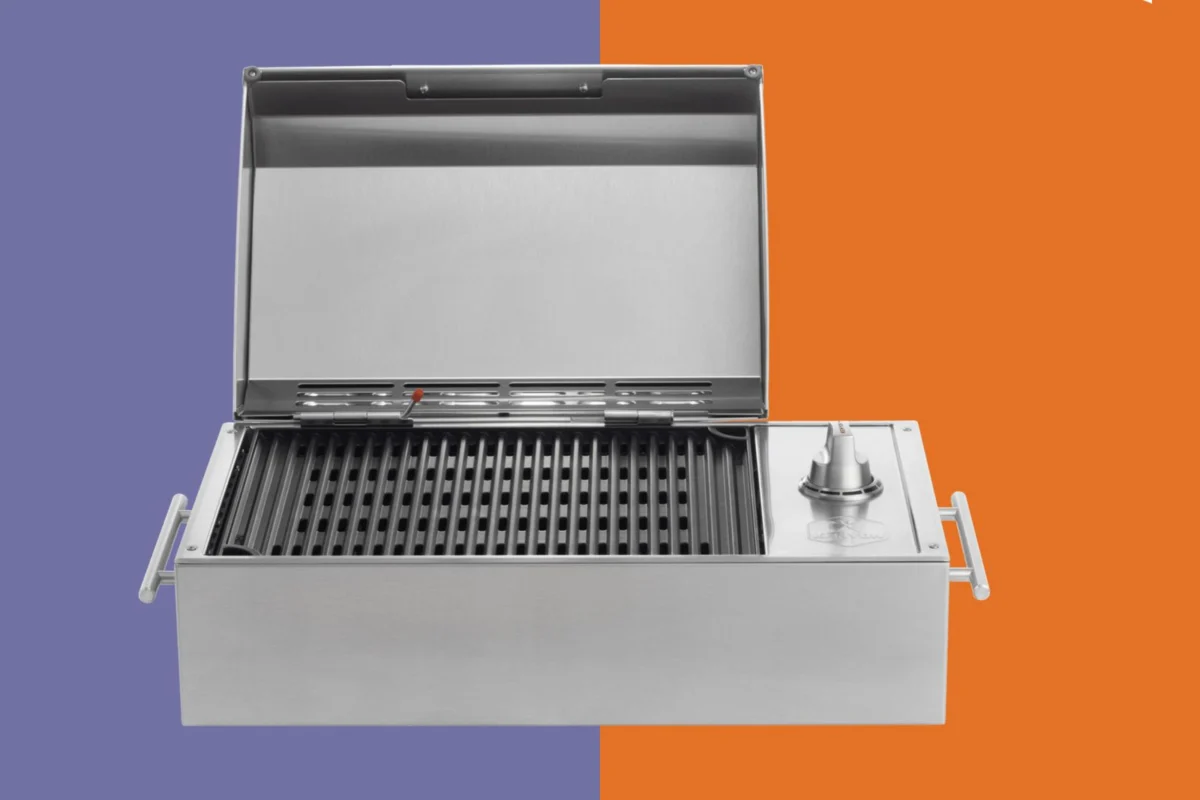
For many urban dwellers, the concept of ample storage space, a luxury often taken for granted in more expansive settings, fundamentally shapes lifestyle choices, including culinary pursuits. This reality particularly impacts the enjoyment of outdoor cooking, where the sheer size and logistical demands of traditional grills can pose significant challenges. While a robust, full-sized gas grill offers an unparalleled grilling experience for backyard entertaining, its inherent immobility often renders it impractical for diverse social engagements or smaller living environments. This dichotomy recently prompted an exploration into portable grilling solutions, culminating in a detailed assessment of the Kenyon City Grill, an electric appliance designed to bridge the gap between performance and portability.
The Urban Grilling Dilemma: Space, Mobility, and Community Events
The limitations of traditional grilling methods become acutely apparent when considering the dynamics of city living. Years spent navigating compact apartments and smaller homes instill an appreciation for versatile, space-saving appliances. The typical urban residence rarely affords the luxury of a sprawling patio or a dedicated outdoor kitchen, making the acquisition of a large, stationary grill a commitment to a singular, fixed grilling location. This stands in stark contrast to the experience of operating a sizable gas grill, such as the Monument Grill Eminence 605 previously reviewed, which, despite its impressive capabilities and positive impact on daily cooking, remains largely tethered to its designated spot. Its integrated wheels, while offering minimal maneuverability within a confined space, do not facilitate transport for off-site events or even repositioning to the front of a house for community gatherings.
This specific need for a portable grilling solution was underscored by a recurring annual event: the neighborhood block party. This vibrant community tradition transforms the residential street into a festive hub, with neighbors contributing to a collective culinary experience by setting up grills outside their homes. Amidst the lively atmosphere, complete with inflatable bounce houses and a DJ playing music at decibels that challenge auditory safety standards, the demand for accessible and adaptable cooking stations is paramount. The primary gas grill, positioned in the backyard, was clearly unsuitable for this front-of-house communal affair.
Last year, a temporary, somewhat improvisational solution was employed: a dilapidated but functional propane grill, an accidental relic left behind by previous residents, was temporarily relocated to the front of the house. After serving its purpose, it was subsequently listed as "free for the taking" on Facebook Marketplace, disappearing within days, rust and all. While effective in the short term, this approach was neither sustainable nor ideal. The need for a more permanent, yet equally flexible, solution became evident. The criteria for this new appliance were clear: it needed to be genuinely portable, easy to store, and capable of handling event-specific cooking demands. This pursuit highlighted the often-overlooked privilege of having sufficient storage space—a "basic luxury" that allows for the acquisition of specialized tools and appliances that cater to diverse needs, rather than being restricted by spatial constraints.
The Search for an Electric Alternative and the Discovery of the Kenyon City Grill
The search for a suitable portable grill quickly gravitated towards electric models. The decision to opt for electric over propane or charcoal was driven by several practical considerations pertinent to urban environments and event logistics. Propane tanks require storage, replenishment, and present certain safety considerations in crowded settings. Charcoal, while offering a distinct flavor profile, involves a longer setup and cleanup process, produces ash, and generates significant smoke, which can be undesirable in close quarters. Electric grills, by contrast, offer a cleaner, more immediate, and often more regulated option, particularly for use on apartment balconies or in areas with restrictions on open flames.
The ideal electric grill would also need to be versatile enough to be placed on various surfaces. For the block party, this meant adaptability to a makeshift grilling station—in this instance, a repurposed slab of stone supported by sawhorses, another fortuitous find left behind on the property. It was during this focused search that the Kenyon City Grill emerged as a promising candidate. Its name, "City Grill," immediately suggested an alignment with urban living requirements, and its advertised ease of use and compact design piqued interest. Contact was made with the manufacturer, and a sample unit was provided for evaluation.
Kenyon: A Legacy of Marine Engineering Applied to Urban Grilling
To understand the Kenyon City Grill, it is beneficial to examine its origins. Kenyon International, a Connecticut-based company, has a rich history rooted in specialized appliance manufacturing. The company initially gained prominence by producing high-quality ceramic glass cooktops for marine applications, equipping yachts and boats with durable and efficient cooking surfaces. This expertise in designing robust, space-efficient appliances for demanding environments—where safety, power efficiency, and compact design are paramount—naturally extended into the RV market and, eventually, to residential applications. This background provides crucial context for the City Grill’s design principles, emphasizing durability, safety, and a compact footprint.
A core innovation central to Kenyon’s grilling technology is its patented "flame-free" and "smokeless" design. According to the company, this design allows for both indoor and outdoor use, a significant advantage for city dwellers who may face weather constraints or limited outdoor space. The mechanism behind this claim involves the strategic placement of the heating element. Unlike many electric grills where the heating coils are directly exposed to the cooking surface, Kenyon’s design conceals the element directly underneath the cooking grate or griddle within a dedicated channel. This engineering choice is critical for several reasons:
- Even Heat Transfer: The direct contact and concealed nature of the element ensure highly efficient and even heat distribution across the cooking surface, minimizing hot spots and cold zones. This improves cooking consistency.
- Elimination of Flare-ups: When food drippings come into contact with an exposed heating element, they vaporize rapidly, causing smoke and potentially igniting small flare-ups. By concealing the element, the City Grill effectively prevents these occurrences, significantly reducing smoke production.
- Enhanced Safety: The absence of open flames and reduced smoke mitigates safety concerns, making the grill suitable for a wider range of environments, including those with stricter fire regulations.
The Kenyon City Grill, while an investment at its retail price of $695, represents the entry point into Kenyon’s line of electric grills, which includes both portable and stationary options. Its user-friendliness is a standout feature. The grill comprises an aluminum grate that lifts easily to reveal the concealed heating element. Beneath this element sits a removable drip pan, designed to collect any food drippings for easy disposal and cleaning. Operation is straightforward: plug in the unit, and a single control knob manages power and temperature adjustment. This minimalist interface underscores its design philosophy of intuitive functionality.
The Test: Performance Under Block Party Conditions
The logistical efficiency of the Kenyon City Grill became apparent from the moment of its arrival. The unit was delivered promptly, within a few days of the order, securely packaged in a substantial box with ample styrofoam cushioning to prevent any movement during transit. Despite its compact dimensions—less than two feet in length and approximately nine inches in thickness—the grill weighs just under 30 pounds. While not feather-light, this weight is manageable for one person to transport, aligning with its intended "ease of logistics." Prior to the block party, the grill was conveniently stored on a low shelf in the kitchen, its modest footprint posing no spatial challenge.
On the designated "Grill Day," deployment was effortless. The unit was simply carried outside, placed on the improvised table crafted from sawhorses and stone, and plugged into a standard electrical outlet. No assembly was required, and the grill was operational within minutes.
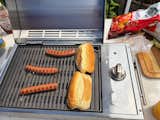
For the block party, the culinary focus was on crowd-pleasing staples: rounds of hot dogs and buns. The City Grill handled this task with commendable efficiency. Despite its smaller cooking surface compared to a full-sized grill, its ability to reach temperatures up to 550 degrees Fahrenheit ensured rapid cooking and excellent searing. The hot dogs cooked evenly, developing a satisfying char, and were indistinguishable in taste from those prepared on a larger, conventional barbecue. The quick heat-up and cool-down cycles proved particularly advantageous for batch cooking, allowing for a continuous supply of freshly grilled items without significant downtime.
However, the experience also highlighted some practical limitations inherent to any compact grill. While perfectly suited for cooking hot dogs, hamburgers, or smaller cuts of meat for a modest group or for sequential batch preparation for a larger gathering, it is not designed for simultaneously cooking large quantities of food. For instance, attempting to grill a substantial number of steaks or a full rack of ribs (which, incidentally, often yield superior results when slow-cooked in an oven anyway) would necessitate multiple rounds and considerable patience. Its optimal use case remains simpler, high-volume items that can be cooked in batches, or for smaller, more intimate gatherings.

Post-party cleanup was remarkably simple, a significant advantage over charcoal or even gas grills. Once the grill cooled, the aluminum grate and drip pan were easily removed. Both components could be washed by hand or in a dishwasher, quickly returning them to a pristine, "factory-style" condition. This ease of maintenance further contributes to the City Grill’s appeal for those seeking convenience.
Broader Implications: Versatility, Urban Living, and the Future of Grilling
The successful deployment of the Kenyon City Grill for the annual block party underscores its potential far beyond a single event. Its portability and electric power source open up a range of possibilities that address contemporary lifestyle trends and challenges:
- Expanded Outdoor Living: For residents of apartments, condos, or townhouses with limited outdoor space, or those living in buildings with strict prohibitions against gas or charcoal grills due to fire safety regulations, the City Grill offers a viable and compliant solution for enjoying grilled food on balconies, small patios, or communal rooftop decks.
- Versatile Event Companion: Beyond neighborhood block parties, the grill is suitable for tailgating events (provided electrical access is available, perhaps via a generator), picnics at parks with power outlets, or even for camping trips where electrical hookups are accessible. Its compact size makes it easy to transport in a car.
- Indoor Grilling Potential: Kenyon’s "smokeless" claim makes the City Grill, and indeed many of their models, suitable for indoor use in well-ventilated kitchens. This allows for year-round grilling, regardless of weather conditions, expanding culinary options for urban dwellers who might otherwise be limited to stovetop or oven cooking during colder months.
- Sustainability Considerations: While the environmental impact depends on the source of electricity, electric grills generally offer a cleaner alternative to fossil-fuel-dependent gas or charcoal grills, which release greenhouse gases and particulate matter. As grids increasingly rely on renewable energy sources, electric grilling becomes an increasingly sustainable choice.
- The "Luxury of Options": Returning to the initial premise, the City Grill exemplifies the value of having specialized tools. Its existence as a secondary, portable grilling option complements a larger, stationary grill, providing flexibility and enabling participation in diverse social and culinary scenarios that a single, fixed appliance simply cannot accommodate. This speaks to a growing consumer demand for versatile home solutions that adapt to dynamic lifestyles.
Market Analysis and Consumer Trends
The market for electric grills has seen steady growth, driven by several factors: increasing urbanization, the rise of smaller living spaces, heightened awareness of environmental concerns, and evolving safety regulations in multi-unit dwellings. According to industry reports, the global electric grill market is projected to continue expanding, with a compound annual growth rate (CAGR) indicating a robust future. Consumers are increasingly valuing convenience, ease of use, and low maintenance, attributes that electric grills, particularly portable models like the Kenyon City Grill, embody.
While charcoal grills are often favored by purists for their distinctive smoky flavor and gas grills for their rapid heating and large capacity, electric grills carve out a niche by offering unparalleled convenience, cleanliness, and regulatory compliance. The absence of fuel tanks or messy charcoal briquettes simplifies the grilling process from start to finish. For many urban consumers, these practical advantages outweigh the traditional benefits of other grill types.
Conclusion: A Niche-Defining Solution for the Modern Griller
The Kenyon City Grill proves to be an exceptionally well-suited appliance for its namesake environment. It masterfully addresses the specific challenges faced by city dwellers and those requiring a portable, efficient grilling solution for special events. Its robust construction, rooted in marine-grade engineering, combined with its innovative flame-free and smokeless electric heating technology, delivers a reliable and enjoyable grilling experience. While its capacity is best suited for batch cooking or smaller gatherings, its performance for staples like hot dogs and hamburgers is excellent, producing results comparable to larger, less portable units.
The ease of setup, operation, and, crucially, cleanup, positions the City Grill as a highly practical choice. Its compact dimensions and manageable weight allow for convenient storage in limited spaces, such as a basement shelf or even a kitchen cabinet, offering the "luxury" of having an alternate grilling option readily available. For the urban dweller, the apartment resident, the tailgating enthusiast with electrical access, or simply anyone seeking a versatile and clean way to grill without the fuss of gas or charcoal, the Kenyon City Grill represents a compelling investment that expands the possibilities of outdoor—and even indoor—cooking. It is more than just a grill; it is a testament to thoughtful design meeting the evolving demands of modern living.