admin
The craft beer industry, which began its meteoric rise in the United States during the 1980s and 1990s, has undergone several transformative cycles defined by shifting consumer preferences and technical innovation. In the early decades, the movement was characterized by a return to traditional European styles—pale ales, porters, and stouts—offering an alternative to the homogenized adjunct lagers produced by macro-breweries. However, as the number of independent breweries surged past 9,000 nationwide, the marketplace reached a level of saturation that necessitated radical differentiation. This pressure to innovate led to the "adjunct arms race," where brewers began experimenting with non-traditional ingredients to capture the attention of an increasingly adventurous public. Among the most successful and polarizing results of this experimentation is the "smoothie sour," a style that has transitioned from a niche curiosity to a significant driver of taproom traffic and brand loyalty.
The Genesis of a New Category
The smoothie sour did not emerge in a vacuum; it is the logical extension of the fruited sour lineage. Historically, sour beers like the German Gose or the Belgian Lambic relied on wild yeast and bacteria to produce tart, complex flavor profiles. In the mid-2010s, American craft brewers popularized "kettle souring," a faster method that allowed for a clean, acidic base. This base proved to be the perfect canvas for fruit additions. Initially, these additions were subtle, but as competition intensified, the volume of fruit increased, and the filtration decreased.
By the late 2010s, a handful of breweries began producing beers that were intentionally opaque, thick, and reminiscent of fruit purées. This evolution was driven by the desire to provide a multisensory experience. Unlike traditional beers, these "smoothie" variants often retain a high level of unfermented fruit solids, resulting in a viscous mouthfeel and vibrant colors that are highly effective for visual marketing on social media platforms.
Pioneering the Style: The Pennsylvania Influence
One of the definitive pioneers in this space is Imprint Beer Company, located in Hatfield, Pennsylvania. The brewery’s trajectory changed significantly during an event that co-founder and brewer Ryan Diehl describes as their "coming out party." While Imprint had established a reputation across various traditional styles, it was the introduction of a beer called Puffsicle—a blend of raspberry, blueberry, pineapple, and marshmallow—that signaled a shift in consumer demand.
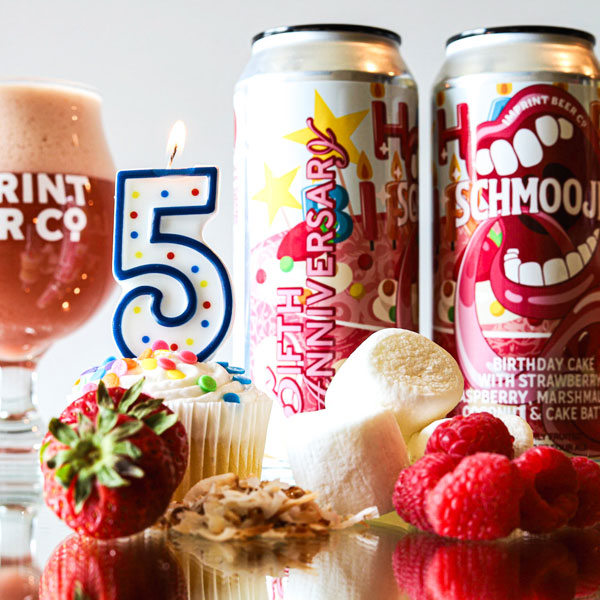
The overwhelming response to Puffsicle led to the creation of the "Schmoojee" line, which has since become a benchmark for the style. The production of these beers requires a departure from standard brewing timelines. At Imprint, the process begins with a base beer that undergoes a fermentation period of eight to 11 days. Following this, the base sour is integrated with a massive volume of adjuncts. These ingredients range from culinary staples like cheesecake and white chocolate to nostalgic treats like fudge and marshmallows. The brewery’s "12 Days of Schmoojee" holiday pack, featuring complex profiles like Blueberry Vanilla Waffles, illustrates the level of detail required to maintain consistency in such a dense, ingredient-heavy product.
Strategic Reinvention and the Rise of "Liquid for Everyone"
In Dallas, Texas, 903 Brewers illustrates how the smoothie sour can serve as a strategic tool for business revitalization. After six years of operation, owner and founder Jeremy Roberts recognized a shift in the beverage landscape. The rise of Ready-to-Drink (RTD) cocktails and flavored malt beverages indicated that a segment of the population was moving away from traditional hop-forward or malt-heavy beers.
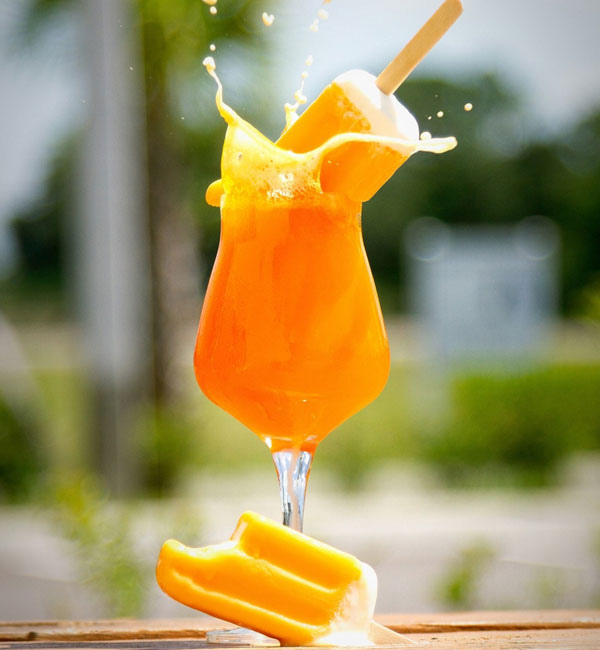
To recapture this audience, 903 Brewers developed a cherry limeade sour, intentionally designed to mimic the flavor profile of popular drive-in soft drinks. The success was immediate, leading to the "Slushy" line. This series utilizes ingredients such as pineapple, vanilla ice cream, and even edible glitter in their "Dad’s Day Out Slushy" to create a festive, accessible drinking experience. By focusing on flavors that are familiar to non-beer drinkers, 903 Brewers successfully expanded their demographic reach, proving that the "smoothie" style could act as a gateway for those who previously avoided the craft beer category.
Technical Specifications and the Role of Food Science
While smoothie sours are often dismissed by traditionalists as "sweet bombs," the production of these beers involves sophisticated brewing techniques and a deep understanding of food science. At Oozlefinch Beers & Blending in Fort Monroe, Virginia, the focus is on maintaining a balance between sweetness and the structural integrity of the beer.
Head brewer Logan Morris notes that their approach is highly intentional. To achieve the desired thickness and acidity, Oozlefinch utilizes specific yeast strains that naturally produce lactic acid. In a notable departure from traditional brewing, they have even experimented with adding charcoal as a thickening agent.
A critical component of their process is "back sweetening"—the addition of fruit and sugars after the primary fermentation is complete. This presents a significant technical challenge: refermentation in the can. If unfermented sugars are packaged with live yeast, the resulting carbon dioxide buildup can lead to "exploding cans," a safety hazard that has plagued the style in the past. To mitigate this, Oozlefinch and other professional operations utilize pasteurization. By heating the finished product to kill any remaining yeast, they ensure the beer remains shelf-stable and that the flavor profile intended by the brewer is preserved until it reaches the consumer.
The Culinary Connection: Sensory-Driven Brewing
In Palmetto, Florida, Corporate Ladder Brewing has built its identity around the "sensory experience" of its "Dessert Station" line. Co-owners Blake Kleppe and James Herrholz emphasize that their goal is to achieve an exact flavor match for the culinary inspirations behind their beers.
This requires rigorous ingredient sourcing. For their "Intangible" beer, they utilize tangerine and vanilla beans to replicate a creamsicle. Other offerings, such as their "Pumpkin Pie A La Mode," incorporate actual pumpkin, vanilla ice cream, and pie spices. According to Herrholz, the objective is for the beer to taste exactly like its namesake. This "culinary-inspired" brewing requires a meticulous balance; if the acidity of the sour base is too high, it clashes with the creaminess of the lactose or chocolate; if it is too low, the beer becomes cloying.
Market Implications and Demographic Shifts
The rise of smoothie sours reflects a broader trend in the American beverage industry toward "flavor-forward" products. According to data from the Brewers Association, while the overall growth of the craft beer segment has leveled off in recent years, sub-categories that offer unique flavor profiles—such as fruited sours and hazy IPAs—continue to show resilience.
The demographic impact is equally significant. Smoothie sours have proven to be exceptionally popular among younger legal-drinking-age consumers and those who traditionally prefer wine or cocktails. This has led to a "festival culture" surrounding the style. Events hosted by breweries like Drekker Brewing Company in North Dakota or Mortalis Brewing Company in New York often see hundreds of enthusiasts waiting for hours for limited-edition releases.
Furthermore, the style has fostered a unique level of collaboration within the industry. Leaders in the field, including Burley Oak Brewery, 450 North Brewing Company, and The Answer Brewpub, frequently engage in "collab" brews. This brotherhood/sisterhood of brewers allows for the sharing of technical knowledge regarding pasteurization and ingredient stability, which has helped professionalize the style and distance it from its earlier reputation for inconsistency.
Analysis of the "Is It Beer?" Debate
The smoothie sour remains a point of contention among purists. Critics argue that by heavily masking the flavors of malt and hops with fruit purées and marshmallows, these products cease to be "beer" in the traditional sense. However, industry leaders like Blake Kleppe of Corporate Ladder argue that the definition of beer must evolve with consumer taste. The sentiment among these brewers is that if a product is fermented and provides an enjoyable experience, the rigid labels of the past are of secondary importance.
From a journalistic and economic perspective, the smoothie sour represents a successful adaptation to a hyper-competitive market. By moving beyond the four traditional ingredients of beer (water, malt, hops, and yeast), craft brewers have found a way to remain relevant in a landscape where consumers are increasingly fickle.
Conclusion: A Lasting Sub-Genre
As the craft beer industry moves into the mid-2020s, it is clear that the smoothie sour is not a fleeting fad. It has matured into a stable sub-genre with its own set of technical standards and a dedicated consumer base. The ability of these beers to "turn someone on to a wide variety of flavors they’ve never experienced before," as Kleppe suggests, ensures their place in the taproom.
While the "adjunct arms race" may eventually find a new frontier, the smoothie sour has fundamentally changed the conversation around what beer can be. It has challenged brewers to become chefs, forced the industry to adopt better safety standards through pasteurization, and most importantly, opened the doors of the craft beer world to a more diverse audience. For the modern brewery, the smoothie sour is more than just a drink; it is a tool for inclusivity and a testament to the limitless creativity of the American craft movement.