admin
admin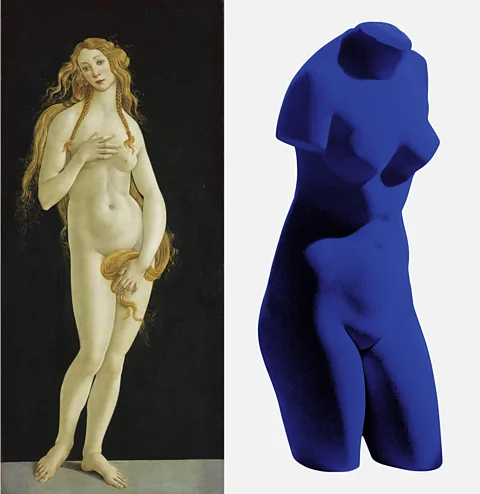
The depiction of Aphrodite, the ancient Greek goddess of love, beauty, and procreation, remains one of the most enduring and debated subjects in the Western artistic canon. While she was originally worshipped as a multifaceted deity with dominion over war, the sea, and the founding of civilizations, her image underwent a radical transformation in the 4th Century BC that would define her legacy for two millennia. From the sacred temples of Cyprus to the modern concert stages of global pop icons, Aphrodite—known to the Romans as Venus—has transitioned from a symbol of divine power to a lightning rod for controversies regarding the male gaze, the objectification of the female body, and the boundaries of public decency.
The Dual Origins of a Deity: Myth and History
To understand the controversy surrounding Aphrodite, one must first examine her complex origins, which are rooted in both mythological fantasy and historical migration. In Greek mythology, her birth is famously visceral. Following the castration of the sky god Ouranos by his son Kronos, the severed genitals were cast into the sea. From the resulting sea foam (aphros), a fully formed goddess emerged near the coast of Paphos in Cyprus. This narrative established her as a primordial force, older than many of the Olympian gods, whose very presence caused nature to bloom.
Historically, however, Aphrodite’s emergence as a deity around 1200 BC tells a story of cultural synthesis. Archaeological evidence suggests she was not a purely Greek invention but an evolution of older Middle Eastern goddesses, including the Mesopotamian Ishtar, the Phoenician Astarte, and the Egyptian Hathor. These precursor deities were formidable figures who governed sexuality and fertility but also held significant roles in war and justice.

Anja Ulbrich, a curator at the Ashmolean Museum, notes that these archaic versions of the goddess were far more versatile than the later Western interpretation. In her early years on Cyprus and across the Greek world, Aphrodite was worshipped as "Pandemos"—the goddess of all people. Her influence was seen as a pervasive force that affected warriors, women, animals, and plants alike. She was even a patron of the ancient Greek navy, a "warrior aspect" that complicates the modern view of her as merely a passive object of beauty.
The Praxitelean Revolution: 350 BC
The pivotal moment in the history of Aphrodite—and arguably in the history of Western art—occurred in 350 BC with the creation of the Aphrodite of Knidos by the sculptor Praxiteles. Before this period, female deities were almost exclusively depicted fully clothed in Greek art. While male "heroic nudity" had been a standard since the 7th Century BC, representing strength and civic virtue, the female form remained draped.
Praxiteles’ sculpture changed this paradigm by presenting the goddess completely nude. According to historical accounts, the work was originally commissioned by the people of Kos, who ultimately rejected it in favor of a more traditional, draped version. The citizens of Knidos, however, purchased the nude statue, and it became an overnight sensation, drawing travelers from across the Mediterranean.
This work introduced the Venus Pudica (modest Venus) pose, characterized by the goddess attempting to cover her groin and breasts with her hands. While often described as a gesture of modesty, art historians argue that the pose actually functions to draw the viewer’s eye toward the very areas being "hidden." Unlike the confident, outward-facing nudity of male statues, Praxiteles’ Aphrodite was depicted in a private moment—caught while bathing—making her appear vulnerable and shy. This shift in body language effectively transformed the viewer from a worshipper into a voyeur, laying the groundwork for centuries of gendered artistic consumption.

A Chronology of Controversy and Vandalism
The transition from divine icon to object of lust triggered a long history of polarized reactions. As the Roman Empire adopted and replicated the Venus Pudica type—producing thousands of copies like the Capitoline Venus—the image became a staple of Western visual culture. However, by the late 19th and early 20th centuries, these depictions became flashpoints for social and political unrest.
1880: Mark Twain’s Moral Outrage
In his travelogue A Tramp Abroad, the American author Mark Twain famously lambasted Titian’s Venus of Urbino (1534), a Renaissance masterpiece heavily influenced by the Praxitelean tradition. Twain described the painting as "the foulest, the vilest, the obscenest picture the world possesses," arguing that its placement in a public gallery was a moral affront. His reaction highlighted a growing Victorian discomfort with the explicit eroticization of classical themes.
1914: The Meat Cleaver Protest
One of the most significant acts of art vandalism in history occurred on March 10, 1914, at London’s National Gallery. Mary Richardson, a member of the militant suffragette movement, attacked Diego Velázquez’s Rokeby Venus (c. 1647-51) with a meat cleaver. Richardson struck the canvas at least seven times, leaving deep gashes in the depiction of the goddess’s back.
Richardson later explained that her act was a protest against the government’s treatment of Emmeline Pankhurst, but she also cited the painting’s effect on male visitors. "I didn’t like the way men visitors gaped at it all day long," she remarked. Her protest was a direct critique of the "male gaze," a term that would later be formalized by feminist film theorist Laura Mulvey to describe how visual arts represent the world and women from a masculine, heterosexual point of view.

The Renaissance and the Institutionalization of the Nude
The enduring controversy of Aphrodite is inseparable from her "rebirth" during the Renaissance. Artists such as Botticelli, Raphael, and Titian sought to revive the ideals of antiquity, and the Venus Pudica provided the perfect template. Botticelli’s The Birth of Venus (c. 1485) remains the most famous example, depicting the goddess on a scallop shell in a pose of ethereal modesty.
During this era, the depiction of Aphrodite allowed artists to explore human anatomy and sensuality under the guise of classical mythology. By framing nudity within the context of a "goddess," the Church and the aristocracy could circumvent strict moral codes. This institutionalization ensured that the objectified female form became a fundamental requirement for any "great" artist’s portfolio. From the Baroque era of Peter Paul Rubens to the 19th-century Neoclassicism of Alexandre Cabanel, the "Venus" became a standardized vehicle for male artistic expression, often at the expense of the deity’s original, more powerful characteristics.
Modern Reclamations and Pop Culture
In the 20th and 21st centuries, the image of Aphrodite has undergone a second revolution. While 20th-century artists like Amedeo Modigliani and Yves Klein continued to use the Venus form to explore abstraction and color, contemporary female artists and performers have begun to "reclaim" the goddess.
In recent years, Aphrodite has been repositioned as an icon of empowerment and bodily autonomy rather than a subject of shame. In 2023, during her Renaissance World Tour, Beyoncé performed while emerging from a giant clam shell, wearing a garment adorned with the hands of the Venus Pudica. By doing so, she subverted the historical "modesty" of the pose, turning it into a statement of ownership and divine femininity. Similarly, artists like Björk, Lady Gaga, and Kylie Minogue have utilized Aphrodite’s imagery in their work to explore themes of love and power that move beyond the limitations of the traditional male gaze.

Analysis: The Enduring Power of the Goddess
The reason Aphrodite remains the most controversial figure in art history lies in her versatility. As Anja Ulbrich suggests, humanity has consistently narrowed the goddess down to fit the specific needs and desires of each era. In the ancient world, she was a protector and a founder; in the Renaissance, she was a vessel for aesthetic beauty; in the modern era, she is a site of political and social negotiation.
The transition from the warrior-goddess of Cyprus to the "shameful" Venus of Praxiteles reflects a broader historical shift in how society views female power. When the goddess was clothed and multifaceted, she represented a divine force to be feared and respected. Once she was undressed and posed in a gesture of modesty, she was brought under the control of the spectator.
However, the fact that Aphrodite continues to inspire both adoration and vandalism 3,000 years after her "birth" on Cyprus is a testament to the inescapable relevance of the themes she represents. Whether she is viewed as an obscene objectification or a symbol of empowerment, Aphrodite remains a mirror for society’s evolving attitudes toward beauty, gender, and the human form. As long as the debate over the representation of the female body persists, the goddess of love will continue to stand at the center of the world’s most prestigious galleries and its most heated cultural debates.