admin
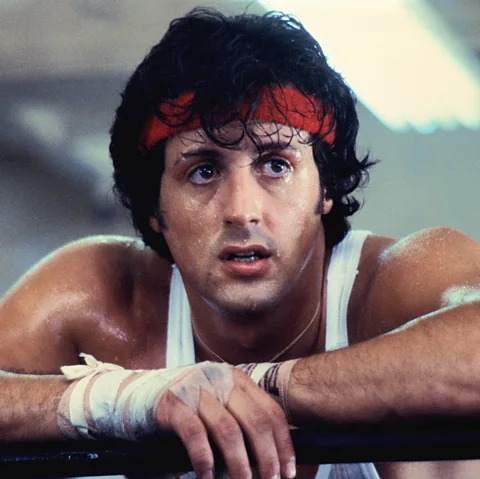
The upcoming release of the biographical drama I Play Rocky, scheduled for North American and European theaters on November 6, 2026, has reignited global interest in one of the most improbable success stories in the history of motion pictures. Directed by Peter Farrelly and starring Anthony Ippolito, the film meticulously reconstructs the mid-1970s struggle of Sylvester Stallone, a then-unknown actor who leveraged a single screenplay to transform himself from a destitute laborer into a multi-generational cultural icon. The narrative of Stallone’s rise is not merely a Hollywood anecdote; it represents a pivotal shift in cinematic history, marking the transition from the cynical anti-heroism of the early 1970s to the era of the resilient, unstoppable protagonist.
In the early 1970s, Sylvester Stallone’s reality was starkly removed from the glamour of the silver screen. Residing in New York City, Stallone faced the dual challenges of extreme poverty and physical limitations. A complication at birth involving the use of forceps had resulted in partial paralysis of his face, affecting his lower left lip, tongue, and cheek. This condition gave him his signature snarling look and slightly slurred speech—traits that casting directors at the time viewed as insurmountable liabilities. Stallone, however, viewed his speech impediment as a hurdle to be cleared through discipline, frequently recording his voice and playing it back to refine his cadence.
During this period, Stallone’s professional life was a series of indignities. He worked grueling shifts gutting fish and cleaning lion cages at the Central Park Zoo to sustain himself and his bullmastiff, Butkus. His acting credits were sparse, consisting largely of uncredited background roles or appearances in low-budget productions, including a 1970 softcore film he later admitted to doing out of sheer financial desperation. At his lowest point, Stallone was forced to sell his dog for $40 because he could no longer afford to feed him—an event that would later be immortalized when he used his first significant paycheck to buy the animal back and cast him in the film that made him famous.

A Chronology of Artistic Defiance
The timeline of Rocky’s creation is a study in creative momentum. On March 24, 1975, Stallone witnessed a heavyweight championship bout between the legendary Muhammad Ali and a relatively obscure brawler named Chuck Wepner. While Ali was the heavy favorite, Wepner managed to go fifteen rounds and even knocked the champion down in the ninth. Inspired by Wepner’s sheer refusal to fall, Stallone returned home and drafted the screenplay for Rocky in a feverish seventy-two-hour sprint.
The script caught the attention of producers Irwin Winkler and Robert Chartoff, who saw immense potential in the story of Rocky Balboa, the "Italian Stallion" from Philadelphia. However, the path to production was fraught with financial tension. United Artists, the studio backing the project, was willing to pay upwards of $360,000 for the script—a life-changing sum for a man with approximately $100 in his bank account—on the condition that a bankable star like Burt Reynolds, James Caan, or Ryan O’Neal play the lead.
Stallone’s refusal to sell the script unless he was cast as the lead remains one of the most significant gambles in industry history. He understood intuitively that the authenticity of the character was inextricably linked to his own personal struggle. Eventually, a compromise was reached: the studio agreed to let Stallone star, but slashed the production budget to roughly $1 million, a fraction of the standard cost for a studio drama in 1976. This financial constraint dictated the film’s gritty, naturalistic aesthetic, forcing director John G. Avildsen to shoot on location in Philadelphia with a lean crew and minimal equipment.
The Technical and Economic Reality of 1976
The production of Rocky was characterized by a "guerrilla" filmmaking style. Shot over just twenty-eight days, the film relied on innovation to compensate for its lack of capital. One of the most significant technical breakthroughs was the use of the newly invented Steadicam. Inventor Garrett Brown used his prototype to film Stallone running up the steps of the Philadelphia Museum of Art, creating a smooth, soaring visual that would have been impossible with traditional handheld or dolly shots. This sequence, paired with Bill Conti’s triumphant score, became the defining image of the franchise.

The economic impact of the film was unprecedented. Upon its release in late 1976, Rocky became a massive sleeper hit. It grossed over $225 million worldwide against its $1 million budget, making it the highest-grossing film of the year. This return on investment (ROI) of over 20,000% solidified Stallone’s position as a power player and demonstrated to Hollywood that high-concept, character-driven narratives could outperform traditional big-budget spectacles.
At the 49th Academy Awards in 1977, Rocky faced formidable competition from films that are now considered masterpieces of American cinema: Martin Scorsese’s Taxi Driver, Alan J. Pakula’s All the President’s Men, and Sidney Lumet’s Network. Despite the intellectual and political weight of its competitors, Rocky won three Oscars, including Best Picture and Best Director. Stallone himself earned nominations for both Best Actor and Best Original Screenplay, joining an elite group that includes Orson Welles and Charlie Chaplin as individuals nominated for both categories for the same film.
Sociopolitical Context and the Need for a Hero
To understand why Rocky resonated so deeply with the American public, one must look at the sociopolitical climate of the mid-1970s. The United States was reeling from the aftermath of the Vietnam War and the Watergate scandal. The prevailing mood was one of cynicism, distrust of institutions, and a sense of national decline. The films of the era reflected this, often featuring anti-heroes who were morally ambiguous or ultimately defeated by corrupt systems.
Rocky Balboa offered a radical alternative. He was a character who did not seek to dismantle the system, but rather to prove his worth within it. Crucially, the film’s ending—where Rocky loses the fight to Apollo Creed on a split decision—was its greatest strength. By focusing on the moral victory of "going the distance" rather than the physical victory of winning the belt, Stallone tapped into a universal human desire for dignity in the face of overwhelming odds. As film historian Nick de Semlyen notes, Stallone’s Rocky created a template for the "resilient hero" that would dominate the 1980s and beyond.

Analytical Implications and Modern Relevance
The legacy of Rocky extends far beyond the original 1976 film. It spawned a franchise consisting of five direct sequels and the critically acclaimed Creed spin-off series. The character of Rocky Balboa has become a permanent fixture of the American cultural landscape, symbolized by the bronze statue that stands at the foot of the Philadelphia Museum of Art steps.
The production of I Play Rocky in 2026 suggests that the "meta-narrative" of Stallone’s life has become as compelling as the fictional characters he created. By casting Anthony Ippolito, a relative newcomer, the biopic mirrors the original film’s casting of an unknown Stallone, reinforcing the underdog theme. Industry analysts suggest that the enduring appeal of the Rocky story lies in its transparency; audiences are aware that the onscreen struggle for respect mirrored the offscreen struggle of the writer-actor.
Furthermore, Stallone’s recent memoir, The Steps, provides additional context for this enduring fascination. In his writings, Stallone reflects on the psychological toll of being "typecast as a thug" early in his career and his conscious decision to use screenwriting as a tool for self-liberation. This move prefigured the modern trend of actors taking control of their own narratives through production companies and creative ownership.
Conclusion
As I Play Rocky prepares for its global debut, it serves as a reminder that the success of the 1976 original was not an accident of timing, but the result of a singular creative conviction. Sylvester Stallone’s journey from a homeless aspiring actor to an Academy Award-winning icon remains the ultimate "American Dream" narrative. In an era where the film industry is increasingly dominated by established intellectual property and digital effects, the story of Rocky stands as a testament to the power of a well-crafted script and the indomitable spirit of a creator who refuses to sell his vision.

The film did more than just launch a career; it provided a blueprint for the modern action hero and offered a weary public a reason to believe in the possibility of personal triumph. Whether in 1976 or 2026, the message of the "Italian Stallion" remains unchanged: the victory is not in the trophy, but in the refusal to stay down when the world expects you to fall. The upcoming biopic is poised to introduce this ethos to a new generation, ensuring that the legend of the man who played Rocky continues to inspire for decades to come.