admin
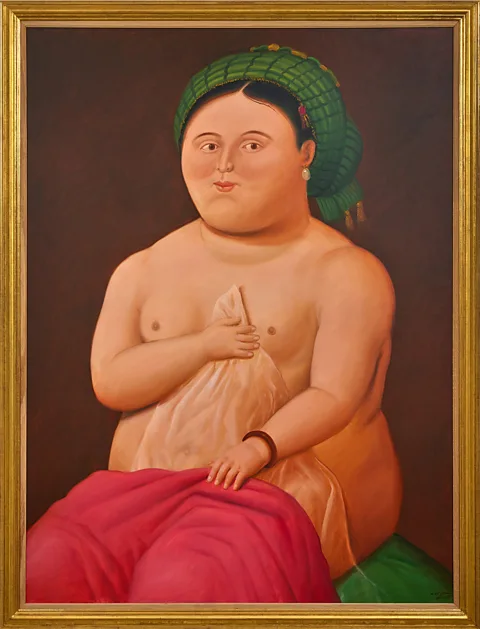
The artistic legacy of the late Fernando Botero continues to reshape the global understanding of figurative art, standing as a monumental bridge between the classical traditions of the European Old Masters and the vibrant, often tumultuous reality of Latin American culture. Known for his signature style—an aesthetic characterized by the exaggeration of volume and form now universally recognized as Boterismo—Botero’s work challenges conventional perceptions of beauty, history, and the purpose of the visual arts. From his early reimagining of Leonardo da Vinci’s Mona Lisa to his massive bronze sculptures that occupy the world’s most prestigious boulevards, Botero’s career represents a singular quest to celebrate the "sensuality of form" while democratizing the high-art canon for a global audience.
In late 2024, the international art community remains fixated on Botero’s enduring relevance. The Opera Gallery in London is currently hosting "Fernando Botero: In Praise of an Amplified World," an exhibition that underscores the artist’s lifelong dialogue with the history of art. This resurgence of interest follows a period of significant market activity; in November 2023, just two months after the artist’s passing at the age of 91, his 1979 painting The Musicians fetched a record-breaking $5.1 million at Christie’s New York. This financial milestone, coupled with his presence in permanent collections such as the Museum of Modern Art (MoMA) in New York and the Museo Nacional del Prado in Madrid, solidifies his status as one of the most commercially and critically successful artists of the 20th and 21st centuries.

The Genesis of Boterismo: A Chronology of Discovery
The evolution of Botero’s unique style was not an overnight occurrence but rather a decades-long synthesis of travel, study, and a pivotal moment of accidental discovery. Born in Medellín, Colombia, in 1932, Botero’s initial exposure to art was limited to the colonial-era religious iconography found in local Catholic churches. This early immersion in the Baroque style—marked by its drama, scale, and emotional intensity—laid the foundation for his future preoccupation with the monumental.
In 1952, at the age of 20, Botero traveled to Madrid, where he enrolled at the Royal Academy of Fine Arts of San Fernando. To support himself, he worked as a copyist at the Prado Museum, spending hours meticulously recreating the works of Velázquez and Goya. It was during this period that his fascination with the European tradition took root. However, it was a subsequent move to Florence that introduced him to the work of the 15th-century master Piero della Francesca. Botero was captivated by the Renaissance artist’s use of space and the geometric solidity of his figures, an influence that would eventually lead him to reject the prevailing trends of Abstract Expressionism in favor of a new kind of figuration.
The definitive birth of Boterismo occurred in 1956 while Botero was living in Mexico City. While sketching a mandolin for his painting Still Life with Mandolin, he accidentally drew the sound hole disproportionately small. This minor error had a profound effect: the instrument suddenly appeared significantly more massive, its volume amplified by the tiny central detail. Botero later described this moment as an explosion of form. From that point forward, he began to apply this logic of "amplification" to everything he depicted—human figures, animals, landscapes, and everyday objects—creating a coherent universe where volume reigned supreme.

Reimagining the Masterpieces: A Dialogue with History
Botero’s most famous works are often his reinterpretations of iconic European paintings. By applying Boterismo to the "sacred" images of Western art, he effectively reclaimed these works, bringing them into a contemporary, Latin American context.
One of his most enduring subjects was the Mona Lisa. His 1959 version, Mona Lisa, Age Twelve, was acquired by MoMA in 1961, signaling his entry into the upper echelons of the international art world. In his 1978 version, the subject’s dark, curly hair and sheer veil remain, but the figure is transformed into a robust, rounded presence with small, delicate facial features. This "amplification" serves not to mock the original but to "celebrate the presence of things," as noted by Belén Herrera Ottino, director of Opera Gallery Madrid.
Botero’s engagement with the Renaissance is perhaps most evident in his 1998 diptych Federico da Montefeltro, Battista Sforza, inspired by Piero della Francesca’s The Duke and Duchess of Urbino. While the original Renaissance portraits were designed to project power and stoicism through sharp profiles and architectural backgrounds, Botero’s version fills the canvas with the sheer mass of the subjects. By switching the sides the couple faces and smoothing out the duke’s battle-scarred features, Botero prioritizes the harmony of volume over historical accuracy.

Similarly, in Menina, after Velázquez (1982), Botero takes the central figure of Margaret Theresa of Spain from Las Meninas and reimagines her as a fuller, more substantial figure. In doing so, he bridges the gap between the rigid courtly life of 17th-century Spain and the joyful, expansive aesthetic of his own vision.
The Philosophy of Volume vs. the Concept of Fatness
A common misconception regarding Botero’s work is that he primarily painted "fat people." The artist himself was consistently adamant in rejecting this characterization. In a 2014 interview with the Spanish newspaper El Mundo, he stated, "I don’t paint fat women… If I paint a woman, a man, a dog or a horse, I do it with volume [in mind]."
For Botero, volume was a technical and philosophical choice. He believed that the purpose of art was to provide pleasure and to exalt life. By increasing the volume of his subjects, he believed he was increasing their "sensuality" and their presence in the world. This focus on form was a direct reaction against the "obscurity" of abstraction, which he felt alienated the viewer. Botero argued that a painting should speak directly to the observer without the need for an academic intermediary.

This commitment to clarity and joy is reflected in his color palette—often vibrant and saturated—and his smooth brushwork, which avoids the textured "impasto" of other figurative painters. The result is a body of work that feels both ancient and modern, grounded in the techniques of the Old Masters but vibrant with the spirit of contemporary Latin America.
Institutional Impact and Market Data
The scale of Botero’s success is reflected in both his market performance and his institutional contributions. In 2000, Botero made a landmark donation to the Banco de la República in Colombia, gifting over 200 of his own works and pieces from his private collection—including works by Picasso, Monet, and Dalí—to create the Botero Museum in Bogotá. This act was a strategic attempt to place Latin American art on an equal footing with the European tradition.
"He was relating his own work with the European tradition," explains Nicolás Gómez Echeverri, director of the arts at the bank. "He’s saying to the visitors, ‘my name is on the same level as these other ones.’"

Market data supports this institutional prestige. Over the last decade, Botero’s works have consistently outperformed estimates at major auction houses.
- The Musicians (1979): Sold for $5.1 million in 2023.
- Man on a Horse (Bronze): Frequently fetches between $2 million and $4 million.
- Still Life with Fruits: Typically sells in the $600,000 to $1 million range.
His public sculptures further extend his reach. From the 23 bronze statues in Medellín’s Plaza Botero to his monumental figures on Park Avenue in New York and the Champs-Élysées in Paris, Botero’s work has become a permanent fixture of the global urban landscape. These public installations have served to "democratize" his art, making the concept of Boterismo accessible to millions who may never step foot in a gallery.
Cultural Implications: High Art and the Latin American Context
Botero’s work does more than just mimic European styles; it explores the complex relationship between the "Old World" and the "New World." In Colombia and across Latin America, images like the Mona Lisa have been absorbed into popular culture, appearing on everything from pizza restaurant signs to street murals. Botero’s reinterpretations acknowledge this cultural migration.

By taking these high-art symbols and rendering them in his local, "amplified" style, Botero validates the Latin American visual experience. His work suggests that the boundary between "high art" (European, classical, white) and "low art" (popular, local, colorful) is an artificial construct.
Furthermore, while much of his work is celebratory, Botero did not shy away from the darker aspects of history. His series on the violence in Colombia and his harrowing depictions of the Abu Ghraib prison abuses demonstrate that Boterismo could also be used to convey profound political critique. Even in these works, the volume of the figures serves to emphasize the weight of human suffering, proving that his style was a versatile tool for social commentary.
A Lasting Legacy
As the art world moves further into the 21st century, Fernando Botero’s influence remains a cornerstone of figurative painting. He succeeded in creating a "singular world," a feat achieved by very few artists in history. Through his unwavering commitment to volume, his deep reverence for the past, and his desire to bring pleasure to the viewer, he carved out a space for Latin American art that is both distinct and universal.

Botero’s legacy is not merely found in the record-breaking auction prices or the museums that bear his name, but in the way he changed the visual language of an entire continent. By reimagining the masterpieces of the past, he ensured that the history of art would always have room for the "amplified" perspectives of the present. In the words of his son, Fernando Botero Zea, his father’s work was ultimately a "celebration of the presence of things," a sentiment that continues to resonate with audiences across the globe.