admin
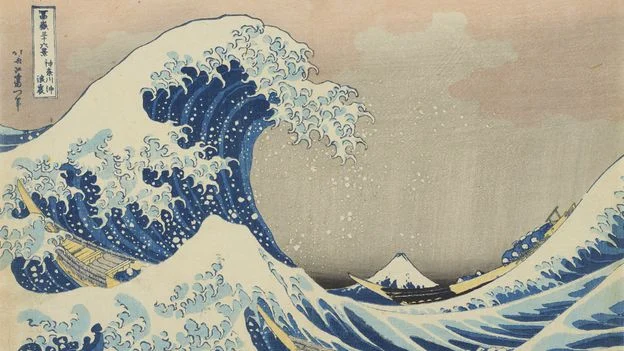
The arrival of Katsushika Hokusai’s complete "Thirty-six Views of Mount Fuji" at the Dulwich Picture Gallery in London marks a significant milestone in the study of Japanese art history, offering a rare opportunity to examine the evolution of an image that has become a cornerstone of global visual culture. At the heart of this exhibition is "Under the Wave off Kanagawa," popularly known as "The Great Wave," a work produced in 1831 that continues to challenge viewers with its intricate balance of terror and serenity. While the image is ubiquitous today—appearing on everything from the Japanese 1,000-yen banknote to digital emojis—the exhibition seeks to peel back the layers of commercialization to reveal the technical mastery and spiritual depth of Hokusai’s late-career reinvention.
The Compositional Mastery of a Late-Life Genius
Katsushika Hokusai was over 70 years old when he began the "Thirty-six Views of Mount Fuji" series. Having recently survived a debilitating stroke and facing significant financial hardship due to his grandson’s debts, the artist turned his focus toward Mount Fuji, a peak long revered in Japan as a symbol of immortality and a site of religious pilgrimage. The series was not merely a collection of landscapes; it was a profound meditation on the relationship between the eternal and the ephemeral.

"The Great Wave" is characterized by its dramatic use of Prussian Blue, a synthetic pigment that had only recently become affordable in Japan through trade with the Dutch. This deep, rich hue allowed Hokusai to create a sense of depth and volume that was previously unattainable with traditional vegetable-based dyes. The composition is built on a series of intersecting triangles and circles: the towering wave forms a massive, breaking arc that threatens to consume the three oshiokuri-bune (fast cargo boats) manned by desperate rowers. In the distant center, the snow-capped peak of Mount Fuji remains motionless, providing a fixed point of stability amidst the chaotic foreground.
The psychological impact of the print was famously noted by Vincent van Gogh, who, in a series of letters to his brother Theo in 1888, described the wave’s crests as "claws" seizing the vessels. This interpretation highlights the "peculiar power to befuddle" that the print possesses; despite its small physical dimensions—roughly 10 by 15 inches—it conveys a sense of monumental scale and existential peril that resonates across cultural and temporal boundaries.
A Chronology of the Floating World: 1831 to the Present
The trajectory of "The Great Wave" from a mass-produced woodblock print in Edo-era Japan to an international icon follows a specific historical timeline:

- 1830–1833: Hokusai produces the "Thirty-six Views of Mount Fuji." Due to its immense popularity, 10 additional prints are eventually added, bringing the total to 46.
- 1850s–1860s: Following the forced opening of Japan by Commodore Matthew Perry, Japanese goods, often wrapped in discarded woodblock prints, begin arriving in Europe.
- 1867: Japanese art is showcased at the International Exposition in Paris, sparking the "Japonisme" movement. Artists like Monet, Degas, and Whistler begin collecting Hokusai’s work.
- 1888: The Van Gogh brothers discuss the "claws" of the wave in their correspondence, cementing the print’s influence on the Post-Impressionist movement.
- 1905: French composer Claude Debussy chooses "The Great Wave" for the cover of his orchestral score La Mer, further integrating the image into the Western high-art canon.
- 2024: The Dulwich Picture Gallery exhibition marks the first time the full series has been displayed in the United Kingdom, showcasing the prints in their historical and thematic context.
Technical Data and the Ukiyo-e Process
The production of "The Great Wave" involved a sophisticated collaborative process typical of the ukiyo-e (floating world) tradition. The process required four distinct specialists: the publisher (who funded and marketed the work), the artist (who provided the design), the woodcarver (who translated the lines onto cherry wood blocks), and the printer (who applied the pigments).
Technical analysis of surviving prints reveals that "The Great Wave" required at least seven separate woodblocks to achieve its complex color gradations. The use of Prussian Blue was a revolutionary choice. Before its introduction, Japanese artists relied on "indigo" or "dayflower" blue, which faded quickly when exposed to light. Prussian Blue’s chemical stability meant that Hokusai’s waves retained their intensity, allowing the prints to survive centuries of display.
It is estimated that between 5,000 and 8,000 impressions of "The Great Wave" were originally printed. However, because the woodblocks wore down over time, later impressions lack the sharp detail and delicate "bokashi" (color shading) of the early editions. Today, only a few hundred high-quality early impressions are known to exist, held by institutions such as the British Museum, the Metropolitan Museum of Art, and the National Museum of Western Art in Tokyo.

Curatorial Analysis: Beyond the Wave
The London exhibition emphasizes that "The Great Wave" cannot be fully understood in isolation. By viewing it alongside other works in the "Thirty-six Views" series, curators aim to show how Hokusai manipulated perspective and geometry to tell a larger story of human resilience.
In the print Kajikazawa in Kai Province, Hokusai depicts a lone fisherman on a jagged rock, his fishing lines forming a triangle that mirrors the shape of Mount Fuji in the background. This visual echo suggests a spiritual alignment between the humble laborer and the eternal mountain. Similarly, in Fujimigahara in Owari Province, a cooper is seen working inside a massive circular barrel. The barrel acts as a lens, framing a tiny, distant view of Fuji. This playful use of scale reminds the viewer that the sacred can be found within the mundane tasks of daily life.
Another critical piece in the series, Reflection in Lake at Misaka in Kai Province, introduces a surreal element. While the mountain above the water is barren and brown, its reflection in the lake is snow-capped and white. This intentional mismatch highlights the theme of flux and the illusory nature of perception—a core tenet of the Buddhist philosophy that underpinned Hokusai’s worldview.

Official Responses and Cultural Impact
Art historians and curators have noted that the enduring appeal of "The Great Wave" lies in its ambiguity. Dr. Jennifer Sliwka, a lead curator involved in the study of Hokusai’s works, suggests that the print serves as a "mirror for the viewer’s own anxieties and hopes." In modern contexts, the image is frequently used as a metaphor for climate change and the overwhelming power of the natural world, yet it also represents the human capacity to navigate through disaster.
The Japanese government has also recognized the print’s status as a primary cultural ambassador. The decision to feature "The Great Wave" on the new 1,000-yen note, scheduled for wide circulation, underscores its role as a symbol of national identity and artistic excellence. This official endorsement ensures that Hokusai’s vision remains integrated into the fabric of daily life, nearly two centuries after its creation.
Broader Implications and Global Legacy
The legacy of "The Great Wave" extends far beyond the confines of the art gallery. It has become a visual shorthand for the "sublime"—that specific aesthetic quality where beauty and terror coexist. In the digital age, the "Wave" emoji (🌊) is a direct descendant of Hokusai’s woodblock, used billions of times to denote everything from a literal ocean to a metaphorical "wave" of emotion or change.

Furthermore, the "Thirty-six Views of Mount Fuji" series represents a pivotal moment in the history of globalization. It is a product of a Japan that was theoretically "closed" to the world but was actually absorbing European artistic techniques (such as linear perspective and synthetic pigments). When the prints eventually traveled to Europe, they revolutionized Western art, breaking the dominance of traditional perspective and paving the way for Modernism.
As the London exhibition demonstrates, Hokusai’s masterpiece is not a static relic of the past. It is a dynamic, "morphing force" that continues to focus and refocus the human eye on the boundary between the inner world of the spirit and the outer world of nature. By examining the clues hidden within the claws of the wave and the silence of the mountain, contemporary audiences can rediscover the profound resilience of an artist who, even in his final years, sought to capture the very essence of existence.