admin
The landscape of residential backup power has undergone a significant transformation as homeowners increasingly prioritize versatility and fuel security in the face of an aging national power grid and more frequent extreme weather events. Dual-fuel generators, which possess the capability to operate on both gasoline and liquid propane, have emerged as the leading solution for those seeking a middle ground between portable convenience and long-term reliability. Following an exhaustive evaluation of more than two dozen models, industry experts and field testers have identified the Westinghouse WGen9500DF as the premier choice for 2024, citing its exceptional power-to-weight ratio and robust feature set.
The shift toward dual-fuel technology is driven by the inherent limitations of single-fuel systems. While gasoline is widely available, its shelf life is notoriously short—typically degrading within three to six months without stabilizers. Conversely, propane offers an indefinite shelf life and burns cleaner, reducing maintenance requirements for the engine’s carburetor. By integrating both options into a single unit, manufacturers have provided a redundancy that is critical during prolonged outages when gas stations may be closed or inaccessible.
Evolution of the Portable Power Market
The rise of dual-fuel generators is a relatively recent phenomenon in the consumer market. Historically, portable generators were divided into two camps: small, gasoline-powered units for camping and large, stationary standby units powered by natural gas or propane. The development of the hybrid carburetor allowed for the birth of the portable dual-fuel unit, a move that responded to consumer demand for higher wattage without the $5,000 to $10,000 investment required for permanent home standby installations.
In 2024, the market has further bifurcated into traditional "open-frame" generators and "inverter" generators. Open-frame models, such as the DuroMax and Westinghouse units tested, provide high wattage at a lower price point but operate at higher decibel levels. Inverter models, like the Pulsar 2200-watt unit, utilize advanced circuitry to provide "clean" power with low total harmonic distortion (THD), which is essential for sensitive electronics like laptops and medical devices.
Comprehensive Testing Methodology and Performance Data
To determine the top performers in this competitive sector, a team of contractors and product experts conducted a series of hands-on trials. The testing phase began with a research period involving 24 different models, focusing on build quality, ease of assembly, and manufacturer reputation. The final selection of five generators underwent rigorous field testing designed to simulate real-world emergency scenarios.
The testing protocol included:
- The Break-in Period: Each engine was run for a predetermined time under light load to allow internal components to seat properly.
- Load Capacity Testing: Using a combination of high-draw appliances—including refrigerators, space heaters, and power tools—testers pushed each unit to its "running watt" limit to observe engine stability.
- Fuel Transition Analysis: Testers evaluated the ease of switching between gasoline and propane while the units were under load.
- Noise Measurement: Decibel meters were used at various distances to verify manufacturer claims regarding operating volume.
Westinghouse WGen9500DF: The Industry Benchmark
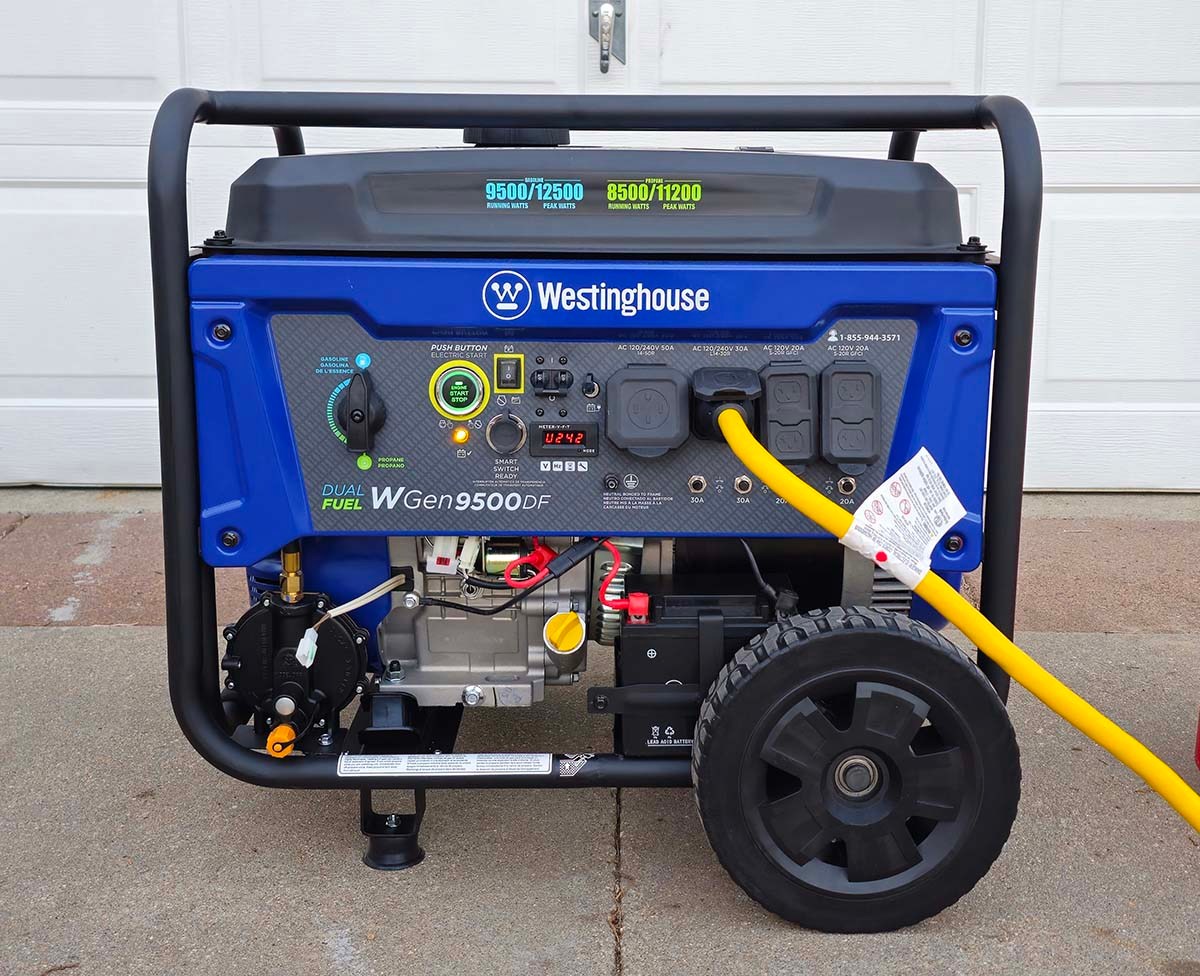
The Westinghouse WGen9500DF emerged as the "Best Overall" selection due to its massive output and user-friendly interface. On gasoline, the unit provides 12,500 peak watts and 9,500 running watts, which is sufficient to power major home appliances including central air conditioning units (depending on the SEER rating and start-up draw). On propane, the output drops slightly to 8,500 running watts, a standard physical limitation of propane’s lower energy density compared to gasoline.
Testers highlighted the remote-start key fob as a standout feature, allowing users to activate the unit from a distance of up to 90 feet. This is particularly valuable during inclement weather, enabling homeowners to start the generator from inside the house.
Pulsar 2200-Watt: The Inverter Advantage
For users prioritizing portability and noise reduction, the Pulsar 2200-Watt Dual-Fuel Quiet Inverter Generator was recognized as the "Best Bang for the Buck." Weighing only 46.5 pounds, it is the only unit in the top picks that can be comfortably carried by a single person. During testing, it successfully managed an 1,800-watt load on gasoline, though the noise level increased significantly when the engine’s "Eco-mode" was disengaged to handle the draw. Its ability to run on propane makes it a favorite for RV enthusiasts who already carry propane tanks for cooking.
DuroMax and Wen: Heavy-Duty Solutions
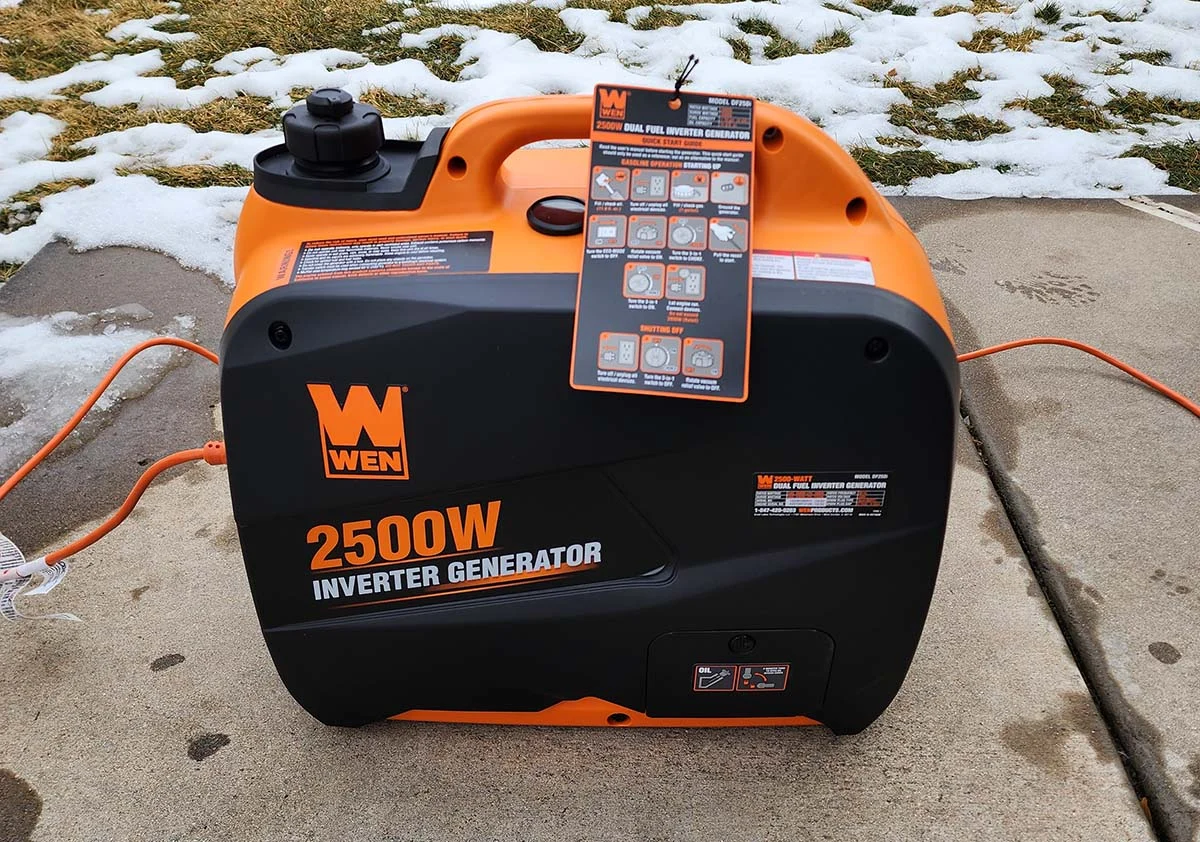
The DuroMax 12,000-Watt and Wen DF11000T represent the "Heavy-Duty" and "Emergency Backup" categories, respectively. The DuroMax was noted for its "MX2" technology, which allows for maximum power extraction from each of the 120V receptacles, making it ideal for job sites or homes with high-draw 120V circuits. The Wen unit was praised for its durability and straightforward fuel-switching mechanism, providing 9,500 peak watts on propane, which remains one of the highest ratings in its price class.
Technical Analysis of Fuel Dynamics
A critical component of the dual-fuel value proposition lies in the chemical and economic differences between the two fuel sources. Gasoline contains approximately 114,000 BTUs per gallon, while propane contains about 91,330 BTUs per gallon. This explains why all dual-fuel generators see a roughly 10% to 15% reduction in wattage when switching to propane.
However, propane offers several operational advantages:
- Cleanliness: Propane does not gum up the carburetor, a common cause of generator failure after long periods of storage.
- Safety: Propane tanks are sealed systems, significantly reducing the risk of spills and fire hazards during refueling.
- Environment: Propane combustion releases fewer greenhouse gases and particulates than gasoline.
Safety Regulations and Modern Standards
The 2024 model year has seen a broader adoption of integrated safety features, largely in response to updated guidelines from the Consumer Product Safety Commission (CPSC). Most notably, the inclusion of Carbon Monoxide (CO) sensors has become a standard for top-tier manufacturers. These sensors, found in models like the DuroMax, automatically shut down the engine if CO concentrations reach dangerous levels in the immediate vicinity.

Furthermore, the EPA and CARB (California Air Resources Board) have tightened emissions standards for small off-road engines (SORE). The generators selected in this analysis meet these stringent requirements, ensuring they can be legally sold and operated in all 50 states.
Infrastructure and Home Integration
A recurring theme in expert analysis is the importance of proper home integration. While portable generators can be used with heavy-duty extension cords, the safest and most efficient method is the installation of a manual transfer switch. This allows the generator to power specific circuits through the home’s existing electrical panel.
For the higher-wattage units like the Westinghouse and DuroMax, which feature 50-amp outlets, a transfer switch is highly recommended. Industry data suggests that homes equipped with a transfer switch experience 40% fewer "user-error" incidents, such as back-feeding the grid or overloading individual extension cords.
Broader Economic and Social Implications
The demand for dual-fuel generators reflects a broader trend of "resilience spending" among American consumers. As the U.S. Department of Energy reports an increase in weather-related power outages over the last decade, the portable power industry has seen record growth. Dual-fuel units offer a psychological and practical safety net, allowing users to leverage whichever fuel source is available during a crisis.
Economically, the initial higher cost of a dual-fuel unit (often $100 to $300 more than a gasoline-only equivalent) is typically recouped through lower maintenance costs and the extended lifespan of the engine when run on propane.
Final Expert Verdict
The conclusion of the 2024 testing cycle reinforces the Westinghouse WGen9500DF as the primary recommendation for the average homeowner seeking comprehensive backup. However, the diversity of the "Top Picks" list—from the lightweight Pulsar to the industrial-grade DuroMax—underscores that the "best" generator is ultimately defined by the specific load requirements and mobility needs of the user.
As technology continues to advance, the next frontier for these units is likely to involve "tri-fuel" capabilities (adding natural gas) and further integration with home battery ecosystems. For now, the current generation of dual-fuel generators stands as a mature, reliable, and essential tool for modern emergency preparedness.