admin
admin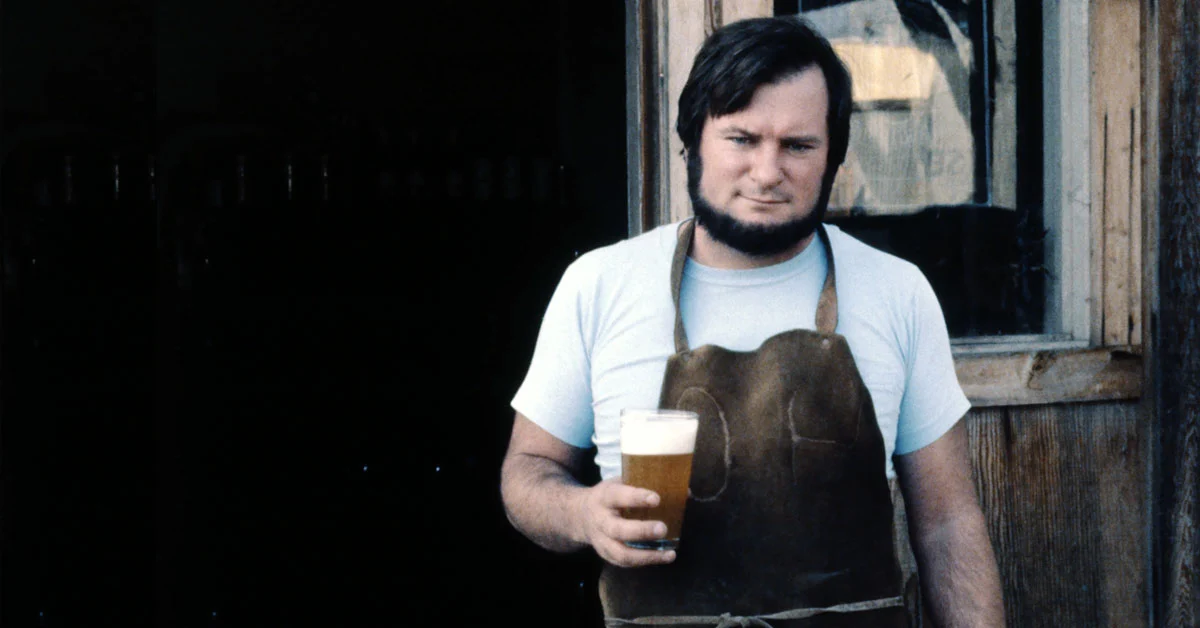
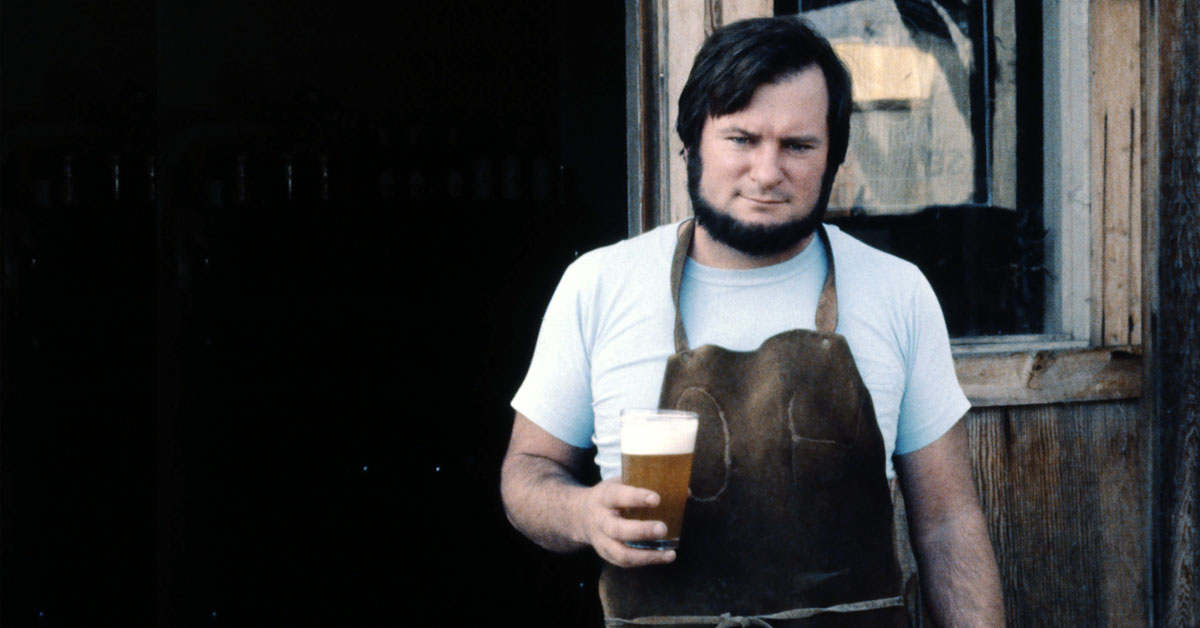
The American brewing landscape, once a monolithic expanse of pale lagers and industrial consolidation, owes its modern diversity to a singular figure whose vision was as bold as the ales he sought to recreate. Jack McAuliffe, the founder of New Albion Brewing Company and the man widely credited with sparking the American craft beer movement, died in July at the age of 80. His passing marks the end of an era for an industry that has grown from a solitary, makeshift warehouse in Sonoma, California, into a multi-billion-dollar cultural phenomenon. McAuliffe’s contribution was not merely the production of beer, but the proof of concept that a small-scale, independent brewery could exist—and thrive—in a post-Prohibition market that had spent decades systematically eliminating small competitors.
The Genesis of an American Original
The story of New Albion Brewing begins not in California, but in the coastal waters of Scotland during the 1960s. While serving as a technician in the United States Navy, McAuliffe was stationed at a submarine base where he was introduced to the complex, malt-forward profiles of British ales. In an era when American beer was synonymous with light, highly carbonated lagers designed for mass consumption, the discovery of porters, stouts, and traditional bitters was transformative.
Upon his return to the United States, McAuliffe found the domestic market severely lacking in the flavors he had grown to admire. He turned to homebrewing, a hobby that was technically illegal at the federal level until 1978, but was gaining a quiet foothold among enthusiasts. McAuliffe’s engineering background and his dissatisfaction with the status quo led him to a radical conclusion: if the beer he wanted to drink did not exist in America, he would have to build the infrastructure to brew it himself.
In 1976, McAuliffe partnered with Jane Zimmerman and Suzy Stern to launch New Albion Brewing Company. With a meager budget of a few thousand dollars—at a time when starting a commercial brewery was considered a multi-million-dollar endeavor—the trio rented a dilapidated fruit-packing warehouse on the outskirts of Sonoma.
Technical Innovation Through Necessity
The founding of New Albion is a study in industrial resourcefulness. Because there was no established market for small-scale brewing equipment in the mid-1970s, McAuliffe had to improvise. He repurposed stainless steel equipment from the dairy industry, which shared the necessary sanitary standards for fermentation but was designed for milk production. He famously converted 55-gallon Coca-Cola syrup drums into fermentation vessels and hand-built a bottling line.
This "MacGyver" approach to brewing became the blueprint for the first generation of microbrewers. By proving that high-quality beer could be produced using repurposed agricultural and food-service hardware, McAuliffe lowered the barrier to entry for future entrepreneurs.
During its five-year run from 1976 to 1982, New Albion produced three flagship styles: a Pale Ale, a Porter, and a Stout. While these styles are ubiquitous today, in 1976 they were revolutionary. New Albion’s Pale Ale, in particular, utilized Cascade hops—a relatively new American cultivar developed by the USDA in Oregon. While large-scale brewers found Cascade too floral and pungent for their light lagers, McAuliffe embraced its piney, grapefruit-like aromatics, setting the stage for the American India Pale Ale (IPA) explosion that would follow decades later.
A Chronology of the Craft Brewing Movement
To understand McAuliffe’s impact, one must view New Albion within the broader timeline of American brewing history:
- 1920–1933: Prohibition shutters thousands of local breweries across the United States.
- 1940s–1970s: Market consolidation leads to the "Big Three" era (Anheuser-Busch, Miller, and Coors). By 1978, only 89 breweries remained in the U.S.
- 1976: Jack McAuliffe opens New Albion Brewing Company in Sonoma, CA, the first new brewery built from scratch in the U.S. since Prohibition.
- 1978: President Jimmy Carter signs H.R. 1337 into law, federally legalizing homebrewing and providing a "test kitchen" for future craft brewers.
- 1980: Ken Grossman and Paul Camusi open Sierra Nevada Brewing Co. in Chico, CA, after visiting McAuliffe’s New Albion.
- 1982: New Albion ceases operations due to financial constraints and a lack of distribution infrastructure.
- 1984: Jim Koch founds the Boston Beer Company, launching Samuel Adams Boston Lager.
- 2023: The number of operating craft breweries in the United States exceeds 9,500, accounting for over 13% of the total beer market by volume.
Industry Reactions and the "McAuliffe Effect"
The influence of Jack McAuliffe is best measured by the testimony of those who followed in his footsteps. Jim Koch, the founder and chairman of Boston Beer Company, has frequently cited McAuliffe as the primary catalyst for his own career. "Jack was truly an American original," Koch noted in a recent tribute. "Before him, starting a brewery from scratch was thought impossible. After him, 10,000 people have done it."
Ken Grossman, founder of Sierra Nevada Brewing Co., similarly credits New Albion with providing the physical and conceptual roadmap for his success. Grossman toured the New Albion facility in the late 1970s, observing McAuliffe’s use of Cascade hops and repurposed equipment. Sierra Nevada’s flagship Pale Ale, which remains one of the most influential beers in history, was a direct evolution of the hoppy, aromatic styles pioneered by McAuliffe.
Historians also point to McAuliffe’s personality as a defining trait of the movement. Maureen Ogle, author of Ambitious Brew: The Story of American Beer, described McAuliffe as a brilliant, if occasionally prickly, iconoclast. "He did not suffer fools gladly," Ogle remarked. "He was intelligent, had a wicked ability to build anything, and was mostly bored by people. He was a joy to know because he was so unapologetically himself."
Economic and Cultural Implications
While New Albion was not a financial success—closing its doors just six years after opening—its failure provided a vital lesson in the importance of the "three-tier system" and the need for dedicated craft distribution. McAuliffe’s struggle to find shelf space in a market dominated by industrial giants highlighted the need for legislative reform and specialized marketing.
The legacy of New Albion also lives on in the concept of "adaptive reuse." By transforming an old warehouse into a community hub, McAuliffe pioneered the "brewery as a destination" model. Today, craft breweries are frequently the anchors of urban revitalization projects, occupying former churches, firehouses, and factories. This model of localism and community-centric commerce has become a cornerstone of the modern "buy local" movement.
Data from the Brewers Association reveals that the craft brewing industry contributed approximately $72.2 billion to the U.S. economy in 2022 and provided more than 460,000 jobs. This massive economic engine can be traced back to the three-person team in Sonoma working with converted soda drums.
The Enduring Standard of Flavor
Perhaps the most lasting impact of Jack McAuliffe is the fundamental shift in the American palate. Before New Albion, the concept of "hop-forward" beer was virtually non-existent in the domestic commercial market. McAuliffe’s insistence on using high-quality, whole-cone hops and traditional fermentation methods forced a reevaluation of what beer could be.
His commitment to flavor over efficiency challenged the industrial brewing philosophy of the mid-20th century, which prioritized shelf stability and cost reduction above all else. By choosing to brew porters and stouts—styles that were nearly extinct in America at the time—McAuliffe preserved a brewing heritage and handed it to a new generation of artisans.
Conclusion: A Toast to the Architect
Jack McAuliffe’s death is a moment of reflection for the millions of consumers who now take for granted the availability of a local IPA or a barrel-aged stout. He was a man who saw a void in the American culinary landscape and filled it with steel, yeast, and a stubborn refusal to conform.
The story of New Albion is a reminder that innovation often begins at the margins, fueled by passion rather than profit. While the equipment McAuliffe built has long since been decommissioned or moved to museums, the spirit of his work resides in every taproom in the country. To honor his legacy, industry leaders suggest a simple gesture: visiting a local, independent brewery and recognizing the courage it takes to brew against the grain. Jack McAuliffe proved that a small idea, when executed with conviction, can change the taste of a nation.