admin
admin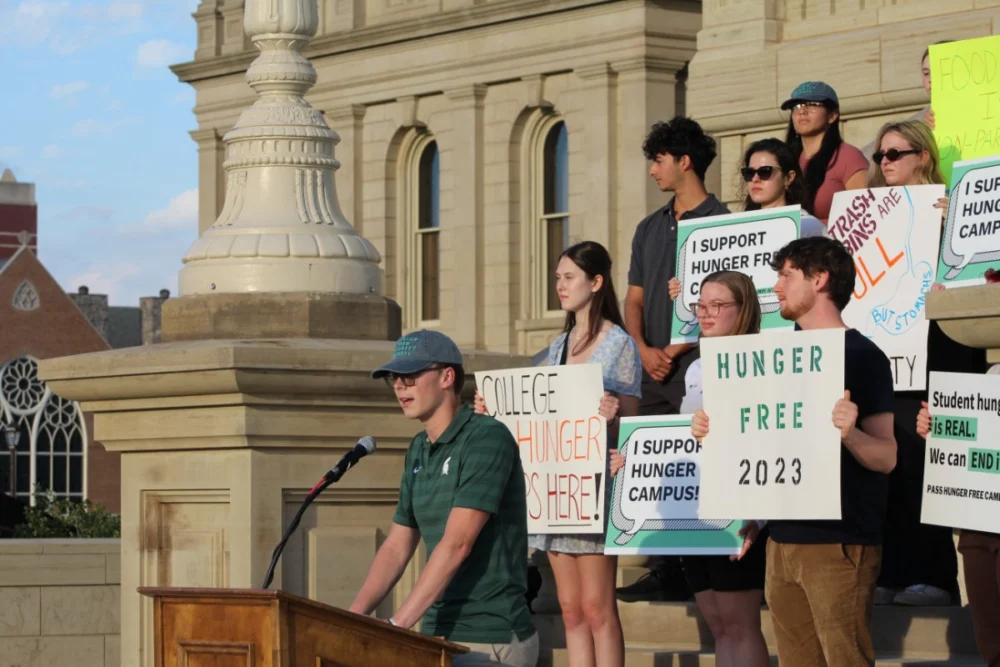
The long-held trope of the "broke college student" has evolved from a romanticized notion of youthful frugality to a stark reality of systemic food insecurity, impacting millions across the United States. For the estimated 40 percent of college students in this country who grapple with consistent hunger, the sacrifice for their education is not merely a social outing or a daily coffee, but often their very next meal. This pervasive issue, which sees over 6 million college students facing food insecurity nationwide, is increasingly being addressed by states stepping up to streamline and simplify access to federal Supplemental Nutrition Assistance Program (SNAP) benefits, even as federal support faces significant challenges.
The Silent Crisis: Unpacking College Food Insecurity
The romanticized image of students subsisting on instant noodles obscures a far more dire situation. Today’s college students are navigating an economic landscape marked by skyrocketing tuition fees, rising housing costs, and stagnant wages, making basic needs like food a constant struggle. This crisis disproportionately affects vulnerable populations, including first-generation students, students of color, those from low-income backgrounds, and student-parents. Food insecurity on college campuses is not merely an inconvenience; it is a profound barrier to academic success, mental well-being, and long-term economic mobility. Research consistently demonstrates that food-insecure students are significantly less likely to graduate, struggling with concentration, energy levels, and overall health. Indeed, approximately 41 percent of students who withdraw from college cite financial reasons, with basic needs often at the core.
Federal SNAP, designed to provide nutritional assistance to low-income individuals and families, theoretically offers a lifeline. However, its complex and often confusing eligibility requirements for college students create substantial hurdles. Unlike the general population, college students are typically deemed ineligible for SNAP unless they meet specific "exemptions." These include working at least 20 hours per week, participating in a federal work-study program, caring for a dependent child under six (or between six and 12 with insufficient childcare), or being enrolled in specific vocational or employment training programs. Even when students meet these income and exemption criteria, the application process itself is notoriously time-consuming and opaque. It demands the collection of myriad documents proving expenses, enrollment status, and financial aid, a burden that many students, especially those juggling jobs, studies, and family responsibilities, find insurmountable.
A Student-Led Solution: The New York SNAP for Students Act
This systemic complexity spurred Jaime Lechner, a Class of 2025 graduate from Niagara University, into action. Lechner, a political science and international studies student, first encountered the gravity of college student hunger during a lobbying trip to Washington, D.C., in early 2023. During this trip, she learned about the federal "Opportunity to Address College Hunger Act" (H.R. 309), proposed by Representative Suzanne Bonamici of Oregon. This bill, currently awaiting consideration by the House Committee on Education and the Workforce, aims to ensure that college students nationwide are informed about SNAP eligibility and application procedures.
Inspired by its simple yet impactful premise, Lechner recognized the potential for similar change at the state level. "It was leveraging information that the government already possessed in order to help people in a meaningful way, with little to no fiscal impact," Lechner recounted. That summer, she embarked on creating a SNAP eligibility fact sheet for her peers at Niagara University. This endeavor quickly revealed the very problem the federal bill sought to address: the lack of accessible, clear information. Despite hours of research and numerous phone calls, Lechner found it nearly impossible to ascertain specific student eligibility requirements for New York State, highlighting the patchwork interpretation of federal rules by different states. For example, in Massachusetts, a MASSGrant financial aid award grants SNAP eligibility, but only to state residents, illustrating the variable nature of state-specific criteria.
Undeterred, Lechner channeled her frustration into advocacy, drafting what would become the "SNAP for Students Act" (A08757 / S08347) for New York State. Her bill mandates that New York higher education institutions utilize existing communication channels to inform students about SNAP benefits, eligibility criteria, application processes, and sources for further information. Lechner’s meticulous approach, studying both the federal Opportunity to Address College Hunger Act and existing New York State laws, ensured her bill was robust and aligned with legislative standards.
In a testament to the urgency of the issue, Lechner’s efforts gained rapid traction. In May 2025, after sharing her draft with State Senator Robert Jackson’s office, she received an email confirming its immediate introduction. Similarly, Assembly Member Phara Souffrant Forrest quickly endorsed the bill. "I figured I’d have to pitch the idea Shark Tank-style," Lechner quipped, reflecting on the unexpectedly enthusiastic reception. The bill is currently with the Social Services Committee in both the New York State Assembly and Senate, awaiting a vote. Lechner remains hopeful for its passage during the current session, which concludes in June, recognizing its critical timing for students navigating an uncertain economic future.
The Stark Reality of Unmet Need

The need for such legislative intervention is underscored by staggering statistics. While 1.1 million college students nationwide currently receive SNAP benefits, an estimated 3 million additional students qualify based on their income and exemptions but remain unenrolled. In New York alone, the College SNAP Project estimates over 350,000 students, representing a third of all college students in the state, are eligible for SNAP, yet more than half are not receiving benefits. "A lot of the issue is that people do not know where to go for help," Lechner emphasized, "and students are unaware that the benefits are out there and that they may be eligible." This gap in awareness and access translates into millions of meals missed and countless opportunities for academic and personal growth curtailed.
A Broader Movement: State-Level Innovations and the Hunger Free Campus Initiative
New York’s efforts are part of a growing national trend as states recognize the profound impact of college food insecurity and move to implement their own solutions. California has long been a trailblazer in this space, with initiatives like the "Plan Against College Hunger Act" (PACHA). Though PACHA concluded in 2022, it provided grant awards to eligible students, equivalent to the cost of a 10-meal-per-week plan, specifically targeting those ineligible for CalFresh (California’s SNAP equivalent).
California’s commitment extends further, with annual funding allocated since 2021 for public colleges and universities to establish and operate comprehensive basic needs centers. These centers are vital hubs, often housing food pantries, and offering toiletries, diapers, childcare essentials, and connections to health resources. The California State University and University of California systems each receive $15 million annually, while California Community Colleges receive $30 million. As of 2023, every public higher education campus in the state boasts a basic needs center and food pantry, setting a national benchmark for integrated student support.
Another significant state-level solution gaining momentum is the "Hunger Free Campus" bill, a policy framework championed by Swipe Out Hunger. This initiative dedicates state funding to public colleges to bolster campus food-access programs. To date, twelve states – Washington, California, Minnesota, Michigan, Illinois, Oklahoma, Louisiana, Virginia, Maryland, Pennsylvania, New Jersey, and Massachusetts – have successfully passed this legislation, with another eleven states introducing similar bills. These state-specific adaptations allow for tailored solutions, with over $36 million distributed since 2017. This funding has facilitated the establishment of new on-campus food pantries, enhanced access to fresh produce through partnerships with local farmers’ markets, and increased staffing to help students navigate basic needs support systems. The Michigan Hunger Free Campus pilot program, launched in 2024 with $500,000, exemplifies this approach, supporting food access initiatives across four colleges in the state.
Federal Headwinds and the Imperative of State Action
These state-level legislative and programmatic advancements arrive at a critical juncture, as federal support for anti-hunger initiatives and student basic needs faces significant headwinds. In July 2025, the passage of H.R. 1, colloquially known as the "One Big Beautiful Bill Act," marked the largest cut to SNAP funding in the program’s history. This legislation is projected to slash an estimated $186 billion in federal support, placing an unprecedented financial burden on states to sustain nutritional assistance programs in the coming years.
Further compounding the challenge, the U.S. Department of Education announced in November 2025 a restructuring of the Fund for the Improvement of Postsecondary Education (FIPSE). This action effectively signals the discontinuation of Basic Needs Grants, which had been the sole federal program specifically dedicated to funding basic needs access for college students. While Congress did vote to fund the Basic Needs Grant in the most recent budget bill, the initial attempt at restructuring underscores a significant deprioritization of college students’ basic needs at the federal level.
This shifting federal landscape makes state-led initiatives not just beneficial, but absolutely critical. At a time when federal actions appear to be withdrawing essential safety nets, states possess the power and the moral imperative to establish their own priorities and actively champion efforts to eradicate college student hunger. Legislators, advocates, and students like Jaime Lechner across the country are proving that policy avenues for positive change still exist and can be highly effective.
"I fell in love with government work because I thought it could be my best way to help the most amount of people in my lifetime," Lechner shared, encapsulating the driving force behind her advocacy. Her belief resonates widely, with 38 state groups, including anti-hunger organizations and academic institutions like Canisius University and Niagara University, signing a letter of support for New York’s SNAP for Students Act. The ball is now in the court of the New York State Senate and Assembly to advance this vital bill, a necessary step, as Senator Jackson asserts, to ensure "colleges and universities want to help their students to be successful and have the energy and the means to get a good education." The fate of millions of students’ academic journeys and overall well-being hinges on such decisive state-level action.