admin
admin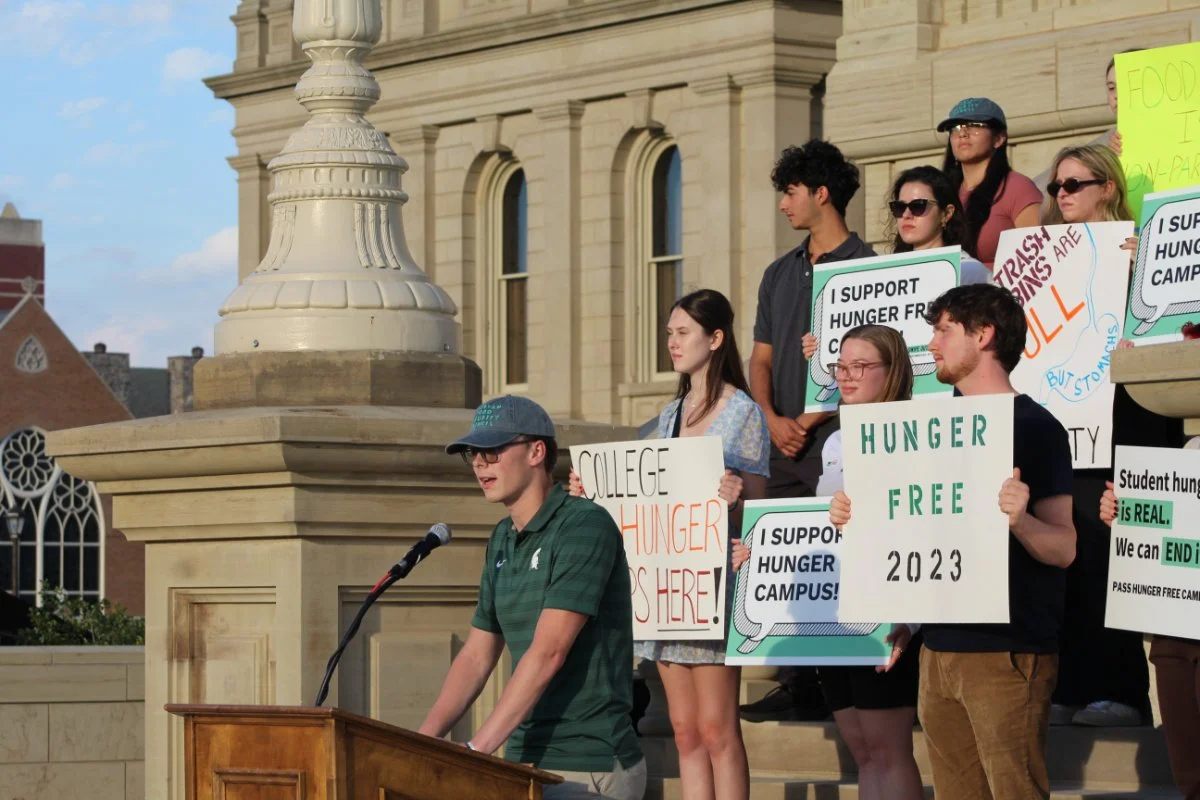
The pervasive image of the "broke college student" has long been a cultural touchstone, often romanticized as a period of harmless ramen-noodle consumption. However, this stereotype masks a far more grim reality for millions of students across the United States: profound food insecurity. An alarming 40 percent of college students in the country routinely face the agonizing choice between funding their education and securing their next meal. This isn’t about sacrificing luxuries; it’s about fundamental survival, impacting academic performance, mental well-being, and ultimately, the ability to complete their degrees. The federal Supplemental Nutrition Assistance Program (SNAP), designed to offer a critical safety net, remains largely inaccessible to many eligible students due to its labyrinthine application process and complex, often confusing, eligibility requirements. In response to this growing crisis and federal inaction, states and dedicated advocates are stepping up, enacting legislative reforms and establishing support systems to streamline access to vital nutritional aid.
The Escalating Crisis of College Student Hunger
The notion that higher education is an automatic pathway to economic stability is increasingly challenged by the harsh realities faced by today’s students. Jaime Lechner, a Class of 2025 graduate from Niagara University, articulates this disillusionment: "In theory, these students have done everything right… go to college, after college you get a job, start your life, that type of thing. But a lot of people now—current students [and] recent graduates—realize that the way things are, that’s not going to be what’s happening for us." This sentiment underscores a systemic issue where rising tuition costs, stagnant wages, and the overall cost of living outpace students’ financial capacities, pushing an estimated 6 million college students nationwide into food insecurity. This pervasive issue contributes significantly to college dropout rates, with studies indicating that approximately 41 percent of students who leave college do so for financial reasons. Food-insecure students are also statistically less likely to graduate compared to their food-secure peers, creating a detrimental cycle that undermines educational attainment and future economic mobility. Beyond academic performance, the impact of food insecurity extends to students’ physical and mental health, often leading to increased stress, anxiety, and an inability to focus on their studies.
Federal Barriers to SNAP Access
While SNAP could serve as a vital lifeline, its federal eligibility criteria present formidable obstacles for college students. Even when students meet income requirements, they are typically ineligible for SNAP benefits unless they satisfy specific "exemptions." These exemptions include working over 20 hours a week, holding a federal work-study job, or caring for young children. While these conditions aim to target assistance, they often fail to account for the complex lives of modern students. Many students juggle part-time or even full-time jobs with demanding academic schedules, while others are parents or guardians, adding significant time constraints to their already packed lives.
The application process itself is another major deterrent. While an initial application might take less than an hour, proving eligibility for an exemption requires gathering a multitude of documents related to expenses, college enrollment, and financial aid status. This extensive documentation process, required both initially and during reapplication for benefits, becomes a significant barrier. According to one study, roughly two-thirds of college students reported working while in school, with nearly half of this group working full-time. Furthermore, about 20 percent of college students are parents or legal guardians, making the time-consuming administrative burden of SNAP applications a near-impossible task. The result is a substantial gap between eligibility and enrollment: nationwide, 1.1 million college students currently receive SNAP, but an estimated 3 million additional students who would qualify based on income and exemptions remain unenrolled. In New York alone, the College SNAP Project estimates that over 350,000 students – a third of all New York college students – are eligible for SNAP, yet more than half of them are not enrolled. As Lechner points out, "A lot of the issue is that people do not know where to go for help… [And] students are unaware that the benefits are out there [and] that they may be eligible."
A Student-Led Legislative Initiative: New York’s SNAP for Students Act
The journey to address college hunger often begins with individual recognition and grassroots advocacy. Jaime Lechner’s path to becoming a legislative proponent began in early 2023 during a lobbying trip to Washington, D.C., for her university’s social work department. There, she learned about the federal Opportunity to Address College Hunger Act (H.R. 309), proposed by Representative Suzanne Bonamici of Oregon. This bill aimed to ensure that college students nationwide were informed about SNAP eligibility and application procedures. Lechner was struck by the bill’s simplicity and its potential for significant impact with minimal fiscal implications. She recognized that while influencing federal legislation might be beyond her immediate reach, she could adapt the core concept to her home state and campus.
That summer, Lechner embarked on creating a SNAP eligibility fact sheet for her Niagara University peers. This seemingly straightforward task quickly revealed the depth of the problem she sought to solve. She encountered the same systemic challenge facing students nationwide: a lack of accessible, clear information. "The information was not accessible or easy to understand," she recalled. Despite dedicating three hours to phone calls and online research, she still lacked definitive information on student eligibility in New York. This experience crystallized her determination to pursue a legislative solution.
Inspired by the federal bill and armed with firsthand knowledge of the barriers, Lechner drafted the SNAP for Students Act (A08757 / S08347) for New York State. Her bill mandates that New York higher education institutions utilize existing communication channels to notify students about SNAP benefits, eligibility criteria, application processes, and sources for further information. To ensure its viability, Lechner meticulously studied the federal Opportunity to Address College Hunger Act and other New York State laws, ensuring her draft was robust and well-articulated. Her proactive approach and clear vision resonated with state legislators. In May 2025, she presented the bill to the offices of New York State Assembly Member Phara Souffrant Forrest and State Senator Robert Jackson. To her surprise, the reception was overwhelmingly positive. "I figured I’d have to pitch the idea Shark Tank–style," Lechner joked, "But they were like, ‘Hey, we love the idea. Is there any other information you want to tell us?’" The bill was introduced in both the Assembly and the Senate the following month, a testament to its compelling rationale and the urgent need it addresses.

Currently, the SNAP for Students Act awaits a vote in the Social Services Committee in both the New York State Assembly and Senate. Lechner remains optimistic for its passage during the current session, which concludes in June. The bill’s potential impact is underscored by the palpable anxiety among today’s students. Lechner observes a widespread feeling of uncertainty regarding their futures, healthcare, food security, and how these stressors affect their academic and professional lives, and even their families. The proposed legislation, if enacted, would represent a critical step toward alleviating some of this uncertainty by ensuring students are aware of and can access existing support systems. The bill has garnered broad support, with 38 state groups, including anti-hunger organizations and universities, signing a letter of endorsement. Senator Jackson emphasizes the fundamental importance of this initiative: "Colleges and universities want to help their students to be successful and have the energy and the means to get a good education… And that’s what this is about."
Expanding State-Level Solutions and Innovations
New York’s efforts mirror a broader trend of states stepping up to address college food insecurity where federal policies have fallen short. California has long been a trailblazer in this area, demonstrating a commitment to student basic needs. The state’s Plan Against College Hunger Act (PACHA), though concluded in 2022, provided grant awards to eligible students equal to the cost of a 10-meal-a-week plan, specifically targeting those ineligible for CalFresh (California’s SNAP equivalent). This initiative showcased a direct state-level financial intervention to supplement federal programs.
Building on this legacy, California has also pioneered the establishment of "basic needs centers" on college campuses. Since 2021, the state has allocated annual funds—$15 million each to the California State University and University of California systems, and $30 million to California Community Colleges—to create and operate these vital hubs. By 2023, every public higher education campus in California boasted a basic needs center and food pantry. These centers are more than just food banks; they offer a holistic suite of resources, including toiletries, diapers and other childcare essentials, and connections to additional health and social services, recognizing that food insecurity often coexists with other basic needs deficits.
Another impactful state-level solution is the Hunger Free Campus bill, a policy framework developed by Swipe Out Hunger, an organization led by the author, Jaime Hansen. This framework dedicates funding to public colleges to support on-campus food-access programs. The initiative has seen significant traction, passed in 12 states—Washington, California, Minnesota, Michigan, Illinois, Oklahoma, Louisiana, Virginia, Maryland, Pennsylvania, New Jersey, and Massachusetts—and introduced in another 11. The strength of the Hunger Free Campus model lies in its adaptability; each state can tailor the bill to its specific student needs and determine the most suitable agencies for funding, ensuring effective implementation. Cumulatively, these state initiatives have distributed over $36 million since 2017, leading to tangible improvements such as the creation of new on-campus food pantries, enhanced access to fresh produce through partnerships with farmers’ markets, and increased staffing to help students navigate and obtain basic needs support.
Bracing for the Future: Federal Deprioritization and State Resilience
The importance of these state-level legislative actions and campus-based solutions is amplified by recent shifts in federal policy that signal a troubling deprioritization of college student basic needs. In July 2025, the passage of H.R. 1, colloquially known as the "One Big Beautiful Bill Act," enacted the largest cut to SNAP funding in the program’s history, slashing an estimated $186 billion in federal support. This drastic reduction places an enormous and unprecedented burden on states to bridge the funding gap and sustain essential food assistance programs in the coming years.
Further exacerbating the federal withdrawal, the U.S. Department of Education announced a restructuring of the Fund for the Improvement of Postsecondary Education (FIPSE) in November 2025. This action effectively discontinued the Basic Needs Grants, which had been the only federal program specifically dedicated to funding basic needs access for college students. While Congress voted to fund the Basic Needs Grant in the most recent budget bill, the initial attempt to jeopardize this critical resource through restructuring sends a clear message about the federal government’s diminishing commitment to student basic needs.
At a time when federal support appears to be receding, the proactive stance of states becomes not just commendable, but absolutely critical. The contrast between federal cuts and state-level innovation highlights a fundamental divergence in approach. While the federal government appears to be leaving many vulnerable populations, including college students, behind, policy avenues still exist at the state level. States possess the inherent power to establish their own priorities and champion efforts to eradicate college student hunger. The dedicated work of legislators and advocates like Jaime Lechner, driven by a core belief in politics as a force for positive change, exemplifies this resilience. Lechner’s passion is fueled by the direct impact her work can have: "I fell in love with government work because I thought it could be my best way to help the most amount of people in my lifetime… The fact that [politics] helps people fuels my excitement and passion for the work, especially for the bill itself."
The ongoing efforts in New York and other states represent more than just legislative tweaks; they signify a crucial recognition of the evolving landscape of higher education and the fundamental right of students to pursue their studies without the constant specter of hunger. The success of these state-led initiatives will not only directly benefit millions of students but also lay the groundwork for a more equitable and effective educational system, ensuring that the promise of higher education remains within reach for all.