admin
admin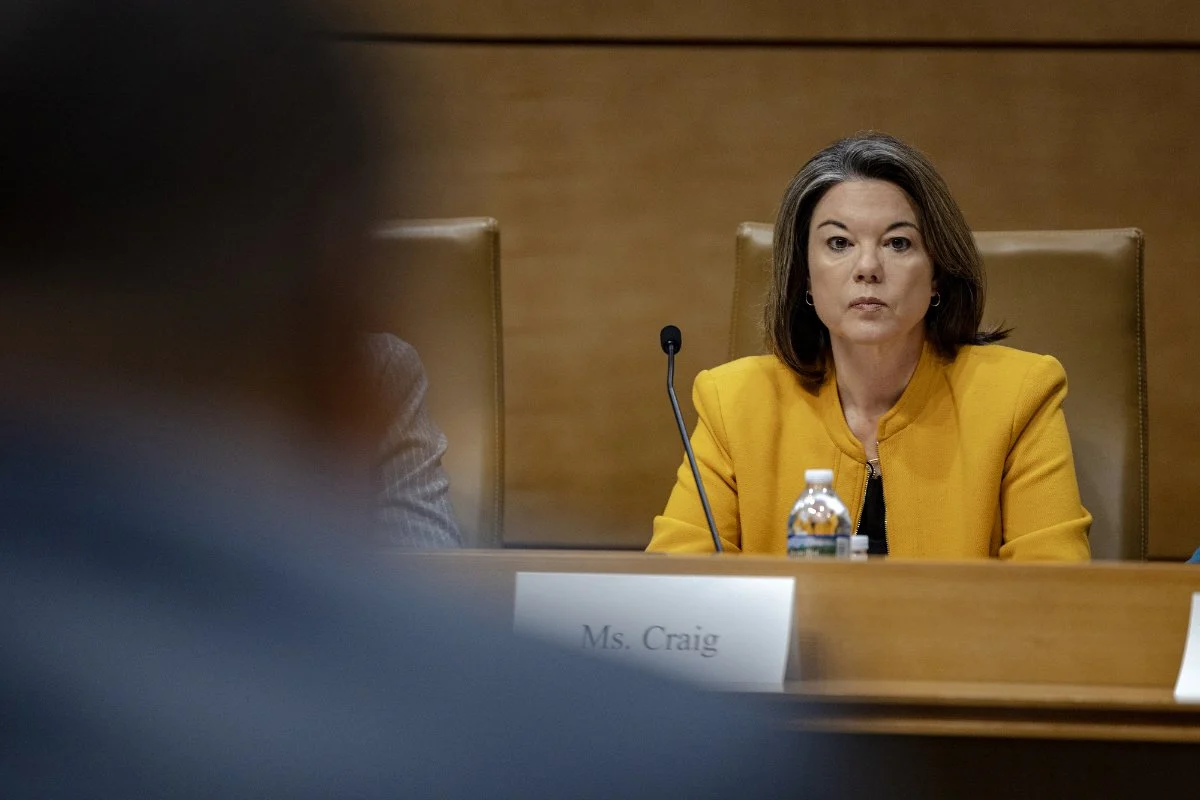
The House Agriculture Committee has successfully advanced a proposed 2026 Farm Bill, garnering a degree of bipartisan support, yet the legislative package faces significant criticism from various farm and food advocacy groups who express profound disappointment over its perceived lack of new investments and failure to address pressing challenges within the U.S. food system. The bill, which now moves forward for debate in the full House, seeks to provide stability to American agriculture and nutrition programs, a goal that has remained elusive since the expiration of the last comprehensive Farm Bill in 2023.
The Farm Bill: A Pillar of U.S. Agriculture and Nutrition Policy
Historically passed every five years, the Farm Bill is a monumental piece of legislation that dictates U.S. food and agricultural policy, shaping everything from farm subsidies and crop insurance to conservation efforts and nutritional assistance programs. It represents a delicate balance between supporting the nation’s farmers and ensuring food security for its citizens. The comprehensive nature of the bill means its provisions touch virtually every American, influencing food prices, environmental practices, and rural economies. With an estimated cost often exceeding a trillion dollars over its five-year lifespan, the Farm Bill is one of the most significant pieces of legislation Congress considers, underscoring the gravity of its periodic renewal.
The delay in passing a new package since the 2018 Farm Bill expired in 2023 has created considerable uncertainty across the agricultural sector and for millions relying on food assistance. Farmers have faced unprecedented economic volatility, exacerbated by climate change impacts, fluctuating commodity prices, supply chain disruptions, and geopolitical tensions. Food insecurity, meanwhile, has remained a persistent challenge, making the timely and effective passage of a new Farm Bill more critical than ever.
Legislative History and the "One Big Beautiful Bill" Context
The current legislative effort follows a period of significant political maneuvering. Last year, several large programs typically housed within the Farm Bill were controversially rolled into the Republican-led "One Big Beautiful Bill" (OBBB). This move effectively disaggregated core components of the Farm Bill, particularly those related to the social safety net, and passed them outside the traditional Farm Bill framework. The House Agriculture Committee’s latest draft for the 2026 Farm Bill largely incorporates provisions from a 2024 draft that had bipartisan support but were excluded from the OBBB, signaling an attempt to consolidate a more conventional Farm Bill structure.
Despite its advancement, the proposed bill immediately ignited debate regarding its efficacy in addressing systemic issues. Rob Larew, president of the National Farmers Union, articulated a common sentiment among critics, stating, "The fundamental changes needed to fix what’s broken in American agriculture—reining in corporate consolidation, building true safety nets, and investing in local communities—still need to be made." This perspective highlights a broader concern that the bill largely maintains the status quo rather than introducing transformative solutions.
Key Provisions and Limited New Investments
The current House bill predominantly focuses on commodity crops, which traditionally receive the lion’s share of Farm Bill funding through programs like crop insurance and direct payments. However, it does include some notable, albeit modest, boosts for specialty crops—a category encompassing fruits, vegetables, nuts, and legumes. A significant proposed change is the requirement for the U.S. Department of Agriculture (USDA) to establish the first-ever emergency assistance framework specifically for specialty crops. This aims to streamline disaster aid for producers of these often-vulnerable crops, a move lauded by the Specialty Crop Farm Bill Alliance as one of the "most significant enhancements" to specialty crop programs in years.
Nevertheless, the overarching criticism, echoed by Mike Lavender, policy director at the National Sustainable Agriculture Coalition (NSAC), is the absence of substantial new investments across farm programs. Lavender emphasized that given the profound instability experienced by farmers in 2025—marked by contract cancellations, funding freezes, and shifts in trade policy—the proposed bill falls short. "It’s got to be a farm bill that rises to the occasion and meets farmers where they are," Lavender asserted, questioning the rationale for accepting a Farm Bill "that doesn’t have any new investments… particularly in a moment like this."
Conservation Programs: Reallocation, Not New Funding
A central theme of recent Farm Bills has been budget neutrality, meaning that lawmakers must reallocate existing funds rather than appropriate new money for programs. This approach significantly impacts conservation efforts, which are crucial for addressing climate change, improving soil health, and protecting water quality.
The proposed House Farm Bill exemplifies this challenge, particularly in its handling of popular conservation initiatives. To create a new subprogram designed to assist states and tribes in improving soil health, the bill proposes pulling $100 million from the Conservation Stewardship Program (CSP), a widely utilized program that rewards farmers for comprehensive conservation efforts. This reallocation has raised concerns among advocates who fear it could undermine existing successful programs.
Even more contentious was the debate surrounding the Environmental Quality Incentive Program (EQIP), another cornerstone of federal conservation efforts. Lawmakers disagreed vehemently over the reallocation of more than $1 billion from EQIP over the next several years to other conservation initiatives. While an aide to House Agriculture Committee Republicans argued that EQIP’s long-term funding outlook remains strong and the proposed funding is still higher than in previous years, conservation experts countered that EQIP is consistently oversubscribed. This means that far more farmers apply for funding than the program can support, often leaving thousands of meritorious applications unfunded annually. Short-term cuts or reallocations, even if offset by future increases, could severely impact farmers already grappling with economic pressures from tariffs, high input costs, and extreme weather events. Jonathan Coppess, a former administrator of the Farm Service Agency, warned that such a proposal is "significant for an oversubscribed program in the middle of an economically difficult time."
The bill’s conservation and research section also seeks to boost precision agriculture technologies by adding them as a qualifying practice for popular conservation programs. While precision agriculture offers potential benefits, critics like Lavender point out that these technologies are often more expensive and not applicable to all farming operations, potentially giving "too much priority to something that doesn’t have the chance to benefit everyone."

Partisan Rifts Over Nutrition Programs
Despite seven Democrats backing the bill in committee, its path through the full House remains uncertain, primarily due to deep partisan divisions over its nutrition title. Democrats, even those who ultimately voted for the bill, voiced strong criticisms regarding previous cuts to the Supplemental Nutrition Assistance Program (SNAP) that were enacted through the OBBB. These cuts included cost-shifts to states and additional work requirements for beneficiaries, measures that anti-hunger advocates warn will exacerbate food insecurity.
Throughout the committee debate, Democratic members introduced amendments aimed at rolling back these policy changes, but these efforts were consistently rejected. Ty Jones Cox, vice president for food assistance at the Center on Budget and Policy Priorities, expressed profound disappointment: "Every member of the House Agriculture Committee represents families with low incomes who need SNAP to afford groceries, and it is deeply disappointing to see all Republicans and some Democratic members of the House Agriculture Committee vote to advance a bill that fails to deliver for these constituents." This sentiment underscores the enduring ideological chasm over the role of federal assistance in addressing poverty and hunger.
"Poison Pills" and Contentious Provisions
Ranking Member Angie Craig (D-Minnesota) notably described certain sections of the bill as "poison pills" that render the package unpalatable for many Democrats. These contentious provisions include:
-
Pesticide Liability Shield: Language in the bill aims to make it more difficult for individuals to sue pesticide companies for claims that their products cause cancer or other illnesses. This is achieved by creating a uniform national pesticide label, which would preempt stricter state or local labeling mandates. Such a provision could shield pesticide manufacturers from lawsuits related to labeling, even as the U.S. Supreme Court prepares to hear a landmark case concerning warning labels on the weedkiller Roundup. An amendment from Rep. Chellie Pingree (D-Maine) to remove this language was rejected.
-
Animal Welfare Preemption: Another highly debated section seeks to preempt state laws focused on animal welfare requirements, specifically targeting measures like California’s Proposition 12. Proposition 12, passed by California voters, mandates specific space requirements for animals raised for pork, eggs, and veal sold within the state, regardless of where they were produced. Opponents of this preemption argue that it would invalidate investments already made by California producers to comply with such laws and undermine the will of state voters. Representative Jim Costa (D-California) introduced an amendment to strip this language but later withdrew it, signaling an intent to continue working on the issue with Senate counterparts. The provision ultimately remained in the House bill.
Restrictions on Federal Incentives for Solar Energy
The proposed Farm Bill also reflects a broader shift in federal policy, initiated by the Trump administration, to curb solar installations on prime farmland. It limits USDA incentives for projects that install large solar panels on highly productive agricultural land.
In the preceding year, Agriculture Secretary Brooke Rollins announced that the agency would block federal dollars from being used to build large-scale solar panels on viable farmland. This directive primarily targeted the Rural Energy for America Program (REAP), a popular initiative that helps farmers lower energy costs through various renewable energy technologies. In recent years, solar projects have been the most popular type of REAP application. Under the USDA’s new directive and the proposed Farm Bill language, many of these projects would lose federal funding. Experts warned that this policy could create significant uncertainty for farmers looking to diversify their income or reduce operational costs through solar energy.
Beyond incentive limits, the draft Farm Bill mandates that the USDA study the impacts of solar installations on prime farmland. An amendment introduced by Representative Nikki Budzinski (D-Illinois) to remove the solar provision sparked heated debate. Republicans defended the restrictions, arguing that large-scale solar development is converting valuable prime farmland out of food production. They clarified that the language does not prohibit solar on farmland but rather removes federal incentives for such transitions. Democrats, however, countered that farmers are already facing immense financial pressures, including soaring energy prices. They argued that this provision would limit farmers’ choices and their ability to leverage solar energy to lower costs and diversify their operations. Representative Budzinski highlighted that solar projects account for only about 3 percent of agricultural land loss, suggesting the impact on food production is often overstated.
The Path Forward and Legislative Hurdles
With the House Agriculture Committee’s work concluded for this stage, the focus now shifts to the full House, where the bill faces a challenging legislative journey. Republican leadership has not yet set a specific timeline for debate. Concurrently, Senate Agriculture Committee leaders have indicated their intention to debate their own version of the Farm Bill in the coming months, setting the stage for potential reconciliation between two differing legislative packages.
The legislative landscape for the Farm Bill is further complicated by a confluence of factors. The upcoming midterms will undoubtedly influence voting dynamics, as members weigh the political ramifications of their positions. Razor-thin margins in both chambers of Congress mean that every vote will be crucial, and securing broad bipartisan consensus will be exceptionally difficult. Moreover, other pressing legislative priorities, coupled with a recent escalation of international tensions, including a conflict with Iran, could divert congressional attention and resources away from the Farm Bill.
Mike Lavender reiterated that advocacy groups like NSAC will continue to engage with lawmakers to ensure they fully comprehend the diverse needs of farm country and allocate adequate funding to critical programs. However, he acknowledged the immense challenges ahead. "I know we have folks on both sides of Congress, on both sides of the aisle who are eager to get one done," Lavender concluded, "But there’s no fooling that there’s a long way to go." The future of American agriculture and food security hinges on navigating these complex political and economic currents to deliver a Farm Bill that truly meets the moment.