admin
admin
The landscape of the Canadian craft beer industry is undergoing a profound transformation as Indigenous brewers, owners, and entrepreneurs assert their presence in a space historically defined by their exclusion. This movement, characterized by a delicate balance between economic self-determination and the processing of multi-generational trauma, reached a public flashpoint in March 2021 with the launch of the "Celebrating Sisters" campaign. Spearheaded by the Indigenous Brew Crew (IBC), a trio of Indigenous brewers, the initiative was designed to support Indigenous women through the medium of craft beer. However, the campaign’s reception highlighted a deep-seated rift within Indigenous communities, where the celebration of alcohol—a substance long used as a tool of colonial oppression—remains a subject of intense pain and debate.
While the "Celebrating Sisters" campaign initially garnered excitement for its potential to increase visibility, it quickly met with "anguished criticisms" from community members. Anishinaabe artist Chief Lady Bird, who designed a label for the project featuring a blackbird against a woodland backdrop, became a central figure in the resulting dialogue. The controversy forced a public reckoning with the difficulty of reconciling the craft beer industry with Canada’s legacy of Indigenous exploitation. By the end of 2021, the IBC had dissolved, and the campaign had concluded, yet the underlying questions regarding Indigenous sovereignty and the alcohol industry remained. Today, a growing number of Indigenous-led breweries are attempting to answer those questions by redefining the relationship between their heritage and the brewing craft.
A Chronology of Exclusion: The Indian Act and Alcohol Control
To understand the current tension within the Indigenous brewing community, it is necessary to examine the legislative framework that governed Indigenous life for over a century. The Indian Act of 1876 was the primary instrument of Canadian colonial policy, designed to define "Indian" identity and manage every aspect of Indigenous existence, from land use to governance. Central to this legislation was the strict prohibition of alcohol.
Between the late 19th century and the mid-20th century, Indigenous people were legally barred from purchasing, possessing, or consuming alcohol. This exclusion was not merely a matter of temperance but a tool of social control. Non-alcoholic beer was colloquially branded "Indian Beer" because it was the only fermented beverage Indigenous people could legally obtain. Paradoxically, while the law prohibited consumption, settlers and traders often used alcohol as a predatory tool to disrupt Indigenous trading systems and secure lopsided land deals, contributing to a cycle of dependency.
The mid-20th century saw a shift in policy, though not necessarily in intent. Between 1951 and 1985, various amendments to the Indian Act and provincial liquor laws gradually granted Indigenous people the right to consume alcohol, often contingent on provincial referendums or the discretion of local authorities. However, this "legalization" occurred against the backdrop of the residential school system and the "Sixties Scoop," during which Indigenous children were forcibly removed from their families. The resulting psychological wounds led many to use alcohol as a coping mechanism for trauma, further complicating the community’s relationship with the substance.

The Rise of Indigenous Entrepreneurship and Self-Determination
Despite this dark history, the 21st century has seen a surge in Indigenous-led business ventures, supported by organizations such as the Manitoba Métis Federation and Farm Credit Canada. For many Indigenous entrepreneurs, entering the craft beer industry is an act of sovereignty—a rejection of the "ward of the state" status traditionally imposed by the Indian Act.
Darnell Stager of Indigenous Tourism BC argues that antagonism toward Indigenous brewers is often a residual effect of colonial economic gatekeeping. He asserts that self-determination must include the right for Indigenous people to participate in any industry they choose. This sentiment is echoed by Matthew Sabourin, co-owner of La Brasserie Nonsuch Brewing Co. in Winnipeg. While Sabourin initially faced hesitation from the Métis business community, his focus on creating high-quality, artisanal products that celebrate local experiences eventually won over skeptics. Nonsuch Brewing now hosts "Beer Bannock" experiences, where customers learn about Indigenous history and figures like Louis Riel while engaging with the brewing process.
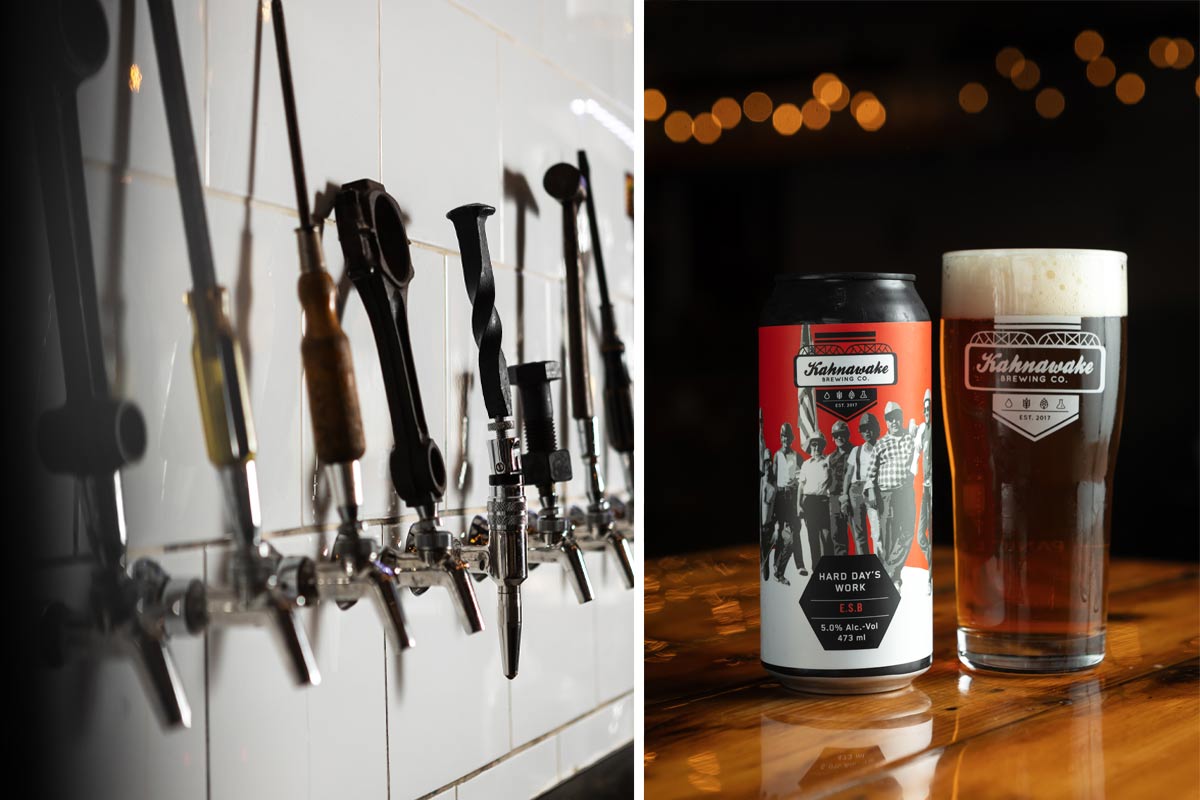
In Quebec, the Kahnawake Brewing Company & Black Bridge Taproom stands as a landmark in the industry. As the first openly Indigenous-owned craft brewery located on Indigenous land (the Mohawk Territory of Kahnawake), it explicitly draws on local history. The brewery’s name references the Saint-Laurent Railway Bridge, famously built by Mohawk ironworkers and French laborers in 1900. Co-owner Fred Leblanc, himself a former ironworker, has steered the brewery to national acclaim, winning multiple medals at the 2024 and 2025 Canada Beer Cups.

Navigating Identity and Responsibility in the Brewhouse
For many Indigenous brewers, the decision to identify their business as "Indigenous-led" carries significant weight. Melanie MacInnes, a Métis woman and co-owner of Locality Brewing in Langley, B.C., describes a "visceral response" to the responsibility of representing her heritage. After accepting a nomination for Best Indigenous-Led Business in 2022, MacInnes found that being open about her identity deepened her connection to her land and community.
However, the experience of brewing while Indigenous is not uniform. Jason Tremblay, head brewer at Toronto’s Two Loons Brewing, acknowledges the privilege of being "white-passing," noting that he does not face the same level of scrutiny or discrimination as First Nations brewers who may be more easily identified with negative stereotypes. Conversely, Inuit brewer Sarabeth Holden, co-owner of Red Tape Brewery in Toronto, has spoken about the challenges of being taken seriously in an industry that often overlooks women and Indigenous people. Despite these hurdles, Holden has found immense support from her family and community, including those who abstain from alcohol but take pride in her success as a business owner.
Defining the "Indigenous Beer" Aesthetic and Ethics
The question of what constitutes an "Indigenous beer" is central to the industry’s evolution. For some, it is defined by the involvement of Indigenous people in the supply chain. For others, it is about the ethical use of the land and the incorporation of traditional ingredients.

- Sourcing and Collaboration: Inez Cook, co-founder of Vancouver’s Salmon n’ Bannock restaurant, prioritizes Indigenous suppliers to ensure that economic benefits remain within the community. Her partnership with Locality Brewing is a prime example of this "people-first" business model.
- Traditional Ingredients: Brewers like Sarabeth Holden and Nadine Jopson have gained recognition for incorporating ingredients tied to the Indigenous experience. Holden’s "Paunnat Saison" utilizes dwarf fireweed, while Jopson’s "Askî Oci" saison (brewed during her time with Another Beer Co.) featured alfalfa and spruce tips.
- Symbolism and Healing: The labels and branding of these beers often serve as educational tools. The "Askî Oci" label explicitly addressed the Indian Act, stating that healing the relationship with alcohol begins with Indigenous people reclaiming their independence.
Implications for Reconciliation and the Future of Craft Beer
The presence of Indigenous people in the craft beer industry is not merely a matter of diversity; it is a critical component of Truth and Reconciliation. Professor Niigaan Sinclair, an Anishinaabe scholar, suggests that the goal is not necessarily to encourage consumption, but to foster a healthy relationship with all things, including those that have historically caused harm. He notes that because beer is derived from natural, "medicinal" elements of the earth, Indigenous people must determine for themselves how to engage with it responsibly.
The broader craft beer community, which has faced its own internal crises regarding inclusivity and economic sustainability, may find a path forward by adopting the values championed by Indigenous brewers. These values—respect for the land, prioritization of people over profits, and a willingness to engage in difficult conversations—offer a blueprint for a more resilient and ethical industry.
As Indigenous-led breweries continue to win awards and expand their reach, they are effectively breaking the silence that once cloaked the issue of alcohol in their communities. By asserting their right to brew, own, and innovate, they are dismantling the legacy of the Indian Act and replacing it with a new narrative of resilience and cultural pride. The success of these ventures suggests that the path to reconciliation in the business world is paved with transparency, mutual respect, and the unwavering pursuit of self-determination.