admin
admin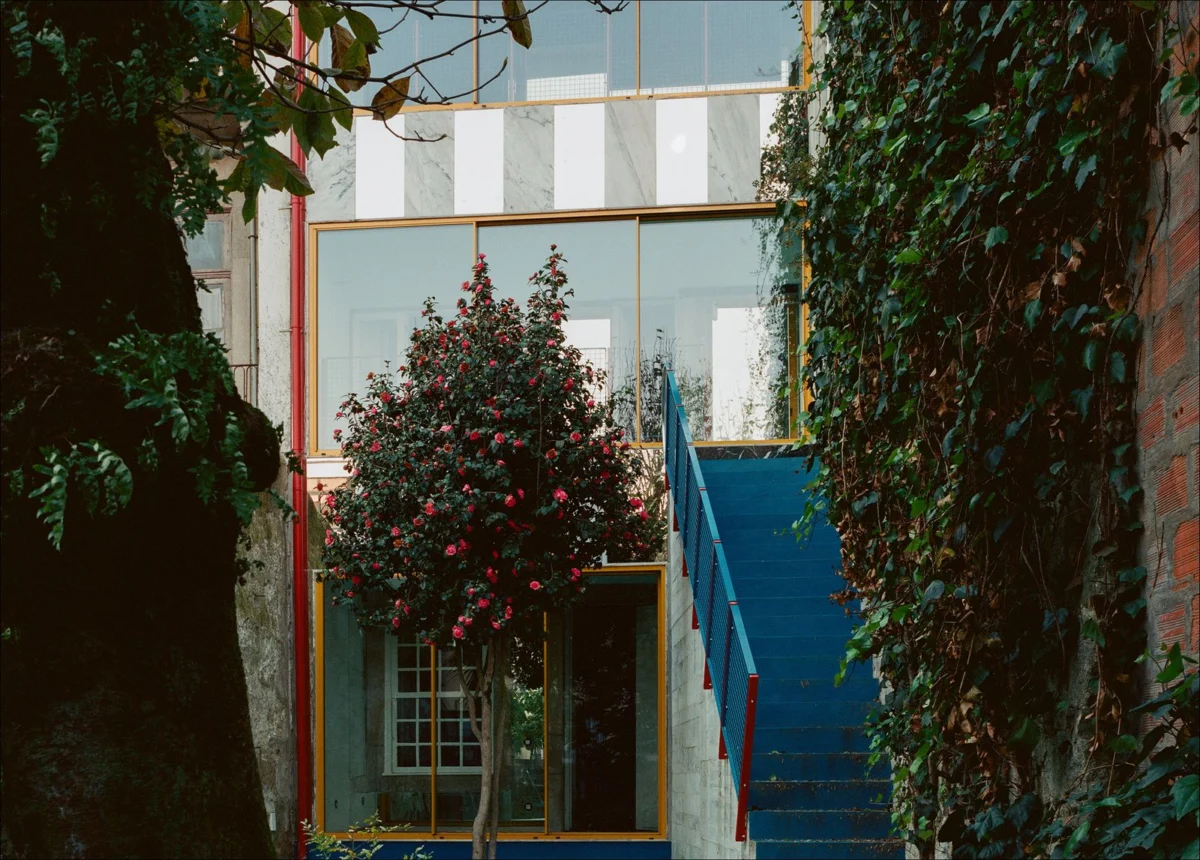
Fala Atelier’s Distinctive Architectural Philosophy
Fala Atelier, founded by Filipe Magalhães, Ana Luisa Soares, and Ahmed Belkhodja, has consistently distinguished itself within the global architectural landscape since its inception in 2013. Known for its minimalist yet playful approach, the Porto-based firm has garnered international recognition for projects that often subvert expectations through the ingenious use of simple geometric forms, a refined material palette, and a striking application of color. Their work frequently engages in a dialogue with existing structures, rather than merely replacing them, fostering a layered history where new and old coexist in a compelling tension. This particular Porto residence exemplifies their core philosophy: to create architecture that is simultaneously rational and intuitive, functional and poetic, familiar and utterly novel. The firm’s portfolio, often characterized by crisp lines, carefully considered voids, and unexpected material juxtapositions, has positioned them as key players in a generation of architects redefining contemporary European design. Their projects frequently appear as a series of meticulously composed vignettes, each a self-contained exploration of form, light, and texture, yet all contributing to a cohesive, albeit often surprising, whole. Fala Atelier’s consistent output, featured in numerous international publications and exhibitions, underscores their influence and critical acclaim within the architectural community.

Project Genesis and Context in Porto
The genesis of this project likely stemmed from a desire to revitalize an aging urban dwelling, imbuing it with contemporary relevance while respecting, or rather, actively engaging with its historical fabric. While specific details of the client brief are not publicly detailed, the outcome suggests a client open to a highly conceptual and experimental approach to residential design. Fala Atelier’s methodology typically involves a deep analytical engagement with the site and existing conditions, identifying inherent qualities to be amplified or deliberately contrasted. For this Porto residence, the "existing building" presented a canvas ripe for reinterpretation. Its original condition, typical of many traditional urban dwellings in Porto, would have likely featured compartmentalized spaces, potentially outdated infrastructure, and a lack of modern insulation. The renovation, presumed to have been completed in the early 2020s, given its recent feature and the architect’s statement, would have involved a rigorous design phase, followed by a construction period where these intricate interventions were meticulously executed. This timeline aligns with Fala Atelier’s typical project cycle, which emphasizes precision in both conception and realization. The transformation wasn’t about erasing the past but rather about drawing new lines, adding new layers, and thereby creating a fresh narrative for the space, respecting the city’s continuous evolution. Porto itself, a UNESCO World Heritage site, is a city that balances deep historical roots with a thriving contemporary arts and design scene, making it a fertile ground for such bold architectural experiments.
The "New Structure": Disrupting and Defining Space
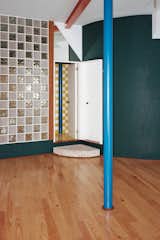
At the heart of the renovation is the introduction of a new structural system described as entering the existing building "on its own terms." This system comprises a "row of thin metal poles" supporting an "I-beam stretching from front to back." What makes this intervention particularly remarkable is its intentional "disruptive" quality. The architects deliberately designed these beams to be interrupted, with "these cuts… exposed and celebrated." Furthermore, these new elements are painted in "bright red and blue," and they occupy positions that "deliberately disrupt, blocking doors, windows, and passages." This approach is a calculated move to make the structure "visible" and an "active participant of the space."
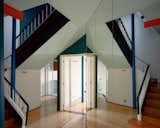
In architectural theory, such deliberate disruption serves multiple purposes. It prevents the new structure from merely blending into the background, forcing occupants to acknowledge its presence and, by extension, the architectural intent behind it. This creates a heightened awareness of the spatial relationships, the movement paths, and the very boundaries of the rooms. Instead of seamless integration, Fala Atelier opts for a jarring, yet ultimately harmonious, confrontation between old and new, function and form. This method encourages a critical engagement with the built environment, compelling inhabitants to consider how they navigate and interact with their domestic space. It challenges the conventional desire for unimpeded flow, suggesting that minor inconveniences can lead to a richer, more conscious experience of one’s surroundings. The vibrant red and blue hues are not merely decorative but serve as a bold visual accent, delineating the new interventions from the original fabric and drawing immediate attention to their sculptural quality. This choice of primary colors also injects a sense of playfulness and modernity into the otherwise traditional shell.
Fragmented Interventions and a Rich Material Palette
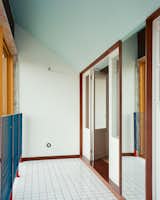
Beyond this primary structural intervention, the project involved "a few fragmented interventions" within the interior. "Very little was demolished," signaling a commitment to preservation and adaptive reuse, a sustainable approach that minimizes waste and respects the building’s embodied energy. Instead, "a couple of strategic walls were added," likely to redefine spatial configurations or introduce new programmatic elements, such as a more defined kitchen area or private study. These additions, rather than creating entirely new rooms, act as subtle dividers, influencing circulation and perception without fully enclosing spaces. The clever use of "lines of wooden skirting, yellow frames, and dense metal mesh" further articulates different zones within the interior, adding layers of detail and visual interest. The wooden skirting grounds the spaces, while the yellow frames act as bright accents, perhaps highlighting doorways or windows. The metal mesh, often associated with industrial aesthetics, introduces a semi-transparent layer, allowing for filtered views and light, and adding a unique textural dimension.
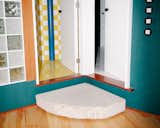
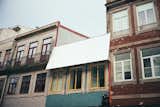
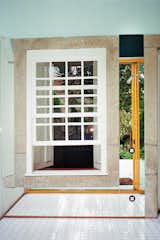
The external facade also received significant attention, transforming its interaction with both the street and the private rear. "Toward the street, the building acquired a reflective hat," an intriguing description that suggests a new, perhaps metallic or mirrored, cap that subtly alters the building’s public presence, reflecting its surroundings and creating a dynamic interplay of light and image. This could be interpreted as a nod to Porto’s often ornate and reflective tiled facades, reimagined in a contemporary idiom. "Toward the back, a new translucent layer mitigates the question of insulation, offering an enclosed balcony on each level and a new mask, made of glass, yellow frames, stripes of mirror, and marble." This intricate rear facade serves a dual purpose: enhancing thermal performance and offering private outdoor spaces, while also creating a complex, multi-layered visual statement. The use of translucent materials filters light, creating soft, diffused interiors, while the combination of glass, vibrant yellow frames, reflective mirror strips, and elegant marble pieces crafts a highly textural and visually stimulating rear elevation. This thoughtful material selection not only addresses practical concerns like insulation and privacy but also contributes to the overarching artistic vision, transforming utilitarian elements into expressive architectural features. The marble, in particular, adds a touch of classic Portuguese material heritage, juxtaposed with the modern glass and metal.
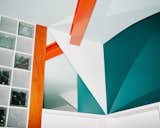
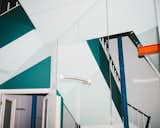
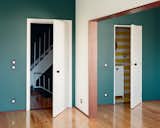
The interior color palette is "let loose," with "each room disassembled into sides of white, light green, and dark blue paint." This partitioning of walls by color creates a dynamic and often surprising visual experience, challenging the monolithic perception of a room’s boundaries. The choices of white provide a clean, expansive backdrop, light green introduces a natural, serene element, and dark blue adds depth and a touch of sophistication. Their strategic application ensures that they are not merely decorative but integral to the spatial redefinition, creating a constantly shifting visual narrative as one moves through the house.
The Art of "Mistakes" and Multiplicity
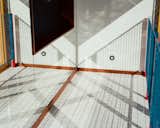
A particularly insightful aspect of Fala Atelier’s design philosophy emerges in their handling of "mistakes" and reflections. The architects state, "Mirrors are applied where the edges do not quite meet. Mistakes result in the multiplicity of reflective surfaces." This candid admission of embracing imperfection, and even leveraging it for aesthetic gain, is a hallmark of truly innovative design. Instead of concealing minor misalignments or challenging junctures, they are highlighted and transformed through the strategic placement of mirrors. This creates a dazzling effect where reflections multiply, blurring the lines between actual space and its illusion. The result is a space that feels "abundant and complex," not through sheer volume or ornamentation, but through a clever manipulation of light, reflection, and perceived depth. The mirrors fragment views, bounce light, and create unexpected visual connections, making small spaces feel larger and adding a dynamic, ever-changing quality to the interiors.
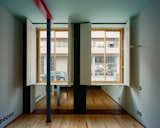
Despite this complexity, the architects emphasize that "every room, fragment, or corner within the house follows the same logic." This underlying coherence ensures that the seemingly disparate elements coalesce into a unified, albeit unconventional, whole. The fragmented project is "taken apart in order to be reassembled with a different system, to suggest a different reading of an existing building." This meta-narrative of deconstruction and reassembly invites inhabitants to engage with the building as an evolving entity, constantly revealing new perspectives. It encourages a critical look at the history embedded in the walls and how new interventions can layer meaning upon it, rather than erasing it.
Implications and Broader Impact
The implications of such a distinctive project extend beyond its immediate boundaries. For the inhabitants, living within this space offers a unique daily experience, one that continuously engages their senses and spatial awareness. The "deliberately disruptive" elements, while potentially inconvenient at first glance, foster a more conscious interaction with the home, transforming mundane routines into moments of architectural appreciation. The play of light on reflective surfaces, the bold demarcation of color, and the clear articulation of structural components mean that the house is never merely a backdrop but an active participant in daily life. This can lead to a more profound connection between the individual and their living environment, encouraging contemplation on the nature of space itself.
Within Porto’s architectural discourse, this project by Fala Atelier serves as a vibrant example of contemporary intervention within a historic urban fabric. While Porto boasts a rich heritage of traditional Portuguese architecture, it is also a city that embraces modernity, as evidenced by structures like Álvaro Siza Vieira’s Faculty of Architecture and Rem Koolhaas’s Casa da Música. Fala Atelier’s work contributes to this progressive dialogue, demonstrating how new architectural expressions can coexist and even enhance existing contexts without resorting to mere imitation or outright demolition. The project will likely be a topic of discussion among local architects, critics, and urban planners, sparking conversations about the role of experimental design in urban regeneration and the balance between functional efficiency and artistic expression. It reinforces Porto’s reputation as a city that fosters architectural innovation. Critically, it could be seen as a challenge to more conservative approaches to renovation, advocating for a bolder, more conceptual engagement with inherited structures.
On a broader scale, the residence contributes to the ongoing evolution of minimalist and conceptual architecture. Fala Atelier’s ability to imbue stark forms and simple materials with profound meaning positions them as leaders in a movement that prioritizes intellectual rigor and spatial poetry over ostentation. Their work encourages other architects to explore the potential of existing buildings, to challenge conventional notions of comfort and convenience, and to embrace the inherent complexities of design. The project’s emphasis on "lines and surfaces," "colors let loose," and the celebration of "mistakes" offers a refreshing alternative to homogenized modern aesthetics, advocating for an architecture that is deeply personal, intellectually stimulating, and ultimately, profoundly human. This approach resonates with a growing global interest in architecture that tells a story, that makes occupants think, and that pushes the boundaries of spatial experience.
In conclusion, the Fala Atelier residence in Porto is more than just a house; it is a meticulously crafted architectural statement. It exemplifies a daring approach to renovation, where structural elements are elevated to sculptural status, and conventional spatial definitions are playfully subverted. Through its vibrant colors, reflective surfaces, and deliberately disruptive interventions, the project invites its occupants and observers alike to embark on a journey of spatial re-discovery. As a testament to Fala Atelier’s innovative vision, this Porto home stands as a significant contribution to contemporary architecture, offering a compelling "different reading" of what a residential space can be, and solidifying the firm’s position at the forefront of avant-garde design. Its enduring impact will be measured not only by its aesthetic appeal but by its capacity to provoke thought and inspire new ways of inhabiting and perceiving our built world.