admin
admin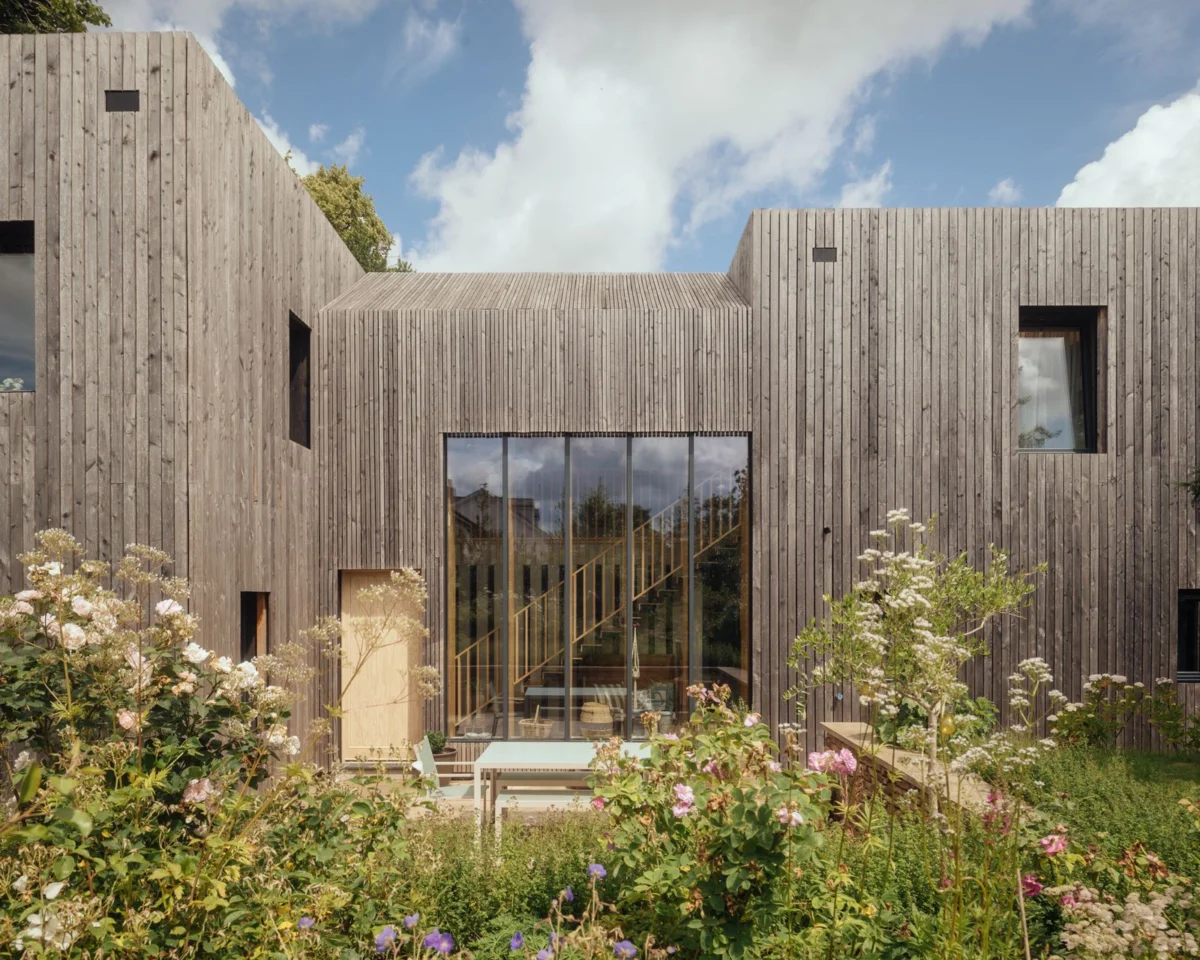
In a remarkable convergence of personal history, innovative design, and rigorous environmental commitment, Orchard House in Cheshire, United Kingdom, stands as a testament to what truly exceptional rural architecture can achieve. This unique dwelling, meticulously crafted by Studio Bark for an environmentally conscious young family, is more than just a home; it is a living narrative embedded within the landscape, embodying principles of sustainability, local sourcing, and deep familial connection. Featured by Dwell.com as a "House We Love," Orchard House transcends conventional residential design, offering a compelling vision for future-proof living within sensitive ecological zones.
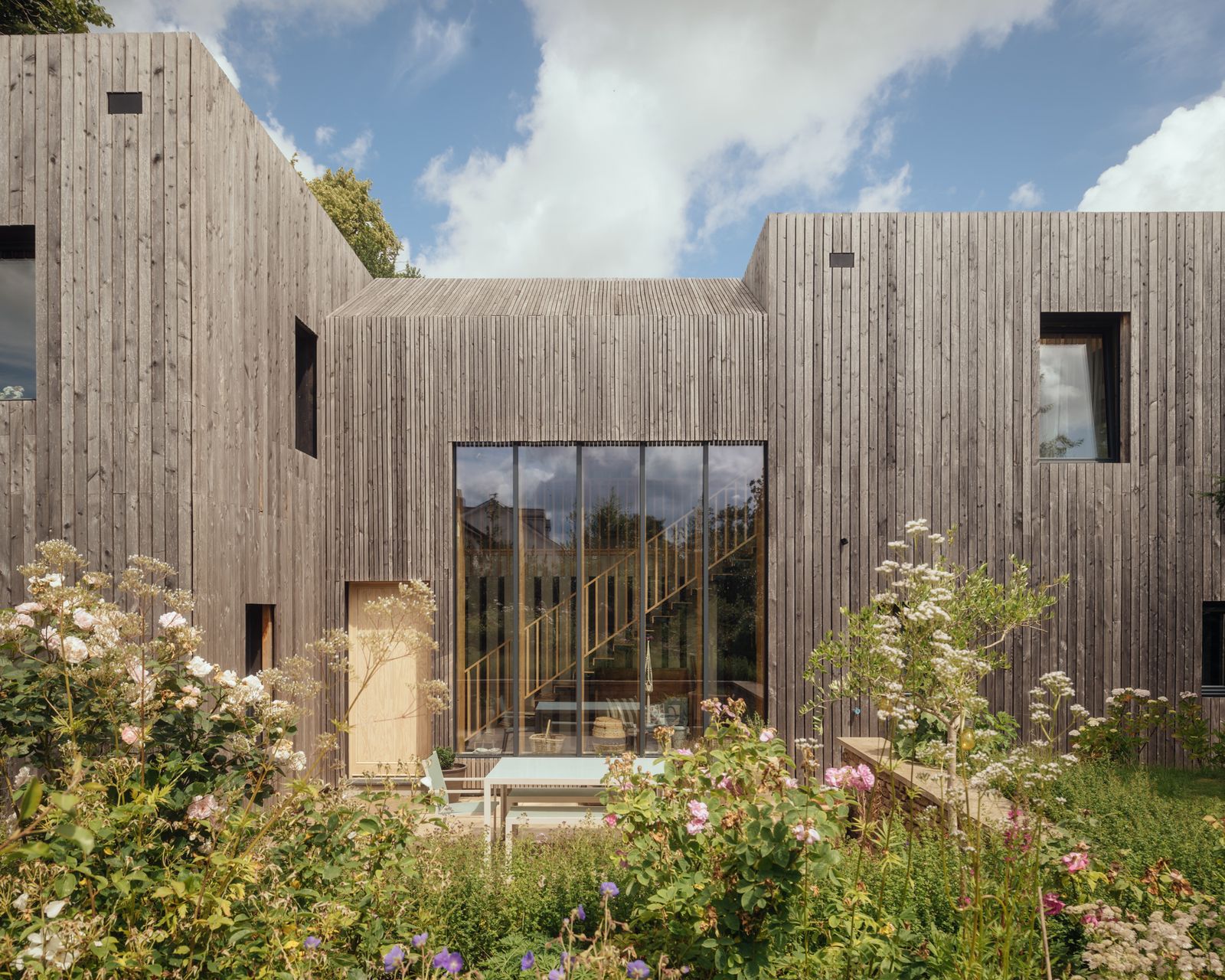
Project Genesis and Deep Personal Roots
The genesis of Orchard House is rooted in a profound sense of place and personal heritage. The home occupies the site of a former orchard, a landscape rich with memories for the client. This was not merely an undeveloped plot but a working orchard where the homeowner spent formative years helping grandparents pick fruit and operate machinery, experiencing firsthand the cyclical rhythms of nature and agricultural life. Four decades later, this cherished land has been revitalized, replanted with local species, and is once again thriving, mirroring the new life nurtured within the house itself. This deep personal connection became the primary wellspring for the design, ensuring the dwelling would not merely sit on the land but become an integral, respectful part of it. The brief from the environmentally conscious family was clear: a modest, highly tailored dwelling that would support everyday life while maintaining an unwavering connection to the land and its ecological health. This ethos guided every decision, from the initial site analysis to the selection of the final finishes.
Architectural Vision and Site-Responsive Design
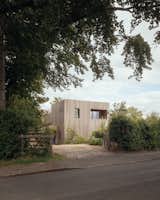
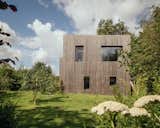
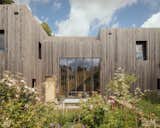
Studio Bark’s architectural response to this rich context is both elegant and pragmatic. From the outset, the design was intrinsically shaped by the site’s unique characteristics, including its topography, microclimate, and most importantly, its breathtaking views. The core architectural concept revolves around two distinct living "cubes" strategically positioned to frame specific vistas. One cube offers expansive eastward views over open fields, inviting the morning light and a sense of boundless space. The other is oriented southwest, providing a more intimate connection to the adjacent woodland. These cubes are ingeniously linked by a pitched-roof, timber-clad "bridge," which serves as a quiet sanctuary for reading and reflection, a serene passage between the public and private realms of the home.
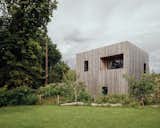
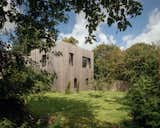
The aesthetic of Orchard House is one of understated sophistication and organic integration. Its asymmetric form introduces a dynamic depth and rhythm, preventing the structure from appearing monolithic or out of place in its rural setting. This form is unified by a striking silvery larch cladding, a material chosen not only for its natural beauty and durability but also for its ability to help the house "bed into its surroundings," softening its presence against the backdrop of the re-established orchard. Practicality is woven into the aesthetic through concealed timber shutters, which offer both passive solar shading during intense summer heat and a sense of security and enclosure in the evenings. As the replanted orchard matures, its branches will increasingly envelop the house, reinforcing the profound living connection to both the family’s history and the revitalized ecosystem.
Navigating the Green Belt: A Planning Triumph
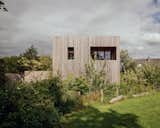
One of the most significant achievements of the Orchard House project lies in its successful navigation of stringent planning regulations, particularly its location within the Green Belt. The Green Belt policy in the United Kingdom is designed to prevent urban sprawl by maintaining open land, typically restricting new development. Projects within these areas face an exceptionally high bar for approval, often requiring "very special circumstances" to be demonstrated.
Studio Bark, leveraging their extensive experience with isolated rural homes, secured planning approval in 2016 under Paragraph 79 of the National Planning Policy Framework (NPPF), a policy now updated to Paragraph 84. This specific paragraph permits new isolated homes in the countryside only if they are of "exceptional quality or innovative design," demonstrating "outstanding architectural quality or innovative design that significantly raises the standard of design in the area," or are "sensitive to the defining characteristics of the local area." The planning committee meticulously evaluated the proposal and concluded that Orchard House met the rigorous "Very Special Circumstances Test" required for Green Belt sites. This approval was a direct acknowledgment of both the unparalleled quality of the architectural design and the robust environmental backbone underpinning the entire project. The success of Orchard House under Paragraph 79/84 serves as a crucial precedent, demonstrating that environmentally exemplary and architecturally distinguished designs can indeed overcome the formidable challenges of Green Belt development, offering a pathway for truly sustainable rural innovation.
Sustainable Design and Environmental Strategy: A Holistic Approach
The environmental strategy of Orchard House is built on a foundation of simplicity, deep site-specific understanding, and adherence to leading sustainable building standards. The architects initiated the design process with comprehensive early studies, mapping crucial environmental factors such as local wind patterns, sun paths, and existing biodiversity features. This data-driven approach ensured that the home’s orientation, window placement, and overall massing were optimized for passive performance, aiming for maximum comfort with minimal energy demand.
Central to its high-performance credentials is the application of Passivhaus Planning Package (PHPP) principles. Passivhaus, a globally recognized standard for energy-efficient construction, prioritizes dramatically reducing a building’s ecological footprint. For Orchard House, this translated into meticulously optimized U-Values (a measure of heat transfer through a building element), a significant reduction in thermal bridging (points where heat can easily escape or enter the building envelope), and sophisticated management of solar gain. By minimizing heat loss in winter and preventing overheating in summer, the house achieves a remarkably stable internal climate with very little active heating or cooling.
Beyond operational energy, Studio Bark also undertook extensive material life cycle studies to reduce embodied carbon – the carbon dioxide emissions associated with the extraction, manufacture, transportation, and construction of building materials. This commitment to low-impact materials extends to their ongoing life cycle carbon emissions, ensuring that the environmental benefits persist throughout the building’s lifespan. The result is a home that not only consumes minimal energy during its operation but also has a significantly lower carbon footprint from its construction. The central bridge element of the house ingeniously integrates a user-controlled core for heat and ventilation management, allowing occupants to fine-tune their internal environment. Furthermore, the project incorporates monitoring sensors and occasional thermal imaging to provide ongoing performance checks. This continuous feedback loop enables refinements that have further optimized the home’s energy efficiency, significantly reducing heat demand, improving internal air quality, and maintaining balanced temperatures year-round.
Materiality and Local Sourcing: A Story of Place
The material palette of Orchard House is a direct reflection of its sustainable and contextual philosophy. The entire timber-framed home adheres to a materials strategy centered on natural, locally sourced elements. This approach not only reduces the environmental impact associated with transportation and industrial processing but also grounds the design firmly in its local setting, creating an authentic connection to the Cheshire landscape.
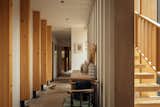
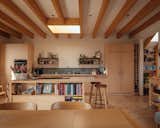
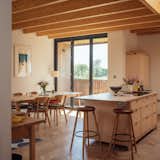
The silvery larch cladding, chosen for its aesthetic and performance, softens the building’s form into the environment, allowing it to age gracefully and blend further into the natural surroundings over time. Inside, a truly poignant example of local sourcing and material reuse is found in the parquet flooring. This beautiful and durable flooring is crafted from an ash tree that was regrettably force-felled from the site due to ash dieback (Hymenoscyphus fraxineus), a destructive fungal disease affecting ash trees across Europe. Rather than discarding the timber, Studio Bark transformed it into a core element of the home’s interior, literally rooting the house in its own ground and giving new life to a tree that was lost. This particular detail underscores the project’s deep respect for its site and its commitment to resourcefulness. The carefully selected, low-impact materials contribute to calm, tactile interiors, fostering a sense of warmth, natural beauty, and well-being for the family within.
Broader Implications for Sustainable Architecture
Orchard House is more than an individual dwelling; it serves as a powerful exemplar for the future of sustainable architecture, particularly in sensitive rural landscapes. Its successful planning approval under Paragraph 79/84 of the NPPF offers a crucial blueprint for other architects and developers aspiring to create high-quality, environmentally responsible homes in protected areas. It demonstrates that stringent planning policies, when met with genuinely outstanding design and robust environmental credentials, can be navigated successfully, encouraging innovation rather than stifling it.
The project’s holistic approach to sustainability, encompassing Passivhaus principles, embodied carbon reduction, and extensive site-specific analysis, provides a replicable model for minimizing environmental impact throughout a building’s lifecycle. By championing local and natural materials, including salvaged timber, Orchard House highlights the potential for creating truly unique and meaningful spaces that are deeply connected to their origins. Its ongoing performance monitoring further underscores a commitment to continuous improvement and sets a benchmark for post-occupancy evaluation in sustainable building. In an era where climate change and ecological preservation are paramount, Orchard House offers a compelling vision: a dwelling that is not only a comfortable and beautiful home but also a responsible, responsive, and regenerative addition to its environment.
Conclusion: A Harmonious Future
Orchard House in Cheshire is a truly remarkable space that seamlessly weaves together family legacy, architectural innovation, and environmental stewardship. Studio Bark has not merely designed a house; they have created a thoughtful intervention that respects its past, thrives in its present, and offers a sustainable path for its future. By addressing the challenges of Green Belt development with an exceptional design, embracing cutting-edge environmental strategies like Passivhaus, and employing a deeply contextual materials strategy, Orchard House stands as a beacon of what is possible when architects, clients, and planning authorities collaborate with a shared vision for a more harmonious built environment. It is a home that supports everyday life while remaining profoundly connected to the land, setting a new standard for sustainable living in the British countryside and inspiring a new generation of environmentally conscious design.