admin
In the spring of 2025, Ali Hayton, the proprietor of the International Marketplace, Point Roberts’ sole grocery store, delivered a stark and urgent message to Democratic Senator Patty Murray and a consortium of Washington state business owners. Gathered to discuss the burgeoning trade tensions with Canada, Hayton articulated a grim reality: the escalating economic friction threatened the very existence of her business. Should the International Marketplace shutter its doors, it would not only eliminate the community’s only source of fresh provisions but also plunge the isolated enclave’s 1,200 year-round residents into a precarious state of food insecurity. This dire warning underscored the profound human cost of international trade disputes on vulnerable border communities.
The Unique Geopolitical Anatomy of Point Roberts
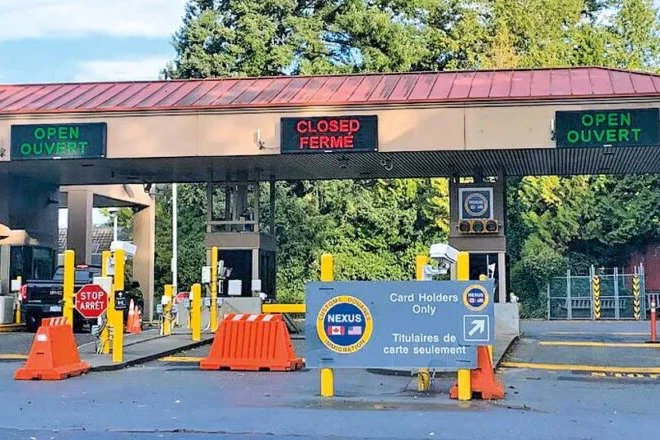
Point Roberts is not merely a border town; it is a geographic anomaly, a five-square-mile American exclave of Washington State, precariously appended to the southern tip of the Tsawwassen Peninsula. Situated just 20 miles south of Vancouver, British Columbia, its terrestrial access is exclusively through Canadian territory. This peculiar geopolitical arrangement was a consequence of the 1846 Oregon Treaty, which arbitrarily demarcated the U.S.-Great Britain border along the 49th parallel, bisecting the peninsula and inadvertently isolating this sliver of American soil. Affectionately known as "the Point" by its residents, its proximity to Canada has historically dictated its economic and social fabric. For generations, businesses in Point Roberts, including the International Marketplace, have thrived on a symbiotic relationship with Canadian visitors, whose steady stream of cross-border commerce has been the lifeblood of the local economy. As Hayton succinctly put it, "Canadian customers are part of who we are and part of who we have always been."
A Decade of Disruption: From Pandemic to Protectionism
The delicate equilibrium sustaining Point Roberts’ unique economy began to fray not solely due to the recent trade war but also due to a preceding global crisis. The COVID-19 pandemic, which commenced in early 2020, instigated an unprecedented 20-month closure of the U.S.-Canada border to non-essential travel. While essential goods, including those destined for the International Marketplace, continued to cross, the absence of Canadian shoppers—who often comprised a majority of customers, particularly on weekends—dealt a devastating blow. Local businesses experienced precipitous declines in revenue, and the community braced for an uncertain future.
"In 2024, things were starting to look up again," Hayton recalled, reflecting on the period following the border’s reopening. A tentative recovery was underway, signaling a potential return to normalcy for the beleaguered enclave. However, this fragile rebound was abruptly curtailed with the political shifts that commenced in January 2025.
The Return of Protectionism: Trump Administration’s Trade Policies
The election of Donald Trump in January 2025 marked a significant turning point in U.S.-Canada relations. Reinstating a protectionist agenda, the Trump administration systematically began imposing tariffs on Canadian goods. Beyond economic measures, the rhetoric escalated, with President Trump reportedly threatening to annex Canada as the 51st state, a pronouncement that further inflamed diplomatic tensions and fueled anti-American sentiment north of the border. This aggressive posture, reminiscent of his previous term, effectively dismantled decades of established cross-border goodwill and economic integration.
The situation intensified dramatically in July 2026, when President Trump signed executive orders mandating a 50 percent increase in tariffs on a broad spectrum of Canadian imports. These punitive duties targeted key agricultural and consumer products, including beer, wine, honey, various fruits, and dairy products. The move was widely seen as a direct assault on Canada’s vital export sectors. In August 2026, efforts to de-escalate the trade dispute proved futile, as high-level trade talks between the U.S. and Canada collapsed without resolution. The breakdown of negotiations signaled a deepening impasse, leaving businesses like Hayton’s in a state of heightened uncertainty.
Economic Fallout: A Chilling Effect on Cross-Border Commerce
The immediate and profound impact of these policies was a sharp decline in Canadian travel to the United States. A February 2026 survey conducted by the Bank of Canada revealed a staggering 25 percent reduction in cross-border trips by Canadians in 2025 compared to 2024, amounting to 10 million fewer visits. This collective show of national unity and economic patriotism among Canadians, spurred by resentment over the tariffs and the annexation rhetoric, directly translated into empty parking lots and struggling businesses in American border communities.
For the International Marketplace, this meant a nearly 50 percent reduction in business. Hayton’s grocery store, once a bustling hub for both American and Canadian shoppers, now grappled with significantly diminished foot traffic and revenue. The symbolic display of side-by-side Canadian and American flags at its entrance, once a testament to cross-border amity, now felt like a poignant reminder of a bygone era.
Other local businesses echoed Hayton’s distress. Hansen, owner of The Pier and the Saltwater Café, reported a 40 percent decline in her customer base, a cumulative effect of the pandemic and the ongoing trade dispute. Her attempts to mitigate the damage by accepting Canadian dollars at a favorable exchange rate underscore the desperation gripping the local business community.
The Intricate Supply Chain and Food Security Crisis

Point Roberts’ food system has always been uniquely vulnerable. Before the International Marketplace’s first iteration opened in 1982, residents relied on small corner shops or undertook arduous journeys to Canada or Bellingham, Washington, for groceries. The Marketplace provided essential access to fresh meat, dairy, and frozen foods, eliminating the need for daily international crossings for basic necessities.
Today, the Marketplace, spanning over 33,000 square feet, remains the largest commercial entity in Point Roberts and its sole source of fresh produce. The enclave lacks any significant commercial agricultural production or market gardens, making it entirely dependent on external supply chains. However, stocking the store presents an extraordinary logistical challenge. Goods sourced from a U.S.-based wholesaler must traverse the U.S./Canada border, travel through Canadian territory, and then re-enter the U.S. in Tsawwassen, British Columbia, before finally reaching Point Roberts. While these "in transit" goods typically bypass duties, the inherent complexity and cost are substantial.
"I would love to have fresh produce delivered every single day, but when that truck costs me $1,000 to come across the border, I can’t do it," Hayton lamented. The prohibitive cost of transportation, exacerbated by reduced customer volume, forces Hayton to limit fresh food orders to every two or three days, potentially compromising the freshness and variety available to residents. She has also had to cut operating hours, a measure that further squeezes an already tight budget and reduces convenience for the community. Hayton’s unwavering commitment, despite these immense pressures, stems from a deep sense of responsibility: "A mom wakes up at 8:30 in the morning. She’s out of milk. Does she really have to drive to another country and get milk, or am I going to be there?"
The Food Bank Connection: A Shared Vulnerability
The crisis at the International Marketplace has profound implications for the Point Roberts Food Bank (PRFB), which serves nearly five percent of the enclave’s population without requiring proof of income. Dave Lee, president of the PRFB’s board of directors and a permanent resident who consciously shops at the Marketplace to support it, highlights the critical interdependence. The food bank, like the grocery store, navigates complex cross-border logistics, collecting provisions from Bellingham, Washington, and transporting them through two border crossings to Point Roberts. While "in transit" regulations exempt them from duties, the operational burden is significant.
Crucially, the PRFB relies heavily on the International Marketplace, which generously shares its refrigeration and freezer space for perishable items such such as cheese, eggs, and fresh vegetables. "If it went out of business, say next month, we’d have to scramble and try and figure out what we’re going to do," Lee stated, underscoring the immediate threat to the food bank’s ability to serve its vulnerable clients.
Recognizing this critical vulnerability, the PRFB embarked on a proactive strategy. In 2023, it acquired property and, in July 2026, commenced construction of a dedicated warehouse facility. This new building aims to centralize inventory management and, critically, reduce the food bank’s reliance on the grocery store’s limited infrastructure. While this initiative fortifies the PRFB’s operational resilience, it does not address the fundamental challenge of declining customer traffic that imperils all businesses in Point Roberts.
Advocacy and Grassroots Diplomacy
In response to the escalating crisis, local stakeholders have engaged in various efforts to mitigate the damage and advocate for their community. Senator Patty Murray, after hearing Hayton’s compelling testimony in the spring of 2025, expressed deep concern over the detrimental impact of trade disputes on border communities. Her office acknowledged the unique vulnerability of Point Roberts and pledged to convey these urgent concerns to the federal administration, emphasizing the need for diplomatic solutions that protect local economies and ensure food security. However, the subsequent collapse of U.S.-Canada trade talks in August 2026, followed by Canada’s vow to implement dollar-for-dollar retaliatory tariffs, indicated that such advocacy had yet to yield a policy shift. Canadian officials, reacting to what they perceived as unilateral and unjustified tariffs, reaffirmed their commitment to defending national economic interests, further entrenching the trade standoff.
The Point Roberts Chamber of Commerce, led by President Wayne Lyle, has also been actively working to rebuild cross-border connections and attract visitors. "We advertise in nearby Delta, B.C., and into the Bellingham and Seattle areas," Lyle explained, highlighting efforts to draw both Canadian and American tourists. While acknowledging the lack of local produce, Lyle maintains a cautious optimism regarding the community’s overall food supply, noting that residents could, if necessary, access groceries in nearby Tsawwassen. However, this option still entails an international border crossing, underscoring the inherent inconvenience and the irreplaceable role of the Marketplace.
Despite the political gridlock, Ali Hayton continues her own form of grassroots diplomacy. She had hoped for a high-profile public relations event at the border, bringing together officials from British Columbia and legislators from Washington State to underscore the importance of cross-border harmony. When this did not materialize, she empowered her staff to lead the charge. "When [Canadians] come down, we show them that we’re the same people we’ve always been [despite political tensions]," Hayton instructed. "We still treat everybody the way we want to be treated and provide the same excellent services." This emphasis on person-to-person relationship building, she believes, is the most effective, and perhaps only, way to salvage her business and continue to feed the residents of Point Roberts.
Broader Implications and an Uncertain Future
The plight of Point Roberts serves as a vivid microcosm of the broader ramifications of protectionist trade policies on highly integrated border regions. While national governments engage in high-stakes economic warfare, it is often small, unique communities like Point Roberts that bear the brunt of the collateral damage. The erosion of cross-border goodwill, the disruption of established supply chains, and the threat to local livelihoods and food security illustrate the profound human cost of diplomatic breakdowns.
Economists and trade analysts have consistently warned that such policies disproportionately harm communities reliant on cross-border commerce, leading to economic contraction and social dislocation. For Point Roberts, the ongoing trade war not only exacerbates the challenges initiated by the pandemic but also threatens to permanently alter its demographic and economic landscape. The potential closure of the International Marketplace would transform a community’s daily convenience into a daily ordeal, requiring residents to navigate international borders for basic sustenance, eroding their quality of life, and potentially driving residents away.
As the U.S.-Canada trade dispute lingers, Point Roberts remains a community on the edge, a poignant reminder of how global politics can directly impact local survival. The determination of its residents and business owners to maintain their way of life, despite external pressures, underscores a resilience born from isolation. Yet, without a resolution to the larger trade conflict, the future of this unique American enclave, and its ability to feed itself, remains precariously uncertain.