admin
admin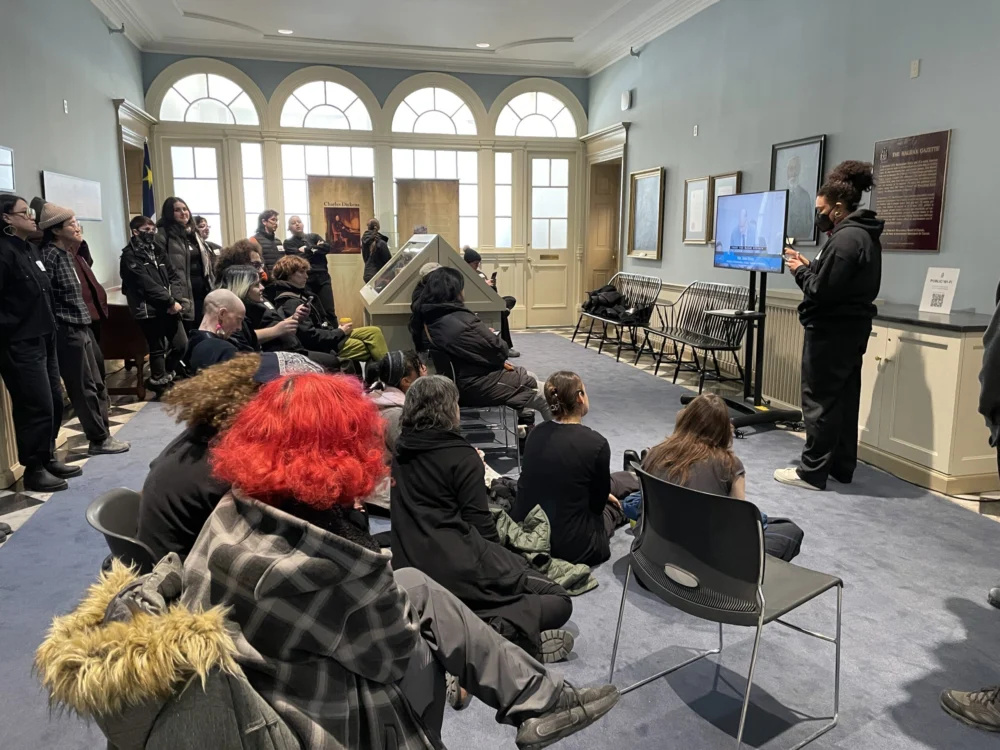
Nova Scotians have escalated their unified and fervent protests against the provincial budget, which has triggered widespread frustration due to significant cuts, particularly those affecting Black and Indigenous communities across the province. The culmination of a week of diverse demonstrations saw a powerful "black out" protest staged within Province House on Friday, March 6, 2026, where participants donned all-black attire as a stark symbol of solidarity and mourning for the vital community programs now facing reduction or elimination. This latest demonstration underscored a deepening chasm between the government’s fiscal priorities and the pressing needs of its most vulnerable populations.
A Week of Unrest: Halifax Becomes a Hub of Dissent
The atmosphere in Halifax has been charged with dissent throughout the week leading up to Friday’s dramatic "black out." The provincial legislature, typically a site of measured debate, transformed into a focal point for public outcry, drawing hundreds of citizens from various sectors. Early in the week, the artistic community, a vibrant cornerstone of Nova Scotia’s cultural identity, mobilized in large numbers, protesting cuts to arts funding that many fear will stifle creativity and economic contributions within the sector. This was quickly followed by a substantial gathering of Indigenous and environmental groups, who voiced grave concerns over budget reductions impacting land stewardship, cultural preservation initiatives, and programs aimed at addressing climate change and environmental justice. These preceding rallies set a precedent for organized public resistance, demonstrating a broad-based disapproval of the government’s fiscal strategy.
The "black out" protest on Friday was meticulously organized and deeply symbolic. People filled not only the public gallery overlooking the legislative chamber but also spilled into the designated overflow areas, creating a sea of black that conveyed a profound sense of loss and collective mourning. This visual statement was a deliberate act to highlight the perceived erosion of support for communities that have historically faced systemic disadvantages. The choice of black attire symbolized a "black out" of essential services and opportunities, particularly for Black and Indigenous Nova Scotians, whose programs have been hard-won through generations of advocacy and struggle. Organizers communicated that the action was a direct response to the government’s perceived disregard for the tangible human impact of its budget decisions.

The 2026-27 Provincial Budget: Austerity Amidst a Swelling Deficit
At the heart of the provincial unrest is Nova Scotia’s 2026-27 budget, tabled with the stated aim of reining in public spending amidst a projected deficit of roughly $1.2 billion. To address this substantial fiscal gap, the government has embarked on an austerity measure that includes reducing or outright eliminating more than 280 grants spread across multiple government departments, aiming to save approximately $130 million. Premier Tim Houston and his Progressive Conservative government have consistently defended these cuts as necessary, framing them as tough but essential decisions required to ensure the province’s long-term financial stability and sustainability. They argue that a responsible government must make difficult choices to avoid burdening future generations with unsustainable debt, emphasizing that every department has been asked to find efficiencies.
However, critics contend that the budget’s approach is not merely about efficiency but rather a blunt instrument that disproportionately impacts vital social programs and community-led initiatives. While the government highlights the overall deficit figure as justification, many residents and advocacy groups argue that the specific targets of these cuts reveal a troubling set of priorities. The breadth of the affected programs is extensive, encompassing areas from education and healthcare support to environmental protection and cultural development. The total savings, while significant, are seen by many as insufficient to justify the potential social fallout from dismantling established community support structures.
Disproportionate Impact: Black and Indigenous Communities Bear the Brunt
A central point of contention and the driving force behind Friday’s "black out" protest is the perceived disproportionate impact of these budget reductions on Black and Indigenous communities. The cuts directly affect a wide array of programs that are critical for cultural preservation, economic development, youth mentorship, and health and wellness within these historically marginalized groups. For instance, scholarships designed to increase access to post-secondary education for Black and Mi’kmaw students are at risk, potentially reversing years of progress in educational equity. Arts funding specifically allocated to Indigenous and African Nova Scotian artists and cultural organizations, which play a crucial role in maintaining heritage and fostering community pride, also face significant reductions.
Kay Macdonald, the program director at The Youth Project, an organization dedicated to supporting LGBTQ+ youth, passionately articulated the severity of these cuts to reporters. Her statement, "the math ain’t mathing," succinctly captured the sentiment that the government’s fiscal narrative does not align with the real-world consequences. Macdonald emphasized the historical struggle for these programs, stating, "People fought really hard for these programs to exist, particularly in an African Nova Scotian context. I know my community fought really hard for these things to exist." She underscored that "These budget cuts are not arbitrary. They directly impact people, and they directly impact the people that I love. And for politicians to act like they will never affect them really creates a divide between the people and the people in power." This sentiment resonates deeply within communities that have long experienced systemic underfunding and neglect, where such programs are not mere amenities but essential lifelines for progress and survival.

A Question of Priorities: SailGP vs. Community Support
A significant point of public outrage and a recurring theme among protestors is the stark contrast between the cuts to essential community services and continued provincial funding for certain high-profile events. Macdonald, along with many others, directly questioned the government’s priorities, highlighting the allocation of $1 million in provincial money for the SailGP event. This international sailing competition, while potentially boosting tourism and offering economic benefits, is widely perceived as a luxury expenditure when compared to the foundational support provided by the now-slashed community grants.
"When we see cuts coming to African Nova Scotian communities, when we [see] cuts coming to Mi’kmaw communities, when we [see] cuts coming down on disability programs and accessibility and the student bus pass pilot program, what does that say when you take money away from those communities?" Macdonald challenged. Her remarks encapsulate a widespread belief that the government is prioritizing events that offer broad, often transient, economic visibility over sustainable, grassroots community development. The student bus pass pilot program, for example, aimed to reduce transportation barriers for low-income students, directly impacting accessibility and educational equity – a stark contrast to a high-cost international sporting event. This perceived misallocation of funds has fueled accusations of a disconnect between the government’s rhetoric of fiscal responsibility and its actual spending choices, further eroding public trust, particularly among those directly affected by the cuts.
Voices from the Legislature: Opposition and Community Leaders Respond
The protests have not gone unnoticed within the legislative chambers. Opposition leaders have been vocal in their condemnation of the budget and their support for the protesting communities. NDP Leader Claudia Chender has been a prominent voice, expressing her pride in the resolve shown by Nova Scotians. "The cuts that are being made in this budget will have an enormous impact on people’s lives. And so I’m always glad to see people paying attention and using their voice," she stated. Chender and her caucus have consistently argued that the budget is short-sighted and fails to address the underlying systemic issues facing the province, instead opting for cuts that will harm the most vulnerable. They have called for a more equitable and strategic approach to fiscal management, one that prioritizes social well-being alongside economic health.
Beyond the formal opposition, numerous community leaders and advocacy groups have amplified the calls for reconsideration. Representatives from various Black Nova Scotian organizations have released statements detailing the potential ripple effects of reduced funding on cultural centers, mentorship programs, and initiatives aimed at addressing systemic racism. Similarly, Mi’kmaw chiefs and community leaders have voiced concerns that cuts to programs supporting Indigenous language, culture, and self-governance initiatives undermine reconciliation efforts and hinder the community’s ability to thrive on its own terms. The consensus among these diverse voices is that the budget, in its current form, represents a step backward for equity and inclusion in Nova Scotia.

The Government’s Stance and Future Outlook
Despite the mounting public pressure and vocal opposition, Premier Tim Houston and his government have remained steadfast in their defense of the 2026-27 budget. Their stance reiterates that the budget is a carefully considered plan necessary to address the province’s significant financial challenges and ensure fiscal health for future generations. While acknowledging the difficult nature of the decisions, the Premier has consistently maintained that these measures are part of a broader strategy to achieve long-term sustainability and reduce reliance on a deficit-spending model. Government spokespersons have also indicated that while public feedback is valued, the core framework of the budget is not expected to undergo substantial changes.
The legislative process for budget approval will continue in the coming weeks. Traditionally, budgets undergo detailed scrutiny and debate, but the governing party’s majority typically ensures passage with minimal alterations to its core components. As of the latest update, there are "no signs of changes on the horizon," suggesting the government is prepared to weather the criticism and proceed with its fiscal plan as presented. This firm resolve indicates a potential for continued tension between the provincial administration and a significant segment of the population, particularly those directly impacted by the funding reductions.
Broader Socio-Economic Implications
The implications of these budget cuts extend far beyond the immediate financial impact on specific programs. Sociologists and economic analysts suggest that such widespread austerity measures, particularly those affecting marginalized communities, can have profound long-term socio-economic consequences. Reduced funding for cultural and community programs can lead to an erosion of social cohesion, diminish opportunities for youth development, and exacerbate existing inequalities. For Black and Indigenous communities, where programs often serve as critical infrastructure for identity, empowerment, and self-determination, these cuts could stifle progress in areas like mental health support, employment equity, and cultural revitalization.
Economically, while the government aims for savings, the long-term cost of neglecting social determinants of health, education, and economic participation can be far greater. A decline in accessibility programs, for example, could lead to increased strain on healthcare services and a reduction in workforce participation. Cuts to arts and culture, while seemingly discretionary, often impact local economies by reducing tourism appeal, stifling creative industries, and diminishing the overall quality of life that attracts and retains residents. The cumulative effect of these reductions could, paradoxically, hinder the very economic growth and stability the government purports to achieve. Moreover, the perceived erosion of trust between the government and its citizens, especially within historically marginalized groups, could complicate future collaborative efforts and foster deeper societal divisions.

Historical Context of Systemic Underfunding
It is crucial to view these current budget cuts through the lens of Nova Scotia’s historical context, particularly concerning Black and Indigenous communities. Both groups have long faced systemic discrimination, economic marginalization, and chronic underfunding of essential services. For African Nova Scotians, descendants of loyalists, maroons, and enslaved people, communities have historically struggled for recognition and equitable resources. Similarly, Mi’kmaw communities, the original inhabitants of this land, have endured the legacy of colonialism, residential schools, and treaty violations, leading to ongoing disparities in health, education, and economic opportunity. In this context, community-led programs are not merely supplementary services; they are often the primary means by which these communities address historical injustices, preserve their unique cultures, and build self-sufficiency. Therefore, any reduction in funding is not just a budget cut but a perceived setback in the ongoing struggle for equity and justice.
Looking Ahead: The Path to Budget Approval and Community Advocacy
As the provincial budget continues its journey through the legislative process, the spotlight remains firmly on Province House and the streets of Halifax. The protests and expressions of dissent are expected to continue, serving as a constant reminder to the government of the human cost of its fiscal decisions. Community leaders have vowed to maintain their advocacy efforts, exploring all available avenues to pressure the government to reconsider or mitigate the impact of the cuts. This could involve further public demonstrations, direct lobbying of Members of the Legislative Assembly (MLAs), and sustained media campaigns to keep the issue in the public consciousness.
The coming weeks will be critical in determining the immediate future of hundreds of community programs and the long-term relationship between the Nova Scotia government and its diverse populations. The challenge for the province lies not only in balancing its books but also in demonstrating a commitment to social equity and justice, ensuring that fiscal responsibility does not come at the expense of its most vulnerable citizens. The powerful collective voice of Nova Scotians, particularly those from Black and Indigenous communities, has made it clear that they are paying attention and will continue to demand accountability from those in power.