admin
admin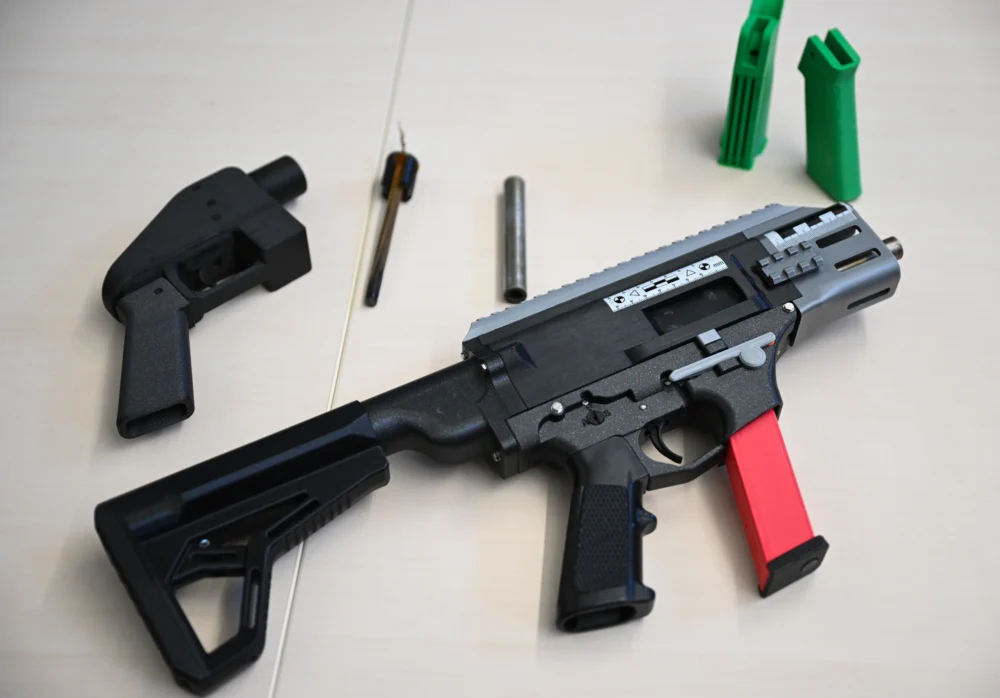
Joseph Wayne Bowser, a 36-year-old resident of Nova Scotia, has been sentenced to six years in prison following his conviction for the illicit manufacturing of 3D firearms and an array of related weapons offenses. The significant sentence, handed down on January 23, 2026, and publicly announced by the Canadian Border Services Agency (CBSA) on March 13, 2026, underscores Canada’s firm stance against the burgeoning threat posed by privately manufactured and untraceable weapons. The case represents a crucial victory for law enforcement agencies in their ongoing efforts to combat the proliferation of "ghost guns" and the criminal networks that facilitate their creation and distribution.
Details of the Conviction and Sentencing

Bowser’s conviction encompassed a comprehensive list of serious charges, reflecting the multifaceted nature of his illicit activities. He was found guilty of three counts of weapons trafficking and manufacturing, directly addressing his involvement in the production and potential distribution of these dangerous devices. Additionally, he faced one count of possession of computer data pertaining to a firearm, highlighting the digital aspect of 3D-printed weapon manufacturing, where blueprints and schematics are often downloaded or created. Further charges included one count of altering a non-prohibited cartridge magazine into a prohibited device, indicating an intent to enhance the destructive capacity of firearms, and three counts of possession of a firearm contrary to a prohibition order. The latter charge suggests Bowser was already legally barred from owning firearms, adding another layer of gravity to his offenses.
The six-year custodial sentence is expected to serve as a significant deterrent, sending a clear message to individuals contemplating similar illegal activities. The judiciary’s decision reflects the severe public safety risks associated with the manufacturing and distribution of untraceable firearms, which circumvent established gun control measures and can easily fall into the hands of prohibited individuals or organized crime groups.
Chronology of a Complex Investigation

The intricate investigation that ultimately led to Bowser’s conviction began over two years prior to his sentencing, showcasing the persistent and collaborative efforts of multiple law enforcement agencies.
- March 6, 2024: Initial Interception: The initial breakthrough occurred when the CBSA’s team in the Toronto area intercepted a suspicious package. This package, identified as containing a critical firearm component known as a fire control unit, originated from China and was destined for an individual in Dartmouth, Nova Scotia. Fire control units are essential components in the operation of a firearm, responsible for housing the firing pin, hammer, and trigger mechanism. Their importation without proper authorization is strictly prohibited in Canada.
- Intelligence Referral: Recognizing the serious implications of such a seizure, the evidence and intelligence gathered by the CBSA were promptly referred to the Royal Canadian Mounted Police (RCMP) / Halifax Regional Police Integrated Gun and Drug Unit. This specialized unit is designed to pool resources and expertise from both federal and municipal police forces to tackle complex investigations involving firearms and narcotics.
- Joint Operation and Controlled Delivery: CBSA investigators in Halifax then joined forces with the Integrated Gun and Drug Unit, initiating a joint operation. This collaboration culminated in a controlled delivery of the intercepted package. A controlled delivery is a law enforcement technique where an illegal or suspicious consignment is allowed to proceed to its destination under surveillance, enabling authorities to identify and apprehend the recipient and potentially uncover broader criminal networks.
- Arrest and Search Warrants: Following the controlled delivery, law enforcement executed search warrants at two separate residences. These operations led to the arrest of Joseph Wayne Bowser and the collection of further critical evidence.
- Further Investigation and Analysis: The subsequent phase of the investigation, spearheaded by the RCMP/Halifax Regional Police Integrated Gun and Drug Unit, involved a meticulous analysis of the seized evidence. This detailed examination confirmed that Bowser was not merely receiving illegal firearm parts but was actively involved in the manufacturing of 3D firearms. This determination was crucial, elevating the charges from mere possession to the more serious offense of manufacturing and trafficking.
- January 23, 2026: Sentencing: After a comprehensive legal process, Joseph Wayne Bowser was formally sentenced to six years in prison.
- March 13, 2026: Public Announcement: The CBSA issued a public statement, detailing the successful outcome of the investigation and the resulting sentence, underscoring the importance of border security and inter-agency cooperation in safeguarding Canadian communities.
Understanding the Threat: 3D-Printed Firearms and ‘Ghost Guns’
The case of Joseph Wayne Bowser casts a spotlight on a growing concern for law enforcement globally: the rise of 3D-printed firearms, often referred to as "ghost guns." These weapons pose unique challenges to traditional gun control efforts and public safety.

- Definition and Characteristics: A "ghost gun" is a privately manufactured firearm that lacks a serial number, making it untraceable by law enforcement. While not all ghost guns are 3D-printed, the term is increasingly associated with weapons produced using additive manufacturing technologies. 3D-printed firearms are typically made from readily available materials like polymers (plastics) or, in more sophisticated designs, combinations of plastic and metal components. They are created using digital blueprints or Computer-Aided Design (CAD) files, which can often be found and downloaded from the internet.
- Evasion of Regulation: The primary concern with ghost guns is their ability to bypass conventional firearms regulations. Since they are not manufactured by licensed companies, they do not undergo background checks, serial numbering, or registration processes. This makes them attractive to individuals prohibited from owning firearms due as a result of criminal records, mental health issues, or other legal restrictions.
- Accessibility and Proliferation: The increasing affordability and accessibility of 3D printers, coupled with the widespread availability of digital schematics, have lowered the barrier to entry for firearm manufacturing. Individuals with basic technical skills can, in theory, produce functional firearms in their homes, outside the purview of regulatory oversight. This creates a challenging environment for law enforcement attempting to track and interdict these weapons.
- Components and Hybrid Designs: While some 3D-printed guns can be entirely plastic (and thus difficult to detect by metal detectors), many hybrid designs incorporate crucial metal components, such as barrels, firing pins, or springs, often sourced from traditional firearms or other commercially available items. The fire control unit intercepted in Bowser’s case is a prime example of such a critical component that can be integrated into a largely 3D-printed frame.
Canada’s Legal Framework and Response
Canada has progressively strengthened its firearms legislation to address emerging threats, including those posed by privately manufactured firearms.
- Bill C-21 and Prohibitions: The federal government’s Bill C-21, which received Royal Assent in 2023, significantly bolstered Canada’s gun control regime. A key aspect of this legislation is the explicit prohibition on the manufacture, sale, and importation of "ghost guns" and 3D-printed firearm frames and receivers. This includes components that can be readily adapted to create a functional firearm. The legislation aims to close loopholes that might have previously allowed for the legal creation of untraceable weapons.
- Strict Penalties: The penalties for offenses related to the manufacturing, trafficking, and possession of prohibited firearms, including 3D-printed ones, are severe. Bowser’s six-year sentence reflects the gravity with which the Canadian justice system views these crimes.
- Border Security: The CBSA plays a critical role as Canada’s first line of defense. Its mandate includes intercepting illegal goods, including firearms and their components, at points of entry. The successful interception in Toronto highlights the agency’s vigilance and sophisticated intelligence capabilities in detecting contraband arriving via international couriers.
- Inter-Agency Collaboration: The Bowser case is a testament to the effectiveness of integrated law enforcement units. The seamless collaboration between the CBSA, RCMP, and Halifax Regional Police demonstrates the necessity of pooling resources, intelligence, and expertise to tackle complex, technologically evolving criminal activities. Such cooperation is vital in an environment where criminals leverage global supply chains and digital technologies.
Broader Implications and Future Challenges

The conviction and sentencing of Joseph Wayne Bowser carry several significant implications for public safety, law enforcement strategies, and legislative evolution in Canada.
- Deterrent Effect: The substantial prison sentence is expected to serve as a powerful deterrent to others who might consider engaging in the illicit manufacturing or trafficking of 3D-printed firearms. It signals that Canadian authorities are taking this threat seriously and are prepared to prosecute offenders vigorously.
- Evolving Threat Landscape: The case underscores the dynamic nature of the illegal firearms trade. As traditional methods of acquiring firearms become more difficult due to stricter laws, criminals are increasingly turning to alternative means, including DIY manufacturing. Law enforcement agencies must continuously adapt their strategies, training, and technological capabilities to stay ahead of these evolving threats. This includes investing in forensic tools to identify 3D-printed components and enhancing intelligence gathering on online communities where blueprints are shared.
- Importance of Border Controls: The origin of the fire control unit from China highlights the international dimension of the problem. Effective border controls and international cooperation with foreign law enforcement agencies and customs authorities are crucial to disrupting the supply chains of components used in ghost gun manufacturing. The CBSA’s role in intercepting such items at the border is paramount.
- Public Awareness: Cases like Bowser’s also serve to raise public awareness about the dangers of ghost guns and the serious legal consequences associated with their production and possession. Educating the public about these threats can contribute to community safety by encouraging vigilance and reporting suspicious activities.
- Legislative Review and Adaptation: While Bill C-21 has significantly strengthened Canada’s legal framework, the rapid pace of technological advancement means that legislation must be continually reviewed and adapted. As 3D printing technology becomes more sophisticated and accessible, policymakers may need to consider further measures to address new challenges, such as regulating the distribution of digital firearm blueprints or imposing stricter controls on the sale of certain 3D printing materials.
- Resource Allocation: Combating the threat of 3D-printed firearms requires significant investment in resources for law enforcement, including specialized training, forensic capabilities, and intelligence analysis. The complexity of these investigations, which often span both physical and digital realms, demands a highly skilled and well-equipped police force.
The sentencing of Joseph Wayne Bowser marks a significant moment in Canada’s fight against illegal firearms. It not only removes a dangerous individual from society but also sends a resounding message about the collaborative efforts of Canadian law enforcement to protect communities from the escalating threat of ghost guns. As technology continues to evolve, so too must the strategies and commitment of authorities to ensure the safety and security of all Canadians.