admin
admin
In a dramatic and unexpected turn of events, Valdo Pauyo, a Montreal man who had been facing a potential life sentence for the second-degree murder of Bert Knockwood in Nova Scotia, is now a free man. Nearly five years after the tragic shooting death in Millbrook First Nation, Crown prosecutors in Dartmouth, N.S., withdrew all charges against Pauyo during a last-minute hearing on Friday, March 14, 2026. The decision, rooted in a determination of "insufficient evidence" and "no reasonable prospect of conviction," has sent shockwaves through the victim’s community and reignited painful questions about justice.
The Crown’s decision effectively brings an abrupt end to a complex and protracted legal battle that began in the summer of 2021. Nova Scotia Crown attorney Cory Roberts articulated the difficult calculus behind the withdrawal, stating, "The Crown had determined as of this week that we had no reasonable prospect of conviction moving forward. So, we withdrew the charge, and the trial dates are vacated." This legal threshold requires prosecutors to believe there is a realistic likelihood of securing a conviction based on the available evidence, a standard that, in this instance, could no longer be met. The vacating of trial dates, a significant logistical and financial undertaking, underscored the finality of the Crown’s assessment.
The Homicide and the Initial Pursuit of Justice
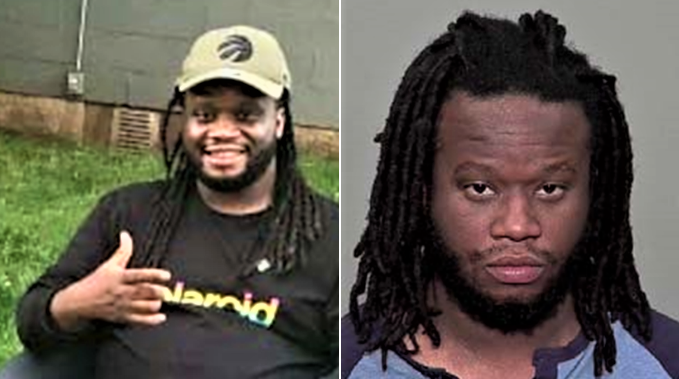
The initial incident that set this chain of events in motion occurred on July 12, 2021. RCMP officers were dispatched to a residence on Glooscap Drive within the Millbrook First Nation community following reports of a sudden death. Upon arrival, authorities discovered Bert Knockwood deceased under circumstances deemed immediately suspicious. The investigation quickly escalated, with police ruling Knockwood’s death a homicide. Early in their probe, Valdo Pauyo was identified as the prime suspect in the case.
Millbrook First Nation, a vibrant Mi’kmaw community near Truro, Nova Scotia, was deeply affected by Knockwood’s death. Homicides within close-knit communities often leave indelible scars, disrupting the sense of security and trust. The initial investigation by the RCMP was thorough, leading to the identification of Pauyo, who, according to police, had departed for Montreal shortly after Knockwood’s death. This swift departure prompted law enforcement to issue a Canada-wide arrest warrant for Pauyo, signaling the gravity of the allegations and the determination to bring him to justice. For a significant period, Pauyo’s name and image appeared on the RCMP’s national "most wanted" list, a designation reserved for individuals sought in connection with serious crimes across the country, further amplifying the public profile of the case.
A Protracted Legal Journey: From Flight to Freedom
The path to Pauyo’s arrest was lengthy, spanning nearly three years. It wasn’t until April 2024 that authorities successfully apprehended him, bringing him back to Nova Scotia to face the charges. This period of being a wanted fugitive, followed by the subsequent arrest and detention, marked a significant chapter in the case. Once in custody, Pauyo began navigating the Canadian legal system, a process involving preliminary hearings, disclosure of evidence, and numerous court appearances as his defence counsel prepared for trial.
The legal journey from arrest to the recent withdrawal of charges typically involves rigorous scrutiny of evidence by both the Crown and defence. Prosecutors must continuously assess the strength of their case, weighing witness credibility, forensic evidence, and the overall narrative against the high legal standard of "beyond a reasonable doubt" required for a criminal conviction, especially in a second-degree murder trial. The decision to withdraw charges at such a late stage, just as trial dates were set, suggests a critical re-evaluation of the available evidence that likely occurred very close to the intended commencement of proceedings. This eleventh-hour decision highlights the dynamic nature of criminal prosecutions, where new information, witness availability, or re-assessments of existing evidence can profoundly alter the trajectory of a case.
The Legal Rationale: Understanding "No Reasonable Prospect of Conviction"
The Crown’s declaration of "no reasonable prospect of conviction" is a fundamental principle in Canadian criminal law. It is not an admission of innocence but rather a legal determination that, based on the evidence currently available, there is insufficient likelihood of persuading a jury or judge to convict the accused beyond a reasonable doubt. This standard is crucial to maintaining the integrity of the justice system, preventing frivolous prosecutions, and upholding the presumption of innocence.
In complex cases such as homicide, the challenges to achieving this standard can be manifold. They can include issues with witness testimony – for example, witnesses recanting statements, credibility concerns, or simply a lack of direct evidence linking the accused unequivocally to the crime. Forensic evidence, while often compelling, may also present ambiguities or fall short of definitively proving guilt. The passage of time, nearly five years since Knockwood’s death, can also complicate matters, potentially leading to memory degradation, loss of crucial physical evidence, or the inability to locate key individuals. Crown attorney Cory Roberts’ statement indicates that, despite the initial strong suspicions and the Canada-wide warrant, the evidence available to the prosecution ultimately failed to meet the rigorous standard required for a successful murder conviction. This decision, while difficult, reflects the Crown’s ethical obligation to only proceed with cases where a reasonable prospect of conviction exists, saving court resources and preventing undue hardship for an accused person who may not be proven guilty.
A Friendship Turned Tragedy: The Human Context
Adding a poignant layer of complexity to this already tragic story is the history shared between Valdo Pauyo and Bert Knockwood. Before Knockwood’s untimely death, the two men appeared to have been close friends. Old Facebook posts belonging to Knockwood frequently featured Pauyo, with Knockwood affectionately referring to him as "one of his favourite people" and using the Mi’kmaw word for "younger brother." This revelation casts a shadow over the entire affair, transforming a seemingly straightforward criminal case into a deeply personal tragedy involving former companions.

The narrative of a friendship dissolving into violence, culminating in a death and subsequent murder charge, underscores the profound human element often lost in legal proceedings. For the community and family, this backstory makes the outcome even more difficult to reconcile. It speaks to the intricate and sometimes volatile nature of human relationships, where bonds of affection can tragically unravel, leading to devastating consequences. The public acknowledgment of their past friendship only intensifies the sense of loss and betrayal for those who knew Bert Knockwood, leaving them to grapple with not only his death but also the perceived betrayal by someone once considered family.
Echoes of Grief: Victim’s Family and Friends Seek Justice
For the loved ones of Bert Knockwood, the Crown’s decision was not a matter of legal nuance but a deeply personal blow, described by one close friend as "a slap in the face." Brian Pelrine, a longtime friend of Knockwood, expressed profound anguish in a Facebook post, stating, "Knowing the man who took his [Knockwood’s] life walks free today is a different kind of hurt," and citing it as "proof of a flawed justice system." Pelrine’s powerful words encapsulate the despair and frustration felt when a legal outcome fails to deliver what victims’ families perceive as justice.
Pelrine, a Nova Scotia DJ, shared a deep connection with Knockwood, describing their bond as "as close to brotherly as you could get." He credited Knockwood with gifting him his first set of turntables, an act that launched his music career. This anecdote not only illustrates the depth of their friendship but also highlights Knockwood’s generous spirit and lasting impact on those around him. The emotional weight of such testimony underscores the profound void left by Knockwood’s death and the desperate need for his friends and family to see accountability. The withdrawal of charges, while legally justifiable under the "no reasonable prospect of conviction" standard, can feel like an abandonment of the victim and a failure of the system to provide closure or retribution, leaving open wounds that may never fully heal.
The Accused’s Ordeal and Relief
Conversely, for Valdo Pauyo and his defence counsel, Xavier Desrosiers and Carl Devost, the Crown’s decision brought immense relief. Having faced the specter of a second-degree murder conviction and a life sentence for nearly five years, Pauyo is understandably "happy to have the entire ordeal behind him." His legal team also expressed their approval of the Crown’s decision, signaling their agreement with the assessment of insufficient evidence.
The period of being a prime suspect, a fugitive on a national most-wanted list, and then an accused awaiting trial for murder, represents an extraordinary psychological and emotional burden. Even when charges are eventually dropped, the experience of being implicated in such a serious crime can leave lasting scars. Pauyo’s freedom, while a cause for celebration for him and his legal team, marks the end of a harrowing chapter, allowing him to attempt to rebuild his life free from the immediate threat of incarceration. This outcome underscores the dual nature of the justice system: while it seeks to punish the guilty, it also aims to protect the innocent and ensure that no one is unjustly convicted.

Broader Implications for the Justice System and Public Trust
The withdrawal of second-degree murder charges in a high-profile case such as this carries significant implications for the broader justice system and public trust. Firstly, it highlights the immense resources, both human and financial, that are expended during extensive police investigations, nationwide manhunts, and protracted legal proceedings. The five-year timeline, from the initial homicide to the recent decision, represents countless hours of police work, prosecutorial effort, and defence preparation. When charges are ultimately withdrawn, it can raise questions about the efficiency and effectiveness of these processes, particularly from the perspective of taxpayers and victims’ advocates.
Secondly, such outcomes can erode public confidence in the justice system. When a prime suspect in a homicide case is freed due to insufficient evidence, it can create a perception that serious crimes go unpunished, fostering a sense of cynicism about the legal process. This is particularly acute in cases where the victim’s family and friends feel strongly about the accused’s culpability, irrespective of the legal standard of proof. The delicate balance between ensuring due process for the accused and delivering justice for victims is constantly tested in such scenarios.
The withdrawal of charges also means that, from a legal standpoint, Bert Knockwood’s homicide technically remains unresolved. While the investigation into Pauyo has concluded, the possibility of new evidence emerging or other suspects being identified remains open, though often challenging after such a passage of time. The Crown’s decision does not preclude future investigations should new, compelling evidence come to light. However, for now, the official search for accountability in Knockwood’s death has reached an impasse, leaving a vacuum where answers and closure are desperately sought.
Remembering Bert Knockwood: A Life Remembered
Amidst the legal complexities and public debate, it is crucial to remember the life of Bert Knockwood. His obituary painted a vivid picture of a man described as a "whirlwind of love" by his family and friends. He was known for his vibrant personality, his deep passion for music and movies, and his strong connection to his Mi’kmaw culture. Perhaps most notably, Knockwood was celebrated for his immense generosity, with loved ones recalling that "he would give the shirt off his back if it meant helping someone he cared for."
These poignant tributes serve as a powerful reminder of the human cost of violence and the lasting impact of loss. For his community in Millbrook First Nation, and for his extended network of friends and family, Bert Knockwood was more than just a name in a police report or a legal file; he was a cherished individual whose life was tragically cut short. The ongoing grief, compounded by the recent legal outcome, underscores the profound and enduring void left by his absence.

Lingering Questions and the Path Forward
The withdrawal of charges against Valdo Pauyo closes one chapter in the tragic story of Bert Knockwood’s death but leaves many questions unanswered. For the family and friends of Knockwood, the search for justice continues, albeit without a clear path forward. The outcome serves as a stark reminder of the rigorous demands of the legal system, where the burden of proof is exceptionally high, particularly in murder cases.
While the legal system has rendered its decision, the emotional and societal reverberations of this case will undoubtedly persist. The Millbrook First Nation community, the friends who cherished Bert Knockwood, and indeed the broader public will continue to grapple with the implications of this outcome. As Valdo Pauyo steps into freedom, the shadow of an unresolved homicide lingers, a testament to the enduring complexities of crime, justice, and the human quest for accountability.