admin
The water is cold and clear. Half-hidden amid the palm-tufted grounds of the Mortuary Temple of Seti I, this sacred sunken lake on Luxor’s west bank was once the domain of ancient Egyptian priests. More than 3,000 years later, women from nearby villages still come, hoping its waters will serve as a fertility aid or a balm for their sick children, says my guide Ahmed Hassan, who was born and raised on this side of the Nile. It’s one of the area’s many miracles, he adds: No one knows where the water comes from, but it hasn’t run dry since those priests of antiquity first bathed here. Hedging my bets, I submerge my hands.
It can be difficult to know what to believe in this transcendent stretch of Upper Egypt, 410 miles south of Cairo, where the Nile exudes a life force of its own; the mountains cradle secret treasures; and the light, particularly at golden hour, plays tricks, almost convincing you that you have traveled back in time. The line between the real and the mystical feels flimsy, whether you are considering the scale of the approximately 1,000-ton, 65-foot-tall colossus of Ramses II, inexplicably carved from a single piece of granite and lying prostrate at the king’s statuesque funerary temple, the Ramesseum; or observing the unnerving precision of the hieroglyphs in the tomb of Ramses V and VI, in the Valley of the Kings, that has proved immune to the ravages of time.

Luxor: A Crossroads of History and Spirituality
Formerly ancient Thebes, Luxor—whose name comes from the Arabic Al-Uqsur (The Palaces)—served as Egypt’s capital during the New Kingdom, from circa 1550 BCE to 1070 BCE. This era, spanning over 480 years, was a golden age for Egypt, characterized by extensive building projects, military campaigns, and burgeoning international trade. On the west bank of the Nile, sugarcane and banana plantations now stretch towards a dramatic limestone canyon, crowned by Al-Qurn, or "The Horn," a natural peak uncannily shaped like a pyramid. It was within this protective natural amphitheater that the rulers of the New Kingdom chose to conceal their richly decorated tombs, hoping to safeguard their eternal rest from grave robbers. However, this endeavor proved largely unsuccessful, as virtually every tomb in the Valley of the Kings was plundered in antiquity, with the singular exception of that of the now legendary boy king Tutankhamen. The discovery of Tutankhamen’s nearly intact tomb by Howard Carter in 1922 remains one of the most significant archaeological finds in history, offering an unparalleled glimpse into the wealth and artistry of the ancient Egyptian elite.
"There are many sites that have an impressive amount of ‘stuff,’ but what you have in Luxor is truly monumental," Mennat-Allah El Dorry, from the American University in Cairo’s department of sociology, Egyptology, and anthropology, tells me. "You have Karnak and Luxor temples on the east bank, and the mortuary temples on the west, as well as the Valley of the Kings. It is such a dense area." This concentration of Pharaonic heritage has solidified Luxor’s reputation as the world’s largest open-air museum, drawing millions of visitors annually.
The writer’s experience encapsulates the duality of Luxor: a place where ancient wonders coexist with enduring local traditions and the palpable mystique of the land. Taking recommendations, the journey involves balancing the serene atmosphere of lesser-visited, partially restored sites like the Mortuary Temple of Seti I and the Ramesseum with the thronged tombs of the Valley of the Kings. The allure of witnessing the diminutive mummy of Tutankhamen, preserved for millennia and lying 26 feet below ground, draws considerable crowds. In stark contrast, the tomb of Ramses V and VI, nearby, offers a more solitary experience. A toothless, djellaba-wearing guard, with a conspiratorial smile, permits entry behind the roped-off areas. He handles the writer’s phone with the practiced ease of a seasoned photographer, directing poses: "Come closer; go there; look over your shoulder." This intimate interaction with a guardian of ancient secrets underscores the personal connection visitors can forge with these historical sites.

The Evolving Landscape of Nile Travel
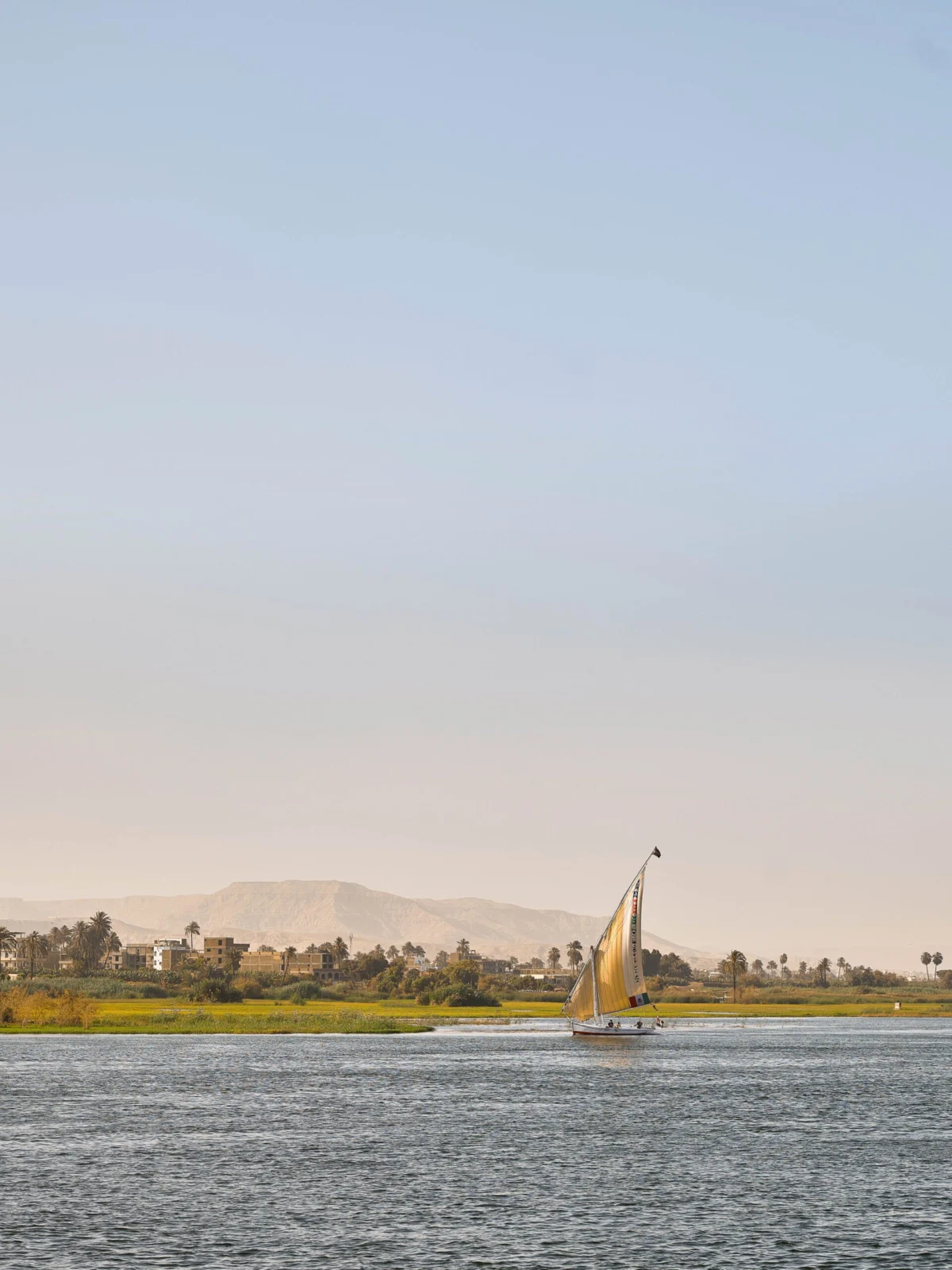
Much of Luxor feels preserved in time. As sunset descends, the elegant sails of felucca boats trace a timeless scene across the Nile’s tranquil surface. Amidst the rhythmic clip-clop of horse-drawn carriages, the call to prayer drifts from minarets, painting the sky in strips of apricot and lavender. This enduring panorama highlights the region’s deep cultural roots, where traditional life continues to unfold against a backdrop of unparalleled historical significance.
From the deck of the Arax, a vessel where the atmosphere is distinctly different, the unhurried advance of night unfolds. This is the second offering from the homegrown Kazazian Cruises, a company dedicated to blending the motorless elegance of the traditional dahabeah boat with the sleek aesthetics of a luxury yacht. The design prioritizes Nile views, with floor-to-ceiling glass windows in the airy living and dining areas of the 200-foot boat, framing the brilliant blues and greens of the lush landscape. Each of the nine cabins features beds clad in premium-quality Egyptian cotton, oriented towards panoramic picture windows. The amenities extend to Hermès toiletries, an onboard massage therapist, and four chefs available to prepare meals on demand. Founder Armen Kazazian identified a market gap for a Nile experience offering extreme privacy and comfort on the time-honored journey between Luxor and Aswan, coupled with intuitive service that can manifest as impromptu easels for children’s entertainment or surprise beach dinners on private islands. This approach signifies a shift in luxury Nile travel, focusing on bespoke experiences and personalized attention.
Complementing the refined simplicity of the Arax are other notable accommodations. The Marsam Hotel offers a stripped-back, authentic experience, while the discreet yet stately Habu Hotel, situated mere feet from the Medinet Habu Temple, provides a sense of historical continuity. However, the Hotel Al Moudira stands at the opposite end of the spectrum, embracing a maximalist aesthetic. Founded by Italian Lebanese artist Zeina Aboukheir in 2001 and initially designed by famed Egyptian architect Olivier Sednaoui, the hotel is a whimsical interplay of domes and arches embellished with terra-cotta plaster, frescoes, and antiques. In 2022, Aboukheir sold the hotel to Florian Amereller, but she continues to guide its creative direction, notably in the design of six new villas. The writer stayed in one of the five rooms in the salmon pink Villa Casbah, adorned with hand-painted silhouettes of gazelles.

Culinary Innovations and Artisanal Crafts
Under its new ownership, the now five-star Al Moudira has expanded significantly, encompassing a vast expanse of surrounding farmland. It is here, in an open kitchen enveloped by lush greenery, that British Spanish chef Gioconda Scott orchestrates a busy lunch service. In 2025, she launched The Moudira Farm Kitchen, transforming fresh, on-site produce into an unfussy, seasonal menu inspired by Mediterranean cuisine. "This is simple cooking," Scott states, emphasizing the importance of ingredient quality. Her kitchen is staffed by young chefs from the local tourism college, fostering new talent within the region. "Every element has to be good. If you don’t have a good olive oil or a good tomato, there’s no hiding." This farm-to-table philosophy not only highlights the quality of the local produce but also supports the local economy and culinary education.
The restaurant itself showcases products crafted by artisans on the farm. Crockery, rendered in earthy tones, is created by local potters, and guests have the opportunity to participate in pottery classes. The sounds of a distant loom weaving jaunty turquoise tablecloths can be heard, while in other areas, artisans carve alabaster, blow glass, and upholster furniture. This integration of local craftsmanship into the guest experience provides a tangible connection to the region’s artistic heritage.
This dedication to artisanal crafts extends to the decks of Al Moudira’s new, 180-foot Nile Canopus. This vessel is a nostalgia-infused nod to historic travel along the evocative waterway. Its design features open-air decks with safari-tent-style coverings, a cozy library, and rooms furnished with brass beds and bespoke teak and rattan furniture, intended to evoke the golden age of travel described by Amelia Edwards in her seminal 1877 travelogue, A Thousand Miles Up the Nile. This conscious evocation of a bygone era adds a layer of historical immersion to the modern luxury experience.

The Resurgence of Dahabeahs and Luxury Nile Cruising
There has been a notable proliferation of new dahabeahs on the Nile, offering more intimate and personalized experiences compared to the larger, 50-cabin motorboats that also navigate these waters. While modern dahabeahs are equipped with contemporary conveniences, they are no longer exclusively propelled by wind and sail, instead often being pushed and pulled by smaller tugboats. Internally, however, they have become increasingly elaborate. Karine Hassoun’s eight-cabin dahabeah, Nile Divine, showcases contemporary Egyptian craft, featuring collaborations with Egyptian painters, professors, and artisans. The nine-cabin Oro boasts a dark wood exterior reminiscent of older dahabeahs, but is enhanced by a dramatic brass wall in the reception area, a plunge pool extending over the deck, a full bar on the upper level, and suites with private terraces and hot tubs. This fusion of traditional aesthetics with modern luxury amenities defines the new wave of Nile cruising.
The luxury hospitality sector is also expanding its presence. Oberoi Hotels and Resorts is set to launch two seven-suite dahabeahs later this year, featuring interiors designed by Karim Mekhtigian, founder of Alchemy Design Studio. Waldorf Astoria Hotels and Resorts’ new, 29-suite Nile cruiser will bring the signature elements of its land-based hotels, including its Peacock Alley brasserie, to the water. This influx of high-end offerings signals a growing demand for luxury Nile experiences and a commitment from major hotel brands to tap into this unique market.
Future Developments and the Celestial Spectacle
Change is also underway on land. Cranes hover over the east bank, marking the site of a Four Seasons Hotel, slated to open in 2027. The renowned Winter Palace, which served as Howard Carter’s base during his 1922 Tutankhamen tomb discovery and inspired Agatha Christie’s Death on the Nile, recently closed for a significant renovation. It is scheduled to reopen as a Mandarin Oriental in July 2027, precisely 120 years after its original inauguration. Hopes are high that the renovation will preserve its original features and unique charm.

These developments are set to coincide with a significant celestial event. Just weeks after the Mandarin Oriental’s reopening, on August 2, Luxor will be the focal point for a solar eclipse. The city is expected to witness the moon masking the sun for its maximum duration, totaling an impressive 6 minutes and 22 seconds. This prolonged period of totality offers a rare and awe-inspiring spectacle, potentially further blurring the lines between the ancient and the extraordinary, and providing a unique backdrop for experiencing the timeless magic of Luxor.
Where to Stay in Luxor: A Spectrum of Experiences
Habu Hotel: Situated mere feet from Habu Temple, celebrated for its deeply etched hieroglyphs and remarkably preserved colors, the unassuming 17-room Habu Hotel carries its own historic pedigree. It was one of the first hotels to open on Luxor’s West Bank in the 1920s. The property has undergone a smart revamp, with its public areas now adorned with antiques, including stately granite busts and wooden statues dating back to the 1800s. Sundowners on the hotel’s charming rooftop terrace offer a unique vantage point, bringing guests close enough to the temple’s chiseled interior to admire its exterior engravings from the comfort of a lounge chair. This intimate setting provides a deep connection to the historical landscape.
Hilton Luxor Resort and Spa: For those seeking a more contemporary experience with direct Nile access, the Hilton Luxor Resort and Spa offers a luxurious retreat. The spa’s treatment rooms provide direct views of the Nile, and the infinity pool is widely regarded as one of the city’s best spots for experiencing Luxor’s famous sunsets. This resort serves as an ultra-convenient base for exploring Luxor’s East Bank historic sites, with Karnak Temple within walking distance. A private breakfast on a felucca offers a fresh perspective of the Nile, particularly if timed to coincide with hot-air balloons ascending over the Valley of the Kings, creating a memorable start to the day.

Hotel Al Moudira: A maximalist dream situated on the Nile’s West Bank, Hotel Al Moudira was the first Relais and Chateaux property in Egypt. Founded in 2001 by Italian-Lebanese artist Zeina Aboukheir, it is a treasure trove of hand-painted frescoes, antiques, artworks, and furniture sourced from across Egypt. Under new ownership since 2022, the hotel provides easy access to the West Bank’s myriad sites, though its cool, bougainvillea- and palm-covered grounds offer a compelling reason to linger. Six new villas maintain the beloved aesthetic while offering enhanced privacy.
Marsam Hotel: For a stripped-back stay that evokes the era of early Egyptologists, the Marsam Hotel is the ideal choice. Originally serving as the excavation house for the University of Chicago before its conversion into a hotel in 1939, the property intentionally lacks a swimming pool or televisions. Its 29 pared-back rooms and five suites are designed for guests dedicated to exploring the surrounding historical sites. Regardless of whether one stays overnight, a lunch at Marsam’s farm-to-table restaurant is highly recommended. The menu changes daily, and the dining experience is often accompanied by the gentle sounds of resident donkeys, camels, and horses.
This article appeared in the December 2026 issue of Condé Nast Traveler.