admin
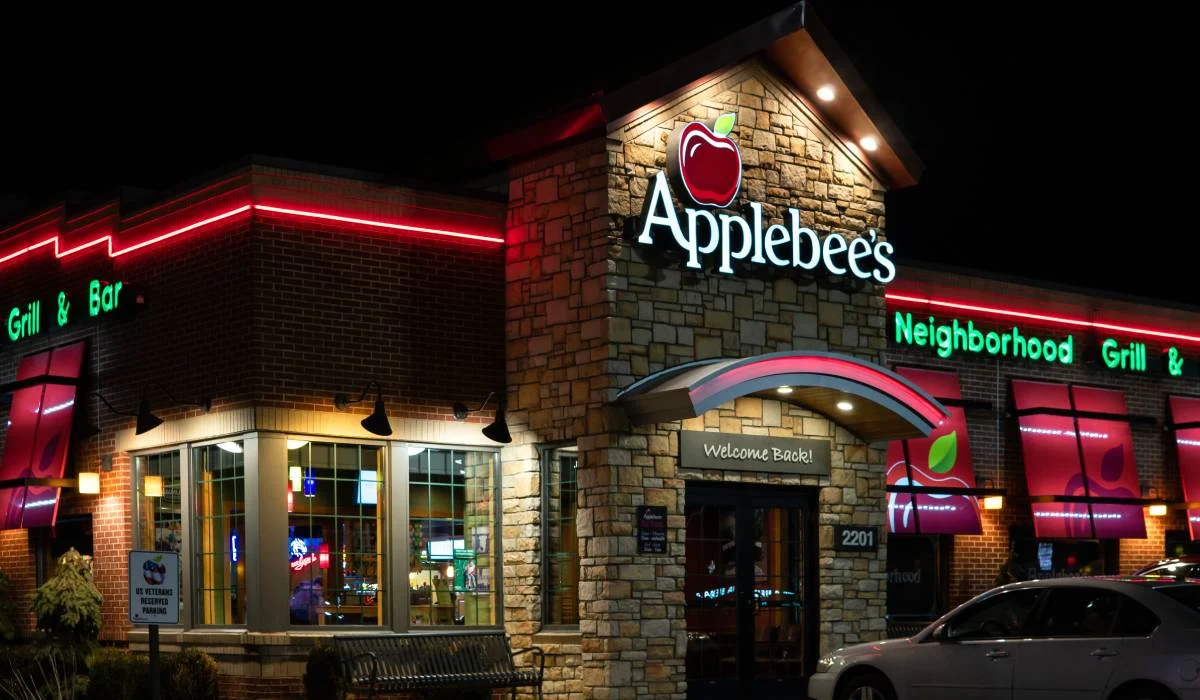
The landscape of the American casual dining sector faced a significant tremor this week as Dine Brands Global, the corporate umbrella for iconic chains Applebee’s Neighborhood Grill + Bar, IHOP, and Fuzzy’s Taco Shop, became the target of a high-stakes acquisition attempt. Cobblers Cove Capital and Arkhouse Management have reportedly submitted a joint proposal to acquire the company in an all-cash transaction valued at $39 per share. The move has prompted an immediate and strategic defensive response from the Dine Brands board of directors, signaling a potential tug-of-war over the future of one of the world’s largest full-service restaurant companies.
According to reports initially surfaced by Bloomberg, the $39-per-share offer represents a substantial 33 percent premium over the company’s average share price during the 30 days leading up to the bid. While the proposal underscores the perceived value of the company’s diverse portfolio, the Dine Brands board has moved swiftly to protect its current trajectory, implementing a limited-duration shareholder rights agreement, a corporate defense mechanism colloquially known as a "poison pill."
The Mechanics of the Takeover Bid and the Defensive Response
The offer from Cobblers Cove Capital and Arkhouse Management arrives at a pivotal moment for Dine Brands. The firms have indicated a willingness to potentially increase their offer price, contingent upon a period of due diligence and direct access to the company’s senior management team. This suggests that the initial $39 figure may serve as a floor for negotiations rather than a final ceiling.
In response, the Dine Brands board of directors announced the unanimous adoption of the shareholder rights agreement. This maneuver is designed to prevent any single entity or group from accumulating a controlling stake in the company through open-market purchases without negotiating directly with the board. By triggering the issuance of new shares to existing shareholders (excluding the hostile party) should a specific ownership threshold be crossed, the "poison pill" effectively dilutes the acquirer’s stake and makes a hostile takeover prohibitively expensive.
The board clarified that the agreement is not intended to prevent a fair sale of the company but is rather a tool to ensure that all shareholders receive an appropriate premium and that the board has sufficient time to evaluate the merits of any proposal. In a corporate environment where activist investors and private equity firms are increasingly targeting undervalued legacy brands, such defensive measures have become a standard, albeit aggressive, component of corporate governance.
Financial Performance and Portfolio Divergence
The buyout interest comes as Dine Brands navigates a complex post-pandemic recovery characterized by shifting consumer habits and inflationary pressures. The company’s most recent financial disclosures for the second quarter, ended June 28, reveal a tale of two trajectories within its primary brands.
Applebee’s, long considered the cornerstone of the casual dining market, reported a 1.8 percent decline in domestic same-store sales. This contraction was primarily driven by a decrease in customer traffic, a trend that has plagued much of the sit-down dining industry as consumers grapple with higher costs of living. While the brand managed to partially offset traffic losses through higher average checks—a result of strategic menu pricing adjustments—the overall volume decline remains a point of concern for investors.
Conversely, IHOP demonstrated continued resilience. The breakfast-focused chain saw a 1.5 percent increase in domestic same-store sales. Similar to Applebee’s, IHOP benefited from higher average checks, but its brand positioning as a value-oriented family destination appears to have insulated it more effectively against the broader downturn in discretionary dining spending.
The newest addition to the portfolio, Fuzzy’s Taco Shop, emerged as the standout performer. With a 4.6 percent increase in same-store sales, the fast-casual taco brand highlights Dine Brands’ successful pivot toward more agile, high-growth segments. Since its acquisition in late 2022, Fuzzy’s has served as a strategic hedge against the slower-moving full-service dining market.
As of the end of the second quarter, Dine Brands’ global footprint remains massive, encompassing 1,557 Applebee’s locations and 1,813 IHOP restaurants. The Fuzzy’s Taco Shop footprint, while smaller at 97 domestic locations, represents the company’s primary engine for unit growth and expansion into the fast-casual space.
A History of Consolidation: From IHOP Corp. to Dine Brands Global
The current structure of Dine Brands is the result of nearly two decades of strategic consolidation. The modern era of the company began in November 2007, when the IHOP Corporation executed a transformative $2.1 billion acquisition of Applebee’s International. At the time, the merger was one of the largest in the history of the restaurant industry, aimed at creating a powerhouse in both the breakfast and casual dining segments.
Following the merger, the company rebranded as DineEquity in 2008 to reflect its broader multi-brand strategy. Under this moniker, the company spent years refining its "asset-light" business model, transitioning to a nearly 100 percent franchised system. This shift allowed the corporate entity to focus on brand development, marketing, and supply chain management while offloading the operational risks and capital expenditures associated with owning and running individual restaurant locations.
In 2018, the company underwent another identity shift, becoming Dine Brands Global. This rebranding was intended to signal a new era of international expansion and a readiness to acquire additional concepts. That vision was realized in December 2022 when Dine Brands acquired Fuzzy’s Taco Shop from NRD Capital for $80 million in cash. The acquisition was seen as a vital move to capture the younger, "on-the-go" demographic that increasingly favors fast-casual environments over traditional sit-down service.
Profiling the Suitors: Arkhouse and Cobblers Cove
The firms behind the bid bring a history of aggressive investment strategies to the table. Arkhouse Management, in particular, has gained notoriety in recent years for its involvement in high-profile retail and real estate plays. Most notably, Arkhouse was a key player in the protracted and ultimately successful effort to take Macy’s private, demonstrating a willingness to engage in long-term battles with corporate boards to unlock shareholder value.
Cobblers Cove Capital, while perhaps less of a household name in retail circles, specializes in identifying companies with strong cash flows and recognizable brand equity that may be undervalued by public markets. Together, the two firms appear to be betting that Dine Brands’ current stock price does not fully reflect the long-term value of its real estate interests, franchise royalties, and the growth potential of the Fuzzy’s brand.
Industry analysts suggest that the interest from these firms may be predicated on a belief that Dine Brands could be more efficiently managed as a private entity. Away from the quarterly scrutiny of public markets, a private owner could more aggressively close underperforming Applebee’s locations, accelerate the international rollout of IHOP, and rapidly scale the Fuzzy’s footprint without the immediate pressure of maintaining public dividend payments.
Industry Implications and the "Value War"
The bid for Dine Brands reflects a broader trend of consolidation and restructuring within the American restaurant industry. As labor costs rise and food inflation remains a persistent challenge, many casual dining giants are finding themselves at a crossroads. Competitors like Brinker International (parent of Chili’s) and Darden Restaurants (parent of Olive Garden) have engaged in aggressive "value wars," utilizing deep discounts and loyalty programs to maintain foot traffic.
For Dine Brands, the challenge lies in balancing its legacy brands’ heritage with the need for modernization. Applebee’s, in particular, has struggled to redefine its "neighborhood" appeal for a Gen Z and Millennial audience that often prefers independent local eateries or digital-first fast-casual options. An acquisition by private equity could provide the capital necessary for a wholesale digital transformation of the guest experience across all three brands.
Looking Ahead: The Q3 Earnings Milestone
All eyes are now turned toward November 4, when Dine Brands is scheduled to report its third-quarter earnings. This report will be scrutinized not only for the company’s financial performance during the summer months but also for any formal commentary regarding the buyout proposal.
Investors will be looking for updates on several key metrics:
- Traffic Stabilization: Whether Applebee’s has been able to stem the tide of declining guest counts.
- Development Pipeline: Progress on new IHOP "Small Shop" formats and the expansion of Fuzzy’s Taco Shop.
- Debt Management: How the company is managing its debt load in a high-interest-rate environment, a factor that heavily influences its attractiveness as a buyout target.
The adoption of the poison pill suggests that the Dine Brands board is prepared for a lengthy engagement. While the $39-per-share offer has set the stage, the ultimate fate of Applebee’s and IHOP may depend on whether Cobblers Cove and Arkhouse are willing to sweeten the deal—or if another suitor, emboldened by the current activity, enters the fray with a superior bid.
As the November 4 earnings date approaches, the tension between the board’s defensive stance and the suitors’ opportunistic bid underscores a fundamental question: Is the traditional American dining model better served by the transparency of the public markets or the strategic privacy of private equity? For the thousands of franchisees and employees under the Dine Brands banner, the answer to that question will define the next chapter of an American culinary institution.