admin
The modern residential landscape has undergone a radical transformation over the last decade, transitioning from a place of evening rest to a multi-functional hub for professional labor, education, and creative pursuits. As the global workforce continues to embrace remote and hybrid models, the demand for acoustic privacy has shifted from a luxury for recording artists to a fundamental requirement for the average homeowner. Soundproofing, once a niche architectural concern, is now a primary focus for urban dwellers and suburban families alike, as they seek to mitigate the intrusive effects of traffic, construction, and internal household activities. Achieving a truly quiet environment requires a sophisticated understanding of how sound travels through structures and the specific materials designed to interrupt that transmission.

The Evolution of Residential Acoustic Management
The history of soundproofing in the home has evolved from rudimentary attempts at insulation to the application of aerospace and industrial-grade materials. In the mid-20th century, acoustic management was largely limited to heavy drapes and thick carpeting. However, as residential construction shifted toward lighter materials and open-concept floor plans, the natural "sound-breaking" properties of thick masonry and compartmentalized rooms were lost. By the 1990s, the rise of home theaters spurred a new interest in acoustic dampening, but it was the 2020 global shift toward remote work that catalyzed the current "quiet revolution."
Today, homeowners utilize a combination of four primary soundproofing principles: mass, decoupling, absorption, and damping. Mass involves adding heavy materials to walls to make them harder to vibrate. Decoupling creates gaps in the structure to prevent sound from vibrating through studs. Absorption uses soft materials to soak up sound waves, while damping involves using specialized compounds to convert sound energy into heat.

Technical Metrics and the Science of Sound Transmission
To understand the effectiveness of soundproofing, one must look at the Sound Transmission Class (STC) rating. This integer rating provides a shorthand for how well a building partition attenuates airborne sound. A standard interior wall with a single layer of 1/2-inch drywall on each side typically has an STC rating of approximately 33. At this level, loud speech can be heard and understood through the wall. By contrast, a wall with an STC rating of 50 is considered "soundproof" for most residential applications, as loud speech becomes inaudible.
Data from acoustic engineering studies indicate that sound follows the path of least resistance. Even a tiny gap under a door—representing only 1 percent of the total surface area—can allow up to 50 percent of the sound to pass through. This phenomenon, known as sound flanking, explains why comprehensive soundproofing must address not only the walls but also the windows, doors, and utility penetrations.
Strategic Intervention: The Use of Mass-Loaded Vinyl
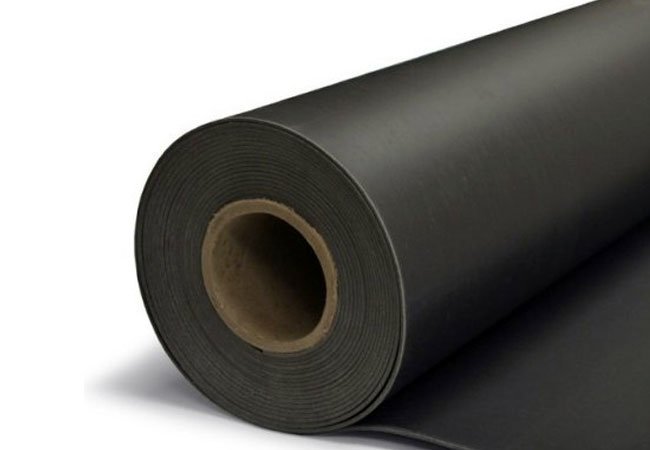
One of the most effective modern interventions for existing walls is the application of Mass-Loaded Vinyl (MLV). Originally developed for industrial machinery and aerospace applications, MLV is a high-density, flexible material infused with metal particles or salts to increase its mass without increasing its thickness significantly. Unlike rigid materials, MLV does not have a resonance point, meaning it does not vibrate in sympathy with sound waves.
The installation of MLV typically involves a systematic process:

- Surface Preparation and Measurement: Precise measurements are required to ensure edge-to-edge coverage, as gaps drastically reduce the STC gains.
- Cutting and Handling: Due to its density, MLV is exceptionally heavy. A standard 1-pound-per-square-foot roll requires significant physical effort to maneuver.
- Mechanical Attachment: The material is hung using drywall nails or heavy-duty staples, starting from the ceiling and working downward.
- Integration: For maximum efficacy, MLV is often "sandwiched" between the existing drywall and a new layer of 5/8-inch Type X drywall. This combination of mass and damping can raise a wall’s STC rating by 10 to 15 points.
Soft Interventions and Acoustic Curtains
While structural changes offer the highest degree of sound isolation, non-invasive methods such as acoustic curtains provide a viable alternative for renters or those with limited budgets. Professional-grade soundproof curtains differ from standard blackout drapes through their internal composition. They often feature multiple layers of dense fabric, such as velvet or heavy polyester, integrated with a core layer of thermally insulated film or recycled cotton batting.
Journalistic analysis of product performance shows that the effectiveness of curtains is largely dependent on "fullness." An acoustic curtain that is bunched or pleated has three times the sound-absorbing surface area of a flat panel. Furthermore, floor-to-ceiling installation is critical to prevent sound waves from "leaking" over or under the fabric barrier. While these curtains are primarily designed for absorption (reducing echo within a room), their density also contributes to a modest reduction in external noise transmission through glass panes.

Addressing Vulnerabilities: Windows, Doors, and Ceilings
The effectiveness of a soundproofed wall is frequently undermined by "weak links" in the room’s envelope. Doors are a primary culprit, as most interior doors are hollow-core, acting as a drum that amplifies sound. Upgrading to a solid-core door or applying a heavy-duty door sweep can provide an immediate and measurable reduction in decibel levels.
Windows represent another significant vulnerability. In urban environments, street noise often penetrates through thin, single-pane glass. Solutions range from the installation of secondary storm windows—which create a dead-air space that decouples the interior from the exterior—to the use of acoustic grade sealants and weather stripping.

For those living in multi-story dwellings, "impact noise" from footsteps or falling objects overhead is a common grievance. Addressing this requires tackling the ceiling. In many modern apartments, the ceiling is directly attached to the floor joists of the unit above, allowing vibrations to pass through easily. Homeowners can mitigate this by installing a "dropped" or "cloud" ceiling using resilient channels. These metal rails separate the drywall from the joists, effectively breaking the path of vibration.
Impact on Mental Health and Productivity
The drive for soundproofing is supported by significant public health data. The World Health Organization (WHO) has identified environmental noise as a leading environmental nuisance, linking chronic exposure to loud environments to increased stress hormones, cardiovascular disease, and cognitive impairment in children. In a professional context, a study by University of California, Irvine, researchers found that it takes an average of 23 minutes and 15 seconds to return to a deep state of focus after a significant distraction.

By creating acoustically controlled environments, individuals can significantly lower their baseline cortisol levels and increase their daily output. Real estate experts also note that "acoustic comfort" is becoming a selling point in high-end markets, with soundproofed home offices and primary suites adding tangible value to property appraisals.
Economic Analysis and DIY vs. Professional Installation
The cost of soundproofing varies widely based on the desired decibel reduction. A basic DIY project involving door sweeps and acoustic curtains may cost between $200 and $500. However, a professional structural soundproofing project, including MLV installation and new drywall, can range from $2,000 to $5,000 per room.

Industry analysts suggest that the "Quiet Industry" is poised for continued growth. As urban density increases and housing units become smaller, the premium on silence will only rise. Current market trends show an influx of "smart" acoustic materials, such as active noise-canceling window inserts and transparent acoustic films, which promise to bring recording-studio levels of silence to the general consumer market within the next decade.
Broader Implications for the Future of Architecture
The integration of soundproofing techniques reflects a broader shift in how we perceive the "sanctity of the home." As the boundaries between public and private life continue to blur, the architectural focus is moving toward creating "sensory refuges." Future building codes may eventually incorporate higher minimum STC ratings for residential construction, recognizing that acoustic privacy is as vital to human health as proper ventilation and thermal insulation.

In conclusion, soundproofing a room is no longer an exercise in isolationism; it is a proactive step toward maintaining mental clarity and professional efficiency in an increasingly noisy world. Through the strategic application of mass, the sealing of air gaps, and the thoughtful use of absorbent materials, homeowners can reclaim their peace and quiet, transforming their living spaces into true sanctuaries of productivity and rest.