admin
admin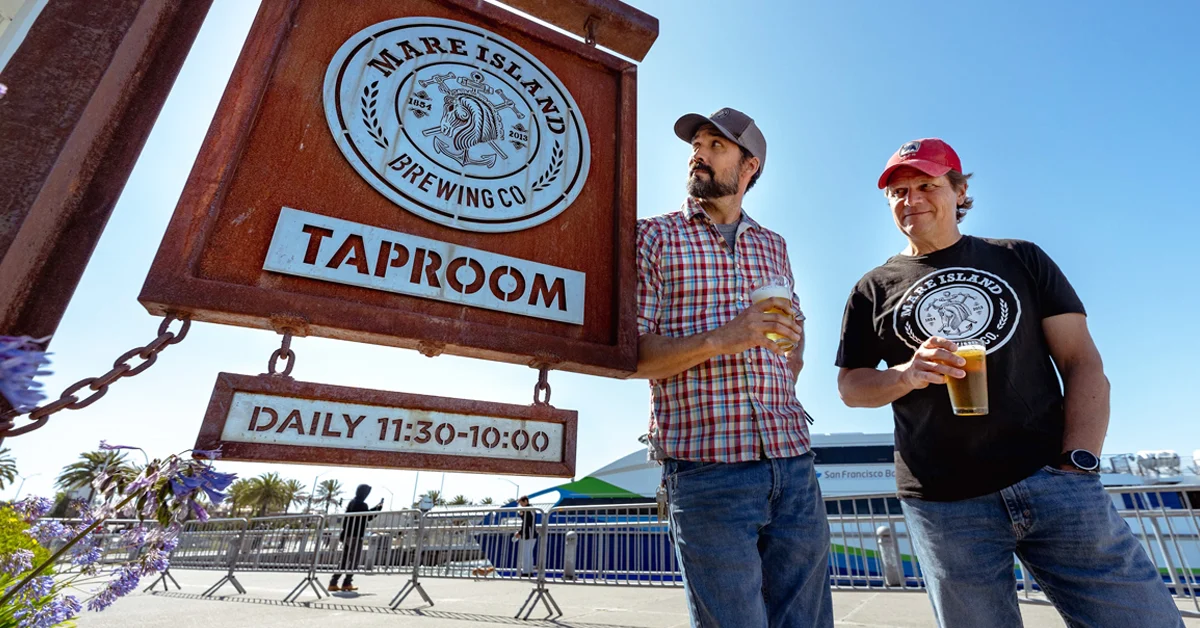
The age-old industry adage that it takes a lot of beer to make good wine is more than a humorous observation among cellar hands; it is a fundamental truth of the fermentation trade. In the sun-drenched valleys of California, where the worlds of viticulture and zymurgy frequently collide, a growing number of artisans are proving that the skills required to craft a world-class Cabernet Sauvignon are surprisingly transferable to the production of an Imperial IPA or a German-style Pilsner. As the United States’ leading producer of both wine and craft beer, California has become a laboratory for "crossover" fermentation, where winemakers-turned-brewers are redefining the aesthetic and technical boundaries of the beverage industry.
This intersection of industries is driven by a combination of sensory necessity and professional curiosity. For winemakers, the appeal of a cold beer at the end of a long day of "tasting through" barrels is rooted in biology. Wine is inherently acidic, often high in tannins, and possesses a complex structure that can lead to significant palate fatigue. Beer, by contrast, offers a lower pH profile, refreshing carbonation, and a colder serving temperature, acting as a functional palate cleanser. This practical relationship has evolved into a professional bridge, leading many of the state’s most respected winemakers to launch their own brewing operations.
The Dual-Career Legacy of Sherman Thacher
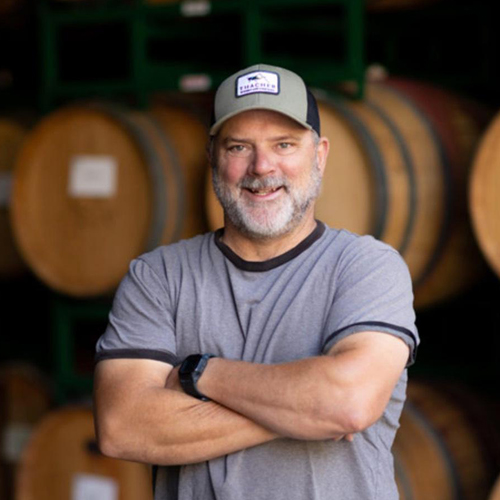
One of the most prominent figures in this dual-industry landscape is Sherman Thacher, the founder and winemaker of Thacher Winery in Paso Robles. Located on California’s Central Coast, Thacher is widely respected for his focused, site-specific cuvées. However, his professional foundation was built not in a vineyard, but in a brewhouse. From 1992 to 2006, Thacher served as the brewmaster at Los Gatos Brewing Company, where he specialized in the rigorous discipline of German-style lagers and ales.
Thacher’s transition from grain to grape highlights the shared technical requirements of both fields. "Attention to detail is critical in brewing," Thacher notes, emphasizing that the sanitary standards and temperature controls required to maintain a clean fermentation in beer are equally vital in winemaking. While he acknowledges that wine is somewhat more "resilient" than beer—owing to its lower pH, higher alcohol content, and lack of residual sugars—the precision learned in the brewhouse remains a cornerstone of his winemaking philosophy. Today, while Thacher’s professional focus has shifted entirely to the vineyard, his ties to the brewing community remain a vital part of his identity, illustrating the lifelong bond between these two fermentation sciences.
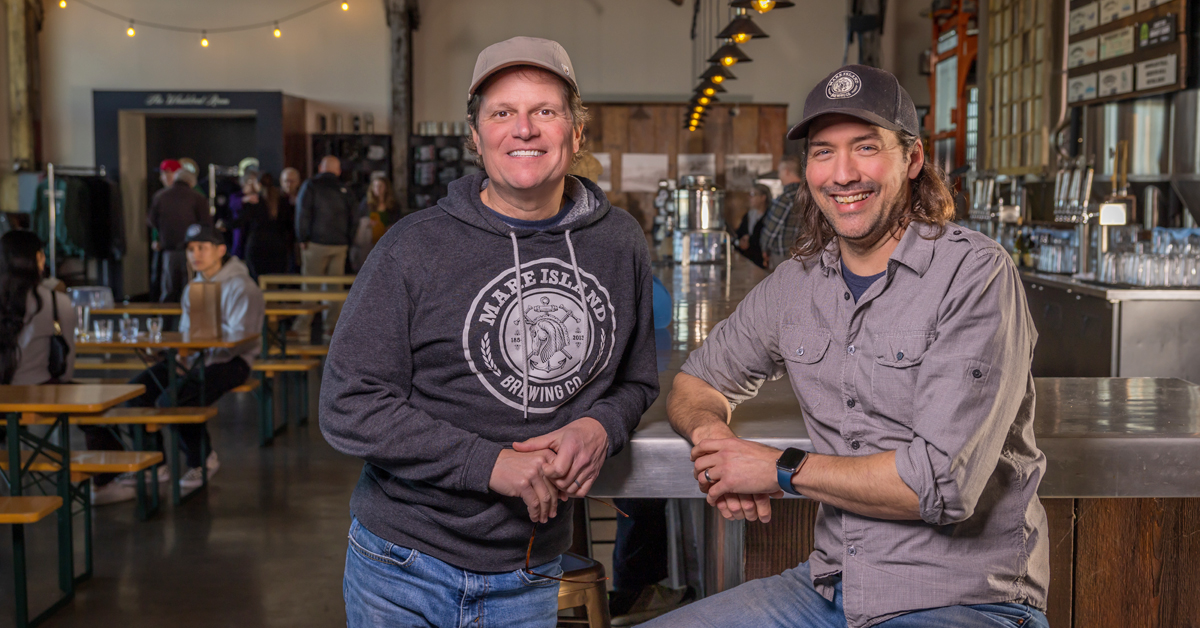
The Maritime Heritage of Mare Island Brewing Co.
The crossover phenomenon is perhaps most visible in the partnership of Kent Fortner and Ryan Gibbons, the co-founders of Mare Island Brewing Co. Both men were formally trained as winemakers and first crossed paths on a crush pad in the Napa Valley, the epicenter of American viticulture. Their transition to brewing was not a rejection of wine, but rather an expansion of their creative portfolios.
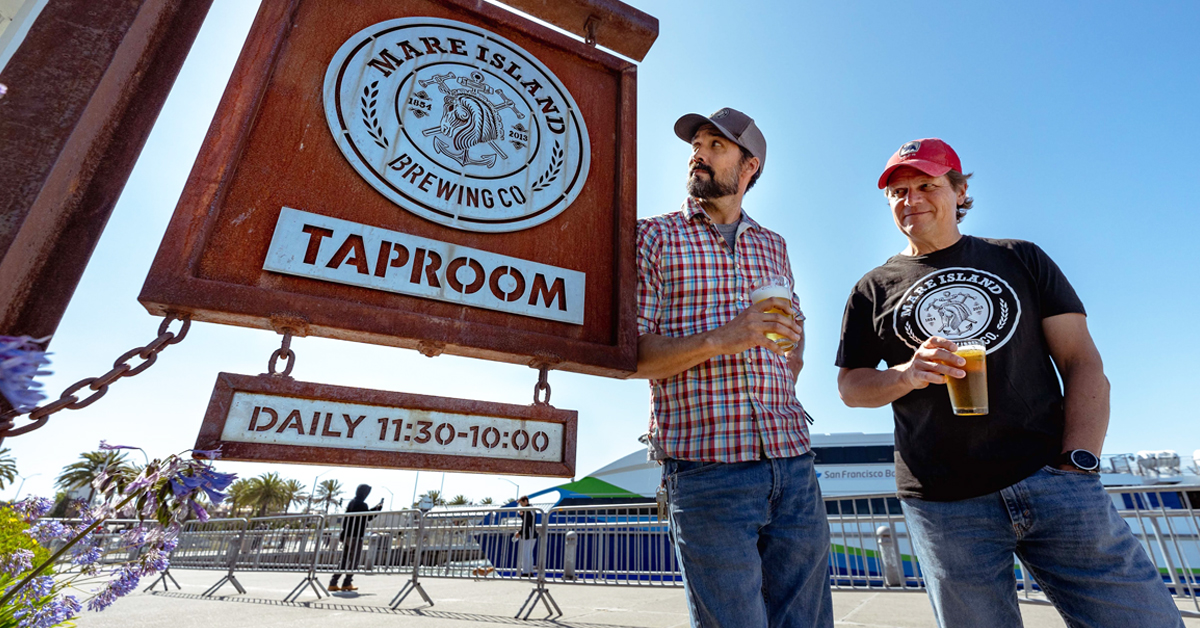
In 2013, they brewed their first commercial beer, Saginaw Golden Ale. The name was a deliberate nod to the Saginaw, the first ship built at the historic Mare Island Naval Shipyard. Established in 1854 as the first U.S. naval installation on the West Coast, Mare Island serves as the spiritual and physical home for the brewery, which has since expanded to three locations: the Ferry Taproom in Vallejo, the Coal Shed Brewery on the Mare Island waterfront, and the First Street Taproom in Benicia.
Despite the success of the brewery, Fortner remains deeply embedded in the wine world. He continues to operate Road 31 Wine Co., a boutique operation he founded over two decades ago. Road 31 focuses on a single product: a Napa Valley Pinot Noir sourced from the Carneros region. Fortner’s commitment to his vines is absolute, famously stating that he would only relinquish his pruning shears under the most dire of circumstances. This "dual-citizenship" in both industries allows Mare Island to offer a unique taproom experience, pouring Fortner’s high-end Pinot Noir alongside their flagship ales.
From New Zealand Harvests to Sonoma Brewhouses
The narrative of the winemaker-turned-brewer often begins with a moment of "teenage rebellion" or a transformative experience abroad. For Remy Martin, co-founder of Fogbelt Brewing in Sonoma County, the attraction to beer was a departure from his family heritage. His father, the late Dennis Martin, was a titan of the wine industry, serving as a winemaker at Fetzer Vineyards for three decades. Growing up in wine country, Martin found that wine was ubiquitous, making beer a "rare treat."
The spark for Fogbelt Brewing occurred during a grape harvest in New Zealand, a common rite of passage for young winemakers. It was there that Martin and co-founder Paul Hawley began homebrewing in a garage, experimenting with recipes that would eventually form the basis of their commercial lineup. To formalize his transition, Martin enrolled in the Master Brewers Program at the University of California, Davis (UC Davis). This institution is globally recognized as a premier center for both viticulture and enology, further cementing the academic link between the two industries.
Technical Divergence: Vintage Variation vs. Consistency
While the fundamental act of fermentation—yeast converting sugar into alcohol and CO2—is the same for both beer and wine, the professional expectations for each product differ significantly. This is a point of distinction emphasized by Remy Martin. In the wine world, "vintage variation" is celebrated. A winemaker’s goal is often to express the unique characteristics of a specific growing season, meaning the 2021 vintage of a wine should taste distinct from the 2022 version.
In contrast, the craft beer industry is built on the pillar of consistency. Consumers expect a flagship IPA to taste the same every time they purchase it, regardless of the time of year or the specific batch. This requires a different type of mastery—one focused on sourcing raw materials (hops and malt) that can be blended to achieve a uniform profile year-round. Additionally, the production cycles differ; winemakers have one "crush" per year, whereas brewers are in a state of constant production, leaving little room for a "slow season."
Branding and the "Wine Lens" in Marketing
The influence of winemaking on the craft beer sector extends beyond the liquid in the glass; it is also reshaping the visual identity of the industry. Ryan Gibbons of Mare Island Brewing Co. observes that their winemaking backgrounds heavily influence their marketing and brand aesthetics. While the craft beer market is often characterized by colorful, "cheeky," or even "crass" label designs intended to grab attention on a crowded shelf, Gibbons and Fortner have opted for a more restrained approach.
By applying a "winemaking lens" to their branding, they aim to bring a sense of class and elegance to the beer space. Their labels often feature historical imagery, clean typography, and a sophisticated color palette that mirrors the aesthetic of high-end wine bottles. This strategy appeals to a crossover demographic—consumers who appreciate the complexity of a craft beverage but prefer a more traditional, refined presentation.
Economic Impact and the California Context
The synergy between these two industries is a significant driver of the California economy. According to data from the Wine Institute and the Brewers Association, California remains the undisputed leader in both sectors. The state’s wine industry contributes over $57 billion annually to the state economy, while the craft brewing sector contributes approximately $9 billion.
The presence of over 4,000 wineries and more than 1,100 craft breweries in the Golden State creates a dense ecosystem of fermentation expertise. This density allows for shared resources, such as specialized laboratory services, mobile bottling lines, and agricultural research. Organizations like the Brewers Association, a not-for-profit trade group, work to protect the interests of small and independent brewers, many of whom navigate the same regulatory and distribution challenges as small-scale vintners.
Conclusion: A Shared Future of Fermentation
As the lines between beverage categories continue to blur, the crossover between winemaking and brewing is likely to accelerate. The technical overlaps in fermentation science, combined with the shared geographic hubs of Napa, Sonoma, and Paso Robles, ensure that the "grapes to grains" pipeline remains robust.
Whether it is Sherman Thacher applying brewmaster precision to his Syrah, or the Mare Island team bringing Napa Valley elegance to their taprooms, the infusion of winemaking philosophy into the craft beer world is elevating the quality and diversity of American beverages. Ultimately, the two industries are bound by a common goal: the pursuit of flavor through the meticulous management of natural processes. As Kent Fortner concludes, whether the day was spent in the vineyard or the brewhouse, the result is the same: the end of the day calls for a beer.