Jia Lissa
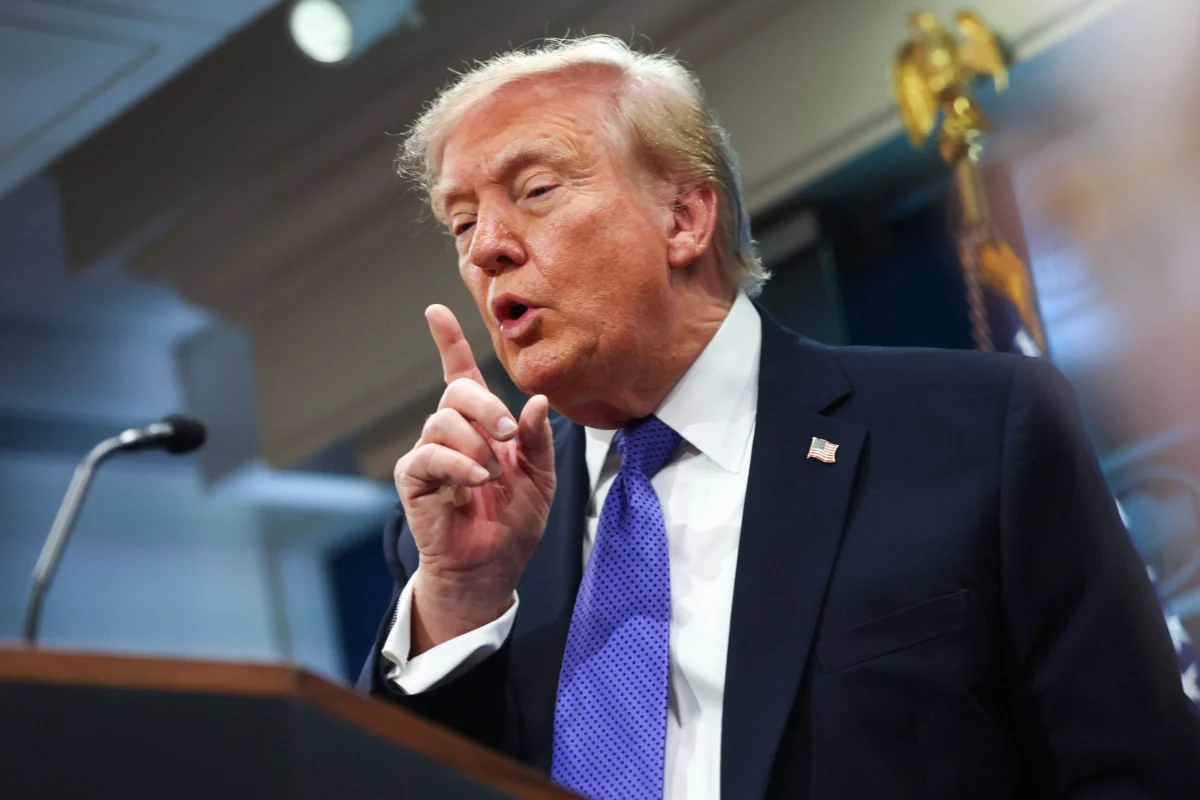
The aftermath of the 2022 US midterm elections has seen a distinct shift within the fringes of the election denial movement, as prominent figures who championed baseless claims of widespread fraud now confront a perceived lack of urgency from former President Donald Trump. Two weeks following the electoral contest, a palpable sense of frustration and dejection has settled over those who had vociferously promoted unsubstantiated theories, particularly as Trump has largely refrained from actively leading new challenges to the results, a stark contrast to his post-2020 election conduct.
Frustration Mounts Among Election Deniers After Midterm Results
Among the most visibly disheartened is Joe Oltmann, a seasoned purveyor of election denial rhetoric, who cut a dejected figure with his head in his hands. For weeks leading up to the midterms, Oltmann had been a vocal proponent of the unsubstantiated claim that the elections were pre-rigged. His efforts included sending the White House a comprehensive, 75-page report detailing an elaborate conspiracy theory. This document, lacking any verifiable evidence, posited that former Venezuelan officials had covertly infiltrated the US electoral system to manipulate outcomes in favor of Democratic candidates. Oltmann even claimed to have directly communicated with President Donald Trump by phone regarding these alleged findings.
However, despite these energetic efforts and purported direct channels to the former president, the anticipated intervention or widespread challenge to the midterm results failed to materialize. The perceived inaction left Oltmann and others in his cohort disillusioned, as their calls for overturning the election results went unheeded by the very figure they expected to champion their cause. The Democratic Party, defying many pre-election predictions of a significant "red wave," secured an overwhelming victory, maintaining control of the Senate and limiting Republican gains in the House of Representatives. This outcome further fueled the conspiratorial narratives among deniers, who struggled to reconcile the results with their pre-conceived notions of a rigged system.
Trump’s Evolving Stance: From Endorsement to Apparent Disinterest
In the wake of the unexpectedly strong performance by Democrats, former President Trump has broadly appeared to accept the midterm results, albeit with characteristic qualifiers. He notably attributed the Republican losses to his name not appearing on the ballot, a claim that sidesteps responsibility while implicitly acknowledging the outcomes. While Trump initially shared some election conspiracy theories on his Truth Social platform in the immediate days following the election, his subsequent actions have been notably subdued compared to the fervor he exhibited after the 2020 presidential election.
This shift in Trump’s public posture has created a chasm between the former president and a segment of his most ardent supporters in the election denial movement. These influential figures, many of whom claim direct contact with Trump, are now expressing profound frustration over what they perceive as his lack of enthusiasm or seeming interest in overturning the results. Their increasingly desperate demands have escalated to include extreme measures such as declaring martial law and instituting military tribunals, reflecting a deepening commitment to their unproven theories despite the absence of any official or legal support.
Initial Flurry of Activity and Subsequent Silence
Days after the midterm elections in November, as the results solidified a Democratic victory, Trump initially engaged with the conspiracy theories circulating online. He shared screenshots of posts from various election deniers on his Truth Social account, amplifying their baseless claims about the midterms. On November 9, he explicitly questioned the integrity of the election, writing on Truth Social, "Does anybody really believe that this ‘Election’ was honest. How could the Polls be so wrong??? Some early voting ‘dumps’ were so large that it was impossible to win, no matter how many people went to vote. It’s all about the machines, which are far more important than the voter! President DJT."
This initial surge of engagement was met with celebration by election deniers on platforms like X (formerly Twitter) and Telegram, who interpreted it as a sign that Trump was poised to fully endorse and lead their community once again. However, in the weeks that followed, Trump largely refrained from posting extensively about stolen or rigged elections, save for a few limited and less emphatic references. This subsequent silence has left many of his most fervent followers feeling abandoned and without a clear leader to spearhead their efforts.
Echoes of 2020: Desperate Demands and Unheeded Calls for Action
The current calls for extreme measures within the election denial movement bear an unsettling resemblance to the demands made in the weeks preceding the January 6, 2021, attack on the US Capitol. Alarmingly, some of the same figures who were involved in promoting those earlier narratives are once again at the forefront. However, a significant difference this time is the apparent silence from former allies within the Trump administration who once actively boosted these baseless claims. The institutional support, or at least the perceived receptiveness, that the movement enjoyed in 2020 appears to have diminished.
Joe Oltmann’s Radical Proposals
Joe Oltmann, reflecting the heightened desperation, outlined radical proposals for addressing what he views as election fraud. "We can walk into every voting [location] and say: ‘Take this equipment, throw it out in the street,’" Oltmann stated. He insisted, "We can do that… that’s not violent… We’re just doing our jobs as Americans." Such rhetoric, advocating for the seizure and destruction of election infrastructure, raises serious concerns about potential civil unrest and challenges to the lawful administration of elections. These actions, if pursued, would represent a direct assault on the democratic process and could invite legal repercussions.
Patrick Byrne’s Alternative Strategy and Flynn’s Role
Patrick Byrne, the controversial founder of Overstock.com, who claims to have spent an astonishing $100 million promoting election integrity over the past six years, echoed the sentiment of 2020. On a recent podcast, he asserted, "This is a carbon copy of 2020." Byrne further claimed that he was in a room with Trump two weeks before the Capitol attack, advocating for the very measures he is now urging the former president to take. While Byrne disagrees with Oltmann’s suggestion to seize voting machines, he has formulated an alternative plan centered on reinstating Michael Flynn, a prolific election denier, to his former role as Trump’s national security adviser.
Byrne’s vision involves a more "strategic" approach. "Instead of going straight to insurrection, [Trump] uses current authorities to go inspect hard drives in 12 cities, and you bring Michael Flynn in as national security adviser, and then turn it over to Michael. Michael can get this all done by December 1," Byrne proposed over the weekend. He added, "If you do find foreign activity… then say, OK, I’m nullifying this election, I’m declaring a new election in 120 days." This elaborate scheme, though presented as a non-insurrectionary path, fundamentally calls for the nullification of a lawfully conducted election based on unsubstantiated claims and the arbitrary seizure of electoral data, an action that has no basis in US law or constitutional precedent.
Peter Ticktin’s Unsubstantiated Claims and Calls for Martial Law
Another figure pushing for drastic action is Peter Ticktin, a lawyer and former schoolfriend of Trump. In an interview with WIRED on November 11, Ticktin claimed, "I am going to give evidence to the president today… I have a wealth of evidence." He refused to share this alleged evidence with WIRED, stating that the documents came from "various sources, some who prefer to be anonymous." Ticktin also asserted his intention to speak directly with Trump to advocate for the president to "nullify all of the results of the last election and declare martial law." By the following Monday, Ticktin informed WIRED that he had not yet spoken with the president but hoped to do so soon. His tone, however, had shifted to one of resignation: "If we take him for what he’s saying at this point in time, he’s not planning to do anything beyond cooperate with the globalists."
The notion of declaring martial law to overturn election results is a profoundly anti-democratic and unconstitutional proposition. Such an action would represent a severe breach of the separation of powers and civil liberties, plunging the nation into a constitutional crisis. There is no legal mechanism for a president to unilaterally nullify election results, let alone declare martial law for such a purpose.
The Broader Landscape of Election Distrust and Republican Divisions
While many on the mainstream right have, perhaps in tacit acknowledgment of the electoral reality, followed Trump’s lead in largely ignoring claims about rigged midterms, the sentiment of distrust remains potent within a significant segment of the Republican base. A new poll from UC San Diego indicates that a substantial number of Republicans believe the midterm votes were not "free and fair." This persistent belief in electoral malfeasance, despite overwhelming evidence to the contrary and the certifications of election results by officials from both parties, underscores the deep partisan divide regarding the integrity of democratic processes.
The election denial movement itself appears to be fractured over the path forward. The differing strategies proposed by Byrne and Oltmann, for instance, highlight internal disagreements on tactics, even as they share a common goal of discrediting election outcomes. This internal discord, coupled with Trump’s diminished engagement, suggests a potential weakening of the movement’s unified front, at least in its current iteration.
Public Trust and Partisan Divides
The sustained promotion of baseless conspiracy theories about election rigging has had a measurable impact on public trust in democratic institutions. Polling data consistently shows a significant partisan gap in confidence in election integrity, with Republicans far more likely than Democrats or independents to believe that elections are not conducted fairly. This erosion of trust poses a long-term threat to the stability of the electoral system, as a substantial portion of the populace remains convinced that their votes may not matter or that the system is inherently corrupt. The 2022 midterms, despite their clear outcomes, have done little to bridge this divide, with deniers simply shifting their focus from presidential to congressional and state-level contests.
Analysis: The Diminishing Influence of Hardline Deniers and the Future of the Movement
The current situation suggests a moment of reckoning for the hardline election denial movement. The absence of a strong, unified lead from Donald Trump, who served as the primary catalyst and legitimizer of the "stolen election" narrative in 2020, has left many of his most extreme followers adrift. While Trump continues to occasionally echo their sentiments on social media, his decision not to launch a full-scale legal and political offensive against the 2022 midterm results indicates a strategic retreat or at least a prioritization of other political objectives, such as his 2024 presidential bid.
Legal and Constitutional Realities
The proposals put forth by Oltmann, Byrne, and Ticktin—ranging from seizing voting machines and declaring martial law to nullifying elections and holding new ones—are not only without factual basis but also entirely unconstitutional and illegal. The US electoral system is decentralized, with elections administered at the state and local levels, protected by robust legal frameworks and oversight. There is no provision for a president or any other federal authority to unilaterally overturn certified election results, seize equipment without due process, or declare martial law to manipulate democratic outcomes. Such actions would be met with immediate legal challenges and would undoubtedly fail in courts, as previous attempts to challenge the 2020 election results overwhelmingly did. The judiciary, including the Supreme Court, repeatedly rejected attempts to invalidate the 2020 results, affirming the constitutional process.
Implications for Political Discourse and Democratic Institutions
The current phase of the election denial movement highlights several critical implications for American political discourse and democratic institutions. Firstly, it underscores the persistent danger of disinformation and conspiracy theories, which, once embedded, are difficult to dislodge, even in the face of contradictory evidence. Secondly, the movement’s internal fracturing and Trump’s relative detachment may lead to a diffusion of efforts, making it harder for these groups to coalesce around a single, coherent strategy. However, it also means that smaller, more radical factions might pursue more extreme and localized actions, potentially posing different kinds of threats to election administration and civil order.
The fact that figures like Michael Flynn, despite Byrne’s suggestions for his reinstatement, have publicly acknowledged the GOP’s "master class in how to fail" in the midterms indicates a pragmatic assessment of the political landscape, even among those previously associated with election denial. This suggests a potential recognition, at least among some, that the narrative of a stolen 2022 election is not gaining the traction seen in 2020, partly due to the clear and decisive nature of the Democratic victories in key races and the lack of systemic irregularities.
Ultimately, while the most extreme demands for overturning the 2022 midterms appear destined to fail due to legal impossibilities and a lack of significant institutional backing, the underlying sentiment of distrust in elections remains a potent force. Addressing this erosion of confidence will require sustained efforts from political leaders, media, and civil society to reinforce the integrity of the electoral process with verifiable facts and transparent procedures, ensuring that such baseless claims do not continue to undermine the foundations of American democracy. The White House, which did not respond to a request for comment regarding these specific claims, continues to navigate a political environment where fundamental democratic processes are routinely questioned by a vocal minority.