admin
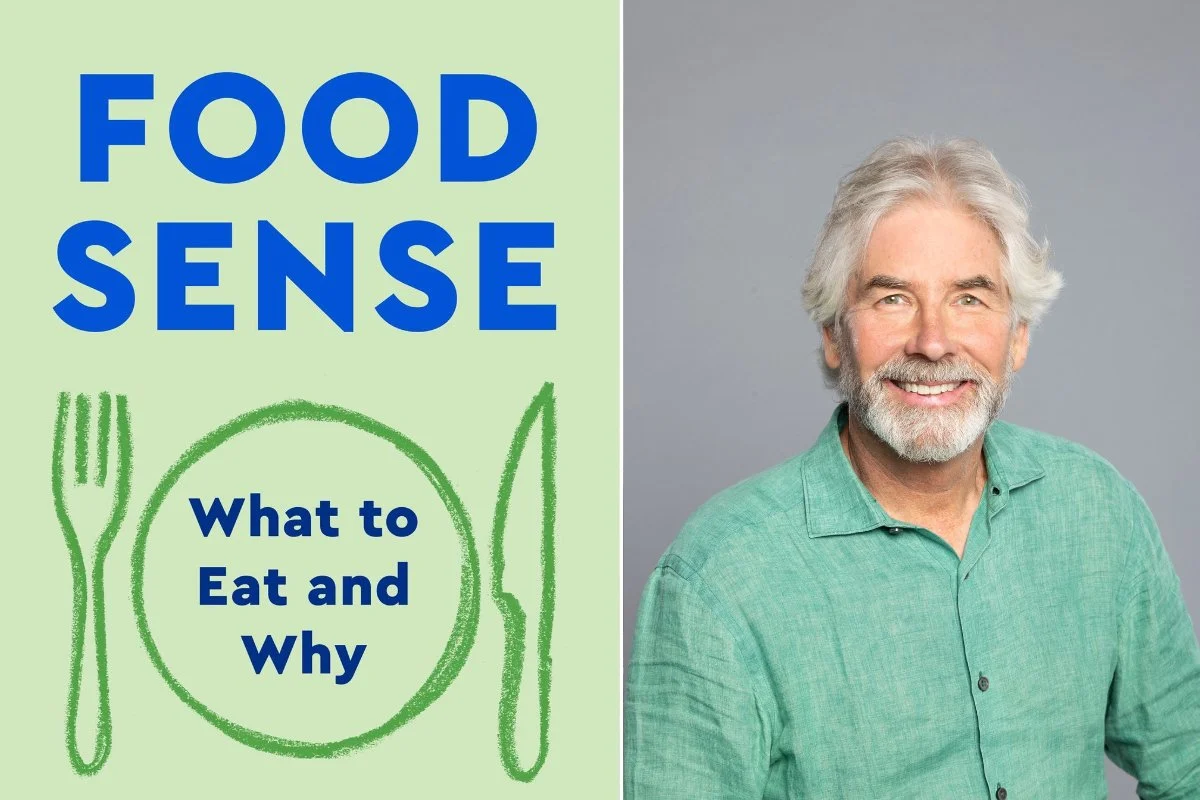
In a landscape increasingly polarized by conflicting dietary advice and politicized science, Dr. Christopher Gardner, a distinguished nutrition researcher and former advisor to national dietary guidelines, offers a beacon of clarity with his latest book, Food Sense: What to Eat and Why. Published in October 2025, Gardner’s work arrives at a critical juncture, aiming to cut through the din of dietary controversies and empower individuals with a nuanced, evidence-based approach to eating. His insights are particularly timely given recent disruptions to the process of establishing the nation’s official Dietary Guidelines for Americans and the burgeoning influence of social media on public health discourse.
A Career Dedicated to Guiding National Nutrition Policy
Dr. Gardner’s expertise is rooted in decades of rigorous scientific inquiry and active participation in shaping public health recommendations. Most recently, he served on the advisory committee of nutrition researchers tasked with formulating recommendations for the Dietary Guidelines for Americans (DGA) 2025-2030, a cornerstone document influencing food policy, nutrition education, and food assistance programs for millions across the United States. Concurrently, he contributed to the American Heart Association (AHA) 2026 Dietary Guidance, underscoring his consistent involvement in setting benchmarks for cardiovascular health. These roles placed him at the forefront of synthesizing complex scientific data into actionable dietary advice, a responsibility he approaches with a blend of scientific rigor and profound humility.
His extensive background in both academic research and policy advisory committees forms the bedrock of Food Sense. As Gardner noted in a recent interview, his experiences have highlighted a fascinating dichotomy: "Given how much public controversy there seems to be over some of these topics, I was always amazed that once I got in a room full of many other colleagues, we would almost always agree." This consensus, he explained, invariably comes with the acknowledgment of data limitations – "that humility that we don’t have all the trials that we’d like to have. We sure wish we had more data." The challenge, then, lies not in achieving scientific alignment, but in translating this nuanced, often incremental, scientific truth into a compelling public message that can compete with sensationalized claims.
The Politicization of Dietary Guidelines: A Troubling Precedent
The timing of Food Sense could not be more poignant, coinciding with an unprecedented level of political interference in the formulation of the Dietary Guidelines for Americans. Traditionally, the DGA, jointly published every five years by the U.S. Departments of Agriculture (USDA) and Health and Human Services (HHS), is based on an exhaustive review of scientific evidence by an independent advisory committee. This rigorous process is designed to ensure the guidelines are objective, evidence-based, and free from political or industry influence, serving as a vital tool for preventing chronic diseases and promoting health for individuals aged two and older.
However, the process for the 2025-2030 guidelines faced significant disruption. In a move that drew widespread concern from the public health community, the Trump administration dismissed a substantial portion of the recommendations put forth by the advisory committee on which Gardner served. Instead, the administration opted for scientific evaluations from a separate, unelected panel created without public input or the transparency that typically governs such processes. The revised Dietary Guidelines, which were released in January 2026, diverged significantly from the scientific consensus, notably by giving a boost to red meat, full-fat dairy, and other fats, while issuing general warnings against highly processed foods. This stark contradiction to the advisory committee’s evidence-based recommendations raised alarms among health experts, who warned that such politicization could erode public trust in scientific institutions and compromise the integrity of critical public health guidance. The implications of this departure from established scientific protocol are profound, potentially undermining decades of efforts to combat diet-related chronic diseases like heart disease, type 2 diabetes, and obesity, which continue to place a heavy burden on the American healthcare system.
The Echo Chamber of Social Media: Fueling Dietary Divides
Beyond institutional challenges, the current nutrition landscape is further complicated by the pervasive influence of social media. Gardner began writing Food Sense more than five years ago, but during its long gestation, the digital sphere transformed into a battleground for dietary ideologies. The rise of movements such as "Make America Healthy Again" (MAHA) and its cadre of social media influencers has amplified conversations around specific food components, often presenting them in an alarmist or overly simplistic manner. Topics like the alleged dangers of seed oils, the blanket condemnation of ultra-processed foods, and the push for higher protein consumption have become viral phenomena, spawning trends like protein pastries and beef tallow fries.
This online environment, characterized by rapid information dissemination and the prioritization of engagement over accuracy, has unfortunately led to a climate where "nutrition research and science have come under attack." Influencers, often without formal scientific training, present anecdotal evidence or selectively interpret data to support sensational claims, fostering distrust in established scientific bodies and consensus-driven recommendations. This makes Gardner’s book, which champions a return to nuanced, evidence-based understanding, particularly vital.
Cutting Through the Noise: The Genesis of Food Sense
In Food Sense, Gardner leverages his unique experience to help readers re-evaluate their perceptions of food and nutrition advice. He confronts the allure of simplistic "magic bullet" diets, a phenomenon he describes as the public’s preference for dramatic revelations over consistent, if less exciting, scientific findings. "What they really want to hear is, ‘Everything you thought you knew for 50 years is wrong, and a bunch of you really should be eating green jellybeans, and a bunch of you really should be eating ice cream, because that’s the secret to longevity, according to Doctor X.’ That’s much more exciting to read, but it’s really unlikely to be true," Gardner explains. His book aims to temper this appetite for novelty with a grounding in scientific reality and a recognition of human diversity.
The book’s evolution during its writing process reflects the dynamic nature of nutrition discourse. For instance, "the seed oil thing took off" during this period, necessitating its inclusion. Similarly, Gardner’s extensive collaboration with microbiologists Justin and Erica Sonnenburg, resulting in numerous microbiome and diet studies, made the addition of a microbiome chapter a "no-brainer." These updates ensure Food Sense remains relevant to contemporary discussions, addressing key public concerns with up-to-date scientific context.
Deconstructing Hot Topics: Seed Oils, Ultra-Processed Foods, and Protein
Food Sense directly addresses many of the "hot topics" that dominate current nutrition debates:
- Seed Oils: While social media narratives often demonize seed oils (like canola, soybean, and corn oil) as inflammatory and harmful due to their processing and omega-6 fatty acid content, Gardner likely presents a more balanced view. Scientific consensus, supported by numerous studies, generally suggests that these oils, when consumed in moderation as part of a balanced diet, are sources of unsaturated fats that can be beneficial for heart health, particularly when replacing saturated fats. The concerns often stem from misunderstandings of lipid metabolism and the distinction between unprocessed and highly refined oils.
- Ultra-Processed Foods (UPFs): The term "ultra-processed foods" has become a lightning rod, with many advocating for their complete avoidance. Gardner’s experience on the DGA Advisory Committee revealed the complexities of defining and studying UPFs. He notes that the most widely used definition, from Brazilian epidemiologist Carlos Monteiro (the NOVA classification), focuses less on mechanical processing (like grinding flour) and more on the presence of "cosmetic additives, artificial flavors, artificial colors, emulsifiers." This distinction poses a challenge for research, as studies linking UPFs to adverse health outcomes often struggle to isolate the effects of these additives from the overall nutritional profile of the food (high in sugar, salt, unhealthy fats, and low in fiber/nutrients). Gardner suggests a significant overlap between what is commonly understood as "junk food" (characterized by poor nutritional quality) and many foods classified as ultra-processed, indicating that focusing on overall nutritional quality might be a more practical approach for federal agencies as they look to officially define the term.
- Higher Protein Consumption: The push for increased protein intake, often linked to satiety, muscle building, and weight management, is another prominent trend. While adequate protein is essential, the "more is always better" mentality can be misleading. Gardner’s book likely explores the benefits of sufficient protein intake within a balanced diet, while cautioning against excessive consumption that may displace other essential nutrients or create metabolic imbalances for certain individuals.
The "Puzzle" of Nutrition Research: Embracing Humility and Nuance
A significant theme in Food Sense is the inherent complexity and evolving nature of nutrition research itself. Gardner likens it to a puzzle, emphasizing that even the "gold standard" of scientific inquiry—randomized controlled trials (RCTs)—do not provide all the answers. He acknowledges the common critique heard on social media: "the evidence is association not causation." While advocating for rigorous science, he also highlights the trade-offs: "The more scientifically rigorous you make it, the more narrow the question is. If you make it really broad and generalizable, it’s a lot harder to make it rigorous, because you haven’t controlled for all the confounding variables." This scientific humility, the acceptance that knowledge is always provisional and incomplete, is crucial for fostering a realistic understanding of nutrition. It encourages a critical, rather than dogmatic, engagement with scientific findings.
The Power of Individualization: No One-Size-Fits-All Diet
At the heart of Food Sense is the powerful, liberating message that there is no perfect, catch-all diet suitable for everyone. This nuanced, individualistic take stands in stark contrast to the rigid prescriptions of many fad diets. Gardner challenges the notion of a universally optimal meal plan with a simple, yet profound, thought experiment: "What if I found the world’s best breakfast, lunch, and dinner? This set of ingredients provided the most positive nutrients and the least unhealthful nutrients known to humankind, and I’m sharing it with you today. Do you think you could eat the same breakfast, lunch, and dinner every day for the rest of your life? No, you would be totally bored."
This rhetorical question underscores a fundamental truth: human beings are diverse, not only biologically but also culturally, religiously, and personally. Dietary preferences are deeply intertwined with identity and lifestyle. "What we’ve seen is there are people who thrive around the world on really different diets. It’s not possible that there’s one diet that people should be on," Gardner asserts. He champions the idea that individuals can—and should—find a way of eating that aligns with their cultural heritage, religious practices, and personal values, rather than blindly adhering to dictates from social media influencers or overly prescriptive diet gurus.
This approach offers significant "wiggle room," empowering individuals to pursue health in a sustainable and enjoyable manner. It shifts the focus from rigid rules to adaptable principles, fostering a more sane, reasonable, and ultimately more encouraging message about nutrition. In a world saturated with conflicting advice, Gardner’s emphasis on flexibility and personal agency provides a refreshing and much-needed antidote to dietary dogma.
Conclusion: Towards a More Sane and Sustainable Approach to Food
Dr. Christopher Gardner’s Food Sense emerges as an essential guide in a tumultuous era for nutrition. By meticulously detailing the scientific consensus, acknowledging research limitations, and advocating for an individualized approach, the book offers a powerful counter-narrative to the sensationalism and politicization that increasingly define public discourse on food. In an environment where official dietary guidelines face unprecedented interference and social media amplifies misinformation, Gardner’s call for critical thinking, scientific humility, and personal agency is more vital than ever. His work encourages a shift from chasing fleeting trends to cultivating a deep, intuitive understanding of what truly nourishes the body, mind, and spirit, making health an accessible and sustainable pursuit for everyone.