admin
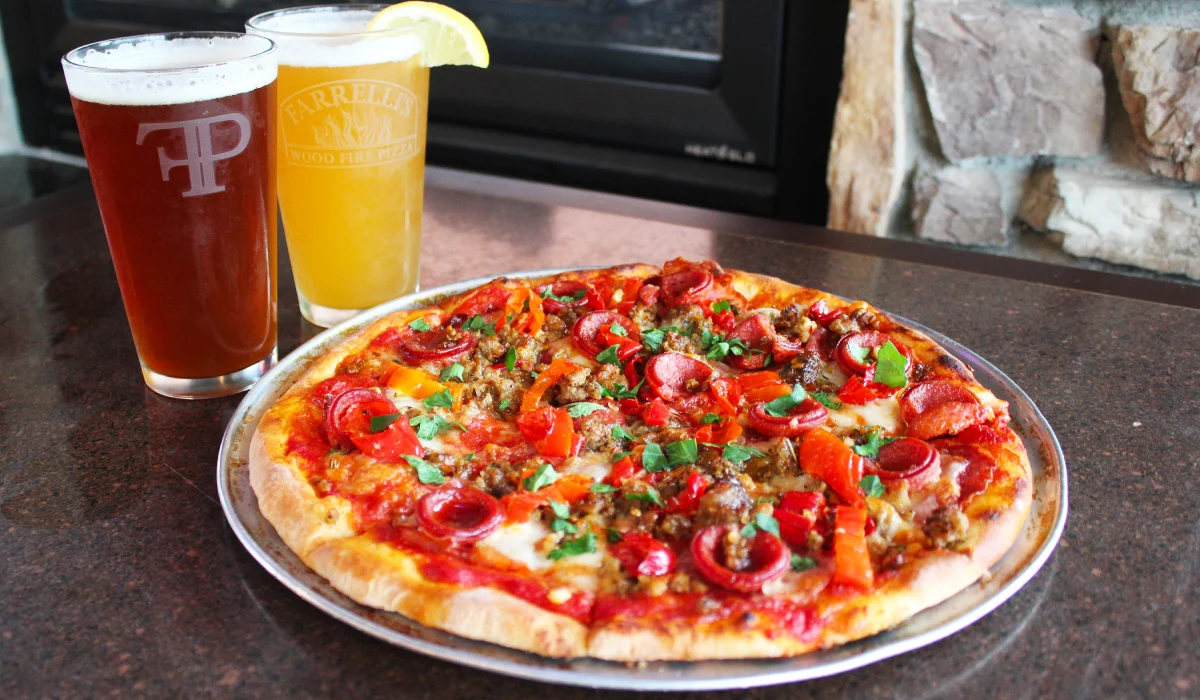
The intersection of hospitality and technology has shifted from a peripheral concern to the central nervous system of the modern restaurant enterprise. For marketing executives in the food service sector, the challenge is no longer about whether to adopt digital tools, but how to integrate a sprawling ecosystem of customer data, loyalty programs, third-party marketplaces, and artificial intelligence into a cohesive business strategy. Clayton Krueger, a partner and Chief Marketing Officer at Farrelli’s Pizza, provides a unique lens into this evolution, rooted in nearly three decades of operational and executive experience. Based in DuPont, Washington, Farrelli’s Pizza operates 14 full-service units across the Pacific Northwest, positioning it as a regional powerhouse navigating the same technological pressures as global chains but with the precision required of a mid-market player.
Krueger’s perspective is informed by a career trajectory that mirrors the technological maturation of the industry itself. Joining the company as a dishwasher in 1997, he ascended to the role of CMO nearly two decades ago. During his tenure, the primary tools of restaurant marketing transitioned from print media and local sponsorships to complex Customer Data Platforms (CDPs) and AI-driven predictive modeling. His philosophy centers on a pragmatic, results-oriented approach to innovation, emphasizing that technology must solve tangible business problems rather than simply adding to the "SaaS bloat" that currently plagues many corporate profit and loss statements.
The Evolution of the Restaurant Tech Stack: 1997 to Present
To understand the current state of restaurant marketing, one must view it through the chronological lens of the digital revolution. When Krueger began his marketing leadership nearly 20 years ago, the primary focus was on physical presence and traditional loyalty tactics. The timeline of disruption since then has been relentless:
- The Social Media Era (2008–2012): The shift from one-way communication to two-way engagement via platforms like Facebook and Twitter.
- The Mobile and Online Ordering Wave (2012–2016): The transition of the point-of-sale (POS) from the counter to the guest’s pocket.
- The Delivery Disruption (2016–2020): The rise of third-party marketplaces like DoorDash and UberEats, which fundamentally altered the economics of off-premises dining.
- The Data and Personalization Era (2020–Present): The move toward hyper-localized marketing, CDPs, and the current rush toward integrated AI.
Krueger notes that restaurants were historically late adopters of these technologies compared to the retail or travel industries. However, the COVID-19 pandemic acted as a forced catalyst, compressing a decade of digital adoption into eighteen months. This rapid shift left many operators with fragmented systems that do not communicate with one another, creating a "data silo" problem that modern CMOs are now tasked with solving.
Reframing Third-Party Delivery as an Acquisition Engine
Perhaps the most controversial element of the modern restaurant tech stack is the third-party delivery marketplace. Industry data from the National Restaurant Association indicates that delivery now accounts for a significant portion of total revenue for full-service restaurants, yet the high commission fees—often ranging from 15% to 30%—have led many operators to view these platforms as a "necessary evil."
Krueger offers a different framework. Rather than viewing DoorDash or UberEats solely as high-cost fulfillment channels, he views them as powerful customer acquisition tools. "Third-party delivery gets a bad rap because of the high fees, disconnected guest experience, and non-owned customer data," Krueger acknowledges. However, he argues that no other marketing technology so effectively connects "hungry prospects" with a brand at the exact moment of intent.
At Farrelli’s Pizza, the strategy is not to maintain the third-party relationship indefinitely but to use it as a "top-of-funnel" entry point. The operational goal is to convert those third-party users into first-party guests. By incentivizing customers to download the Farrelli’s proprietary loyalty and online-ordering app—which offers more cost-effective delivery and exclusive rewards—the brand can reclaim the customer relationship and the associated data. This conversion strategy turns a high-commission transaction into a long-term, high-margin relationship.
From CRM to CDP: Achieving a Holistic Guest View
For years, the gold standard for restaurant marketing was the Customer Relationship Management (CRM) system. However, CRMs are often limited to "known" customers—those who have already opted into a loyalty program or signed up for an email list. This creates a blind spot regarding the vast majority of a restaurant’s foot traffic.
The adoption of Customer Data Platforms (CDPs) represents a significant leap forward. Unlike a traditional CRM, a CDP can aggregate data from multiple touchpoints, including POS transactions, online ordering, and even guest Wi-Fi usage. For Farrelli’s, this technology allows the marketing team to track a customer’s journey from their very first visit based on their payment method, even before they join a loyalty program.
"These new tools can show you the holistic picture of the customer at both a macro scale and micro details," Krueger explains. This granular visibility allows marketers to identify patterns—such as the frequency of visits or specific menu preferences—enabling them to send personalized offers that are statistically more likely to drive a return visit. According to industry benchmarks, personalized marketing can increase restaurant revenue by 5% to 15%, making the CDP a critical component of the modern revenue-generation strategy.
The AI Rush: Distinguishing Utility from Hype
The current "AI everything" trend in Silicon Valley has flooded the restaurant industry with promises of total automation. While Krueger acknowledges the power of artificial intelligence, he urges a disciplined approach to its implementation. The most effective use of AI in the current landscape, according to Krueger, is its ability to process fragmented data sets faster than any human analyst could.
Modern restaurant platforms now feature native AI that can surface trends, recommend guest segments, and suggest campaign strategies. However, Krueger draws a firm line at fully automated execution. The risk of AI-driven strategies is that they may lead to over-discounting or "message fatigue" by hitting guests with redundant outreach across overlapping segments.
Farrelli’s approach involves using AI as an analytical assistant rather than an autonomous pilot. By validating AI recommendations before they are deployed, the marketing team ensures that the brand voice remains authentic and that promotional strategies do not inadvertently erode margins. Krueger’s litmus test for any new AI tool is simple: "What problem are we attempting to solve?" If the technology is merely impressive without addressing a specific business friction point, it is discarded.
Operational Ownership and the Human Element
A recurring theme in Krueger’s leadership is the necessity of internal championship. He argues that the primary reason restaurant technology fails to deliver an ROI is a lack of ownership. "Without a dedicated team member who is championing the platform, the new tech will face the likely outcome of becoming another SaaS cost on your P&L as opposed to a revenue generator," he warns.
This perspective highlights a broader trend in the industry: the blending of marketing and IT roles. The modern CMO must be as comfortable discussing API integrations and data architecture as they are discussing brand aesthetics and menu innovation. For a 14-unit chain like Farrelli’s, this means being highly selective about which tools to add to the stack, ensuring that the team has the bandwidth to fully leverage every feature of the platforms they pay for.
The External Tech Threat: Streaming and Sports Bar Logistics
While much of the technology conversation focuses on internal stacks, Krueger points to an external technological shift that poses a significant threat to full-service, sports-centric restaurants: the fragmentation of televised sports.
Historically, restaurants could rely on a single satellite or cable provider to access almost all major sporting events. However, the migration of live sports to streaming platforms—including Amazon Prime Video for NFL’s Thursday Night Football, Peacock for exclusive NFL playoffs, and Apple TV for MLS—has created a logistical and financial nightmare for operators.
For a brand like Farrelli’s, which relies on a sports-bar environment to drive evening and weekend traffic, the need to manage multiple streaming subscriptions and commercial licenses across 14 locations is a complex challenge. Krueger notes that the industry needs a unified solution for commercial licensing that preserves the competitive buying power of restaurants. This "fragmentation of the screen" is a prime example of a technological shift that sits outside the marketing stack but directly impacts a brand’s ability to attract and retain guests.
Implications for the Future of Regional Chains
The insights shared by Clayton Krueger underscore a fundamental shift in the restaurant industry: the "moat" for regional brands is no longer just the quality of the food, but the sophistication of their digital infrastructure. As labor costs and ingredient prices continue to rise, the ability to efficiently acquire and retain customers through data-driven strategies becomes the primary driver of profitability.
Farrelli’s Pizza serves as a case study for how regional players can compete with national giants. By treating third-party delivery as a tactical acquisition tool rather than a permanent burden, leveraging CDPs for a holistic guest view, and maintaining a healthy skepticism toward AI-driven hype, the brand is positioning itself for sustainable growth in an increasingly digital marketplace.
The broader implication for the industry is clear: the most successful restaurant marketers of the next decade will be those who can balance the "high-touch" nature of hospitality with the "high-tech" requirements of modern commerce. As Krueger’s 27-year journey from the dish pit to the C-suite suggests, the tools may change, but the core objective remains the same—understanding the guest and delivering value at every point of contact.