admin
admin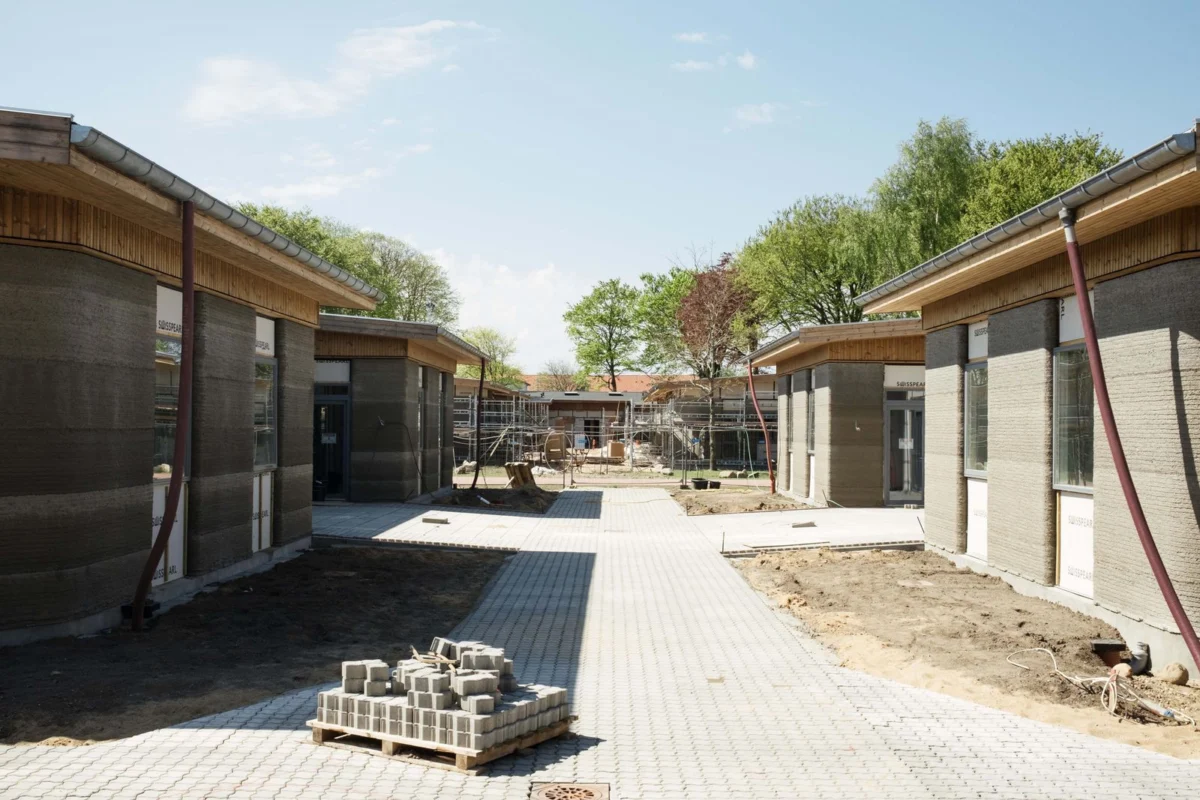
The global landscape of design, technology, and societal development is undergoing profound transformations, with two distinct yet equally significant movements garnering international attention: Denmark’s ambitious embrace of 3D-printed housing as a solution to contemporary urban challenges and the burgeoning trend of Native-owned data centers in North America, championing digital sovereignty and economic empowerment. These developments, emerging prominently by September 2026, underscore a broader shift towards sustainable, community-centric, and technologically advanced infrastructure, redefining how we conceive of homes and digital ecosystems.
Denmark’s Architectural Revolution: The Rise of 3D-Printed Housing
Denmark, long lauded for its innovative design and commitment to sustainability, has positioned itself at the forefront of a global architectural revolution: the widespread adoption of 3D-printed housing. This strategic move is not merely a technological novelty but a comprehensive response to pressing issues of housing affordability, construction waste, and the urgent need for accelerated development in a rapidly urbanizing world. By 2026, several pilot projects have transitioned into scaled initiatives, signaling a significant shift in the nation’s construction paradigm.
Context and Impetus
The impetus for Denmark’s deep dive into 3D-printed housing stems from a confluence of factors. Like many European nations, Denmark faces persistent housing shortages in its major cities, particularly Copenhagen and Aarhus, where demand consistently outstrips supply. Traditional construction methods are often slow, labor-intensive, and resource-heavy, contributing significantly to carbon emissions and waste. According to a 2024 report by the Danish Ministry of Climate, Energy, and Utilities, the construction sector accounted for nearly 30% of the nation’s total waste generation and a substantial portion of its industrial CO2 emissions.
In response, the Danish government, in collaboration with leading architectural firms and construction technology companies, launched the "Sustainable Built Environment 2030" initiative in late 2023. A cornerstone of this initiative was the allocation of substantial funding for research, development, and implementation of advanced manufacturing techniques in construction, with 3D printing identified as a key disruptive technology. The goal was to reduce construction time by 50%, material waste by 70%, and labor costs by 30% for specific housing types within five years.
Technological Advancements and Key Projects
By September 2026, Denmark has witnessed the successful completion of several landmark 3D-printed housing developments. One of the most prominent is the "Nordic Print Village" in Odense, a project initiated in early 2025 by a consortium comprising the Danish Building and Research Institute (SBi), architectural firm Bjarke Ingels Group (BIG), and Danish robotics company COBOD International. This village features 50 single-family and multi-unit residences, all constructed using large-scale concrete 3D printers. The printing process for each structure shell was completed in an average of 48 hours, a stark contrast to the weeks or months required by conventional methods.
The materials used are also innovative, incorporating a proprietary blend of recycled aggregates and low-carbon cement, significantly reducing the environmental footprint. Beyond concrete, research is actively exploring bio-based materials, such as wood fiber composites, for interior partition walls and non-load-bearing elements, further enhancing the sustainability profile.
Another notable project is the "Copenhagen Future Homes" initiative, focused on addressing affordable housing. Here, a modular 3D-printing approach has been deployed, with components printed off-site in controlled factory environments and then assembled on location. This hybrid method leverages the precision and speed of 3D printing while maintaining a degree of flexibility in site logistics.
Benefits and Challenges
The benefits of Denmark’s 3D-printed housing drive are multifaceted. Speed of Construction is perhaps the most immediate advantage, allowing for rapid deployment of housing solutions. Cost Efficiency is another critical factor, driven by reduced labor requirements and optimized material use. Design Flexibility enables architects to create complex, organic forms and highly customized structures that would be prohibitively expensive or impossible with traditional methods, fostering a new era of architectural expression. Furthermore, the inherent precision of digital fabrication leads to Improved Energy Efficiency through seamless insulation layers and minimized thermal bridging.
However, the journey has not been without challenges. Regulatory frameworks have had to adapt rapidly to accommodate novel construction techniques and materials. Standardization of 3D-printable building codes has been a continuous process, requiring close collaboration between industry, academia, and government bodies. Public perception and acceptance of "printed" homes also required educational campaigns to dispel misconceptions and highlight the quality, durability, and aesthetic potential of these structures. The "Nordic Print Village" included a public exhibition center and tours to showcase the technology and finished homes, contributing to widespread public understanding and acceptance.
Official Responses and Future Outlook
Mette Frederiksen, Prime Minister of Denmark, speaking at the inauguration of the "Nordic Print Village" in May 2026, stated, "Our commitment to a green and innovative future is tangible in projects like these. 3D-printed housing is not just about building faster; it’s about building smarter, more sustainably, and creating homes that meet the needs of our citizens in the 21st century. Denmark is proud to lead the way in integrating advanced manufacturing into our urban development strategies."
Professor Lars Jensen, Head of Architectural Technology at the Technical University of Denmark (DTU), added, "We are witnessing a paradigm shift. The integration of artificial intelligence into generative design processes and the refinement of material science for 3D printing means we can create structures that are not only efficient but also highly resilient and aesthetically rich. This is the future of sustainable construction."
Looking ahead, Denmark plans to expand its 3D-printed housing initiatives, targeting a significant portion of new residential developments to incorporate these technologies by 2035. The focus will be on further automation, developing a broader palette of sustainable printing materials, and integrating smart home technologies directly into the printing process.
Indigenous Communities Forging Digital Sovereignty with Native-Owned Data Centers
Across the Atlantic, a parallel, equally transformative movement is gaining momentum in North America: the establishment and expansion of Native-owned data centers. This initiative represents a critical step towards digital sovereignty, economic diversification, and bridging the long-standing digital divide within Indigenous communities. By September 2026, several tribal nations have successfully launched and are operating state-of-the-art data centers, asserting control over their digital infrastructure and fostering unprecedented economic growth.
Context: The Digital Divide and Self-Determination
For decades, Indigenous communities across North America have faced significant disparities in digital access and infrastructure. A 2023 report by the U.S. Federal Communications Commission (FCC) indicated that nearly 35% of residents on tribal lands lacked access to reliable high-speed broadband, compared to just 4% in non-tribal rural areas and 1% in urban areas. This digital divide has hampered educational opportunities, economic development, access to healthcare, and overall community well-being.
Simultaneously, a growing movement for data sovereignty has emerged, emphasizing the right of Indigenous peoples to own, control, access, and possess their own data. This extends to cultural heritage, health information, governance records, and economic data, recognizing that data is a valuable asset and a key component of self-determination in the digital age. The idea of hosting this data on servers physically located and managed within their own territories aligns directly with these principles.
Key Initiatives and Partnerships
One of the pioneering efforts is the "Sovereign Cloud Initiative" launched by the Navajo Nation in late 2024. Partnering with a leading technology firm, the Navajo Nation has completed the first phase of a multi-million-dollar, carbon-neutral data center facility near Window Rock, Arizona. This facility, powered entirely by a dedicated solar farm, began operations in early 2026, offering cloud services, data storage, and co-location services to tribal enterprises, government agencies, and private businesses.
Similar initiatives have been observed among the Cherokee Nation in Oklahoma and the Standing Rock Sioux Tribe in North Dakota. These projects often involve complex partnerships: tribal councils provide the land and strategic vision, tech companies offer expertise in data center design and operation, and federal or state grants (such as those from the U.S. Department of Commerce’s National Telecommunications and Information Administration) provide crucial funding for infrastructure development and workforce training.
The "Indigenous Digital Futures Fund," established in 2025 by a consortium of philanthropic organizations and tech giants, has been instrumental in providing seed funding and technical assistance for these projects, aiming to catalyze 20 new Native-owned data centers by 2030.
Economic and Social Impact
The impact of Native-owned data centers extends far beyond mere data storage. Economically, these facilities create high-paying jobs in technology, IT management, cybersecurity, and maintenance, diversifying tribal economies traditionally reliant on sectors like gaming or natural resources. The Navajo Nation’s data center alone is projected to create over 150 direct jobs and an estimated 400 indirect jobs within five years, injecting significant revenue into the local economy.
Socially, the presence of these data centers often coincides with substantial investments in fiber optic infrastructure, bringing high-speed internet directly to homes and businesses within tribal communities. This enhanced connectivity facilitates remote learning, telehealth services, and e-commerce, directly addressing the digital divide. Moreover, by hosting their own data, tribal nations gain unprecedented control over their digital assets, ensuring compliance with their own governance principles and cultural protocols, and protecting sensitive information from external vulnerabilities.
Technological and Environmental Considerations
A defining characteristic of these Native-owned data centers is their strong emphasis on sustainability. Recognizing the environmental impact of large-scale computing, many projects are designed to be carbon-neutral or even carbon-negative. The Navajo Nation’s facility, for example, leverages its abundant solar resources, while others are exploring geothermal or wind power. This commitment to green technology aligns with Indigenous principles of environmental stewardship and positions these data centers as models for the broader industry.
Technologically, these centers are built to enterprise-grade standards, incorporating advanced cooling systems, robust cybersecurity protocols, and redundant power supplies to ensure high availability and data integrity. The aim is not just to provide infrastructure but to provide resilient and secure infrastructure.
Official Responses and Future Outlook
Navajo Nation President Buu Nygren, speaking at the opening of the data center, emphasized, "This facility represents our digital future, built on our terms. It is a beacon of self-determination, proving that our communities can lead in the most advanced technological sectors while honoring our commitment to the Earth. We are not just storing data; we are cultivating opportunity and sovereignty for generations to come."
Dr. Sarah Grey, CEO of TechBridge Solutions, a partner in several tribal data center projects, remarked, "The ingenuity and strategic vision demonstrated by Indigenous leaders in developing these data centers are truly inspiring. These partnerships are proving that economic development, technological advancement, and cultural preservation can go hand-in-hand, setting a new standard for responsible digital growth."
The future for Native-owned data centers appears robust. Expansion plans include developing regional networks of data centers, fostering inter-tribal collaboration, and potentially offering specialized services tailored to Indigenous cultural and linguistic needs. The long-term vision is to create a fully sovereign digital ecosystem that empowers Indigenous communities economically, socially, and culturally.
Broader Implications and Convergence
These two distinct developments, Denmark’s 3D-printed housing initiative and the rise of Native-owned data centers, while geographically and contextually separate, represent a broader global trend in design and development. Both exemplify innovative approaches to solving complex societal challenges through technology, sustainability, and community empowerment.
Denmark’s foray into 3D-printed housing showcases how advanced manufacturing can address urban challenges, reduce environmental impact, and foster architectural innovation, setting a precedent for future urban development worldwide. It underscores a commitment to resource efficiency and rapid, scalable solutions in the face of growing populations and climate change.
Conversely, the Native-owned data centers highlight the critical importance of digital infrastructure as a foundation for economic growth and self-determination. They demonstrate how technology can be leveraged to empower historically marginalized communities, bridge divides, and establish true digital sovereignty, all while prioritizing environmental stewardship.
Together, these movements illustrate a future where design and technology are not just about aesthetics or efficiency but are deeply intertwined with social responsibility, environmental sustainability, and the fundamental rights of communities to shape their own destinies. As the world navigates the complexities of the 21st century, the lessons learned from Denmark’s architectural revolution and Indigenous communities’ digital sovereignty will undoubtedly resonate globally, inspiring new paradigms for resilient and equitable development.