admin
admin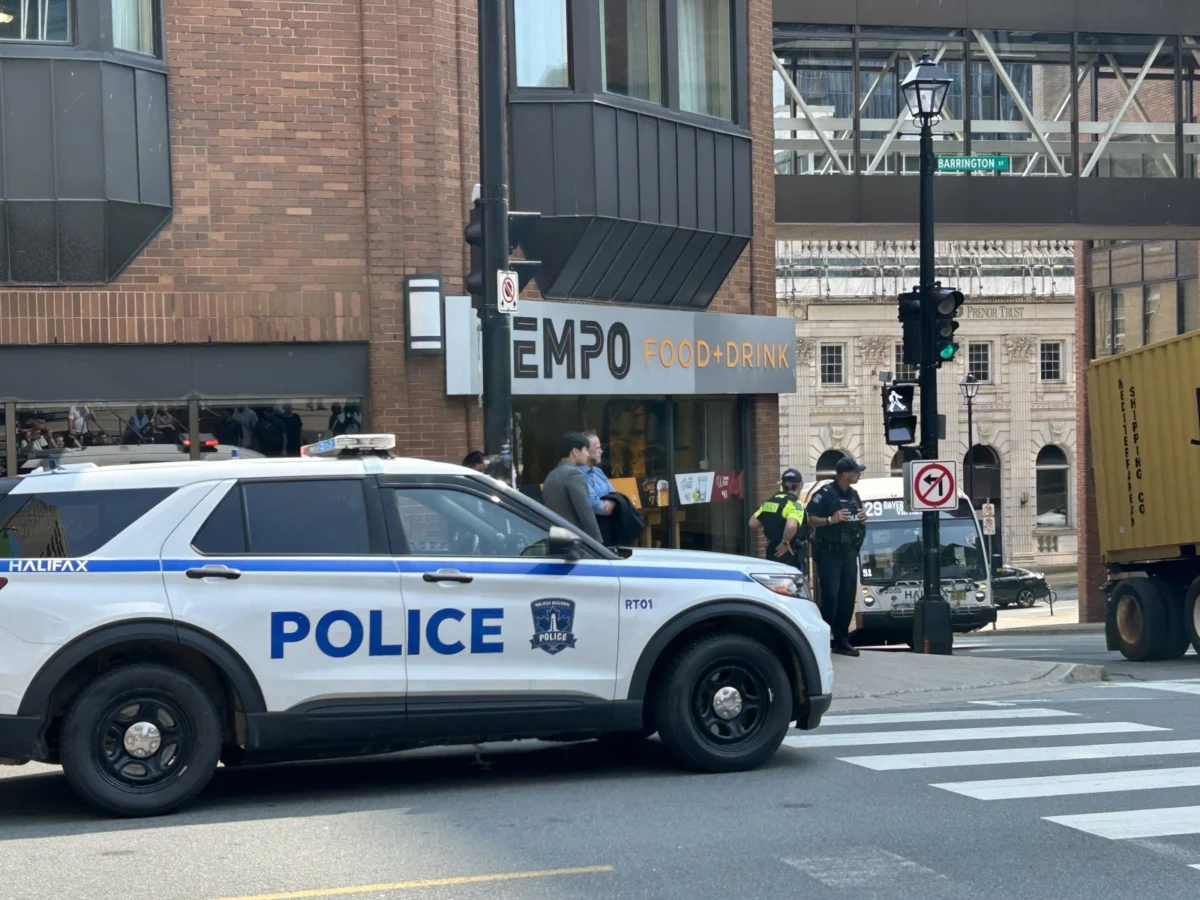
The legal representative for Ali Assakereh, the 54-year-old man accused of threatening the U.S. Consulate in Halifax earlier this month, has indicated that his client is not yet prepared to pursue a bail application. Assakereh, who faces grave charges including an offence categorized under Canada’s anti-terrorism legislation for threats against internationally protected persons, appeared in court today as the complex legal proceedings continue to unfold in the Nova Scotia Provincial Court. The Crown’s position, as highlighted in related reporting, is to seek an increase in the maximum penalty for the serious allegations, underscoring the gravity with which authorities are treating the incident.
The August 10, 2026, incident sent shockwaves through the typically tranquil downtown core of Halifax, prompting a significant police response and the immediate shutdown of a critical section of the city. Assakereh was apprehended after allegedly positioning a vehicle containing a propane tank and various flammable liquids in close proximity to the U.S. Consulate building on Hollis Street. This alleged act not only triggered a full-scale emergency operation but also raised serious questions about security protocols around diplomatic missions and the potential for domestic threats with international implications.
The Alarming Incident and Immediate Response
On the morning of Monday, August 10, 2026, Halifax Regional Police (HRP) and the Royal Canadian Mounted Police (RCMP) were alerted to a suspicious vehicle parked near the U.S. Consulate at 1970 Hollis Street. Initial reports suggested the presence of potentially dangerous materials within the vehicle, leading to an immediate and robust response from emergency services. Police swiftly established a wide perimeter, evacuating nearby buildings and cordoning off several blocks of downtown Halifax, including sections of Hollis, Salter, and Barrington streets. The objective was clear: to ensure public safety and mitigate any potential threat.
Specialized units, including the HRP’s Explosive Disposal Unit (EDU) and HAZMAT teams, were deployed to assess the situation. The discovery of a propane tank and what were described as flammable liquids within Assakereh’s vehicle escalated concerns, necessitating a meticulous and cautious approach. For several hours, the vibrant heart of Halifax transformed into a high-security zone, with businesses closed, traffic rerouted, and pedestrians advised to avoid the area. The disruption had a tangible impact on local commerce and daily routines, but authorities maintained that these measures were absolutely critical given the nature of the alleged threat and the sensitive location.
Ali Assakereh was arrested at the scene without further incident. The swift and coordinated action of law enforcement agencies was widely praised for containing the situation and preventing any potential harm. The incident served as a stark reminder of the ever-present need for vigilance, even in cities not typically associated with such high-stakes security concerns.

The Accused and Legal Representation
Ali Assakereh, 54, remains in custody following his arrest. His legal representation is being handled by a legal aid lawyer, a common practice for individuals facing serious criminal charges who may not have the financial means to retain private counsel. Legal aid services play a crucial role in ensuring access to justice, providing legal assistance to eligible individuals in criminal, family, and other civil matters. In complex cases such as this, legal aid lawyers are tasked with navigating intricate legal frameworks and advocating for their clients’ rights throughout the judicial process.
During the recent court appearance, Assakereh’s legal aid lawyer informed the court that while they have been working with the accused’s family to formulate a comprehensive bail plan, it would not be ready for presentation "for some time." This decision reflects the significant complexities involved in securing bail for individuals facing charges of this magnitude, particularly those involving national security elements. Assakereh has reportedly agreed to remain in custody for the time being, a common strategic move in cases where the defence needs more time to gather information, assess the strength of the Crown’s case, and develop a robust bail proposal that addresses all potential concerns, including flight risk and public safety.
The bail process in Canada is designed to balance the presumption of innocence with the need to protect the public and ensure the accused’s attendance in court. For charges involving alleged terrorist activity or threats to national security, the burden on the defence to demonstrate that the accused poses no undue risk to public safety is substantially higher. Factors such as the nature of the alleged offence, the strength of the evidence, the accused’s criminal record, and community ties are all rigorously scrutinized by the court. The delay in seeking bail often indicates the defence is meticulously building a case that can satisfy these stringent requirements.
Grave Charges and Anti-Terrorism Legislation
Assakereh is facing several charges, most notably an offence related to threats against internationally protected persons, which is explicitly designated as terrorist activity under Canadian law. This particular classification elevates the severity of the charges considerably, placing the case within the ambit of Canada’s comprehensive anti-terrorism legislation, specifically Part II.1 of the Criminal Code.
Under Canadian law, "terrorist activity" is broadly defined and includes acts committed in whole or in part for a political, religious, or ideological purpose, objective, or cause with the intention of intimidating the public, or a segment of the public, with regard to its security, including its economic security, or compelling a person, a government, or a domestic or international organization to do or refrain from doing any act. The use of a propane tank and flammable liquids in proximity to a diplomatic mission, coupled with the alleged intent to threaten, aligns with the criteria for such a designation.
Specifically, the Criminal Code of Canada includes provisions that criminalize acts such as facilitating terrorist activity, participating in the activity of a terrorist group, instructing to carry out a terrorist activity, and making threats against internationally protected persons. An "internationally protected person" includes heads of state, foreign ministers, diplomats, and other representatives of states or international organizations who are entitled to special protection under international law, as well as members of their families. Diplomatic missions, such as the U.S. Consulate, are considered sovereign territory and symbols of international relations, making threats against them a matter of significant national and international concern.

The Crown’s stated intent to seek an increase in the maximum penalty for the charges highlights the perceived gravity and potential impact of Assakereh’s alleged actions. Offences classified as terrorist activity carry some of the most severe penalties in the Canadian Criminal Code, reflecting Parliament’s determination to deter and punish acts that undermine national security and public order. Convictions can result in lengthy incarceration, often with a focus on denunciation and deterrence. The legal implications for Assakereh, should he be convicted, are therefore profoundly serious.
The Road Ahead: Plea and Trial Format
Assakereh is scheduled to return to court on September 10, 2026. This upcoming appearance will be a pivotal moment in the legal process, as he is expected to enter a plea to the charges laid against him and inform the court of his preferred trial format.
At a plea hearing, the accused formally responds to the charges by entering a plea of "guilty" or "not guilty." A guilty plea typically leads directly to sentencing proceedings, while a not guilty plea initiates the trial phase. Given the complexity and seriousness of the charges, a "not guilty" plea is often anticipated in such cases, setting the stage for a potentially protracted legal battle.
Regarding the trial format, an accused in Canada has the right to choose between a trial by a judge alone or a trial by judge and jury, for most indictable offences. Both options have distinct strategic advantages and disadvantages, and the choice is made in consultation with legal counsel, taking into account the specifics of the case, the nature of the evidence, and the potential impact on public perception. A judge-alone trial offers a streamlined process with decisions made solely by an experienced legal professional. A jury trial, on the other hand, involves a panel of ordinary citizens who decide on matters of fact, with the judge overseeing legal procedures. The choice in a case involving alleged terrorist activity against a diplomatic mission could be particularly significant, influencing how evidence is presented and how legal arguments are received.
Reactions and Broader Implications
The incident at the U.S. Consulate has drawn reactions from various stakeholders and carries significant broader implications.
Law Enforcement: Halifax Regional Police and the RCMP have reiterated their commitment to public safety and robust enforcement against threats of violence, particularly those targeting diplomatic entities. Their coordinated response on August 10 underscored the readiness of Canadian law enforcement to manage high-stakes security incidents. Investigations are likely ongoing, with authorities working to determine any potential links or motivations behind Assakereh’s alleged actions.

U.S. Consulate and Diplomatic Community: While specific statements from the U.S. Consulate are typically discreet regarding security incidents, such events invariably lead to heightened security postures and a re-evaluation of existing protocols. The incident serves as a stark reminder to the diplomatic community in Canada of the persistent threats they face globally, even in seemingly secure environments. It also reinforces the strong cooperation between Canadian and U.S. authorities on security matters.
Local Government and Community: Halifax Mayor and city officials likely issued statements reassuring residents of the city’s safety and praising the efficiency of emergency services. Such incidents can momentarily disrupt the sense of security within a community, and official reassurance is vital. The downtown business community, which experienced direct disruption, would be keen to see a swift resolution and assurances of ongoing security measures.
Legal Experts: Legal commentators have highlighted the rare and serious nature of charges under Canada’s anti-terrorism legislation, especially when linked to threats against internationally protected persons. They note the substantial resources typically dedicated by the Crown to prosecuting such cases, reflecting their importance to national security. Discussions often revolve around the complexities of proving intent in such cases and the high evidentiary standards required.
Security Implications: The incident will undoubtedly prompt a review of security measures at diplomatic missions across Canada, not just in Halifax. It underscores the challenge of protecting sensitive sites from both organized threats and individual actors. The use of readily available materials like propane and flammable liquids also highlights the need for vigilance against low-tech, high-impact threats.
Chronology of Events
- August 10, 2026, Morning: Halifax Regional Police and RCMP respond to reports of a suspicious vehicle containing dangerous materials near the U.S. Consulate on Hollis Street, downtown Halifax.
- August 10, 2026, Day: A significant section of downtown Halifax is cordoned off and evacuated. Specialized police units assess the vehicle, confirming the presence of a propane tank and flammable liquids. Ali Assakereh is arrested at the scene.
- August 11, 2026: Assakereh appears in court for initial charges, including threats against internationally protected persons, categorized as terrorist activity. He is remanded into custody.
- August 28, 2026: Assakereh’s legal aid lawyer informs the court that a bail plan is not yet ready, and Assakereh agrees to remain in custody. The Crown’s intent to seek increased maximum penalties is noted.
- September 10, 2026: Next scheduled court appearance for Ali Assakereh, where he is expected to enter a plea and indicate his choice of trial format (judge alone or judge and jury).
The unfolding legal proceedings for Ali Assakereh will continue to be closely watched, not only for their implications for the accused but also for the broader context of national security, diplomatic protection, and the ongoing vigilance required to safeguard Canadian communities from serious threats. The outcome of this case will undoubtedly contribute to precedents in the interpretation and application of Canada’s anti-terrorism laws.