admin
admin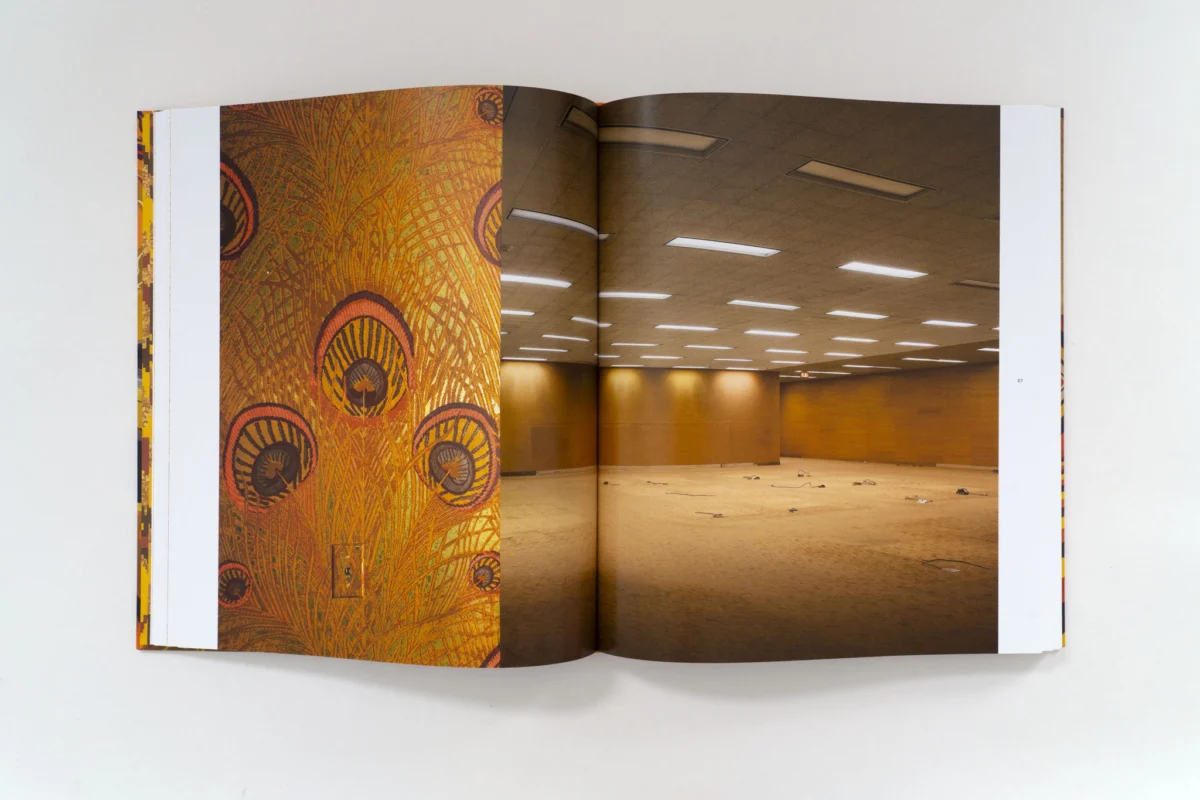
The Architectural Genesis of 820 South Michigan Avenue
The story of the Johnson Publishing Company headquarters is inextricably linked to the socio-political climate of Chicago in the late 1960s and early 1970s. When John H. Johnson, the founder of Ebony and Jet magazines, sought to build a permanent home for his media empire, he encountered systemic barriers common to Black entrepreneurs of the era. Real estate agents and financial institutions, rooted in discriminatory practices, were often hesitant to support a Black-owned company’s expansion into the prestigious "Loop" area of downtown Chicago.
Defying these obstacles, Johnson commissioned John Moutoussamy, an architect who had studied under the legendary Ludwig Mies van der Rohe at the Illinois Institute of Technology. Moutoussamy became the first Black architect to design a major high-rise in Chicago’s downtown district. Completed in 1972, the building was a departure from the prevailing glass-and-steel "International Style" towers that dominated the skyline. Instead, Johnson insisted on a structure that conveyed permanence, strength, and character. Moutoussamy delivered a modernist monolith clad in travertine marble, featuring recessed windows and a stark, vertical geometry that commanded respect on the Michigan Avenue corridor.

Interior Design as Cultural Statement
While the exterior of 820 South Michigan Avenue projected an image of corporate stability, the interior was a riot of color, texture, and avant-garde design. John and Eunice Johnson hired the Palm Springs-based design duo Arthur Elrod and William Raiser to curate the spaces. The resulting interiors were a masterclass in 1970s aesthetics, blending high-end modernism with what many now describe as an "Afro-futurist" or "Black Glamour" sensibility.
Each of the building’s 11 floors was assigned a distinct visual identity. The designers utilized kaleidoscopic patterns, mirrored walls, and bold, custom-made carpets to create an environment that felt both luxurious and revolutionary. Notable spaces included:
- The Executive Suite: The office of co-founder Eunice Johnson was a study in sophisticated neutrals—cream and honey tones—serving as a backdrop for the couple’s extensive collection of African and African American art.
- The Test Kitchen: Perhaps the most famous room in the building, the Ebony Test Kitchen featured swirling, psychedelic laminate cabinetry in shades of orange, purple, and brown. This kitchen was where recipes for the magazine were developed and tested, becoming a symbol of Black culinary excellence.
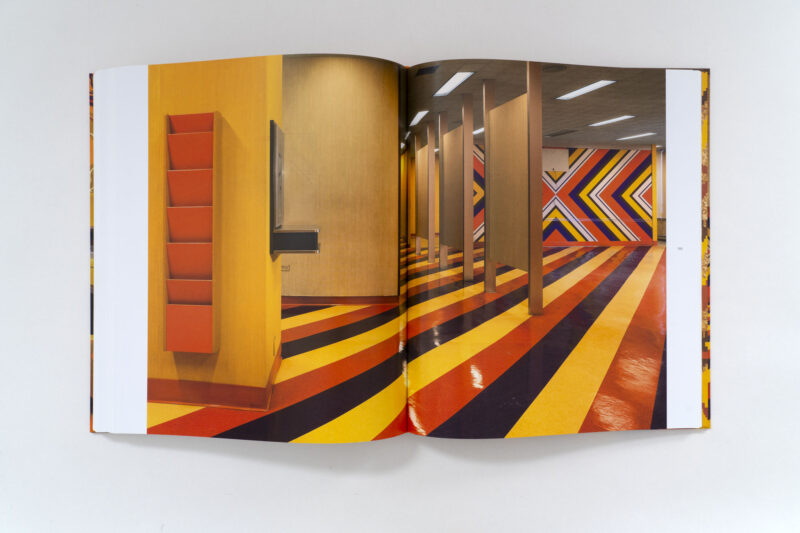
- The Cafeteria: A vibrant space defined by orange, purple, and gold chevron patterns, designed to foster a sense of community among the hundreds of Black professionals who worked in the building.
- The Photo Studio: A state-of-the-art facility where iconic covers for Ebony and Jet were shot, documenting everyone from civil rights leaders to Hollywood stars.
A Chronology of the Johnson Publishing Empire
To understand the weight of the monograph, one must look at the timeline of the company that occupied the building. The Johnson Publishing Company was more than a business; it was the primary chronicler of the Black American experience.

- 1942: John H. Johnson founds the company with a $500 loan, launching Negro Digest.
- 1945: Ebony is launched, modeled after Life magazine but focusing on Black success and culture.
- 1951: Jet is launched as a weekly news digest, famously bringing the horrors of the Emmett Till murder to the national consciousness in 1955.
- 1971: The company moves into its custom-built headquarters at 820 South Michigan Avenue.
- 1980s-90s: JPC remains the world’s largest Black-owned publishing company, with Ebony reaching a peak circulation of over 2 million.
- 2010: Amid the decline of print media, the building is sold to Columbia College Chicago.
- 2012: The Johnson Publishing Company officially vacates the premises, marking the end of an era.
- 2013-2018: Barbara Karant begins her photographic survey of the now-vacant building, capturing the interiors before they were altered for redevelopment.
- 2017: The building is designated a Chicago Landmark, ensuring its exterior remains preserved.
- 2019: The Johnson Publishing Company files for Chapter 7 bankruptcy, and its iconic photo archive is sold to a consortium of foundations to be preserved at the Smithsonian and Getty Research Institute.
The Photographic Vision of Barbara Karant
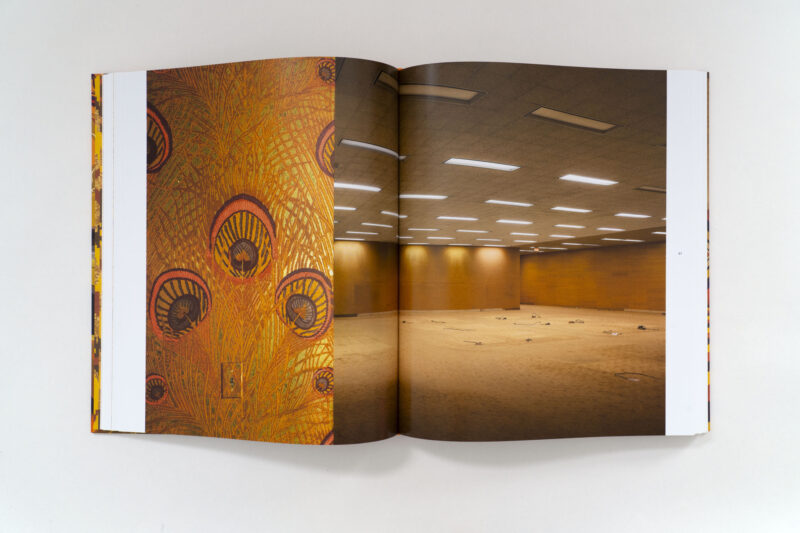
The power of 820 Ebony/Jet: Visions of the Johnson Publishing Company, an American Icon lies in Barbara Karant’s ability to find beauty in the stillness of an abandoned space. Between 2013 and 2018, Karant was granted access to the empty headquarters. While the furniture had largely been removed, the "bones" of the interior design remained—the wallpaper, the cabinetry, the carpets, and the mirrors.
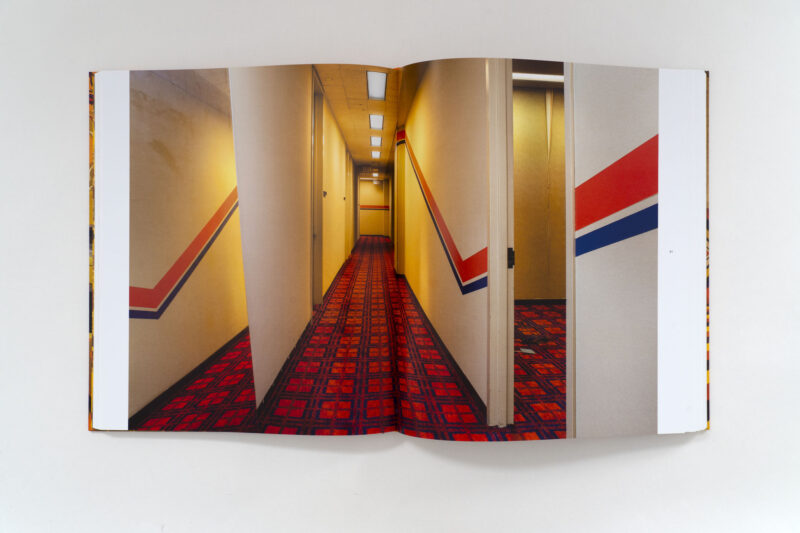
Karant’s photography treats the building as a series of abstract compositions. She focuses on the way mirrors double and triple the geometric patterns of the walls, creating a sense of infinite space. Her lens captures the "swirling laminate" of the Test Kitchen and the "diagonal red, yellow, and black stripes" of the office corridors with a clarity that highlights the tactile quality of the materials.
By stripping the rooms of their human activity, Karant allows the viewer to focus on the intentionality of the design. The photographs serve as a "memento mori" for a corporate culture that prioritized aesthetic excellence as a form of resistance. The emptiness of the rooms underscores the transition from a living, breathing institution to a historical artifact.
Supporting Data and Economic Reach
At its height, the Johnson Publishing Company was a massive economic engine. The headquarters was designed to house a staff of over 500 people. According to historical records, the building cost approximately $8 million to construct in 1971—an astronomical sum for a Black-owned enterprise at the time.
The reach of the publications produced within those walls was equally vast. In the mid-1970s, Ebony was read by nearly 40% of all Black adults in the United States. This level of market penetration gave John H. Johnson unprecedented influence, allowing him to attract major corporate advertisers who had previously ignored the Black consumer market. The building was the physical hub for this economic revolution, housing the Fashion Fair Cosmetics line and the company’s extensive book publishing division.
Critical Responses and Cultural Impact
The release of the monograph has drawn praise from historians, architects, and artists alike. The book features a foreword by renowned artist and scholar Deborah Willis, along with essays from experts such as Brenna Wynn Greer and E. James West. These contributors argue that the building was a "theatre of Black life," where the image of the "New Negro" was crafted and exported to the world.
Contemporary artists have long been fascinated by the JPC legacy. The monograph notes that the building and its archives have influenced a generation of creators, including Theaster Gates—who famously saved a portion of the JPC library—as well as Lorna Simpson, Hank Willis Thomas, and Martine Syms. For these artists, 820 South Michigan Avenue represents a "Black Space" that was unapologetic in its grandeur.
In a statement regarding the building’s landmark status, preservationists noted that the JPC headquarters is one of the few skyscrapers in the United States designed by a Black architect for a Black-owned company. Its preservation is seen as a crucial step in diversifying the narrative of American architectural history, which has traditionally centered on white designers and corporations.
Broader Implications for Design History
820 Ebony/Jet: Visions of the Johnson Publishing Company, an American Icon serves as more than just a coffee table book; it is an act of historical reclamation. In 240 pages, with 142 color images, it preserves a visual language that was nearly lost to time. As many of the building’s floors have since been converted into residential apartments, Karant’s photographs remain the only comprehensive record of the original 1972 interiors.
The monograph challenges the notion that corporate offices must be sterile or neutral. It proves that a workplace can be a site of cultural expression and racial pride. As the media landscape continues to shift toward digital-only formats, the physical legacy of the Johnson Publishing Company stands as a reminder of the power of "place" in shaping identity.
Published by MW Editions, the book is scheduled for release on October 13, priced at $65. It arrives at a time when there is a renewed national interest in the history of Black business and the preservation of mid-century modern design. For those who grew up with Ebony and Jet on their coffee tables, this volume offers a rare look inside the house that those magazines built—a house that remains an enduring symbol of American excellence.