admin
admin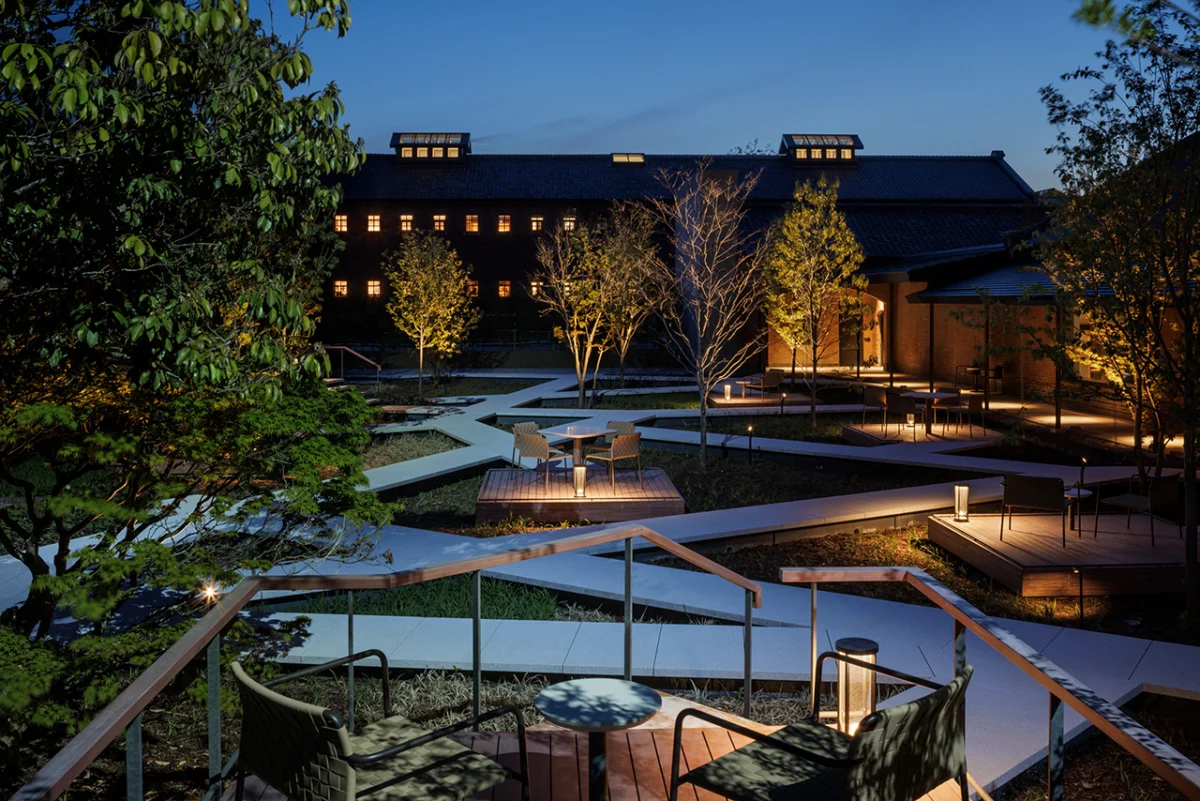
The landmark Nara Prison, an architectural marvel constructed in 1908, has officially transitioned from a site of confinement to a destination of high-end hospitality. Originally designed by government architect Keijiro Yamashita, the complex stands as the only surviving intact structure among Japan’s "Five Great Prisons of Meiji." Following an extensive and meticulous renovation led by Hoshino Resorts, the facility has been reimagined as Hoshinoya Nara Prison. This 48-suite luxury hotel represents a significant milestone in Japan’s approach to adaptive reuse, balancing the preservation of a National Important Cultural Property with the requirements of a contemporary luxury resort.

The transformation of the red-brick facility comes over a century after its inauguration, a period during which it served as a symbol of Japan’s rapid modernization. By repurposing the site, Hoshino Resorts and its team of architects have sought to maintain the integrity of Yamashita’s vision while introducing a new functional life to the sprawling campus. The project is not merely a commercial venture but a sophisticated exercise in heritage management, ensuring that the architectural legacy of the Meiji era remains accessible to future generations.
Historical Context and the Architect’s Vision
To understand the significance of Hoshinoya Nara Prison, one must look back to the Meiji era (1868–1912), a period defined by Japan’s emergence from isolation and its embrace of Western administrative and architectural models. The Nara Prison was commissioned as part of a broader government initiative to modernize the nation’s penal system. This effort was partially driven by the desire to demonstrate to Western powers that Japan possessed a "civilized" judicial infrastructure, which was a prerequisite for renegotiating the unequal treaties of the 19th century.

Keijiro Yamashita, the architect behind the project, was a central figure in this movement. Having studied Western architectural styles, Yamashita designed the Five Great Prisons—located in Chiba, Kanazawa, Nara, Nagasaki, and Kagoshima—using durable red brick and grand, Romanesque-inspired gateways. Of these five, the Nara facility is the only one to have escaped major demolition or structural alteration, largely due to its continued use as a juvenile prison until its closure in 2017.
The facility’s layout utilized the Haviland System, a radial design popularized by the Eastern State Penitentiary in Philadelphia. This configuration features multiple wings extending from a central hub, allowing guards to monitor all corridors from a single vantage point. While the system was originally intended for surveillance and control, it now provides the hotel with a unique, rhythmic geometry that defines the guest experience.

A Chronology of Transformation
The journey from a functional correctional facility to a luxury hotel has been nearly a decade in the making. The timeline of this transformation highlights the complexity of modernizing a heritage site in a seismically active region:
- 1908: Construction is completed, and Nara Prison opens as a state-of-the-art facility.
- 1946: The site is reorganized as the Nara Juvenile Prison, focusing on the rehabilitation of young offenders through vocational training.
- 2017: The prison officially closes its doors due to the aging of the facilities and the need for seismic retrofitting. It is designated an Important Cultural Property of Japan shortly thereafter.
- 2017–2019: Hoshino Resorts is selected to lead the redevelopment project, emphasizing a "Cycle of Heritage" model.
- 2020–2024: Extensive structural reinforcements and interior redesigns take place, involving specialized conservationists and architects.
- 2026: The hotel is scheduled to welcome its first guests, marking the completion of one of Japan’s most ambitious adaptive reuse projects.
Architectural Strategy: The Dialogue Between Old and New
The renovation was led by architect Rie Azuma of Azuma Environmental Architectural Research Institute, a long-time collaborator with Hoshino Resorts. Azuma’s challenge was to reconcile the building’s rigid, institutional past with the comfort and fluidity expected of the Hoshinoya brand. Working alongside Yasui Architects & Engineers, the team adopted a philosophy of "minimal intervention, maximum preservation."

One of the most striking features of the renovation is the visible seismic reinforcement. To bring the 116-year-old brickwork up to modern safety standards, engineers installed exposed steel frames. Rather than hiding these elements, Azuma integrated them into the aesthetic, creating a sharp, industrial contrast against the hand-laid bricks. This transparency allows guests to appreciate the structural evolution of the building.
The conversion of the cells into suites required a radical rethinking of the interior volume. Original prison cells were narrow and designed for isolation; to create luxury accommodations, the design team merged multiple cells. For instance, the "11-Cell Deluxe" suite occupies the footprint of eleven original detention units. These spaces now feature expansive living areas, separate dressing lounges, and high-end amenities, yet they retain the original vaulted ceilings and window placements that hint at their former use.

Interior Design and the Meiji Aesthetic
The interior concept pays homage to the Meiji era’s spirit of global integration. During this time, Japan actively imported European design elements, blending them with indigenous craftsmanship. In a departure from other Hoshinoya properties, which typically focus on traditional Japanese minimalism, Hoshinoya Nara Prison incorporates European furnishings. This choice reflects the historical context of the building’s birth, when Western influence was a sign of progress.
Lighting designer Masanobu Takeishi played a crucial role in softening the building’s inherent austerity. Using indirect illumination and handcrafted ceramic fixtures created by local Nara artisans, Takeishi transformed the long, imposing corridors into warm, inviting galleries. The interplay of light and shadow emphasizes the texture of the brickwork and the rhythm of the arches, turning a once-foreboding environment into one of quiet reflection.

In the main lounge, the design team preserved the open atrium and exposed structural beams. The addition of arched glass partitions and colorful floor cushions introduces a sense of playfulness and comfort, encouraging guests to linger in spaces that were once transition points for guards and inmates.
The "Outside Within" Landscape Concept
The grounds of the prison, once strictly controlled and utilitarian, have been reimagined by landscape architect Hiroki Hasegawa. His "outside within" concept seeks to bring the natural beauty of Nara into the fortified walls of the complex.

The vast open spaces that were formerly used for security and prisoner exercise have been converted into terraced gardens, private decks, and geometrically arranged walkways. By introducing carefully maintained flora and illuminated paths, Hasegawa has created a serene outdoor environment that provides a buffer between the hotel and the surrounding city. The courtyard, particularly at twilight, is designed to evoke a sense of "distant moonlight," using restrained lighting to maintain a peaceful, contemplative atmosphere.
Official Responses and Economic Implications
The project has garnered significant support from both local government and cultural heritage organizations. Nara, while world-famous for its ancient temples and free-roaming deer, has historically struggled to retain tourists for overnight stays, as many visitors choose to return to nearby Kyoto or Osaka.

"The Hoshinoya Nara Prison project is a cornerstone of our strategy to promote high-end, sustainable tourism in the region," a representative from the Nara City Tourism Bureau stated. "By preserving this landmark and giving it a new purpose, we are not only protecting our history but also creating a compelling reason for international travelers to experience Nara after dark."
Hoshino Resorts has emphasized that the hotel is part of a larger ecosystem. The on-site Nara Prison Museum, connected to the hotel via a dedicated pathway, will ensure that the history of the penal system and the stories of those who lived and worked there are not erased. This "Cycle of Heritage" ensures that the revenue generated by the luxury hotel helps fund the ongoing maintenance of the museum and the structural integrity of the historic site.

Broader Impact on Heritage Preservation
The completion of Hoshinoya Nara Prison serves as a blueprint for the future of heritage preservation in Asia. As urban centers face pressure to modernize, historic buildings are often demolished to make way for high-rise developments. This project demonstrates that adaptive reuse can be both commercially viable and culturally responsible.
By treating the building’s history as an asset rather than an obstacle, Hoshino Resorts has created a unique "experiential" luxury offering. Guests are not just staying in a hotel; they are engaging with a physical narrative of Japan’s modernization. The project proves that even buildings with complex or "difficult" histories—such as prisons, factories, or warehouses—can be reclaimed as spaces of beauty and education.

As Japan continues to expand its footprint in the global luxury travel market, Hoshinoya Nara Prison stands as a testament to the power of thoughtful design. It is a place where the echoes of the past are preserved not in silence, but in a new, vibrant conversation with the present. Through this transformation, the "Five Great Prisons of Meiji" legacy is secured, ensuring that Keijiro Yamashita’s red-brick masterpiece will endure for another century.