admin
admin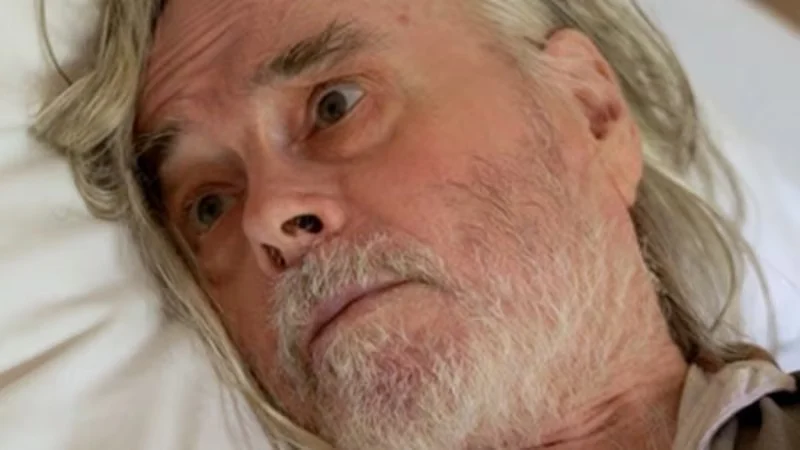
Amsterdam police have been inundated with over 500 public tips following a widespread appeal to identify a man, affectionately nicknamed "Lucky," who collapsed on a city street on May 10, 2023. The man, believed to have potential Canadian or American ties, suffered a severe medical emergency, leaving him with a profound communication disorder that has rendered him unable to articulate his own identity. This humanitarian mystery has transcended borders, capturing international attention as authorities strive to reconnect him with his past and loved ones.
The Unfolding Enigma: A Chronology of Events
The distressing incident began on a seemingly ordinary Wednesday in the heart of Amsterdam. On May 10, 2023, the man, whose true name remains unknown, was found collapsed on a public street. He was immediately transported to a local hospital, where medical professionals quickly determined the severity of his condition: a brain hemorrhage or stroke. These acute cerebrovascular events are medical emergencies that occur when blood flow to a part of the brain is interrupted, either by a blocked artery (ischemic stroke) or a ruptured blood vessel (hemorrhagic stroke), leading to brain cell death. The immediate focus was on stabilizing his condition and providing critical care to mitigate further damage.
Following initial medical intervention, it became apparent that the stroke had left him with a severe form of aphasia. Aphasia is a complex neurological disorder that impairs a person’s ability to communicate. It can affect expressive language (speaking and writing) and receptive language (understanding speech and reading). In Lucky’s case, the impact was profound, severely limiting his ability to speak, read, or comprehend spoken language. This medical outcome proved to be the central obstacle in identifying him, as he carried no personal identification at the time of his collapse.
Once medically stable, Lucky was transferred to a nursing facility where he continues to receive care. However, without any verifiable information about his background, family, or nationality, he remains isolated, spending a significant portion of his time alone. Marijke Stor, a spokesperson for Amsterdam police, articulated the core challenge: "We don’t really know how much he understands and we have tried in various ways, but it’s not really possible in communication with him to find out who he really is." The police’s investigation quickly shifted from a standard identification process to a more complex and sensitive "social investigation," driven by the urgent need to establish his identity and connect him with his social network or family.
Medical Ordeal and the Challenge of Aphasia
Aphasia, a condition affecting approximately one in three stroke survivors, is not a disease in itself but rather a symptom of brain damage, most commonly from a stroke. Other causes can include traumatic brain injury, brain tumors, or progressive neurological diseases. The severity and type of aphasia depend on the location and extent of the brain damage. Common types include Broca’s aphasia, where speech production is severely impaired but comprehension may be relatively preserved, and Wernicke’s aphasia, characterized by fluent but often meaningless speech and poor comprehension. Global aphasia, which Lucky’s condition suggests, is the most severe form, impacting both comprehension and expression significantly.
For individuals like Lucky, the world becomes a confusing and frustrating place. Imagine being unable to express basic needs, answer simple questions about your past, or even understand what others are saying. This profound communication barrier not only hinders daily life but also poses immense challenges for medical and social workers attempting to gather crucial information. Healthcare professionals in the nursing facility would be employing various communication aids, such as picture boards, gestures, and potentially speech-generating devices, but the lack of foundational biographical context makes any progress incredibly difficult. The inability to ascertain his understanding levels further complicates these efforts, leaving investigators in a perpetual state of uncertainty regarding his cognitive awareness.
The emotional toll of aphasia can be devastating, often leading to depression, anxiety, and social isolation. Without the ability to communicate, Lucky is unable to articulate his feelings, fears, or desires, leaving him in a silent world of his own. This humanitarian aspect underscores the urgency of the police investigation, aiming not just for identification but for restoring a sense of belonging and connection for a man in profound distress.
The "Social Investigation": A Humanitarian Mission
Initially, the Amsterdam-West detective unit handled the case, diligently pursuing every conventional lead. This would typically involve checking missing persons databases, local hospital records, and questioning individuals in the vicinity of his collapse. However, as weeks turned into months without a breakthrough, and with the unit needing to prioritize criminal cases, the investigation into Lucky’s identity was transferred to the police’s cold case team. This move highlights the unique nature of the situation: while not a criminal matter, the profound lack of identity for a vulnerable individual necessitated dedicated, long-term resources often reserved for unresolved crimes.

Two former police officers were specifically assigned to the case, signaling a commitment to a "social investigation" – a term emphasizing the humanitarian rather than punitive goals. Their mission was to meticulously reconstruct Lucky’s life in Amsterdam, focusing on his social circles and routines. This involved painstaking legwork, interviewing community members, shopkeepers, and anyone who might have encountered him.
Their efforts began to yield small but significant clues. The officers discovered that Lucky was known to a Buddhist community located on Middenweg in Amsterdam. It was within this spiritual group that he had acquired his affectionate nickname, "Lucky." This discovery provided the first tangible thread in the tapestry of his lost identity, suggesting a settled presence within a specific social environment. Further inquiries led the investigators to Soep en Zo, a restaurant on Waterlooplein (Waterloo Square) where he was an occasional patron, known for stopping by for a drink.
It was at Soep en Zo that a crucial piece of information emerged: some patrons and staff referred to him as "Chris the Canadian." This specific moniker, coupled with observations about his accent, provided the strongest indication yet of his potential origins. Marijke Stor confirmed this vital lead: "The people told us that he always spoke with what they called an American or a Canadian accent. So the theory that he might be from America or Canada, that’s a theory we think could be really possible." While Stor cautioned that this was still a theory and not definitive proof of his nationality, the consistency of the reports made it a "real possibility" that warranted a broader, international appeal.
The Transatlantic Connection: A Call to North America
Armed with the "Chris the Canadian" lead, Amsterdam police made the strategic decision to expand their appeal beyond the Netherlands. On a recent Monday, they released a compelling video featuring Lucky and detailing his story, specifically targeting audiences across the Atlantic Ocean. The video highlighted his few spoken words – mostly English terms like "nonsense," "definitely," and "positive," which he uses to agree or disagree with questions – and his overall demeanor, hoping that a familiar face or voice might spark recognition.
The theory of Canadian or American origin is robust, not only because of the anecdotal evidence of his accent and nickname but also due to the sheer volume of North American expatriates and tourists who frequent Amsterdam. The city is a vibrant international hub, attracting millions of visitors and housing a significant foreign resident population, making it plausible for someone to live there without deep local ties. The police have exhausted local avenues, including showing his image to individuals he might have known and attempting various communication methods, such as speech computers and pointing at maps. However, the fundamental barrier of aphasia means they are still "not sure how much he actually understands" of these efforts.
The international appeal, particularly to Canada, was a calculated move to leverage the power of global networks and social media. The hope is that someone, perhaps a former colleague, friend, or family member, will see his image or hear his story and recognize him.
The Power of Public Engagement: Over 500 Tips and Counting
The public’s response to the international plea has been nothing short of extraordinary. Within a short period since the video’s release, Amsterdam police have received more than 500 tips. This overwhelming volume is unusual for such a case, as Marijke Stor noted, "a number she said they’re not used to." The sheer number of responses underscores the global reach of modern media and the human desire to help someone in distress.
Each tip, no matter how seemingly insignificant, must be carefully evaluated and cross-referenced. This laborious process involves dedicated police resources to sift through information, prioritize leads, and follow up on potential connections. The diversity of the tips could range from speculative guesses based on physical resemblance to concrete details about missing persons, travel itineraries, or past acquaintances. The police are hopeful that among these hundreds of leads, the one crucial piece of information that unlocks Lucky’s identity will be found. "What we really want is that as many people as possible see the footage of Lucky, so that the chances of someone knowing him will see (the footage) are as big as possible," Stor emphasized. "The chances of someone in Canada knowing who he is, we think, are there."
International Cooperation and the Role of RCMP
Given the strong possibility of Canadian ties, the Royal Canadian Mounted Police (RCMP) have been made aware of the efforts by Dutch authorities. In a formal statement, the RCMP confirmed its knowledge of the investigation to identify an individual with possible Canadian connections in the Netherlands.

The RCMP’s role in such international cases is primarily facilitative. They work closely with law enforcement agencies abroad through established mechanisms like INTERPOL National Central Bureau (NCB) Ottawa and the Mounties’ liaison officer program. INTERPOL, the world’s largest international police organization, enables police in 195 member countries to work together to make the world a safer place. Its secure communication system, I-24/7, allows police across the globe to share crucial crime-related data and intelligence in real-time. Through these channels, Canadian authorities can assist in checking missing persons databases, sharing fingerprints, or conducting inquiries within Canada based on specific leads provided by the Dutch police.
However, the RCMP also cited privacy reasons for being unable to provide further comment on the specifics of the case. This is standard procedure for ongoing investigations, particularly those involving sensitive personal information. While they cannot publicly disclose details, their active engagement ensures that the necessary international legal and investigative frameworks are in place to support the Dutch efforts. This collaboration is critical, as identifying someone across international borders requires coordinated information exchange and adherence to various national laws and protocols.
The Broader Implications: Unidentified Persons and Global Mobility
The case of "Lucky" is a stark reminder of the complex challenges posed by unidentified persons globally, particularly in an era of increased international travel and migration. Every year, countless individuals go missing or are found without identification, often due to tragic accidents, medical emergencies, or intentional disengagement from their past lives. While some cases are linked to criminal activity, many, like Lucky’s, are purely humanitarian.
The resources dedicated to identifying such individuals are often substantial. Police forces, forensic experts, and medical professionals frequently collaborate to use every available tool, from DNA analysis and dental records to facial reconstruction and public appeals. The emotional toll on families searching for missing loved ones, or on individuals living without an identity, is immense. Lucky’s story highlights the vulnerability of individuals who may lack robust support networks or who travel internationally without easily accessible next-of-kin information. It also underscores the critical importance of carrying identification and having emergency contact information readily available, especially for those with pre-existing medical conditions.
A Life in Limbo: The Human Cost of Anonymity
Currently residing in a nursing facility, Lucky receives adequate medical care, but his emotional and social well-being remains profoundly affected by his anonymity. Marijke Stor eloquently articulated the humanitarian drive behind the investigation: "We want to not only find out who he is, but also if there are any, for example, relatives who still love him and he could get in contact with, because he is right now in a nursing facility where they are taking, of course, good care of him. But he spends a lot of his time alone and we think it would be very nice for him if he . . . could be able to talk to someone he knows."
The prospect of reunification with family or friends offers the hope of restoring a fundamental human need: connection. For someone living with aphasia, the familiar faces and voices of loved ones could provide invaluable comfort and perhaps even aid in his rehabilitation. The simple act of speaking to someone who understands his past, who shares memories, could be transformative for a man whose present is shrouded in an impenetrable fog.
How to Help: Contacting Authorities
The Amsterdam police continue to urge the public, particularly those with Canadian or American connections, to view the footage of Lucky and come forward with any information, no matter how minor it may seem. Every tip is a potential key to unlocking his identity and bringing him closer to a life of recognition and belonging.
Anyone who believes they recognize "Lucky" or has information that could assist in identifying him is encouraged to contact Amsterdam police directly through their official channels. The dedicated webpage for this case provides the necessary contact information, ensuring that all tips are processed efficiently. This global plea represents a collective hope that the compassion of strangers, amplified by modern communication, can pierce the veil of anonymity and bring a mystery man home.
© 2026 Global News, a division of Corus Entertainment Inc.