admin
admin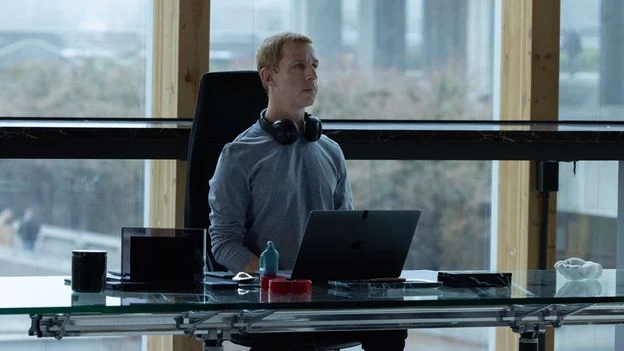
Sixteen years after the critical and commercial success of The Social Network, director and screenwriter Aaron Sorkin has returned to the subject of Silicon Valley with The Social Reckoning. The film, which functions as a spiritual and thematic sequel to the 2010 Academy Award-winning drama, shifts its focus from the fractious origins of Facebook to the modern-day ethical and societal consequences of the platform’s global dominance. Starring Jeremy Strong as Mark Zuckerberg, the production marks a significant departure in tone and narrative structure from its predecessor, moving away from the legal disputes of Harvard undergraduates toward the high-stakes world of investigative journalism and federal whistleblowing.
The Narrative Framework and Cinematic Transition
The Social Reckoning centers on the real-world events surrounding the 2021 "Facebook Files" leak, a series of investigative reports that exposed internal research regarding the platform’s negative effects. While the 2010 film was directed by David Fincher and written by Sorkin, the sequel sees Sorkin assuming both roles. This shift in leadership is reflected in the film’s aesthetic; where Fincher utilized a kinetic, high-tension style to dramatize the coding of a website, Sorkin adopts a more dialogue-heavy, procedural approach typical of his previous directorial efforts like The Trial of the Chicago 7.
The casting also signals a shift in the portrayal of Facebook’s founder. Jesse Eisenberg’s 2010 performance depicted Zuckerberg as a brilliant but socially isolated "petulant princeling." In contrast, Jeremy Strong, known for his Emmy-winning role in Succession, portrays a mature, "dead-eyed" version of the CEO. This iteration of Zuckerberg is depicted as a detached corporate titan, navigating a landscape where his creation has moved far beyond his direct control.
Chronology of Events: From the WSJ Office to the Senate Floor
The film’s plot is structured around two primary timelines that reflect the real-world chronology of the Facebook whistleblower scandal. The first timeline begins in 2019, following Jeff Horwitz (played by Jeremy Allen White), an investigative reporter for the Wall Street Journal. Upon transferring to the Journal’s San Francisco bureau, Horwitz begins a years-long effort to penetrate the opaque corporate culture of Facebook.
The narrative details Horwitz’s initial struggles to secure sources within the company, a challenge that persists until he establishes contact with Frances Haugen (played by Mikey Madison). Haugen, a former product manager on Facebook’s Civic Integrity team, becomes the film’s central catalyst. The story tracks their clandestine meetings, during which Haugen provides thousands of pages of internal documents—materials that would eventually form the basis of the "Facebook Files."
The second timeline focuses on the immediate lead-up to Zuckerberg’s testimony before the United States Senate. This strand of the film serves as a character study, depicting the meticulous preparation required for a high-profile congressional hearing. Sorkin uses these scenes to highlight the disconnect between corporate optics and the internal realities revealed by Haugen’s documents.
Investigative Data and Internal Research Findings
A significant portion of The Social Reckoning is dedicated to the dissemination of data uncovered during the Wall Street Journal’s investigation. The film dramatizes the discovery of internal research that Facebook—now Meta—had allegedly kept from the public. Among the most sobering statistics highlighted in the film is the impact of Instagram on the mental health of adolescent users.
According to internal documents cited in the film and the original reporting, Facebook’s own research found that:
- 32% of teenage girls who felt "bad about their bodies" reported that using Instagram made them feel worse.
- Among teens who reported suicidal ideation, 13% of British users and 6% of American users traced the desire to kill themselves to Instagram.
- The platform’s algorithms were found to promote content that led users toward extremist groups and misinformation, a byproduct of an engagement-based ranking system designed to maximize time spent on the app.
The film portrays the internal "Civic Integrity" team’s efforts to mitigate these issues, only to show their recommendations being sidelined in favor of growth metrics. This data serves as the moral backbone of the movie, providing the "reckoning" promised by the title.

Comparative Industry Analysis: The Tech Biopic Wave
The Social Reckoning arrives during a prolific period for films documenting the lives and impacts of tech industry leaders. Industry analysts have noted a "current wave" of productions focusing on the ultra-wealthy architects of the digital age. This includes:
- Digger: A surrealist exploration of a tech industrialist starring Tom Cruise and directed by Alejandro G. Iñárritu.
- Musk: A four-hour documentary by Alex Gibney examining the rise of Elon Musk and the influence of Tesla and X (formerly Twitter).
- Artificial: Luca Guadagnino’s stylistic biopic of OpenAI CEO Sam Altman.
Within this context, Sorkin’s film is positioned as a traditionalist’s entry into the genre. While other directors have experimented with "gonzo" or "stylistic" approaches, Sorkin remains focused on the "crusading newspaper drama" tradition, drawing comparisons to classics such as All the President’s Men and Spotlight.
Critical and Corporate Reactions
While the film attempts to capture the gravity of the whistleblower’s revelations, early critical analysis suggests a divide between its ambitious subject matter and its dramatic execution. Some observers have noted that the film lacks the "dynamism" of Fincher’s original work, pointing out that despite the characters’ frequent mentions of personal risk, the film fails to generate a palpable sense of physical danger for Horwitz or Haugen.
Furthermore, the film faces a narrative challenge inherent in dramatizing ongoing history. Unlike the 2010 film, which concluded with Zuckerberg becoming the world’s youngest billionaire—a definitive "origin story" ending—The Social Reckoning concludes in a world where Facebook remains a dominant global force and Zuckerberg’s net worth exceeds $200 billion. This lack of a "giant-killing finale" has led some critics to argue that the "reckoning" depicted is more rhetorical than tangible.
Meta has historically pushed back against the characterizations found in the "Facebook Files," asserting that the documents were cherry-picked to provide a one-sided view of the company’s efforts. While the company has not issued an official statement regarding the film’s specific dramatizations, the movie’s release on October 9 is expected to reignite public debate regarding Section 230, algorithmic transparency, and the regulation of social media platforms.
Broader Impact and Implications for Social Media Regulation
The release of The Social Reckoning is expected to serve as a cultural touchstone for discussions on tech accountability. By dramatizing the internal research regarding teen mental health and political radicalization, the film brings complex policy issues to a mainstream audience.
The film highlights the "alarming power" of social media platforms to influence public discourse and individual psychology. However, it also raises questions about the efficacy of whistleblowing in the face of immense corporate wealth. The narrative suggests that while the truth can be exposed through investigative journalism, the structural power of Big Tech remains largely insulated from systemic change.
As the film moves into theaters in the US and UK, it serves as a reminder of the 2021 Senate hearings where Frances Haugen famously testified that Facebook "put its astronomical profits before people." Whether Sorkin’s cinematic interpretation will influence public opinion or policy remains to be seen, but it ensures that the conversation regarding the "social reckoning" of the digital age remains at the forefront of the cultural zeitgeist.
Technical Specifications and Release Information
- Director: Aaron Sorkin
- Screenplay: Aaron Sorkin
- Cast: Jeremy Strong (Mark Zuckerberg), Mikey Madison (Frances Haugen), Jeremy Allen White (Jeff Horwitz)
- Run-time: 1 hour 52 minutes
- Release Date: 9 October (US and UK)
- Production Studio: Sony
The Social Reckoning provides a dense, dialogue-driven exploration of the friction between corporate growth and ethical responsibility. While it may not replicate the "stunt-packed" energy of contemporary thrillers, its reliance on factual data and real-world investigative milestones provides a sobering look at the platforms that shape modern life.