admin
admin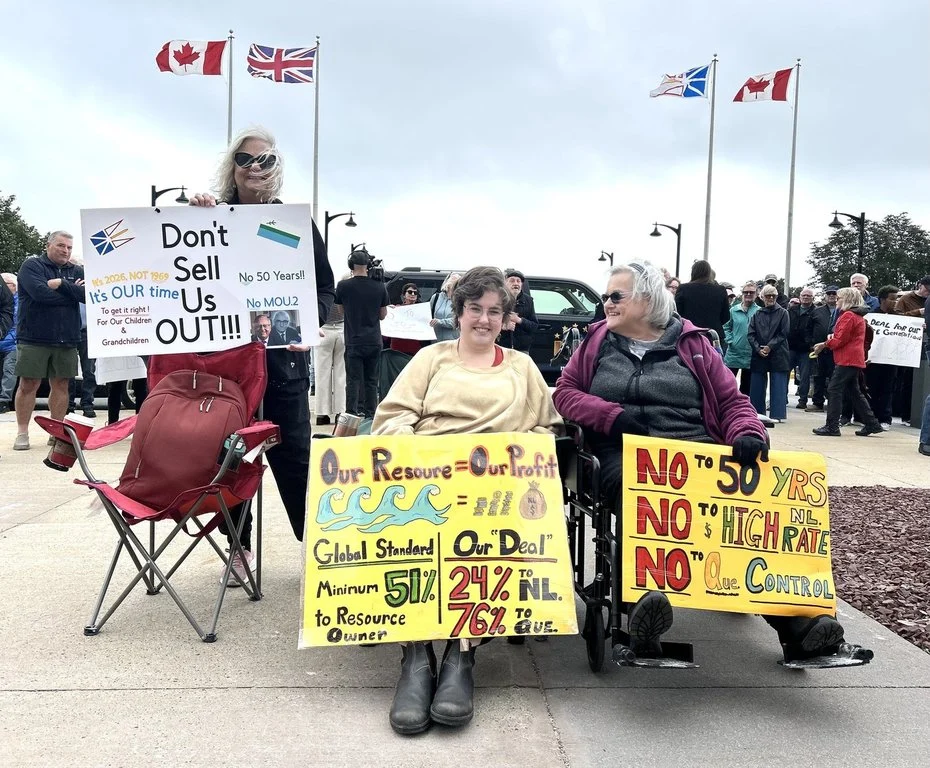
The political landscape of Newfoundland and Labrador was dramatically reshaped on Monday as the provincial legislature convened for a contentious four-day debate over a proposed tentative energy agreement with Hydro-Québec. The proceedings were marked by both parliamentary upheaval and impassioned public protest, underscoring the deep divisions and high stakes surrounding the deal. The day’s events culminated in a significant political defection and renewed calls for greater transparency and provincial autonomy over its vast natural resources.
Political Shockwave: Russell’s Defection and the Shifting Balance of Power
The session began with a stunning announcement from Keith Russell, the government member representing a Labrador district. Russell rose in the House of Assembly to declare his immediate departure from the governing Progressive Conservative party, stating his intention to serve as an Independent. His decision, delivered with gravity, cited a fundamental duty to his constituents and his own conscience. "This is not a decision I make lightly," Russell told a hushed legislature, "but there are moments in public life when we must listen to our conscience and put the people we represent first." Despite the profound impact of his words, Russell offered no further explanation for his abrupt exit, nor did he engage with reporters following his announcement.
The unexpected defection sent a ripple of surprise through the Progressive Conservative caucus and the office of Premier Tony Wakeham. Premier Wakeham, visibly taken aback, confirmed Russell’s presence in a morning caucus meeting just hours before his public declaration. "Mr. Russell was in our caucus this morning," Wakeham informed the press, adding with a measured tone, "But Mr. Russell has made his choice."
Russell’s move immediately altered the numerical composition of the legislature. The Progressive Conservatives, who previously held a slim majority, now command exactly half of the province’s 40 seats. However, the government retains a working majority due to the unique role of the Speaker of the House. The Speaker, who is an Independent and only casts a vote in the event of a tie, effectively allows the Progressive Conservatives to maintain 20 regularly voting members, preventing an immediate deadlock and ensuring the government’s ability to proceed with its legislative agenda, including the crucial energy debate. This delicate balance of power highlights the vulnerability of the current administration and the amplified significance of every vote moving forward.
Public Outcry: A Symphony of Dissent Outside Confederation Building

Simultaneously with the legislative drama, a vibrant and vocal protest unfolded outside the Confederation Building in St. John’s. More than 100 individuals, united by their strong opposition to the proposed energy agreement, gathered to make their voices heard. The air resonated with the collective singing of the "Ode to Newfoundland," the province’s official anthem, a poignant symbol of provincial pride and a rallying cry against what many perceive as a disadvantageous deal. Russell’s defection was met with enthusiastic applause from the crowd, signifying public approval for a politician prioritizing local interests over party lines.
The sentiment among the protestors was clear: the deal, in their view, is detrimental to Newfoundland and Labrador’s future. William Wells, a prominent figure in the province’s energy sector who served as CEO of Newfoundland and Labrador Hydro from 1996 to 2004, articulated this widespread concern. "This deal is absolutely not in Newfoundland and Labrador’s best interest," Wells stated emphatically. He contended that the 50-year framework agreement disproportionately benefits Hydro-Québec, granting the Quebec utility "the lion’s share of the power from the Churchill River in Labrador, with little in return for Newfoundland and Labrador." Wells’s conclusion was stark: "No deal is better than this deal."
A Deep-Rooted Grievance: The Legacy of the 1969 Churchill Falls Contract
To understand the intensity of the current opposition, it is crucial to delve into the historical context of energy relations between Newfoundland and Labrador and Quebec, particularly concerning the Churchill Falls hydroelectric plant. The 5,428-megawatt facility, co-owned and operated by the two provinces’ electric utilities, is governed by a 1969 contract that has long been a source of deep resentment and perceived injustice in Newfoundland and Labrador.
Critics within the province have consistently described the 1969 agreement as "lopsided" and a monumental economic loss for Newfoundland and Labrador. Under its terms, Hydro-Québec secures the vast majority of power generated at Churchill Falls at an astonishingly low rate of 0.2 cents per kilowatt-hour. This exceptionally cheap energy has fuelled Quebec’s industrial growth and allowed it to become a major electricity exporter, with approximately 15 percent of Quebec’s total electricity currently sourced from Churchill Falls. For decades, Newfoundland and Labrador has watched billions of dollars in potential revenue flow out of the province, creating a profound sense of grievance and a determination to avoid a repeat of what many view as a historical blunder. This sentiment forms the bedrock of the current resistance to any new agreement perceived to be similarly unbalanced.
The New Framework Agreement: Hopes and Contentions
The latest iteration of the proposed energy agreement, unveiled last month by Premier Wakeham alongside Prime Minister Mark Carney, aims to supersede or significantly alter the contentious 1969 contract. The deal has been touted by its proponents as a landmark achievement, with Prime Minister Carney describing it as the "largest clean energy investment in North American history."

The framework agreement outlines ambitious plans for a collaborative future, including:
- Redistribution of Churchill Falls Power: Higher rates from the existing Churchill Falls generating station are proposed, alongside a revised allocation of its output.
- New Hydroelectric Development: A new 2,700-megawatt generating station at Gull Island on the Churchill River is a cornerstone of the plan.
- Renewable Energy Expansion: Plans include feasibility studies for a second powerhouse at Churchill Falls and a substantial 2,000-megawatt wind farm in the broader Churchill River area, signaling a significant shift towards diversified clean energy production.
- Transmission Infrastructure: The agreement encompasses critical transmission projects to move this vast energy supply.
- Financial Projections: Officials project an estimated return of $49 billion for Newfoundland and Labrador over the 50-year life of the agreement. The federal government has also committed approximately $10 billion in financing for several proposed projects, including the transmission lines and the Gull Island development.
Under the proposed arrangement, power would be earmarked with approximately 2,750 megawatts for Newfoundland and Labrador Hydro and 8,515 megawatts for Hydro-Québec. These figures could increase further if the partners proceed with the expansion of the Churchill Falls plant, demonstrating the scale of the projected energy output.
However, the details of the new agreement have done little to quell the skepticism and opposition. The 50-year duration of the framework is a major point of contention, with critics like Kaitlyn Duff arguing, "Fifty years is too long." Many fear that committing to such a long-term deal could once again lock the province into unfavorable terms, particularly given the evolving global energy market. Duff further suggested that the province is "acting out of desperation because Newfoundland is in a deficit. We should be acting for our future, not in desperation," highlighting the perception that the province’s current financial woes might be driving a hasty and potentially ill-advised decision.
Another key concern revolves around the control over the Churchill River itself, with opponents arguing the memorandum of understanding surrenders too much provincial authority to Hydro-Québec. Des Sullivan, a well-known energy commentator in the province who writes the popular "Uncle Gnarly" blog, characterized the proposed agreement as a "travesty." His core argument mirrors that of many others: it gives Quebec decades of energy at rates that will likely remain below market value, echoing the perceived injustices of the 1969 contract. Sullivan believes this critical aspect "is not well understood by Newfoundland and Labrador people."
Broken Promises and Political Accountability
Adding fuel to the fire of public discontent is the government’s reversal on a key promise regarding the deal’s approval process. The Progressive Conservatives had initially pledged to subject any final agreements to a provincial referendum, allowing the populace a direct say in a decision of such profound economic and generational impact. However, the Tories walked back this promise, opting instead for a legislative debate. This shift ignited accusations of broken trust, with at least one protester outside the Confederation Building holding a sign starkly proclaiming, "Tony lied," directly referencing Premier Wakeham. This perceived breach of democratic commitment further alienated segments of the public and intensified calls for a more transparent and accountable process.
The Government’s Defense: Balancing Urgency and Long-Term Vision

Despite the strong opposition and internal political challenges, Premier Wakeham’s government remains steadfast in its defense of the proposed agreement. Wakeham expressed confidence in his party’s support for the tentative deal, even in the wake of Russell’s unexpected departure. He confirmed that "Team Labrador," a group he assembled last month specifically to advocate for Labrador’s interests in the Churchill River deal and of which Russell was a member, would proceed as planned, signaling the government’s commitment to the project.
Energy Minister Lloyd Parrott took a more confrontational stance, directly addressing critics, particularly those voicing opposition online. He asserted, "The price tag for your self-righteousness means that everybody else stays poor," a statement that underscores the government’s belief that the deal is a pragmatic necessity for the province’s economic well-being and that continued opposition without viable alternatives is counterproductive. This comment highlights the perceived tension between idealized provincial autonomy and the immediate financial realities facing Newfoundland and Labrador.
Lead negotiator Barry Parry also weighed in, directly addressing calls from some critics to delay negotiations until the 1969 contract expires in 2041. Parry presented a stark financial calculation: for Newfoundland and Labrador to achieve a similar economic benefit by waiting, Hydro-Québec would have to agree to pay an unprecedented 18 cents per kilowatt-hour for Churchill Falls power in 2041. He argued that this scenario is highly improbable and economically unsound. "With no deal, there is no money coming to Newfoundland and Labrador in the next 15 years," Parry emphasized, highlighting the critical immediate financial benefits the new agreement promises, benefits that the province, currently grappling with significant deficits, urgently needs. His statement suggests that the government views the current deal as the most realistic and beneficial path forward, balancing long-term aspirations with pressing short-term financial imperatives.
Broader Implications: A Crossroads for Newfoundland and Labrador
The ongoing debate represents a pivotal moment for Newfoundland and Labrador, a province long challenged by economic volatility and a legacy of contentious resource development. The outcome of this agreement will have profound implications across several fronts:
- Economic Stability: For a province battling persistent deficits and a heavy debt load, the projected $49 billion return over 50 years and the $10 billion in federal financing represent a significant potential influx of capital. Proponents argue this could stabilize provincial finances, create jobs, and stimulate economic diversification. Critics, however, fear that these short-term gains might be overshadowed by missed long-term opportunities and continued undervaluation of the province’s resources.
- Energy Future and Climate Goals: The agreement’s emphasis on new hydro, wind, and transmission projects aligns with broader clean energy transition goals, both provincially and federally. It could solidify Newfoundland and Labrador’s role as a significant contributor to North America’s renewable energy supply.
- Interprovincial Relations: The deal, if ratified, would mark a new chapter in the historically fraught energy relationship between Newfoundland and Labrador and Quebec. While proponents hope for improved cooperation, the current level of public dissent in NL suggests that the underlying grievances are far from resolved and could continue to shape interprovincial dynamics.
- Political Landscape: The political fallout from Russell’s defection and the intense public scrutiny of the deal could significantly impact Premier Wakeham’s government. His ability to navigate this contentious issue, secure passage of the agreement, and maintain public confidence will be a critical test of his leadership. The decision to forgo a referendum also raises questions about democratic accountability and public engagement in major policy decisions.
As the four-day debate unfolds in the Newfoundland and Labrador legislature, the stakes could not be higher. The province stands at a crossroads, grappling with the legacy of past energy deals, the urgent demands of its present economic reality, and the aspirations for a prosperous future. The decisions made in the coming days will resonate for generations, shaping not only the economic trajectory of Newfoundland and Labrador but also its identity and its relationship with its neighbors.