admin
admin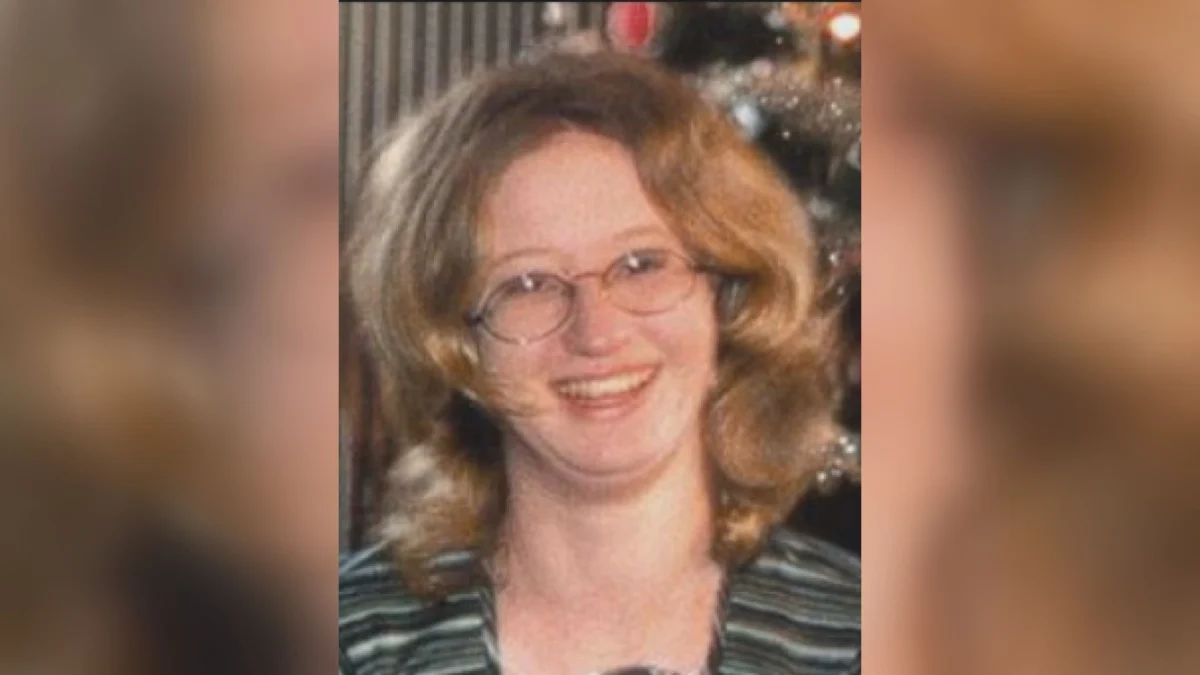
The Ontario Provincial Police (OPP) has launched a renewed appeal in the tragic cold case of Kathleen MacVicar, a Nova Scotia woman whose life was brutally cut short in 2001. Twenty-five years after her body was discovered at Canadian Forces Base (CFB) Trenton, the OPP has released a poignant new video as part of its "Unsolved" series, aiming to leverage advancements in DNA technology and reignite public interest to finally bring her killer to justice. The initiative underscores the enduring commitment of law enforcement to unresolved cases, offering a glimmer of hope to families who have spent decades grappling with unanswered questions and profound grief.
Renewed Hope: OPP Reinvigorates Cold Case Investigation
On September 9, 2026, the OPP announced its latest efforts in the investigation into MacVicar’s death. The cornerstone of this renewed push is a newly released video that meticulously retraces Kathleen’s last known movements and features emotional interviews with her grieving mother, Colleen MacVicar, alongside key OPP investigators. This public appeal is not merely a rehash of old information but a strategic move designed to capitalize on the significant leaps made in forensic science since the early 2000s, particularly in DNA analysis.
Det. Insp. Jennifer Patton, a major case manager with the OPP, highlighted the critical role of these technological advancements. While the original crime scene yielded DNA evidence, the capabilities for analysis in 2001 were considerably less sophisticated. "With emerging and developing DNA technology," Patton stated in the video, "it allows us to return to the case to try once more." This commitment reflects a broader trend in law enforcement where cold case units are increasingly revisiting old files, confident that modern forensic tools can extract new insights from previously intractable evidence. The hope is that this new examination of forensic material, combined with renewed public attention, will finally identify the person or persons responsible for MacVicar’s death.
A Tragic Timeline: The Last Days of Kathleen MacVicar
Kathleen MacVicar, a vibrant 19-year-old, was last seen on the evening of June 13, 2001. At approximately 10 p.m., she departed a friend’s house, embarking on a walk toward CFB Trenton. At the time, Kathleen was residing on the military base with relatives, having recently moved from her hometown of Glace Bay, Nova Scotia, earlier that year. Her movements that night, seemingly innocuous at the time, would become the subject of intense scrutiny and a quarter-century of investigative efforts.
The initial alarm was raised when Kathleen failed to return or make contact. The two days following her disappearance were undoubtedly fraught with anxiety for her family and friends. Their worst fears were realized on June 15, 2001, when Kathleen’s body was tragically discovered in a secluded wooded area on CFB Trenton, specifically near Curtis Road. The discovery sent shockwaves through the community and initiated a murder investigation. Autopsy results later confirmed that she had sustained multiple stab wounds, indicating a violent and brutal end to her young life.

The immediate aftermath of the discovery saw the Quinte West Police Service initiate an investigation. However, several months into the complex case, the local police department formally requested assistance from the Ontario Provincial Police. This transition underscored the intricate nature of the investigation, spanning civilian and military jurisdictions, and the need for the extensive resources and expertise that the provincial force could provide. The OPP subsequently took over the lead, commencing an arduous journey that has now spanned more than two decades.
From Glace Bay to Trenton: Kathleen’s Journey
Kathleen MacVicar’s story begins in Glace Bay, a close-knit community on Cape Breton Island, Nova Scotia. Like many young people seeking new opportunities or experiences, Kathleen made the significant decision to relocate from her maritime home to Ontario in early 2001. Her move to CFB Trenton, where she lived with relatives, offered a new chapter, potentially a fresh start or a period of transition. CFB Trenton, one of Canada’s largest and busiest air force bases, is a significant employer and community hub in the Quinte West region. For a young woman from a smaller town, the base environment, with its transient population and unique social dynamics, would have presented a distinct change of pace.
The specifics of her life on the base, her daily routines, her social circle, and her aspirations in the months leading up to her death are crucial elements that investigators have painstakingly tried to reconstruct. Understanding her relationships, any potential conflicts, or even casual encounters could provide the elusive clue needed to unlock the mystery. Her family’s decision to host her reflects a supportive network, making her violent end all the more devastating and inexplicable. The distance from her childhood home further compounded the grief for her Glace Bay family, who were left to mourn from afar, longing for answers that remained out of reach.
The Initial Investigation: Challenges and Transition
The early stages of the MacVicar investigation were met with inherent challenges. The crime scene on a vast military base presented jurisdictional complexities, though the Quinte West Police Service and later the OPP worked closely with military police. The wooded area near Curtis Road, while yielding crucial physical evidence, was also exposed to natural elements, which can degrade forensic material over time. Furthermore, the transient nature of a military community means that potential witnesses may have moved away, making follow-up interviews difficult years later.
The decision for the Quinte West Police Service to seek OPP assistance was a recognition of the case’s complexity and the need for specialized major case management. The OPP, with its extensive resources, including forensic pathology, behavioral analysis, and cold case units, was better equipped to handle a murder investigation of this magnitude. Over the years, the OPP has asserted that "all investigative leads" have been pursued. This includes countless interviews, re-examinations of evidence, and the painstaking process of cross-referencing information. Despite these exhaustive efforts, a definitive breakthrough remained elusive, leading the case to become one of Ontario’s most enduring cold cases.
The Power of Persistence: Advancements in Forensic Science
The renewed focus on Kathleen MacVicar’s case is largely predicated on the revolutionary advancements in forensic DNA technology over the past two decades. In 2001, DNA profiling primarily relied on Short Tandem Repeat (STR) analysis, requiring relatively larger and cleaner samples. While powerful, it had limitations with degraded or trace evidence. Since then, the field has evolved dramatically.

Modern forensic laboratories now employ techniques such as:
- Increased Sensitivity: Current methods can generate full DNA profiles from minute or degraded samples, often referred to as "touch DNA," which might have been deemed insufficient for analysis in 2001.
- Mitochondrial DNA (mtDNA) Analysis: This technique analyzes DNA inherited solely from the mother, useful for highly degraded samples like hair shafts or bones, and can link individuals through maternal lines.
- Y-Chromosome DNA Analysis: Focusing on DNA passed exclusively from father to son, this is invaluable in cases with multiple male contributors or when trying to identify a male perpetrator from a mixed sample.
- Forensic Genetic Genealogy (FGG): This groundbreaking technique, increasingly used in cold cases, involves uploading unknown DNA profiles to public genealogy databases to find distant relatives of the perpetrator. By building family trees, investigators can narrow down potential suspects who share common ancestors. While ethically complex, FGG has been instrumental in solving numerous cold cases across North America.
The presence of DNA evidence at the original crime scene in MacVicar’s case is a critical advantage. Det. Insp. Patton’s statement about returning to the case with new technology suggests that this evidence, perhaps previously yielding incomplete results or deemed unmatchable, now holds fresh promise. This technological leap offers a powerful tool to revisit stagnant investigations, providing hope that biological evidence, once considered exhausted, can now speak volumes.
The Enduring Grief: A Mother’s Plea for Justice
At the heart of every cold case is a family left shattered, perpetually trapped in a state of limbo, their grief compounded by the absence of closure. Colleen MacVicar’s anguish is palpable in the "Unsolved" video, offering a raw and intimate glimpse into the profound and lasting impact of her daughter’s murder. Her words resonate with the pain of countless other families who have lost loved ones to unsolved crimes.
"I want somebody to be punished for this," Colleen MacVicar states with an unwavering resolve. Her plea is not just for retribution but for accountability, for the acknowledgment that a life was cruelly taken. Her subsequent reflections are even more heartbreaking: "I want my daughter back, I want those years back, I want those memories, I want her to never be in fear. And she was, she had to be frightened and that kills us that she probably cried for us and we weren’t there to protect her and that’s her job." These words encapsulate the universal guilt and helplessness experienced by parents who cannot protect their children, especially when faced with such senseless violence. For Colleen, the lack of answers means the final moments of her daughter’s life remain a terrifying unknown, fueling a persistent, agonizing quest for the truth. Her courage to speak out after so many years serves as a powerful testament to her enduring love for Kathleen and her unyielding pursuit of justice.
Community Engagement and Public Appeals
Public appeals play a crucial role in cold case investigations. Over the years, the OPP has continuously sought information from the public, understanding that even seemingly insignificant details, once overlooked, can become vital clues when revisited in a new context or combined with fresh evidence. To further incentivize cooperation, a substantial reward of $75,000 remains available for information that leads to the arrest and conviction of the person or people responsible for MacVicar’s death. This reward is a joint initiative, comprising $50,000 from the provincial government and an additional $25,000 from the City of Quinte West, underscoring the collective commitment to resolving this long-standing mystery.
Such financial incentives are often crucial in encouraging individuals who may possess vital information but have been reluctant to come forward due to fear, loyalty, or other reasons. The "Unsolved" video itself is a direct appeal to the collective memory of the community and anyone who might have had contact with Kathleen or witnessed something unusual in June 2001. The OPP’s strategy relies on the hope that someone, somewhere, holds a piece of the puzzle that, when combined with advanced forensics, can complete the picture.

The Broader Context: Cold Cases in Canada
Kathleen MacVicar’s case is one of thousands of cold cases across Canada, representing a significant challenge for law enforcement and a source of perpetual pain for families. A cold case is generally defined as an investigation that remains unsolved for a significant period, often years, despite initial intensive efforts. Factors contributing to cases going cold include:
- Lack of Witnesses: No direct eyewitnesses or those who initially came forward may have incomplete or unreliable memories over time.
- Degraded or Limited Evidence: Forensic science in earlier decades was less advanced, potentially leaving crucial evidence unanalyzed or unpreserved effectively.
- Transient Populations: Suspects or witnesses may have moved, making them difficult to locate.
- Insufficient Initial Information: Sometimes, investigators simply lacked enough initial leads to pursue a viable path.
Despite these challenges, cold case units across the country continue their work, driven by the belief that every victim deserves justice. The emergence of new technologies, particularly in DNA, has provided a powerful new avenue for solving these seemingly intractable mysteries. Public interest, sustained by media coverage and initiatives like the OPP’s "Unsolved" series, also plays a critical role in keeping these cases alive and generating new leads. The success stories of cold cases being solved decades later, often through forensic genealogy, offer renewed hope for families like the MacVicars, demonstrating that time does not always erode the possibility of justice.
The Road Ahead: A Call for Information
The renewed appeal for information in Kathleen MacVicar’s case is a testament to the unwavering dedication of the Ontario Provincial Police and the enduring hope of her family. The "Unsolved" video not only provides a detailed account of the events but also serves as a direct and urgent plea to the public. Anyone who may have seen Kathleen MacVicar on June 13, 2001, near CFB Trenton, or who possesses any information, no matter how seemingly insignificant, about her disappearance and death, is urged to come forward.
Investigators emphasize that even small details can sometimes provide the crucial missing link. Information can be shared directly with the OPP or anonymously through Crime Stoppers. For the MacVicar family, especially Kathleen’s mother Colleen, every passing year without answers is a burden of immense sorrow. The advancements in forensic technology, coupled with the power of public memory and conscience, represent the best chance yet to finally close this two-and-a-half-decade-old wound and deliver the justice Kathleen MacVicar and her family so desperately deserve. The investigation remains open, active, and fully committed to unraveling the truth behind this enduring tragedy.