admin
admin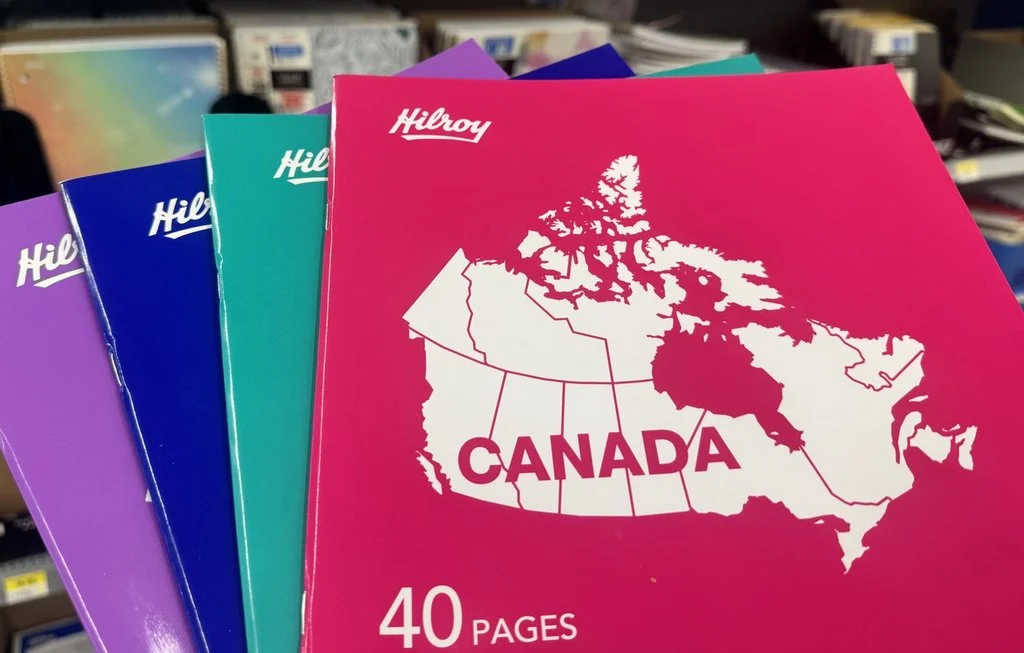
The venerable Canadian stationery brand, Hilroy, has issued a comprehensive apology following widespread public backlash concerning an egregious geographical error on the covers of its popular glossy notebooks, which depict a map of Canada notably missing the provinces of Newfoundland and Labrador, the entirety of Cape Breton Island, and the significant archipelago of Haida Gwaii. This oversight, described by the company as a "production error," has ignited a fervent national conversation about geographical accuracy, regional identity, and the pervasive impact of seemingly minor oversights in widely distributed educational materials.
The pastel-coloured exercise books, instantly recognizable by generations of Canadian students, have long featured a stylized map of the country as a staple of their cover design. However, the iteration found on the glossy-covered notebooks circulating since last year presented a truncated version of the nation, prompting dismay and vocal criticism primarily from residents of the omitted regions and concerned citizens across the country. Hilroy, through a statement posted to its official Facebook page on Tuesday, acknowledged the gravity of the mistake, expressing profound regret. "Our team has always been proud of the map, which is exactly why getting it wrong stings," the company’s statement read, confirming that the inaccurate artwork was the result of an internal production error. In response to the outcry, Hilroy immediately ceased distribution of the faulty notebooks and initiated an urgent process to rectify the cover artwork for future print runs. "That’s our mistake, and we’re sorry," the apology concluded. "To everyone who spotted it: you’re right and thank you for telling us."
The Unfolding of a Geographical Blunder
The faulty notebooks, produced by Hilroy’s parent company ACCO Brands, reportedly began appearing on retail shelves as early as last year, yet the geographical inaccuracies seemingly went unnoticed by the broader public and, crucially, by the company’s quality control mechanisms for several months. It was only recently that sharp-eyed consumers, particularly those from the affected regions, began to identify and highlight the omissions, leveraging social media platforms to voice their collective indignation. The digital sphere quickly became a crucible for public opinion, with posts from Newfoundlanders, Nova Scotians, and British Columbians expressing a mix of bewilderment, frustration, and a deep-seated sense of being overlooked.
The initial reports focused on the absence of Newfoundland and Labrador and Cape Breton. Newfoundland and Labrador, Canada’s easternmost province, boasts a population of approximately 530,000, with a rich history distinct from mainland Canada, having only joined Confederation in 1949. Cape Breton Island, an integral part of Nova Scotia, is home to over 130,000 residents and is celebrated for its unique Celtic culture, stunning landscapes, and significant historical sites. The subsequent discovery of Haida Gwaii’s omission further compounded the error. This archipelago off the coast of British Columbia, often referred to as the "Galapagos of the North," is the ancestral home of the Haida Nation, a vibrant Indigenous community with a profound connection to the land and sea, and is a region of immense ecological and cultural significance. Its exclusion from a national map is particularly sensitive, given ongoing efforts towards reconciliation and recognition of Indigenous territories.
Official Reactions and Political Condemnation
The error quickly escalated beyond consumer complaint, attracting the attention of provincial political leaders who underscored the importance of accurate representation and regional pride. Newfoundland and Labrador Premier Tony Wakeham issued a concise but powerfully worded rebuke via Facebook on Wednesday. "You can leave Newfoundland off an exercise book, but you can’t erase us," Premier Wakeham asserted, emphasizing the province’s enduring identity. "Hilroy will never take away our identity, our history, or our place on the map." His statement resonated deeply with Newfoundlanders and Labradorians, for whom the province’s distinct cultural heritage and often-overlooked status within the national narrative are highly sensitive points.

Similarly, Nova Scotia Premier Tim Houston voiced his strong disapproval of the incomplete map, deeming it "unacceptable." Premier Houston’s response went a step further, announcing an official directive: "I’ve asked the minister of education to send the makers of Hilroy scribblers a map of Nova Scotia that includes Cape Breton and Newfoundland," he stated in a Facebook post. This proactive measure not only highlighted the province’s displeasure but also offered a practical, albeit symbolic, solution to the company. The premiers’ unified and swift condemnation underscored the political weight attached to such geographical inaccuracies, particularly in a nation as vast and regionally diverse as Canada.
ACCO Brands, Hilroy’s parent company, confirmed awareness of the Haida Gwaii omission as part of its ongoing "correction plan." This plan reportedly involves not only halting current distribution and correcting future print runs but also a comprehensive review of their production and quality control processes to prevent similar incidents. The logistical challenges for a company of Hilroy’s size are considerable; recalling products already on shelves across a vast country like Canada would be an immense undertaking, potentially incurring significant financial costs and logistical complexities.
Historical Context and Regional Sensitivities
The error, while seemingly a simple oversight, taps into a deeper historical and cultural sensitivity, particularly for Newfoundland and Labrador. Sean Cadigan, a distinguished history professor at Memorial University in St. John’s, N.L., offered valuable context, noting that Newfoundland did not become part of Canada until 1949. This relatively late entry into Confederation means the province has, at times, been inadvertently or deliberately omitted from national descriptions and maps, a historical trend that continues to sting.
"When there are big tours and people say they’re touring Canada, Canada often stops somewhere in Nova Scotia," Cadigan observed in an interview, highlighting a persistent perception. "I think that’s just probably an old habit that often predates Newfoundland’s joining Confederation," he added, emphasizing that "obviously, people here want to emphasize, of course, since 1949, we’re part of Canada." This historical legacy means that any perceived exclusion, even if unintentional, can evoke strong feelings of marginalization and underscore the ongoing struggle for full recognition within the broader Canadian identity. The island’s unique dialect, cultural traditions, and maritime history contribute to a distinct identity that residents are fiercely proud of, making its erasure from a national symbol all the more impactful.
For Cape Breton, the omission similarly resonates with a strong sense of local identity. The island, while politically part of Nova Scotia, possesses a distinct cultural flavour, particularly its vibrant Gaelic heritage and strong community bonds. Its physical separation from mainland Nova Scotia by the Strait of Canso further emphasizes its unique geographical and cultural position, making its disappearance from a national map a visual representation of a deeper cultural oversight.
The absence of Haida Gwaii, a culturally and ecologically critical region, adds another layer of complexity. The Haida Nation’s long-standing stewardship of these islands, their rich artistic traditions, and their leadership in conservation efforts are integral to Canada’s heritage. The omission of their traditional territory from a national map, particularly in a time of heightened awareness and commitment to Indigenous rights and recognition, is a significant symbolic misstep that goes beyond mere geography.

The Power of Social Media and Consumer Vigilance
The incident serves as a potent reminder of the transformative power of social media in the modern consumer landscape. In an era where information travels at the speed of light, geographical errors on mass-produced goods can no longer escape scrutiny. The collective vigilance of online communities, particularly those with a vested interest in their regional representation, proved instrumental in bringing Hilroy’s error to light. What might have once been a quietly corrected production flaw became a national talking point, amplified by shares, comments, and direct engagement with the company. This incident underscores how individual consumers, empowered by digital platforms, can hold large corporations accountable and influence their operational and public relations strategies.
Furthermore, the public’s reaction highlights the enduring significance of national symbols and educational materials. For many, a Hilroy notebook is more than just paper; it’s a part of their formative years, a ubiquitous presence in Canadian classrooms. When such an iconic item carries an error that diminishes parts of the country, it sends an unintended message, particularly to younger generations learning about their nation’s geography and diversity. The accuracy of educational tools, even seemingly innocuous ones, carries a profound responsibility to reflect the country in its entirety and complexity.
Broader Implications and Moving Forward
The Hilroy map controversy, while perhaps an "embarrassing mistake" as Professor Cadigan described it, without any "intent to slight," carries significant implications for brand reputation, corporate responsibility, and the ongoing dialogue surrounding national identity. For Hilroy and ACCO Brands, the immediate challenge lies in demonstrating genuine commitment to correction, not just through apologies but through tangible actions that rebuild trust. This includes not only fixing the artwork but also communicating transparently about their revised quality control protocols and ensuring that such omissions do not recur across their product lines.
Beyond the immediate corporate response, the incident has inadvertently sparked a valuable national conversation. It has brought to the forefront the sensitivities of regional identity, the importance of acknowledging all parts of the Canadian mosaic, and the vigilance required to ensure that educational materials accurately reflect the nation’s geography and diverse cultural landscape. It serves as a stark reminder that in a country as geographically expansive and culturally rich as Canada, every island, every coastline, and every community contributes to the whole, and their inclusion on the national map is not merely a matter of cartography, but a profound statement of belonging and recognition. The Hilroy incident, therefore, transcends a simple printing error; it has become a microcosm of the larger, ongoing Canadian discussion about who we are, where we are, and how we represent ourselves to ourselves and to the world.