admin
admin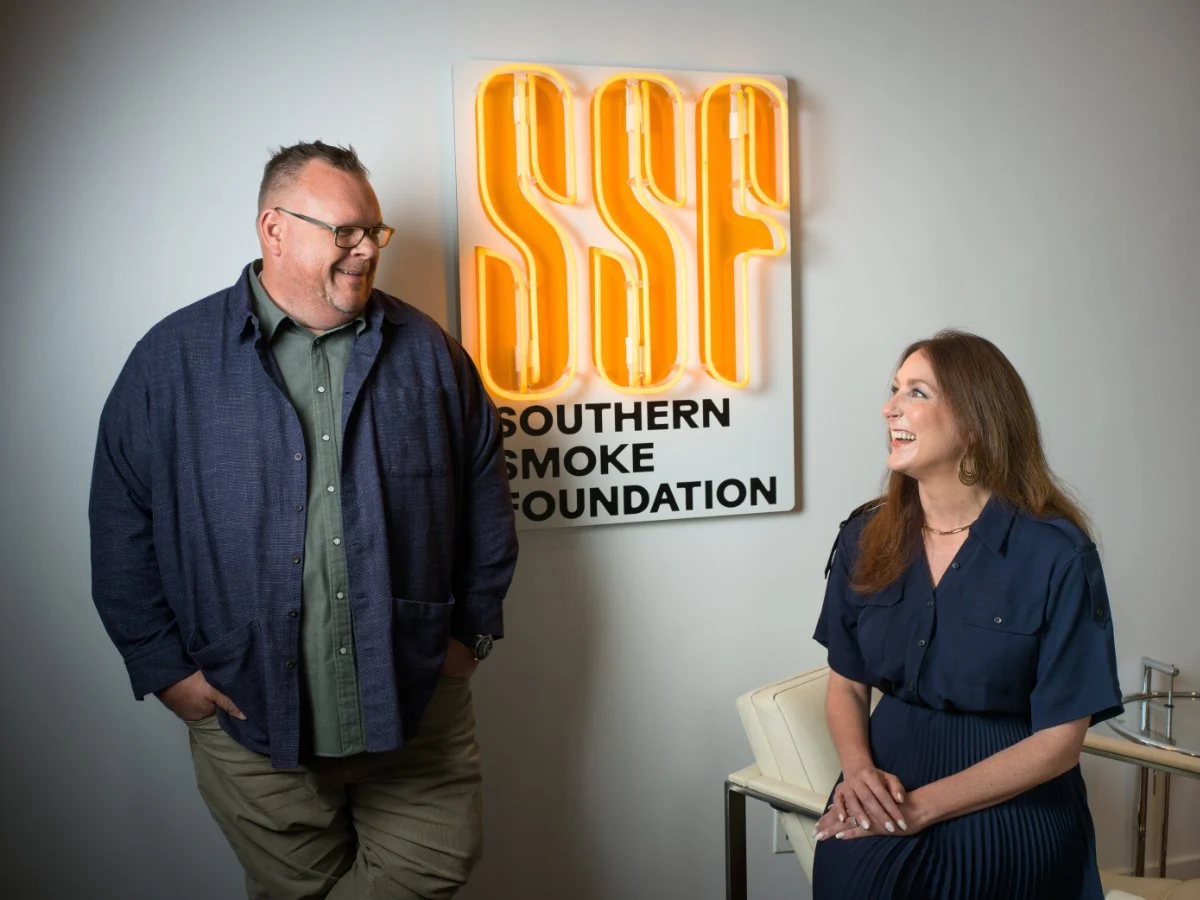
In an industry often celebrated for its culinary artistry and vibrant dining experiences, the precarious reality faced by its foundational workforce often remains obscured. The Southern Smoke Foundation (SSF), co-founded by James Beard Award-winning chef Chris Shepherd and restaurant public relations professional Lindsey Brown, has emerged as a critical safety net, providing emergency relief and pioneering mental health support for food and beverage workers across the United States. Their innovative approach, recognized recently with a prestigious James Beard Foundation Impact Award, addresses the profound vulnerabilities inherent in a sector marked by low wages, demanding conditions, and an absence of robust social protections.
From Crisis to Compassion: The Genesis of Southern Smoke
The Southern Smoke Foundation’s journey began in 2015, rooted in a deeply personal experience. Chris Shepherd, acclaimed for his culinary contributions and role as Food & Wine’s "Editor in Chef," and Lindsey Brown initially established the nonprofit to raise funds for multiple sclerosis research, prompted by a friend’s diagnosis. This foundational commitment to community support, however, took an unforeseen and critical pivot in 2017 with the devastating arrival of Hurricane Harvey.
Hurricane Harvey, a Category 4 storm, made landfall in Texas in August 2017, unleashing unprecedented rainfall and catastrophic flooding, particularly in Houston. The storm caused an estimated $125 billion in damages, making it one of the costliest natural disasters in U.S. history. Beyond the physical destruction, Harvey brought widespread economic disruption, paralyzing industries and leaving countless workers jobless and homeless. For the hospitality sector, a cornerstone of Houston’s vibrant economy, the impact was immediate and severe. Restaurants closed, often indefinitely, and hourly wage earners found themselves without income, facing urgent needs for shelter, food, and basic necessities.
It was in this crucible of crisis that Southern Smoke redefined its mission. Witnessing the immediate and dire needs of food and beverage workers, many of whom had lost everything, Shepherd and Brown recognized a profound gap in existing relief efforts. "We did our due diligence to figure out where this money was going, and what we found is that it’s all going to infrastructure and probably not going to be spent for another two or three years," Brown recounted, highlighting the slow pace of traditional aid. "But the dishwashers that were literally standing on their roofs and had to be rescued from floods, they need it now." This stark realization fueled the foundation’s pivot to emergency relief, directly addressing the immediate and pressing needs of a vulnerable workforce.
A Lifeline in Times of Despair: The Emergency Relief Fund
Since its reorientation in 2017, the Southern Smoke Foundation’s Emergency Relief Fund has become an indispensable resource for food system workers grappling with unforeseen medical emergencies, personal hardships, and other critical crises. The fund operates on a direct grant model, providing financial assistance to individuals who often have nowhere else to turn. To date, the foundation has disbursed an impressive $16.8 million in grants, with the average grant amount standing at $3,500. This financial injection can be the difference between stability and destitution for recipients, covering expenses like rent, utilities, medical bills, or essential repairs.
The critical need for such a fund is underscored by the pervasive economic insecurity within the food service industry. Industry data consistently reveals that a significant portion of food and beverage workers earn wages at or near the federal or state minimum, with many relying heavily on tips for a living wage. Unlike many other sectors, the hospitality industry often provides minimal benefits, such as health insurance, paid sick leave, or retirement plans. This lack of a financial safety net means that a single unexpected expense—a medical emergency, a car repair, or a sudden job loss—can precipitate a cascade of financial ruin. As Shepherd starkly put it, "If anything happens, there’s no safety net. Nobody’s stacking cash in their bank accounts." This vulnerability, inherent in the very structure of the industry, makes Southern Smoke’s emergency relief not just helpful, but often life-sustaining.
The Unseen Crisis: Mental Health in the Hospitality Sector
While immediate financial relief remains a cornerstone of Southern Smoke’s mission, the foundation recognized that external crises are often compounded by, or can even trigger, internal ones. The COVID-19 pandemic, which began sweeping the globe in early 2020, brought unprecedented challenges to the food service industry, exacerbating existing mental health vulnerabilities. Lockdowns, restaurant closures, widespread layoffs, and the constant threat of infection created an environment of extreme stress, anxiety, and uncertainty for millions of workers. Those who remained employed faced new pressures, including navigating rapidly changing safety protocols, dealing with stressed customers, and often working longer hours for reduced pay or tips.
Studies conducted during and after the pandemic consistently highlighted a significant increase in mental health issues among hospitality workers. Rates of anxiety, depression, and substance abuse climbed, reflecting the immense psychological toll of the crisis. Long before the pandemic, however, the industry was already known for its demanding nature: irregular and long hours, high-pressure environments, often low pay, and the emotional labor involved in customer service. These factors contribute to a higher propensity for burnout, stress-related illnesses, and challenges in maintaining work-life balance. It became clear that addressing mental well-being was not merely a secondary concern but a fundamental component of supporting the food system workforce.
Proactive Care: The "Behind You" Program’s Innovative Approach
Responding to this growing crisis, Southern Smoke pivoted once again during the pandemic, launching its "Behind You" program. This initiative represents a groundbreaking shift from reactive emergency aid to proactive mental health support, offering free counseling services to food and beverage workers. The program is built on strategic partnerships with universities, leveraging their clinical psychology and social work programs to provide high-quality, accessible mental healthcare.

Through these partnerships, "Behind You" offers participants 20 free counseling sessions. Following these initial sessions, individuals can continue to receive support on a sliding scale, ensuring that ongoing care remains affordable. This model not only provides immediate relief but also fosters long-term mental wellness. As Shepherd articulated, the program is designed to ask, "How do we fix things before we have to pay for them?" This preventative philosophy aims to equip workers with coping mechanisms and support systems before they reach a breaking point, thereby reducing the likelihood of a "waterfall" of crises, as Brown described—where one problem leads to another until individuals are completely overwhelmed.
Since its inception in 2020, the "Behind You" program has provided over 12,400 no-cost counseling sessions, expanding its reach across 12 states plus Washington, D.C. The program recently broadened its services to Colorado and North Carolina, with pilot programs set to launch in Kentucky and Pennsylvania by the end of the year. The success and innovative nature of "Behind You" were formally recognized in June when the Southern Smoke Foundation received a James Beard Foundation Impact Award, a testament to its profound and positive influence on the lives of food system workers. The award signifies not just recognition of their work, but also a broader industry acknowledgment of the critical importance of mental health support for its workforce.
The "Behind You" program’s reliance on university partners, particularly those belonging to the Association of Psychology Training Clinics (APTC), ensures a consistent standard of care. "They use the same guidelines in each of these universities we work with. It shows us that we’re offering a consistent level of care, no matter what state you’re in, which is very important. You could never guarantee that in private practice," Brown explained, highlighting the rigorous and ethical framework underpinning their mental health services. This commitment to quality and accessibility distinguishes "Behind You" as a leading model for industry-specific mental health interventions. The most common reasons individuals seek support through "Behind You" include anxiety and depression, work-related burnout, relationship issues, trauma, and substance abuse – reflecting the multifaceted stressors endemic to the industry.
The Human Element: Understanding Worker Vulnerabilities
The Southern Smoke Foundation’s deep understanding of worker vulnerabilities stems directly from the lived experiences of its founders and the countless stories they’ve encountered. Chris Shepherd’s personal journey in the culinary world provides a poignant illustration of the financial tightrope many food system workers walk. "I was a broke-ass cook. My first job was as a dishwasher in Tulsa, Oklahoma, at a sushi bar, making $4.25 an hour, trying to figure out how to make that work," Shepherd recalled. He described a "cook’s lifecycle" where after paying bills, often only a meager sum, sometimes as little as $22, remains for two weeks. Even as he advanced, the struggle persisted: "My first salary position [in Houston] was $17,000 a year as a sous chef. I thought I was doing great. Then I left for a job making $8 an hour… I’ll never forget how I’d get paid, pay my bills, I had $5 left, and had to borrow $20 from my buddy so I could get gas and make it back and forth to work. Then I just ate at work. There was no going out, nothing."
This reality means that even seemingly minor setbacks can become catastrophic. "Then I got a flat tire, a blowout. Luckily, I had my parents in Houston at the time, so they helped me out here and there, but a lot of people don’t have that structure," Shepherd emphasized. This "flat tire" scenario is a powerful metaphor for the fragility of financial stability for many workers, where an unexpected $100 or $200 expense can derail their ability to work and survive.
Lindsey Brown further illuminated the industry’s paradoxical nature: "At so many restaurants, they are the first people to step up when anything is happening—raising money for an employee who is sick, feeding people on the front lines of any sort of natural disaster. All of my clients were constantly doing charity events, but who takes care of them?" This rhetorical question highlights the systemic oversight that leaves those who serve others without a safety net of their own. Brown stressed that medical expenses are currently the number one reason for Emergency Relief Fund applications "by a long shot," pointing to the crippling costs of healthcare in the U.S. and the widespread lack of comprehensive health insurance among service workers. The foundation aims to demystify the idea of crisis, urging workers not to wait for "a massive catastrophic event." "We want people to know that an unforeseen crisis can be something as small as a flat tire that you can’t afford. You don’t have to have a massive catastrophic event to reach out to us."
Bridging the Gaps: Reaching Underserved Communities
Despite its significant impact, Southern Smoke acknowledges that there are still many within the vast and diverse food system workforce who remain unreached. A key focus for future expansion is increasing awareness among employees of large chain restaurants. "We fund everyone in the industry, not just independent restaurants. When we get applications from workers at Waffle House, McDonald’s, or Chilis, we’d feel like we’ve really broken through," Brown stated. These large chains employ millions of workers, many of whom face the same financial precarity as those in independent establishments, but who may be less connected to industry-specific non-profits.
Beyond corporate chains, the foundation also seeks to extend its reach into other vital, yet often overlooked, segments of the food system. "We don’t find a lot of people in the wine industry—the people working the vineyards, the bottling line, or in tasting rooms. We would like them to know about us," Brown noted. Similarly, Chris Shepherd highlighted the need to connect with "farmers or fishermen or cattlemen, the whole grower industry," recognizing that the food system extends far beyond restaurant kitchens. He also pointed to specific urban markets and smaller, community-focused establishments, such as "the Vietnamese restaurants [in Houston] don’t really know who we are, and all of the smaller mom-and-pop places. Also bottling line workers in Kentucky." Reaching these diverse groups requires tailored outreach strategies, potentially including multilingual resources, partnerships with local community organizations, and direct engagement with agricultural and production hubs. The challenge lies in overcoming barriers of language, cultural differences, lack of internet access, and simply a lack of awareness about available resources.
A Blueprint for Industry Support: Recognition and Future Vision
The Southern Smoke Foundation’s receipt of the James Beard Foundation Impact Award is more than just an accolade; it is a powerful affirmation of their pioneering work and a call to action for the broader food industry. The James Beard Foundation, a prominent voice in American cuisine, bestows this award upon organizations that demonstrate significant positive impact on the food system, reflecting a growing awareness that the future of food extends beyond celebrity chefs and Michelin stars to the well-being of every individual involved in its production and service. Southern Smoke’s recognition signals a paradigm shift, emphasizing that a thriving food industry must prioritize the health and stability of its human capital.
Looking ahead, Southern Smoke aims to continue its strategic expansion of the "Behind You" program, building on its university partnership model to ensure consistent, high-quality mental health care across more states. The goal is not just to expand geographically, but to deepen its integration into the fabric of the food service community, ensuring that seeking help becomes normalized and accessible. The foundation’s work implicitly underscores the need for broader systemic changes, such as improved wages, better benefits, and stronger labor protections for food system workers. While Southern Smoke operates as a charitable organization providing direct aid, its existence and impact serve as a powerful testament to the gaps in public policy and corporate responsibility that currently leave millions vulnerable.
The Southern Smoke Foundation stands as a beacon of hope and a practical model for how the food industry can cultivate a more compassionate and sustainable ecosystem for its workforce. By providing both immediate financial relief and proactive mental health support, Chris Shepherd, Lindsey Brown, and their team are not just addressing crises; they are building a vital safety net, one grant and one counseling session at a time, ensuring that the people who feed us are also cared for. Their enduring mission is to foster an industry where vulnerability does not lead to despair, and where every worker has the support they need to thrive.