admin
admin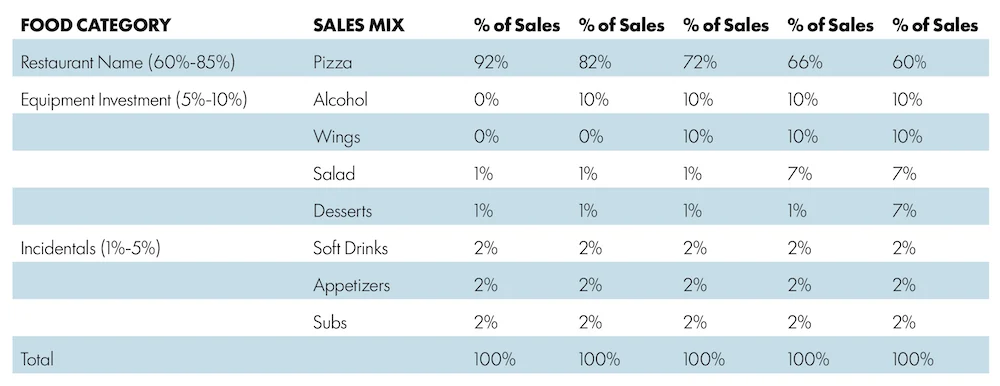
In the highly competitive and rapidly evolving restaurant industry, particularly within the pizzeria sector, the astute management of a restaurant’s sales mix stands as a critical determinant of profitability and long-term viability. Beyond merely tracking revenue, understanding the specific proportion of sales contributed by each menu category—the "sales mix"—empowers operators to make strategic decisions concerning menu development, operational investments, and targeted marketing campaigns. This analytical approach, as championed by experienced restaurateurs like Dan Collier of PizzaMan Dan’s, provides a robust framework for enhancing customer value and driving sustainable growth in a challenging market landscape.
The Foundation: Deciphering the Sales Mix for Strategic Insight
At its core, calculating the sales mix involves a straightforward yet powerful arithmetic: dividing the sales generated by a specific category by the total sales over a defined period. For instance, if a pizzeria records $15,000 in pizza sales and $20,000 in total sales for a given week, pizza accounts for a significant 75% of the overall revenue. This initial figure serves as the cornerstone for understanding a business’s primary revenue drivers and identifying areas for potential optimization. Extending this calculation to all sales categories—such as appetizers, salads, beverages, and desserts—yields a comprehensive sales mix profile, offering a snapshot of customer purchasing habits and menu performance.
The importance of this metric extends beyond simple accounting. It acts as an early warning system for underperforming categories and highlights opportunities for capitalizing on strengths. In an era where consumer preferences are increasingly fragmented and competition from diverse culinary offerings is intense, a data-driven understanding of what customers are actually buying is indispensable. Industry data consistently shows that businesses with a clear understanding and active management of their sales mix can achieve 5-10% higher profit margins compared to those that operate without this insight, primarily by optimizing inventory, labor, and marketing spend.
Strategic Optimization: Defining and Shaping the Optimal Sales Mix
The concept of an "optimal sales mix" is not a one-size-fits-all formula but rather a dynamic target shaped by a restaurant’s core identity and strategic investments. A restaurant’s name, for example, inherently sets customer expectations and largely dictates the dominant sales category. For an establishment branded "PizzaMan Dan’s," it is almost a given that pizza sales will constitute a substantial majority—typically ranging from 60% to 85% of total sales. This expectation is deeply ingrained in consumer perception; patrons entering a pizzeria anticipate pizza as the primary offering. This fundamental branding influence underscores the importance of aligning menu strategy with the restaurant’s advertised identity. Should an operator wish to elevate another food item to a similar prominence, incorporating it into the restaurant’s name (e.g., "John’s Pizza & Wings" or "John’s Pizza and Bar") becomes a crucial initial step in managing customer expectations and diversifying the perceived core offering.
Beyond branding, strategic equipment investment plays a pivotal role in consciously altering the sales mix. While a pizzeria might initially sell 60-85% pizza, with other categories like appetizers, salads, and desserts often representing only 1-5% as "incidentals," targeted capital expenditure can significantly shift these proportions. This isn’t about diminishing the core product but about expanding the restaurant’s appeal and revenue streams.
Consider the following real-world applications of equipment-driven sales mix optimization:
- Adding a Bar: Investing in a full-service bar—complete with draft systems, liquor inventory, and trained bartenders—can dramatically increase alcohol sales. What might have been a mere 2-3% contribution from bottled beers or limited wine options can surge to 10-15% or even higher. This not only boosts revenue per customer but also enhances the dining experience, encouraging longer stays and repeat visits. Industry averages suggest that alcohol sales often carry higher profit margins than food items, making this a particularly attractive investment.
- Integrating Fryers: The addition of commercial fryers allows for the expansion of appetizer menus, most notably through popular items like chicken wings and various fried starters. This investment can elevate sales in this category from a modest 2-4% to a robust 10-15%. Wings, in particular, have become a staple alongside pizza, offering a complementary savory option that appeals to groups and families.
- Developing a Salad Bar: While salads might traditionally be an afterthought, investing in a well-stocked and visually appealing salad bar can transform them into a significant sales contributor. Moving from 1-2% to 5-7% of total sales is achievable by offering a wider variety of fresh ingredients, dressings, and protein add-ons. This caters to health-conscious customers and those seeking lighter options alongside their pizza.
- Establishing an Ice Cream Counter: Similarly, a dedicated ice cream counter or dessert station can boost dessert sales from a nominal 1-2% to 5-7%. Desserts often represent an impulse purchase, and a visible, enticing display can significantly increase their uptake, adding to the average check size.
Crucially, these increases in ancillary sales categories do not necessarily cannibalize pizza sales in absolute dollar terms. Instead, they often expand the overall customer base and increase the total transaction value. The percentage of pizza sales might decrease relative to the total, but the actual dollar volume of pizza sold frequently rises or remains stable, augmented by new revenue from the diversified offerings. This strategy transforms a pizzeria from a single-product destination into a more comprehensive dining experience.
Real-Life Strategic Pivots: Expanding Beyond the Core

The strategic implications of these shifts are profound. Dan Collier’s own experience highlights this: facing intensified competition from third-party delivery services making all food options readily available, and a saturated dine-in market, he recognized the need to fortify PizzaMan Dan’s offering. The decision to add a bar to an existing restaurant proved transformative, doubling weekly sales from $20,000 to $40,000. This success was not an anomaly; subsequent pizzerias designed from inception with a bar achieved opening sales of $60,000 per week, a substantial increase over the $40,000 typically seen in traditional openings. This demonstrates a clear correlation between strategic investment in diversifying the sales mix and significant revenue growth, validating the concept that adding value beyond the primary product attracts a broader clientele and higher spending.
Tactical Management: Cultivating Growth in the Sales Mix
The ongoing management of the sales mix is a continuous process of analysis, adaptation, and innovation. The primary motivation for expanding beyond the core product, such as increasing bar sales at the expense of a percentage of pizza sales, is often misunderstood. As demonstrated by PizzaMan Dan’s, the actual result is rarely a reduction in pizza revenue. Instead, each strategic investment in equipment for an additional sales category has led to an increase in the actual dollar sales of pizza, alongside the new revenue from the invested category. This phenomenon suggests that by offering a more comprehensive and appealing customer experience—one that extends "over and above serving just pizza"—restaurants can attract a larger customer base, increase visit frequency, and encourage higher spending per visit. This value-added approach directly translates into overall sales increases, representing a powerful engine for business growth.
While the potential for diversification is vast, identifying the right additional items is key. PizzaMan Dan’s has strategically focused on alcohol, wings, salads, and desserts, finding these four categories to be the most synergistic and profitable fits for their pizzeria concept. These items complement pizza rather than compete with it, enhancing the overall dining occasion.
Another crucial aspect of tactical sales mix management involves addressing "incidental" categories—those contributing less than 2% to total sales. Such low performance signals either a lack of customer interest, an unappealing offering, or insufficient marketing. Rather than simply eliminating these items, a strategic review can often uncover opportunities for improvement without requiring significant capital expenditure.
Real-Life Tactical Innovation: The Pizza Burger Case Study
An excellent example of this tactical innovation comes from Dan Collier’s experience with sub/sandwich sales. Despite various efforts, this category consistently languished below 2% of total sales. Simultaneously, the rising cost of fast-food burgers, driven by minimum wage increases, presented a market opportunity. Observing that burgers in the market were averaging $6.50, Collier innovated the "Pizza Burger." This creation, designed with an optimized food cost, could be sold for $5. Its appeal and value proposition resonated strongly with customers, propelling it to become the No. 1 seller in the sub/sandwich category and effectively doubling that category’s contribution to 4% of total sales. This case illustrates how creative menu development, responsive to market conditions and cost pressures, can significantly impact sales mix performance and overall profitability without extensive capital investment. It underscores the importance of continuously evaluating menu items for relevance, value, and profitability.
Marketing Integration: Leveraging Sales Mix for Maximum Impact
Effective marketing is not just about promoting individual products; it’s about strategically positioning offerings within the context of the overall sales mix, always emphasizing the primary product. For a pizzeria, this means that every marketing effort, even when promoting ancillary items, must reinforce the restaurant’s core identity as a pizza destination. The bar, for instance, is not marketed as a standalone drinking establishment but as an enhancement for pizza customers to enjoy a cocktail or a pitcher of beer with their meal. Similarly, hot wings are presented not as a competitor to dedicated wing establishments but as an ideal appetizer to precede the main event: the pizza. This "pizza-first" marketing philosophy ensures consistency in branding and maximizes the impact of promotional spend.
This integrated marketing approach is crucial for achieving greater "bang for your buck." By featuring pizza alongside other items, the marketing message remains relevant to the broadest possible customer base—all pizza patrons. If a restaurant markets its salad bar in isolation, a significant portion of potential customers, those primarily interested in pizza, might disregard the message entirely. However, by marketing the addition of a fresh salad from the new salad bar to pizza customers, the message gains immediate relevance. Even individuals who might not typically consider a salad are engaged because the communication is rooted in their primary interest: pizza. This method leverages the strength of the core product to cross-promote complementary offerings, effectively expanding the appeal of the entire menu.
Real-Life Marketing Evolution: The Carpinteria Salad Bar Example

The power of this integrated marketing strategy is vividly illustrated by the experience at PizzaMan Dan’s Carpinteria, California, location. This establishment was launched with a significantly enhanced salad bar, boasting double the selections of other locations and superior offerings compared to local competitors. In its first year, the salad bar achieved a respectable 5% of total sales. Aiming to increase this, the team embarked on a social media campaign in the second year, featuring beautiful, standalone pictures of the salads. Despite the high-quality visuals, salad sales stubbornly remained at 5%. This plateau highlighted a critical disconnect: the marketing, though visually appealing, failed to connect the salads to the restaurant’s primary identity and the customer’s core interest.
Frustrated by the lack of movement, Collier re-directed the marketing strategy. The same high-quality salad pictures were used, but this time, they were strategically placed next to the pizza in all promotional materials. The shift was simple but profound. Over the subsequent three months, salad sales surged to 10% of total sales, and crucially, total restaurant sales increased by over 10%. This outcome unequivocally demonstrates that even the most attractive ancillary offerings require marketing that is inextricably linked to the restaurant’s core identity and primary product to achieve their full potential. It’s not just about what you sell, but how you tell the story of how it fits into the customer’s overall experience with your brand.
Broader Industry Context and Challenges
The strategies outlined by Dan Collier are not merely theoretical exercises but essential responses to the seismic shifts occurring within the restaurant industry. The proliferation of third-party delivery platforms, while offering convenience, has intensified competition by making every restaurant’s menu instantly accessible. This "restaurant without walls" phenomenon means pizzerias are no longer just competing with other pizzerias but with every conceivable food option available for delivery. This necessitates a stronger, more diversified value proposition to capture and retain customer loyalty.
Furthermore, rising operational costs, particularly labor expenses driven by minimum wage increases, place immense pressure on profit margins. Optimizing the sales mix, especially by introducing high-margin items like alcohol or creatively designed, cost-effective menu additions like the Pizza Burger, becomes a critical tool for maintaining profitability. It allows operators to boost average check sizes and overall revenue without necessarily increasing foot traffic dramatically or undertaking unsustainable price hikes on core items.
Economic Implications and Future Outlook
The implications of robust sales mix management extend beyond individual restaurant profitability. On an industry-wide level, such strategies foster greater resilience and innovation. Restaurants that actively analyze and adapt their sales mix are better positioned to weather economic downturns, respond to shifting consumer trends, and maintain a competitive edge. This approach encourages a culture of continuous improvement, pushing operators to not only perfect their core offerings but also to explore complementary revenue streams that enhance the overall customer experience.
Looking ahead, the ability to strategically manage and market a diversified sales mix will likely become an even more critical differentiator. As consumers increasingly seek value, convenience, and unique dining experiences, restaurants that can offer a well-curated array of high-quality products, thoughtfully integrated and effectively marketed, will be best placed for success. The lessons from PizzaMan Dan’s underscore that in the dynamic world of food service, success isn’t just about selling a great pizza; it’s about mastering the art and science of the sales mix to create a holistic and profitable culinary ecosystem.
Analyzing the sales mix is not merely an accounting exercise; it is the fundamental first step in any meaningful strategy for existing pizzeria sales growth and the foundational blueprint for new pizzeria success. By embracing this data-driven approach, restaurateurs are empowered to craft their own narratives of growth and triumph in an ever-challenging market.