admin
admin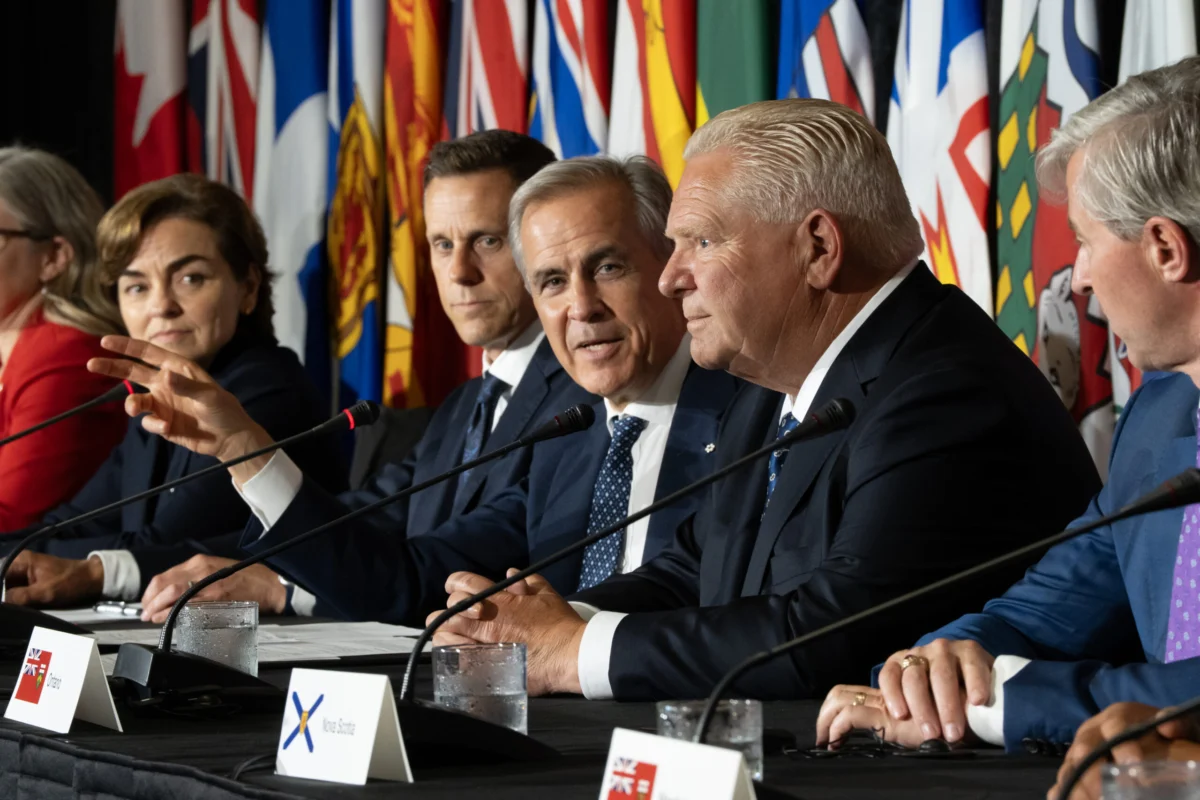
Following days of intense, high-stakes negotiations that ultimately proved fruitless, Canada and the United States have failed to reach a new trade agreement, leading Prime Minister Mark Carney to declare he was "walking away from a bad deal." This breakdown in talks has immediately escalated the ongoing trade dispute between the two historically close allies, with the United States implementing sweeping 50 percent tariffs on billions of dollars in Canadian goods, effective Saturday, August 22, 2026. In a show of remarkable cross-partisan solidarity, Canada’s provincial premiers have swiftly rallied behind Prime Minister Carney’s resolute decision, while simultaneously preparing their respective economies for the anticipated economic fallout and calling for robust federal support.
The abrupt collapse of these critical trade discussions marks a significant turning point in Canada-U.S. relations, plunging North America into an era of heightened economic uncertainty. The imposition of tariffs by the United States targets a broad spectrum of Canadian products, from manufactured goods and natural resources to agricultural exports, raising immediate concerns about job losses, supply chain disruptions, and inflationary pressures across Canada. Prime Minister Carney, in a Saturday afternoon briefing with provincial leaders, outlined the details of the abandoned deal and discussed potential tariff relief measures, emphasizing Canada’s firm stance against what he characterized as unfair trade practices.
The Breakdown: A Chronology of Failed Negotiations
The latest round of trade negotiations, which began with cautious optimism, had been an attempt to de-escalate burgeoning tensions that have characterized the Canada-U.S. economic relationship for several years. Since the re-election of U.S. President Donald Trump, an "America First" doctrine has consistently prioritized domestic industries, leading to a series of protectionist measures and strained diplomatic ties. The current trade dispute escalated following the expiry of a temporary tariff truce earlier in the year, which had briefly paused escalating duties on steel, aluminum, and certain agricultural products.
Sources close to the negotiations indicated that the primary sticking points revolved around several key sectors. The U.S. delegation reportedly demanded significant concessions on Canada’s dairy supply management system, seeking greater market access for American dairy products. Furthermore, contentious issues included stricter "rules of origin" for the automotive sector, which Canadian manufacturers argued would cripple their integrated North American supply chains, and U.S. insistence on limitations on Canadian digital services taxes. Canada, for its part, sought assurances against future arbitrary tariffs and greater stability in cross-border trade, advocating for a dispute resolution mechanism that the U.S. delegation was reportedly unwilling to enshrine.

Over the past week, negotiators from both sides worked tirelessly, often through the night, in a bid to bridge the widening chasm. Hopes for a breakthrough briefly flickered on Friday evening when reports suggested a tentative agreement might be within reach, focusing on minor adjustments to agricultural quotas and a phased approach to digital taxation. However, these hopes were dashed by Saturday morning as fundamental disagreements over the automotive sector and the permanence of tariff protections proved insurmountable. Prime Minister Carney ultimately concluded that the proposed U.S. terms would fundamentally undermine Canada’s sovereignty and economic interests, choosing to "walk away" rather than accept what he deemed a detrimental agreement.
Immediate Economic Fallout and Industry Reactions
The immediate impact of the 50 percent tariffs is expected to be substantial, affecting billions of dollars in Canadian exports to its largest trading partner. Preliminary economic models from the Canadian Chamber of Commerce suggest that industries such as steel, aluminum, automotive parts, forestry products, and various agricultural goods, including certain processed foods and beverages, will be hit hardest. Analysts at RBC Economics estimate that up to 150,000 Canadian jobs could be at risk in the short term across these sectors, with an additional drag of 0.5 to 0.8 percentage points on Canada’s annual GDP growth in the coming year.
The automotive sector, in particular, is bracing for significant disruption. Canada’s integrated auto supply chain, which sees parts crossing the border multiple times during production, is highly vulnerable to tariffs. The Automotive Parts Manufacturers’ Association (APMA) released a statement expressing profound concern, stating, "These tariffs will create chaos in our industry, increase costs for consumers, and jeopardize thousands of highly skilled jobs on both sides of the border. We urge both governments to return to the negotiating table with a genuine commitment to free and fair trade." Similarly, the Canadian Steel Producers Association warned of immediate layoffs and the potential for plant closures if the tariffs remain in effect for an extended period.
Beyond traditional manufacturing, Canada’s burgeoning tech sector, particularly those involved in digital services and e-commerce, also faces indirect pressure as the broader economic downturn impacts consumer spending and investment. Agricultural producers, while not as broadly targeted as manufacturing, expressed anxiety over potential retaliatory measures from the U.S. or increased competition in domestic markets if goods are diverted from export channels.
A United Canadian Front: Premiers Rally Behind Carney
In a striking display of national unity that transcends provincial and partisan lines, Canada’s premiers have vocally endorsed Prime Minister Carney’s decision, signaling a collective resolve to confront the U.S. trade offensive. The consensus among provincial leaders underscores the gravity of the situation and the perceived threat to Canada’s economic sovereignty.

Ontario Premier Doug Ford, whose province is home to a significant portion of Canada’s auto and steel industries, was among the first to offer unequivocal support. Speaking to reporters in Toronto, Premier Ford stated, "I’ve always said we need to fight these tariffs. Tariff to tariff, dollar to dollar. I’m glad he didn’t sign that deal because it was a bad deal. It was a bad deal for Ontario. It was a bad deal for the auto sector, the steel sector, and the manufacturing sector. We never started this fight, but I can assure you, we’re going to win this fight." Ford’s strong words reflect the deep concern within Canada’s industrial heartland over the potential for job losses and economic destabilization. He further added, in a now-viral soundbite, that "President Trump is the type of person that would steal your lunch money," emphasizing the need for Canada to stand firm.
Manitoba Premier Wab Kinew echoed this sentiment, advocating for a robust and uncompromising Canadian response. "History will not be kind to Donald Trump, so we should never appease him," Kinew asserted. "We should fight back, which is what Canada’s doing today." His remarks highlight a broader Canadian political sentiment that appeasement of protectionist policies from the U.S. is not a viable long-term strategy.
From the Atlantic, Nova Scotia Premier Tim Houston pledged his full support to the Prime Minister. "I continue to stand ready to support and work with the prime minister," Houston affirmed. "It’s clear that we cannot trust or rely on the United States as we once did. This reality must make us more determined than ever to make Nova Scotia and Canada stronger." Premier Houston’s statement underscores a potential paradigm shift in Canadian foreign and trade policy, suggesting a renewed focus on domestic resilience and diversification away from an over-reliance on the U.S. market.
Similar expressions of solidarity came from other provincial leaders. British Columbia Premier David Eby acknowledged the economic challenges ahead but emphasized the importance of national cohesion. "While we recognize the significant economic headwinds these tariffs will create for B.C. industries, particularly in forestry and technology, we stand united with the Prime Minister in rejecting a deal that would have compromised our long-term interests," Eby’s office released in a statement. "We call on the federal government to ensure robust support mechanisms are in place for affected workers and businesses in our province."
New Brunswick Premier Blaine Higgs, while expressing concern for the province’s lumber and seafood exporters, also voiced support for Carney’s firm stance. "We cannot allow our industries to be held hostage by protectionist policies," Higgs stated, "New Brunswick will work closely with Ottawa to mitigate the impacts and explore new trade avenues." Saskatchewan Premier Scott Moe, representing a predominantly agricultural province, highlighted the need for federal assistance for farmers who might face indirect market disruptions. "Our agricultural sector is resilient, but these tariffs introduce new uncertainties. We expect Ottawa to deliver comprehensive support packages to ensure our producers can weather this storm," Moe communicated through his press secretary.

This united front from the premiers provides Prime Minister Carney with a strong mandate as Canada prepares to implement its own dollar-for-dollar retaliatory tariffs next month, signaling a prolonged and potentially damaging trade conflict.
Historical Context: A Legacy of Trade Tensions
The current trade dispute is not an isolated incident but rather the latest chapter in a complex, often fraught, economic relationship between Canada and the United States. While the North American Free Trade Agreement (NAFTA), and its successor, the United States-Mexico-Canada Agreement (USMCA), aimed to foster seamless trade, underlying tensions have frequently surfaced. Historically, disputes over lumber, dairy, and steel have punctuated periods of cooperation.
The return of Donald Trump to the U.S. presidency amplified these protectionist tendencies. His "America First" rhetoric has consistently challenged multilateral trade agreements and sought to leverage America’s economic might to secure what he perceives as more favourable bilateral deals. From the Canadian perspective, this approach often disregards the intricate interdependencies of the North American economy and the mutual benefits derived from integrated supply chains. Prime Minister Carney, a former Governor of the Bank of Canada and the Bank of England, brought to the leadership a deep understanding of global economics, positioning him to articulate Canada’s long-term economic interests against short-term political pressures. His decision to walk away from the deal reflects a strategic calculation that capitulating to U.S. demands would set a dangerous precedent and weaken Canada’s negotiating position in future international trade discussions.
Broader Economic Implications: Beyond the Initial Shock
The long-term economic implications for Canada extend far beyond the immediate shock of tariffs. The disruption to established supply chains will force Canadian businesses to re-evaluate their operational strategies, potentially leading to diversification of suppliers and markets. This could accelerate Canada’s efforts to deepen trade ties with European and Asian partners, a strategy that has been gaining traction even before the current crisis. However, such diversification takes time and significant investment.
Consumer prices are also expected to rise as the cost of imported components and goods from the U.S. increases due to Canada’s own retaliatory tariffs, and as domestic producers face higher input costs. The Canadian dollar could face downward pressure amidst increased economic uncertainty, which might offer some relief to exporters selling into non-U.S. markets but would make imports more expensive for Canadian consumers and businesses.

Furthermore, the dispute could impact foreign direct investment (FDI) into Canada. Businesses seeking to establish a North American presence might hesitate if cross-border trade becomes consistently unpredictable. This highlights the urgent need for the Canadian government to articulate a clear, stable economic policy that instils confidence in both domestic and international investors.
Political Ramifications and Future Prospects
Domestically, the unified stance of the premiers provides Prime Minister Carney with crucial political capital, demonstrating national resolve in the face of external pressure. This unity could strengthen his government’s hand in implementing support measures for affected industries and workers, potentially through direct subsidies, retraining programs, and tax relief. However, should the trade war drag on and lead to prolonged economic hardship, this political unity could be tested. Opposition parties, while currently supportive of the firm stance, will undoubtedly scrutinize the government’s handling of the crisis and its mitigation strategies.
Diplomatically, the breakdown in talks signals a strained period for Canada-U.S. relations. While channels of communication will remain open, the current environment suggests a shift from cooperative partnership to competitive rivalry in certain economic spheres. The situation could also prompt Canada to seek recourse through international bodies like the World Trade Organization (WTO), although the effectiveness of the WTO in resolving disputes with major powers like the U.S. has been a subject of debate in recent years.
The future prospects for a resolution remain uncertain. A change in U.S. administration or a significant shift in U.S. economic policy could pave the way for renewed negotiations. However, for the foreseeable future, Canada appears committed to a strategy of resilience, diversification, and firm retaliation, accepting that the economic relationship with its southern neighbour has fundamentally changed.
The Road Ahead: Calls for Support and Strategic Planning
As Canada stares down the barrel of a protracted trade conflict, the focus now shifts to strategic planning and robust support for affected sectors. Business associations, labor unions, and provincial governments are all calling on Ottawa to implement comprehensive measures to safeguard jobs and maintain economic stability. This includes expedited unemployment benefits, industry-specific aid packages, and investments in infrastructure and technology to boost domestic competitiveness.

Beyond immediate relief, there is a growing consensus that Canada must accelerate efforts to diversify its trade relationships, reduce its reliance on the U.S. market, and strengthen its domestic manufacturing capabilities. This might involve exploring new free trade agreements, increasing investment in port infrastructure and supply chains that bypass the U.S., and fostering innovation within Canadian industries. The challenge for Prime Minister Carney and his government will be to navigate these turbulent waters while maintaining national unity and charting a course towards a more resilient and diversified Canadian economy. The coming months will be critical in determining the long-term impact of this unprecedented trade standoff.