admin
admin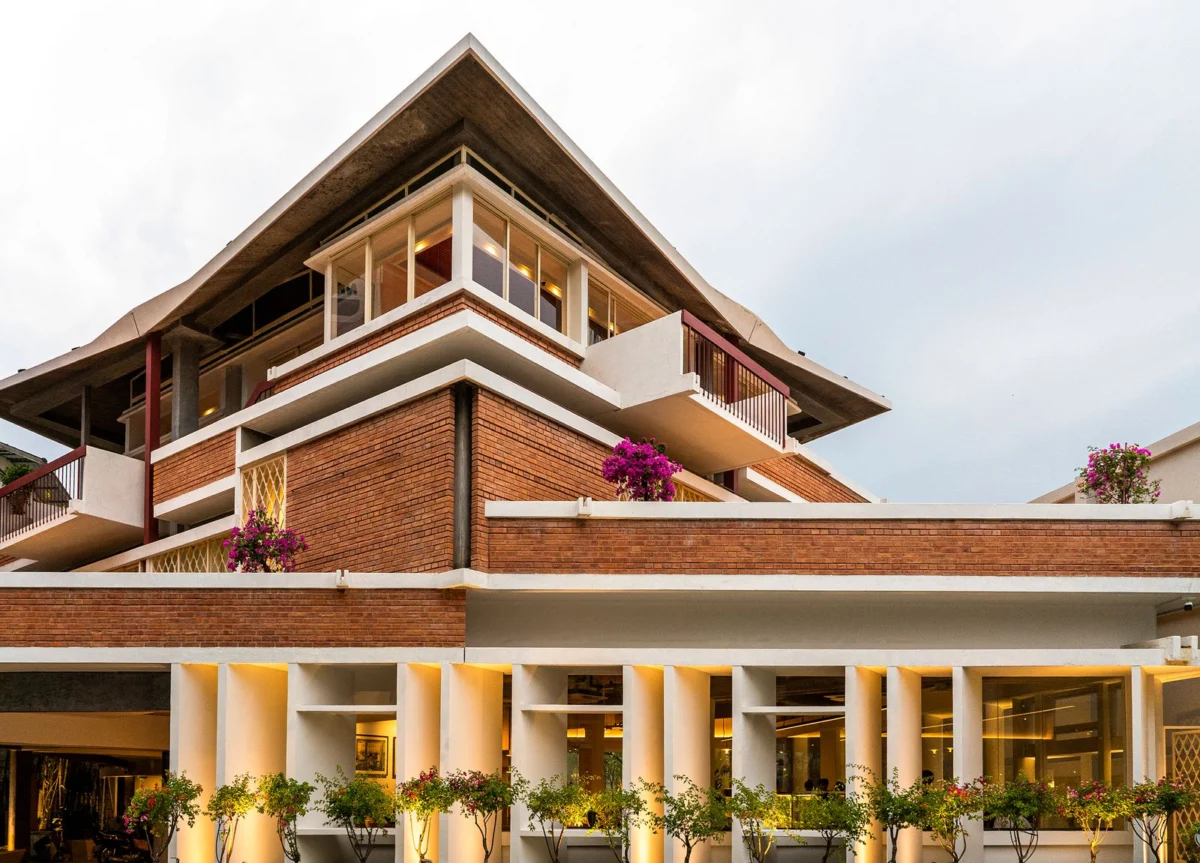
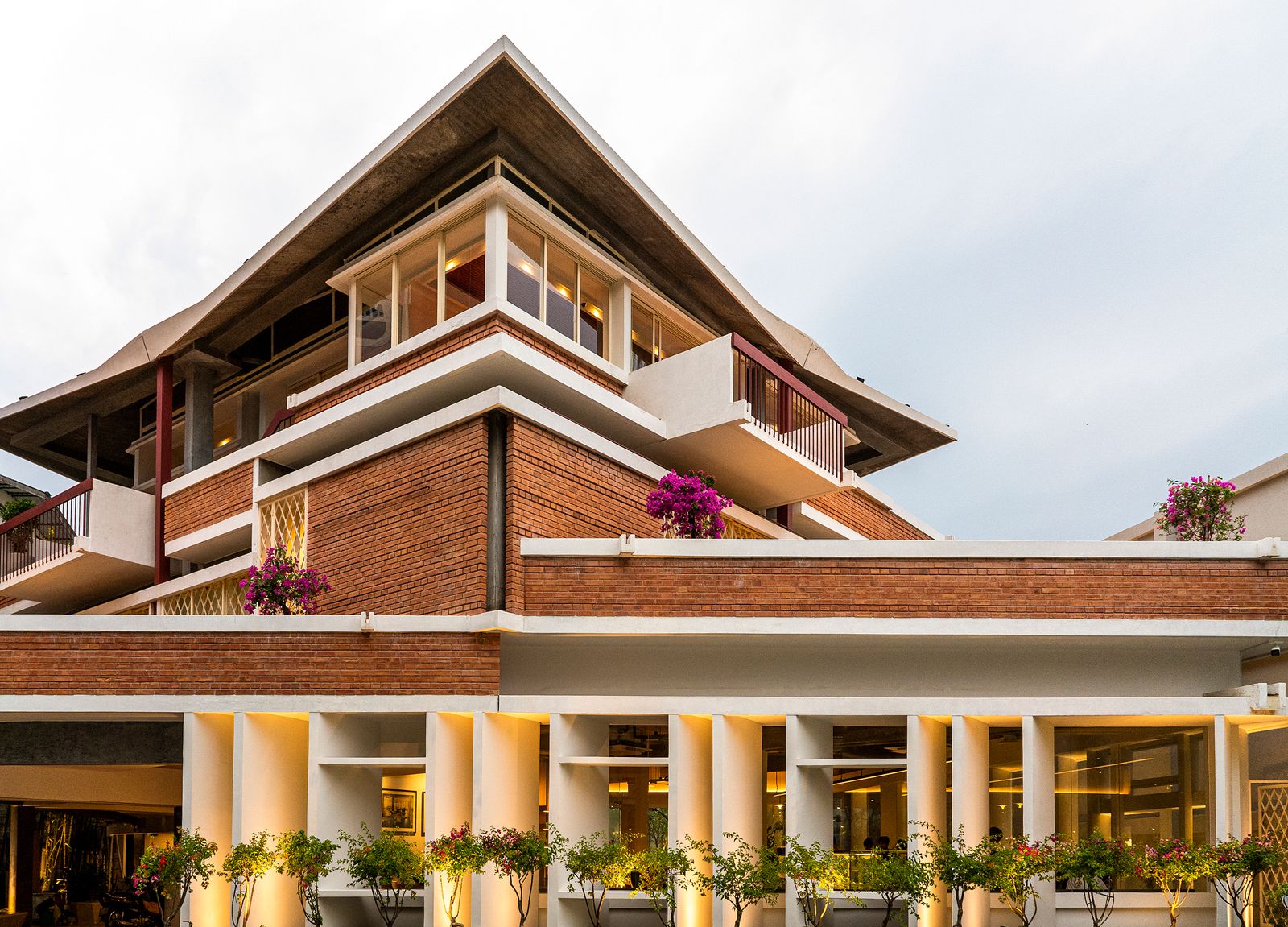
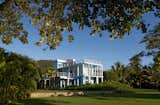
Phnom Penh, Cambodia – A significant chapter in Cambodia’s architectural history has been revitalized with the transformation of the former residence of legendary modernist architect Vann Molyvann into a dynamic cultural hub. Located prominently in the heart of the capital on Mao Tse Toung Boulevard, the iconic 1966 structure now houses a state-of-the-art Brown Coffee establishment, an in-house museum, and an archive, serving as a beacon of heritage preservation and contemporary engagement. This innovative repurposing, which officially opened its doors in 2025, marks a pivotal moment, connecting a new generation of Cambodians with the enduring genius of an architect whose vision shaped the nation’s post-independence identity.
The four-story edifice itself is a testament to Molyvann’s pioneering design philosophy. Under a distinctive parabolic roof, the upper floors of the cube-like building are ingeniously rotated 45 degrees, a deliberate design choice aimed at mitigating street noise from the bustling boulevard below. Further enhancing its climate-responsive design, double-layered walls and a strategic array of openings facilitate natural ventilation, providing a much-needed respite from Cambodia’s intense tropical heat. This structural ingenuity, deeply rooted in Molyvann’s "New Khmer Architecture" principles, showcases his profound understanding of local environmental conditions and traditional building practices, fused with modern aesthetics.
A New Lease on Life: Brown Coffee and the Cultural Nexus
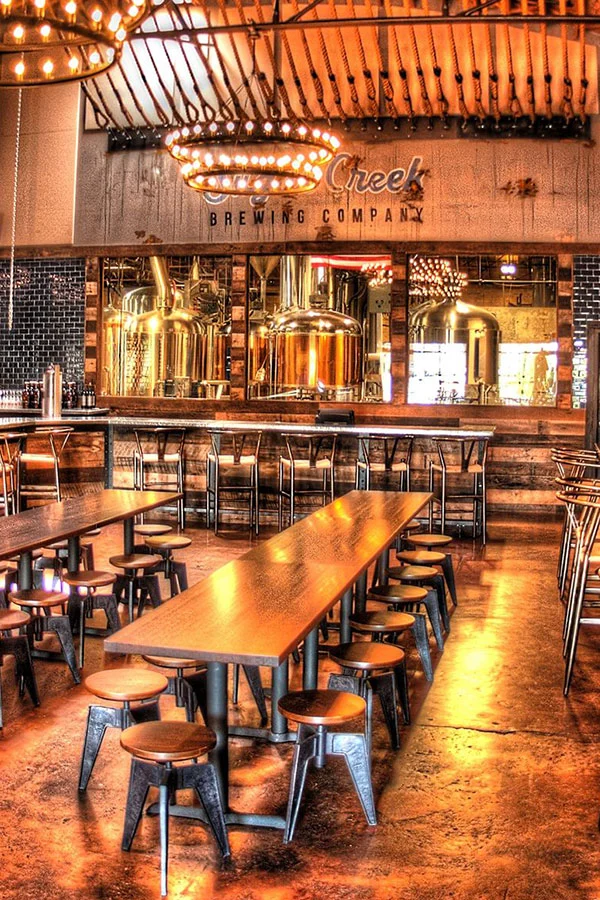
The ground floor of this architectural marvel now buzzes with the vibrant energy of Brown Coffee, one of Phnom Penh’s most popular coffee chains. Overlooking a serene, palm-tree-filled garden, the café has rapidly become a favored "third space" for the city’s burgeoning youth demographic. Here, twenty-somethings can be found engaged in quiet conversation, working diligently on laptops, and enjoying artisanal coffee – a modern ritual unfolding within the walls of historical significance. The integration of a contemporary coffee shop into a heritage site reflects a growing trend in urban conservation, where commercial ventures play a crucial role in making cultural landmarks accessible and relevant to daily life.
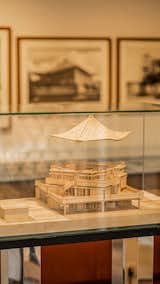
Beyond the lure of premium coffee and a conducive workspace, the building itself is a primary draw. Visitors are encouraged to explore its multi-faceted offerings: after grabbing a coffee on the ground floor, they can ascend to the top level to delve into the in-house museum, which showcases intricate models of Molyvann’s numerous designs. Adjacent to the museum, a dedicated archive room offers a deeper dive into his extensive collection of drawings and blueprints, providing invaluable resources for researchers, architects, and enthusiasts alike. This dual function of commerce and culture ensures the building remains a living, breathing entity, fostering appreciation for its architectural pedigree while serving the needs of the modern community.

Vann Molyvann: The Architect of Cambodia’s Golden Age
Vann Molyvann, who passed away in 2017, is revered as the father of modern Cambodian architecture. Born in 1926, his 100th birth anniversary has become a focal point for celebrating his indelible contributions. His journey began with a prestigious scholarship that took him to Paris, where he studied under the tutelage of the legendary Swiss-French architect Le Corbusier. This formative experience profoundly influenced Molyvann’s approach, exposing him to the tenets of modernism, including functionalism, brutalism, and the innovative use of reinforced concrete.
Upon his return to Cambodia in 1955, just two years after the nation gained independence from France, Molyvann was appointed State Architect by Prince Norodom Sihanouk. This period, often referred to as Cambodia’s "Golden Age," was characterized by an ambitious program of urban investment and nation-building. Molyvann was at the forefront, designing hundreds of public and private buildings across the country. His creations included iconic structures such as the National Olympic Stadium, the Chaktomuk Conference Hall, the State Palace, the Council of Ministers, the Teacher Training College, the Institute of Foreign Languages, and various theaters and universities. Many of these buildings have since attained national icon status, embodying a distinctive style that became known as New Khmer Architecture.

The Philosophy of New Khmer Architecture
New Khmer Architecture was Molyvann’s ingenious synthesis of Western modernist principles with Cambodia’s rich historical and cultural building traditions. He meticulously expanded upon traditional Khmer construction concepts, such as natural openness, strategic ventilation, dramatic swooping roof forms, stepped elevations, and the integral use of water as a functional design element. This approach was deeply inspired by ancient Khmer marvels like Angkor Wat, where a sophisticated moat system integrated with a vast hydraulic network demonstrated an early mastery of environmental adaptation.
Molyvann’s environmentally attuned ideas were revolutionary for his time and remain highly relevant today. He incorporated elements like brise soleils (sun breakers) to filter harsh tropical sunlight and employed moats and shallow pools to cool structures through natural evaporation and ventilation. Examples of these climate-sensitive designs are evident in the fan-like Chaktomuk Conference Hall and the colossal National Olympic Stadium. Pen Sereypagna, director of the Vann Molyvann Project, an organization dedicated to raising awareness of the architect’s works, emphasizes this unique fusion: "His work created a uniquely Cambodian form of modernism by drawing inspiration from international modern architecture and traditional Khmer design principles." This commitment to contextual design ensured his buildings were not only aesthetically striking but also perfectly suited to Cambodia’s tropical climate and cultural identity.
Resilience Through Turmoil: Preserving a Fragile Legacy
The enduring presence of Molyvann’s ideas is remarkable, considering the tumultuous decades that followed Cambodia’s Golden Age. In 1971, Prince Sihanouk was overthrown in a military coup, leading to Molyvann’s exile with his young family. The subsequent years brought unimaginable devastation, particularly during the brutal reign of communist leader Pol Pot and the Khmer Rouge from 1975 to 1979. During this period, many of Molyvann’s buildings were abandoned, fell into disrepair, or were deliberately leveled. Tragically, the National Olympic Stadium, a symbol of national pride, became a site of mass executions. Carole Vann, Molyvann’s eldest daughter, starkly recalls the aftermath: "After the Khmer Rouge, the country was destroyed. There was no law, no cadastre, nothing."
Despite the profound losses, Molyvann’s commitment to his homeland never wavered. After working for the United Nations in Switzerland, he returned to Cambodia in 1991, determined to aid the war-torn nation in regaining its spirit and rebuilding its cultural fabric. He served as the Minister of Culture and, critically, as the head of the Apsara Authority, a government institution charged with protecting the Angkor Wat complex. Through his leadership, he safeguarded this priceless monument from exploitation by collectors or developers, establishing crucial laws that forbade tall buildings near the temple. His efforts culminated in Angkor Wat’s designation as a UNESCO World Heritage Site in 1992, an act that preserved Cambodia’s most sacred cultural treasure for future generations.
While some of Molyvann’s works were irretrievably lost—the Council of Ministers building demolished in 2008, the National Theatre torn down after a fire, and several homes from his 1965 "100 Houses Project" for National Bank employees—the majority of his most renowned structures have remained relatively intact. His architectural ethos also continues to influence a new wave of designers, notably his protégés whose three 1950s villas on the coast of Kep were meticulously restored and integrated into the 18-bedroom Knai Bang Chatt by Kep West hotel, which also opened in 2025.
Inspiring a New Generation of Innovators
The renovation of Vann Molyvann’s home into a public-facing cultural space is having a tangible impact on young Cambodians, fostering a renewed appreciation for their national architectural heritage. Entrepreneur and artist Ket Monnyreak, in his early thirties, opened "Monday Mundane," an art and design store, within a corner of the ground floor near the café. Here, young shoppers can browse prints and stickers celebrating Phnom Penh’s unique identity. "Vann gave an identity to Phnom Penh city," says Ket. "His commitment to push the boundaries of Khmer architecture is admirable. Each work of his is a masterpiece." Ket, who studied architecture before specializing in visual communication, draws profound inspiration from Molyvann, stating, "This space makes me feel proud, inspired, and motivated to create more."
Similarly, artist Li Minghang, 35, who has lived in Cambodia for six years, recounts her initial awe upon seeing the Olympic Stadium. "It blew me away," she shares. "I just had to look up who designed it, and that’s how I discovered Vann’s genius." Inspired by Molyvann’s work, Li now sells calendars featuring the architect’s 1960s buildings at upscale venues like the Rosewood Phnom Penh hotel, a modern development that itself subtly references Khmer architectural elements. "I want people to feel proud and see these landmarks with fresh eyes," Li explains. "I want to show that they are not just old concrete, but beautiful, living masterpieces."
Monsoon Modernism: A Vision for the Future
The legacy of Vann Molyvann is not merely being preserved; it is actively shaping the future of Cambodian design. In July 2026, his Phnom Penh residence hosted "Monsoon Modernism," an architectural competition that drew over 400 young designers. The event served as a powerful platform for emerging talent to engage with Molyvann’s principles and apply them to contemporary challenges.
The first prize was awarded to Lim Chhunly and Mel Siv Orn for their design of a three-story villa. Their winning concept skillfully channels Molyvann’s core ideas, such as rotating the building to optimize the capture of prevailing winds and utilizing exposed brick for passive climate control. They further innovated with a folding, shell-like roof designed to harvest rainwater and employed L-shaped bricks to create honeycomb-like walls, achieving an exquisite balance of light and ventilation. Lim emphasizes Molyvann’s adaptable genius: "Each of his projects presents a different solution, whether responding to the climate or the site. Good architecture should always reflect thoughtful solutions and meaningful experiences."
Carole Vann proudly observes this resurgence of interest: "What is great about this generation is that they’re thinking about the environment—how to use light and ventilation. And in this my father was an example." This sentiment underscores the timeless relevance of Molyvann’s environmentally conscious designs, offering sustainable solutions for future development in a world increasingly grappling with climate change.
Broader Implications and Enduring Significance

The transformation of Vann Molyvann’s residence into a vibrant cultural and commercial space carries multifaceted implications for Phnom Penh and Cambodia as a whole. It serves as a powerful model for heritage preservation, demonstrating how historic buildings can be given new life through adaptive reuse, ensuring their continued relevance and economic viability. This initiative also bolsters cultural tourism, offering both local and international visitors a unique insight into Cambodia’s rich architectural lineage beyond the ancient temples.
Furthermore, the project reinforces Phnom Penh’s urban identity, highlighting the modernist layer that significantly shaped its character during a period of national flourishing. By creating accessible public spaces like the Brown Coffee shop and fostering educational opportunities through the museum and archive, the site actively engages the community, particularly the youth, in understanding and appreciating their shared heritage. It encourages dialogue around sustainable design, national pride, and the enduring power of architectural innovation. As Cambodia continues its rapid development, the renewed focus on Vann Molyvann’s work serves as a crucial reminder that progress need not come at the expense of heritage, but can, in fact, be deeply enriched by it. The architect’s legacy, once threatened by neglect and conflict, now thrives, a testament to his genius and the unwavering spirit of a nation reclaiming its architectural soul.