admin
admin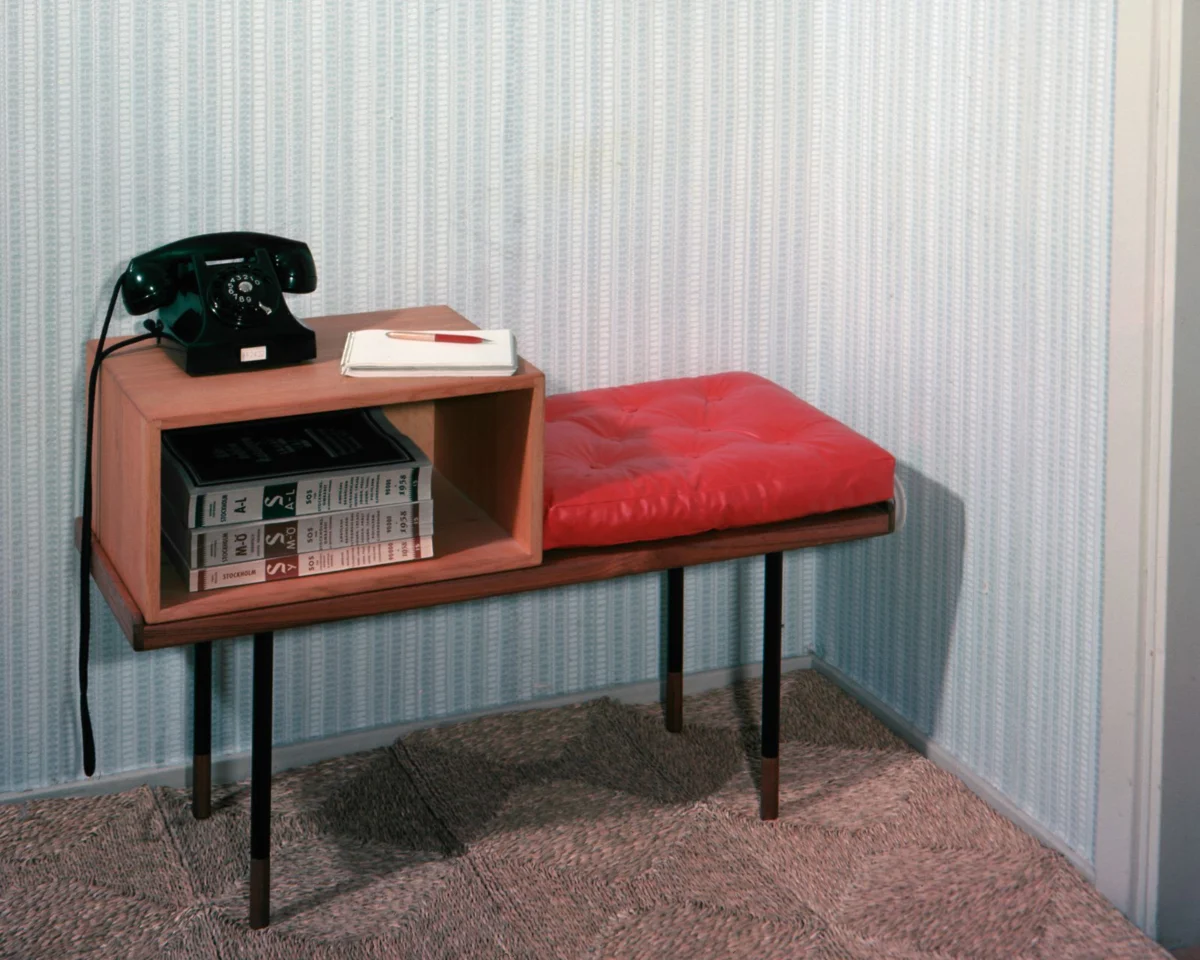
On any given weekday afternoon in the late 1970s, John Stallone’s grandmother could be found in the hallway of her Queens, New York, home, talking on the telephone. "The heavy black receiver would be wedged between her shoulder and ear while she stretched the coiled cord as far as it would go, holding court with friends and relatives from her corner of the house," he recalls. Stallone, a historian and curator at the Long Island Telephone Museum, notes that his grandmother kept a notepad and a thick phone directory on the wire shelf built into the pipe-legged bench where she sat for many of those phone calls. This piece of furniture, often called a gossip bench or telephone table, was a quintessential product of postwar domestic life, transforming an everyday phone call into a ritual with a dedicated place within the home. Far more than a mere piece of furniture, the gossip bench embodies a fascinating chapter in the evolution of domestic technology, social customs, and gender roles, reflecting a period when communication was a deliberate, often communal, act, deeply rooted in the physical architecture of the home.
The Dawn of Domestic Telephony: From Novelty to Necessity
When telephones first entered American households in the late 19th century, they were as much symbols of status and technological prowess as they were communication devices. Before the telephone, inter-household communication relied on letters, telegraphs (often requiring a trip to an office), or face-to-face visits, limiting spontaneous interaction over distance. The initial cost of basic telephone service, approximately $2.75 a month in the early 1880s, translates to roughly $90 today, representing a significant household expense for the average American family. This made early telephone ownership largely exclusive to the affluent, akin to owning a luxury automobile in later decades.
As a result of their high cost and novelty, early telephones were often displayed prominently in entrance halls, parlors, or other public-facing areas of homes. This placement signaled both wealth and a family’s embrace of modernity and progress. Historian Chris Wisniewski notes that early adopters quickly made spatial adjustments to accommodate these devices. For instance, when telegraph manufacturer Charles Williams Jr. installed the first residential telephone in his Massachusetts home in 1877, he mounted it on a shelf just outside the parlor at a height perfect for use from a nearby chair, demonstrating an immediate need to integrate the new technology into the domestic environment. These early setups, often comprising a wall-mounted phone or a small table with a chair, laid the groundwork for the more specialized furniture that would emerge decades later.
Integrating Communication: The Telephone’s Growing Role in American Life
Over the subsequent decades, as telephone service expanded and its cost gradually decreased, the device transitioned from a high-status novelty to an increasingly essential tool of domestic life. By the 1920s and 30s, the telephone had become indispensable for managing a household, facilitating calls to grocers, doctors, and various delivery services, effectively extending household management beyond the physical walls of the home. These responsibilities, particularly the coordination of domestic logistics, often fell to women, who were predominantly in charge of home management. This period saw a significant increase in telephone penetration; by the 1930s, nearly 41 percent of American households subscribed to telephone service, a stark contrast to the single-digit percentages seen at the turn of the century.
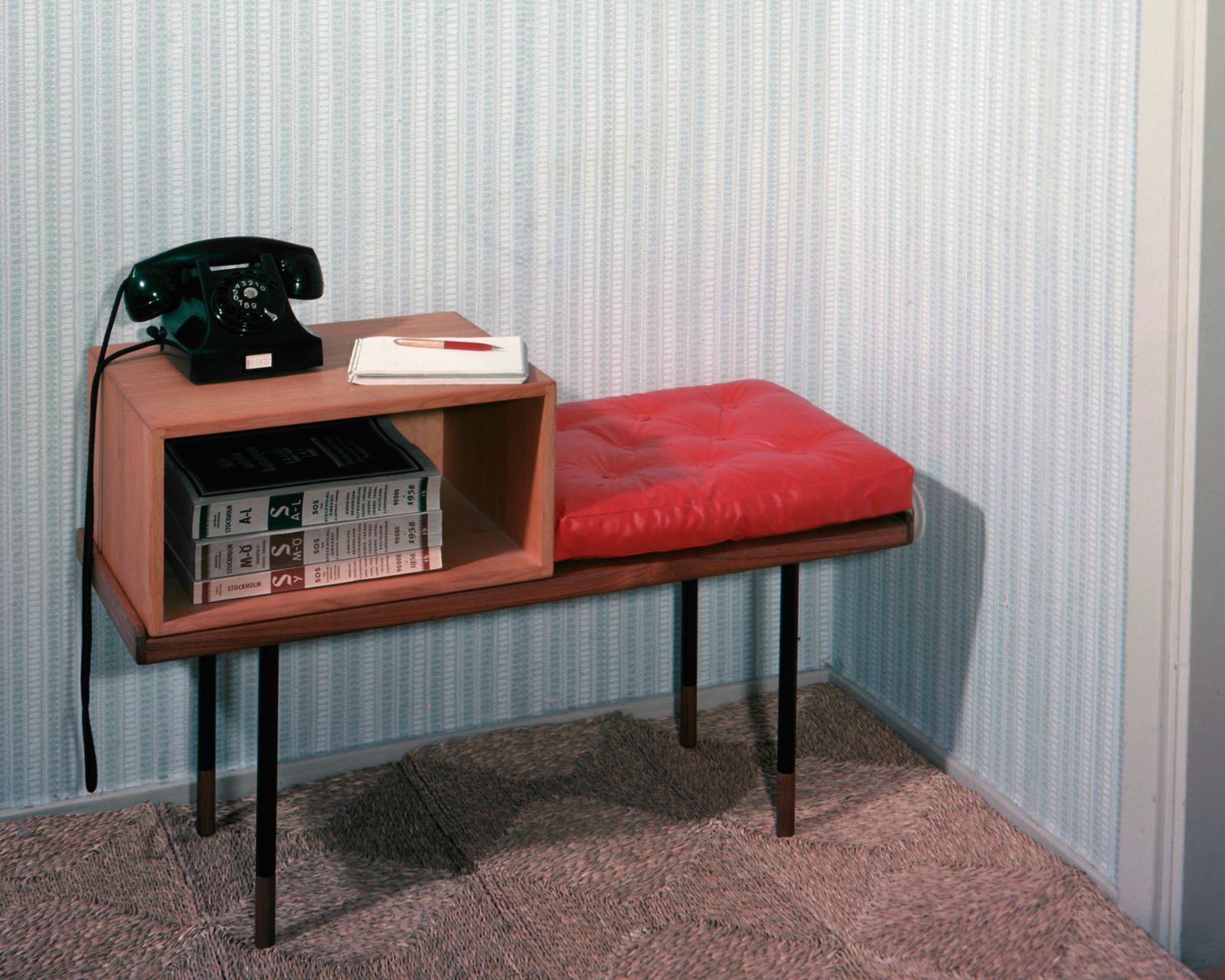
Advertisements from this era actively promoted the telephone as both a practical convenience and a "sightly ornament" worthy of display. The heavy, corded receiver, however, imposed its own constraints. Anyone engaged in a lengthy conversation had to stand, crouch, or pace within the limited radius of the coiled cord. This practical limitation spurred innovation in furniture design. To address the need for comfort and utility, people began adding small tables, wall shelves, and even built-in hallway nooks to hold the growing collection of telephone directories, message pads, and pencils. It was from this practical necessity that furniture makers conceived of a more comprehensive solution: combining the storage components of the telephone station with a comfortable seat. "All good inventions are spawned from necessity," Stallone observes, perfectly encapsulating the birth of the gossip bench.
The Gossip Bench Emerges: A Dedicated Space for Connection
The mid-20th century, particularly the post-World War II boom, witnessed the widespread proliferation of the gossip bench. This unique piece of furniture provided phone conversations with a designated, permanent place within the home. Part telephone table, part chair, and part household command center, it typically featured a seat integrated with built-in shelving or drawers for essential communication tools like directories, message pads, and pencils. As telephones became commonplace and even began to be offered in a variety of colors, manufacturers quickly recognized that the humble phone bench could be as fashionable as it was functional.
The era’s diverse design aesthetics influenced the gossip bench, making it a versatile piece that could fit into almost any decor. Some manufacturers embraced the clean, sculptural lines of midcentury modernism. Drexel Furniture Company, for example, incorporated its signature steam-bent wood detailing into its versions, while Lu Van produced a more minimalist, steel-framed model that echoed the clean utility of a school desk. Conversely, other designers leaned into more traditional styles, such as Colonial Revival, proving that there was a gossip bench to suit nearly every decorating taste and interior scheme.
By the early 1950s, the gossip bench had transcended its purely utilitarian origins. Esteemed industrial designers such as Raymond Loewy, Edward Wormley, and Kai Kristiansen elevated the telephone seat into an object of postwar modernism, demonstrating how functional items could also be aesthetically significant. Advertisements from the period sold not just a piece of furniture, but an ideal of modern domesticity. A 1964 newspaper clipping about "the latest telephone chairs" displayed at the London Furniture Show declared, "It’s comfort on call," highlighting the blend of convenience and style. British furniture maker Chippy Heath, in particular, became a prolific producer, manufacturing over 38 models between the late 1950s and early 1980s. Among its most iconic designs was the 1960s Contour, featuring a kidney-shaped form that reflected the biomorphic curves prevalent in many midcentury-modern designs. Garry Heath, the company’s former marketing director and the founder’s son, remarked in archival footage, "In 1958, the telephone seat was seen by some as a mere gimmick. That gimmick quickly became a desirable piece of furniture in many of our homes." This rapid acceptance underscores the bench’s successful integration into the domestic landscape.
A Deeper Look: Gendered Assumptions and Unacknowledged Labor
Beyond its functional and aesthetic appeal, the gossip bench reflects the gendered assumptions that shaped domestic life during its peak popularity. Amidst its midcentury rise, furniture manufacturers overwhelmingly identified women as the primary consumers responsible for furnishing the home. Designers, who were predominantly men, often projected their assumptions about women’s roles back into the domestic sphere through their products and marketing. Even the name "gossip bench" itself reveals these underlying assumptions. Michael Ausbon, curator at the North Carolina Museum of History, places it alongside other "gendered furniture" like hope chests (cedar trunks traditionally given to young women preparing for marriage) and Victorian-era fainting couches. "It framed women’s most visible form of communication as idle chatter rather than legitimate exchange," Ausbon states, highlighting how the very nomenclature trivialized women’s conversations.

This gendering was particularly pronounced in the United States. While similar telephone tables appeared in U.K. and European homes, they were more often treated as practical furniture, less defined by women’s social habits. In the U.S., however, the "gossip bench" became a cultural shorthand, transforming a functional piece of telephone furniture into a symbol of feminine homekeeping. Emily M. Orr, curator at the Cooper Hewitt, Smithsonian Design Museum, points out that this nickname overlooked the often-critical work performed from these benches. "Many of the conversations involved coordinating medical appointments, arranging deliveries, managing household finances, or maintaining family relationships, forms of labor rarely acknowledged as such," she explains. These were not mere trivial exchanges but vital components of domestic and social infrastructure, underpinning the smooth functioning of families and communities.
Manufacturers further reinforced this narrow image through design and advertising. Benches were frequently upholstered in floral prints, featured modestly scaled seats, and were marketed almost exclusively to women. One particularly telling advertisement even prefilled the order form with the words "wife’s name" and described its upholstery as "washable virgin plastic," directly appealing to the perceived needs and roles of housewives. Furthermore, telephone etiquette guides of the era often instructed women to avoid profanity and to keep the household phone line available for their husbands’ business calls, explicitly reinforcing the idea that domestic communication was subordinate to men’s professional lives. These social norms, embedded in advertising and etiquette, painted a clear picture of societal expectations for women in the mid-20th century.
Despite these limitations, the gossip bench inadvertently facilitated an unexpected kind of freedom and empowerment for women. From its seat, women forged vital social networks, exchanged critical information, and organized activities beyond the confines of their immediate homes. Francis Lewis, a local activist and political outsider in Wheaton, Minnesota, provides an early and powerful example. In 1927, after local party leaders denied her a mayoral nomination because of her gender, Lewis ingeniously organized her own campaign entirely by telephone. Within 24 hours, she rallied supporters across town, demonstrating the telephone’s power as a tool for political mobilization. She went on to become Wheaton’s first woman mayor, and her successors continued to use the telephone to build influence, seize opportunities, and reshape public life, proving that the "gossip bench" was often a hub of significant social and political activity.
The Decline: A Shift Towards Mobility and Privacy
Privacy, however, remained an elusive commodity for household telephone users. Because landlines typically occupied hallways, living rooms, or other shared spaces, conversations were rarely truly private. By the late 1950s, manufacturers and consumers alike recognized a growing desire for more personal communication. Bell Telephone Laboratories’ answer arrived in 1959 with the introduction of Henry Dreyfuss’s Princess phone. "It was the first telephone designed specifically for women and teenage girls," Orr notes. Its compact size made it suitable for a bedside table, and its illuminated dial allowed for discrete, late-night conversations. This marked a pivotal shift, as conversations could now migrate behind closed bedroom doors, away from the communal gaze. The Princess phone’s success, selling over 25 million units by 1970, was a clear indicator of this societal yearning for private communication, and it signaled the beginning of the end for the dedicated communal space of the gossip bench.
The subsequent decades brought further technological advancements that fundamentally reshaped domestic communication. The introduction of cordless handsets in the 1980s freed callers from the physical tether of the wall jack, allowing them to roam throughout their homes. Answering machines offered an alternative to missing calls, further reducing the need for someone to be physically present by the phone. Ultimately, the advent and widespread adoption of mobile phones in the late 20th and early 21st centuries rendered the landline, and by extension, the gossip bench, largely obsolete. Communication became increasingly mobile, personal, and ubiquitous, untethered from any single location within the home.

The Modern Resurgence: Nostalgia, Reimagination, and Digital Detox
The gossip bench emerged to solve a fundamental problem of place: a telephone tethered to a single, fixed spot. As communication became increasingly mobile, the need for a dedicated telephone station disappeared. Its decline in popularity starting in the 1960s and accelerating through the 1980s marked more than just the end of a furniture category; it reflected a broader shift in how society valued and engaged with conversation. For much of the 20th century, a phone call demanded time, intention, and physical presence. "The act of calling someone carried a sense of occasion," Stallone recalls, a ritualistic quality that modern, instantaneous communication often lacks.
Today, in an era dominated by constant digital connectivity and ubiquitous screens, a curious phenomenon is emerging. As more people seek ways to create distance from their devices and practice "digital detox," the ritual that the gossip bench represented feels newly relevant. This nostalgia is actively showing up in the marketplace for vintage collectibles. According to Alejandra Katz of Chairish, an online vintage furniture retailer, midcentury rattan and bamboo gossip benches are experiencing a renewed interest. Buyers are gravitating towards the expressive silhouettes and historical charm that defined this once-ubiquitous piece of furniture. These pieces are often repurposed as stylish entry benches, accent chairs, or even compact workstations, valued for their unique form and historical narrative rather than their original function.
Contemporary versions of the gossip bench have also appeared in new collections from major manufacturers, such as Emma Chamberlain’s West Elm collaboration, which features upholstered entry benches that echo the form factor of the classic telephone seat. While the gossip bench may never return to its former widespread popularity as a primary communication hub, the growing market for both vintage and reimagined versions proves that its story is far from over. It stands as a tangible reminder of a past era when communication was a more deliberate act, rooted in a specific place, and offers a poignant counterpoint to our hyper-connected present, inspiring a re-evaluation of how we engage with technology and each other within our homes. Its journey from a practical necessity to a gendered symbol, and now to a cherished vintage item, encapsulates a rich cultural history of domestic life and technological evolution.