admin
admin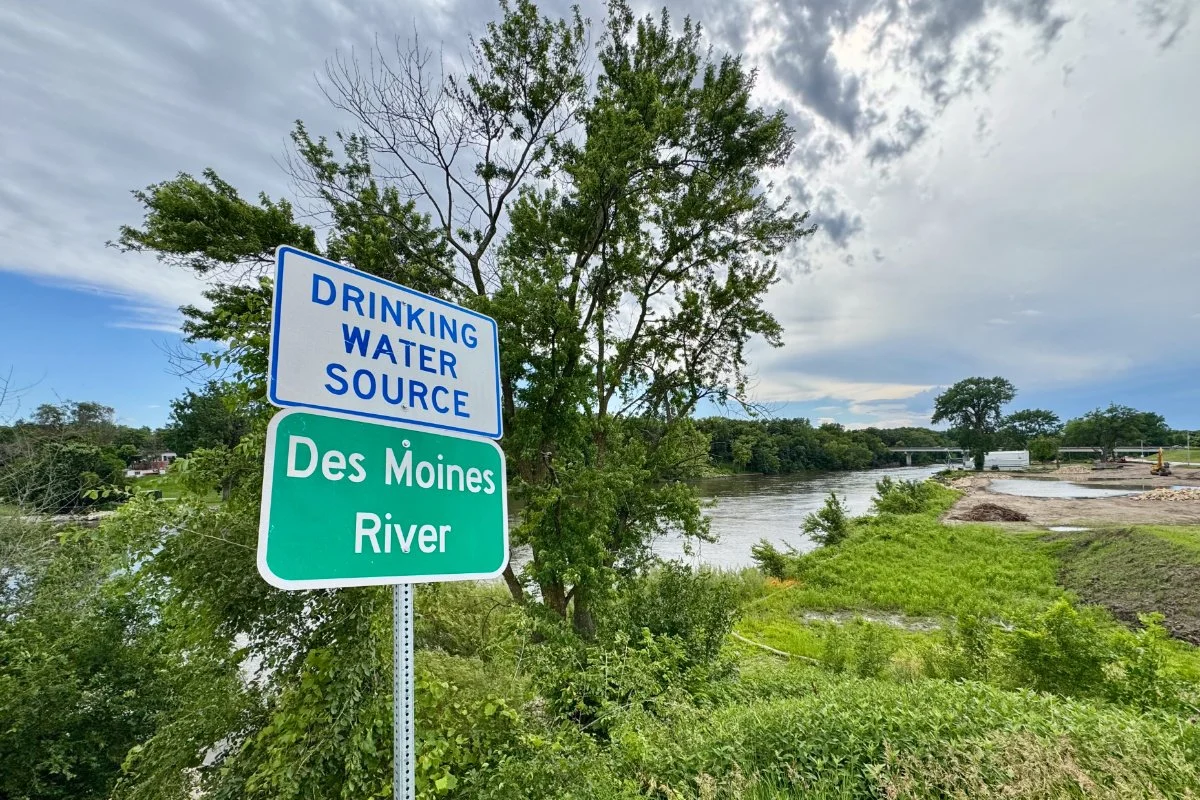
Iowa finds itself at a critical juncture, grappling with severely polluted waterways and a disturbing surge in cancer diagnoses, issues that have unequivocally seized the attention of its electorate. As the November midterm elections loom, voters across the political spectrum are increasingly prioritizing candidates who offer concrete strategies to address these interconnected crises, fundamentally reshaping the state’s political landscape.
The heart of Iowa’s drinking water supply, the Raccoon and Des Moines Rivers, are in alarming condition, ranking among the top 1 percent of rivers nationwide for nitrate concentration. This severe contamination has profound implications for public health, with a recent report published in March by the Iowa Environmental Council and the Harken Institute attributing a staggering 80 percent of the rivers’ pollution to the agriculture industry. The report draws a direct link between nitrate pollution and various adverse health outcomes, including a heightened risk of cancer. This connection is particularly resonant in Iowa, which currently holds the unenviable position of having the second-highest rate of new cancer cases in the country and is one of only three states experiencing a rise in these rates.
The Alarming Reality of Iowa’s Water and Health
The scientific data paints a stark picture. Healthy rivers typically exhibit nitrate levels of 1 milligram per liter (mg/L) or less. While the U.S. Environmental Protection Agency (EPA) has set a maximum contaminant level of 10 mg/L for drinking water, research indicates that health risks, particularly gastrointestinal cancers, can increase with long-term exposure to nitrate levels as low as 5 mg/L. Even more concerning, studies suggest links to other cancers, such as ovarian cancer, beginning at 3 mg/L – significantly below the EPA’s current standard.
Iowa’s Raccoon and Des Moines rivers have frequently far exceeded these safety thresholds, with recorded nitrate levels reaching as high as 17.58 mg/L in the current year. This widespread contamination has led to tangible consequences for residents. In 2025 alone, Iowa reported 36 nitrate-related drinking water violations, a substantial increase from the 14 reported in 2024, according to the Iowa Department of Natural Resources (DNR). These violations underscore the escalating challenge faced by municipalities in providing safe drinking water.
The human cost extends beyond illness. Central Iowa Water Works (CIWW), responsible for supplying drinking water to over 600,000 residents and commercial customers in the Des Moines area, operates the world’s largest nitrate-removal facility. This year, the facility has run for a record number of days, incurring costs of $16,000 per day when all seven nitrate removal vessels are active. These substantial operational expenses are ultimately borne by Iowa taxpayers and utility customers, highlighting the economic burden of unchecked pollution.

Agricultural Practices: The Root of the Problem
The primary driver of this nitrate crisis is the state’s dominant agricultural industry. Iowa farmers, aiming to maximize yields, apply nitrogen-based fertilizers to vast corn and soybean fields, often exceeding the crops’ absorption capacity. Compounding this issue, Iowa’s 15,309 confined animal feeding operations (CAFOs) generate an astonishing 107.6 million tons of nitrogen-rich manure annually, much of which is also applied to cropland. This excess nitrogen, whether from synthetic fertilizers or manure, then leaches into waterways, particularly through miles of underground farm tiles designed to drain fields, pushing nitrate-laden water directly into rivers and lakes.
This runoff not only contaminates local drinking water sources but also contributes to broader environmental degradation. Nutrients from Iowa’s rivers flow downstream into the Mississippi and Missouri rivers and ultimately into the Gulf of Mexico. There, they fuel massive algal blooms that, upon decomposition, create an expansive "dead zone" of thousands of square miles off the Texas and Louisiana coastlines, where oxygen levels are too low to sustain most marine life. The largest such dead zone ever recorded underscored the stark impacts of industrial agriculture far beyond Iowa’s borders.
A Decade of Voluntary Measures: The Iowa Nutrient Reduction Strategy
In response to growing concerns, the Iowa Nutrient Reduction Strategy (INRS) was developed in 2013. This framework of voluntary measures aimed to reduce nutrient runoff to Iowa waters by 45 percent by 2035. However, a decade into its implementation, the strategy’s effectiveness is severely questioned. The most recent data from the INRS dashboard, reflecting 2024, revealed some of the highest levels of nitrate pollution ever recorded, demonstrating a significant failure to achieve its intended goals.
Experts like Michelle Soupir, who leads Iowa State University’s Water Quality Research Lab, emphasize the vast scale of change required. She notes that to meet INRS goals, Iowa would need to dramatically increase the number of bioreactors – natural systems that remove nitrates from water – from around 300 to over 100,000, alongside other extensive conservation practices like expanded wetlands, cover crops, and saturated buffers. The current rate of implementation is simply insufficient to achieve meaningful reductions.
Political Tides Turning: Voter Frustration and Shifting Priorities

The deep frustration among Iowans over water quality and rising cancer rates is now a dominant force in the political arena. A February poll by Food & Water Action revealed compelling shifts in voter priorities: 82 percent of Iowa voters indicated they would be more likely to support an elected official who champions clean water, and 72 percent expressed greater concern over rising cancer rates than the cost of living. Crucially, the poll also found that voters favor reducing pollution from industrial agriculture to protect clean water over limiting regulations to safeguard the state’s agricultural economy. This indicates a growing public demand for accountability from an industry long considered untouchable in Iowa politics.
Sam Bernhardt, political director for Food & Water Action, believes these numbers are likely even stronger now, stating, "I think there’s a jailbreak about to happen on water quality." This sentiment reflects a widespread perception that political leaders have failed to adequately address the crisis.
Legislative Landscape: A Patchwork of Responses
For years, Iowa lawmakers have been accused of downplaying the severity of the water quality crisis and offering largely inadequate responses. In her January Condition of the State speech, Governor Kim Reynolds extensively discussed Iowa’s cancer rate but notably omitted any mention of the water quality crisis.
In contrast, House Democrats introduced a comprehensive water quality package the week after Reynolds’ speech, aiming to address the upstream sources of nitrate pollution. However, this initiative failed to even be assigned a bill number, illustrating the political hurdles faced by proposals that challenge the agricultural status quo.
Conversely, Republicans introduced their own legislation in February, focusing not on reducing pollution but on protecting polluters. This bill, which limits lawsuits against agriculture operations based on greenhouse gas emissions, was introduced by State Representative Derek Wulf (who has since been chosen as Zach Lahn’s running mate for governor) and was signed into law in April. Critics argue this move further entrenches the power of agribusiness and shields it from accountability.
In a last-minute legislative push, on May 3, Iowa lawmakers passed the "Farm to Faucet" water quality funding package. This package allocates $25 million to double the nitrate removal capacity of Central Iowa Water Works (CIWW) and funnels an additional $320 million into other water quality investments over the next 12 years. It also includes $500,000 annually for the Department of Natural Resource’s "single-check" water quality monitoring system, a system criticized for infrequent updates.

While some welcomed the funding, "Farm to Faucet" has faced criticism from both sides of the aisle for being a "Band-Aid fix" that focuses on downstream mitigation rather than addressing the root causes of pollution. Gubernatorial candidate Zach Lahn, while acknowledging its benefits, called it a "Band-Aid fix," advocating for incentives for practices like saturated buffers. Democratic State Rep. Austin Baeth suggested the bill’s late passage was a reactive measure, indicating Republicans’ belated recognition of water quality as a major electoral issue.
A prime example of political interference in data collection occurred in 2023 when state funding for the Iowa Water Quality Information System (IWQIS), a real-time water quality monitoring system, was reallocated from the Iowa Nutrient Research Center to the Iowa Department of Agriculture. Chris Jones, who coordinated IWQIS, suggested that the ease of public access to the data, which often contradicted official narratives about the Nutrient Reduction Strategy’s success, "aggravated the legislature." This move effectively reduced transparency and public access to critical environmental data.
Key Electoral Battles: Governor and Secretary of Agriculture
The upcoming elections, particularly the races for governor and secretary of agriculture, are now heavily influenced by the water quality issue.
-
The Gubernatorial Race: Divergent Paths to Clean Water
For the first time in 15 years, a Democratic candidate for governor, current State Auditor Rob Sand, has a viable path to victory, according to the Cook Political Report. This is no coincidence, as Sand is the only gubernatorial candidate to issue a comprehensive official water quality plan. His plan includes investing in real-time water quality monitoring, expanding conservation programs with income and property tax credits for farms using approved nutrient plans, establishing a notification system for high nitrate levels, and increasing the number of wetlands. Sand’s campaign, largely self-funded by his in-laws, the Lauridsen family (who own agribusiness and protein ingredient businesses), touts broad support, including from the United Automobile, Aerospace and Agricultural Implement Workers of America (UAW) and some Republican leaders.
On the Republican side, Zach Lahn secured the nomination, surprisingly defeating the Trump-endorsed Randy Feenstra. Lahn’s success was partly due to his bold strategy of directly linking agricultural pollution to rising cancer rates, making it a cornerstone of his "Make America Healthy Again" (MAHA) platform. Lahn advocates for refundable tax credits for "deep banding" nitrogen (which keeps nutrients in deeper soil) and financial incentives for farmers to install saturated buffers. While Lahn claims to be self-funded, giving him freedom from special interests, critics point to his past ties to Koch Industries Network through Americans for Prosperity, an organization that has historically backed agribusiness interests in Iowa. Lahn’s campaign manager, Paul Cordes, vehemently denies any current ties or funding from the Koch conglomerate.

Farmers like DeAnn and Doug Pudenz, who have implemented conservation practices on their Carroll County farm, see Lahn as a candidate who will advocate for both farmers and water quality. They feel betrayed by current policies favoring agribusiness over individual farmers. Conversely, Stephani Kilbride, a Des Moines suburb resident who installed a countertop reverse osmosis system due to water concerns, finds Rob Sand’s detailed plan and willingness to address problems more convincing.
-
The Secretary of Agriculture Contest: Policy vs. Practice
The race for Iowa’s Secretary of Agriculture, a position responsible for protecting consumers, animals, food supply, and natural resources, is almost entirely focused on water quality.
Incumbent Republican Mike Naig built his career as an agrichemical and agribusiness lobbyist, working for CropLife, the Agribusiness Association of Iowa, the Iowa Biotechnology Association, and Monsanto before entering public service. As Secretary, Naig has championed voluntary, farmer-led conservation practices, asserting that continued work will lead to "real, measurable changes." He recently announced the first phase of the Farm to Faucet plan, allocating $2.5 million for cover crop adoption and stream buffers in 22 counties, aiming to double cover crop acreage across the Des Moines watershed.
Democratic challenger Chris Jones, a retired research engineer and former professor at the University of Iowa’s Institute of Hydraulic Research, was compelled to run due to what he perceives as legislative inaction on water pollution. Jones proposes a two-pronged approach: taxpayer-funded "off-ramps" for farmers transitioning to sustainable practices, and enforceable pollution regulations for those who do not. He advocates for diversifying Iowa’s agriculture beyond the 70 percent corn and soybean monoculture, suggesting a shift toward sustainable beef cattle and reduced reliance on corn for ethanol. Jones sharply criticizes Farm to Faucet, calling it a strategy to "cope with the problem" rather than solve it, arguing it places the financial burden solely on taxpayers without demanding accountability from the industries driving the pollution.
Community Innovations and Growing Public Burden
While politicians debate, some Iowans are actively working towards solutions and adapting to the crisis. Ray and Susan Meylor, owners of Cherry Glen Learning Farm, demonstrate innovative watershed mitigation. Their farm near Saylorville Lake intercepts nitrate-laden waters, using a sediment trap and water retention basin connected to farm tiles. They use this water for solar-powered irrigation, ensuring that the water filtering back into the aquifer or watershed is clean. Ray Meylor expresses deep frustration with the slow pace of political change, arguing that with genuine focus on inclusive crop ecology and water management, the state’s water quality could be "fixed in two or three years" rather than the projected 50 years under current approaches.

The burden on individual citizens is also escalating. The demand for home water treatment systems, particularly reverse osmosis (RO) units, has skyrocketed. Schaal Plumbing, Heating, and Cooling, a central Iowa company, reported installing 50 RO systems by June 12, compared to 25 in the entire previous year, projecting a 400 percent increase. Home improvement retailer Menards has also noted a significant uptick in RO system sales across the state, indicating a widespread public effort to secure safe drinking water in their homes.
The Road Ahead: Challenges and Opportunities
The November elections represent a potential watershed moment for Iowa. The outcomes of the gubernatorial and secretary of agriculture races will dictate the direction of the state’s environmental policy, funding priorities, and regulatory oversight for years to come. A shift towards leadership committed to enforceable regulations and systemic change could usher in a new era of environmental stewardship, moving beyond voluntary measures that have proven insufficient.
The interconnected crises of water pollution and public health demand a comprehensive, multi-faceted approach that acknowledges the significant role of industrial agriculture while also supporting farmers in transitioning to more sustainable practices. The economic implications are vast, encompassing the costs of municipal water treatment, the burden on individual citizens for home filtration, and the long-term health expenditures associated with rising cancer rates. As Iowans head to the polls, their votes will not only shape the state’s political future but also determine the health of its citizens and the vitality of its natural resources for generations to come.