admin
admin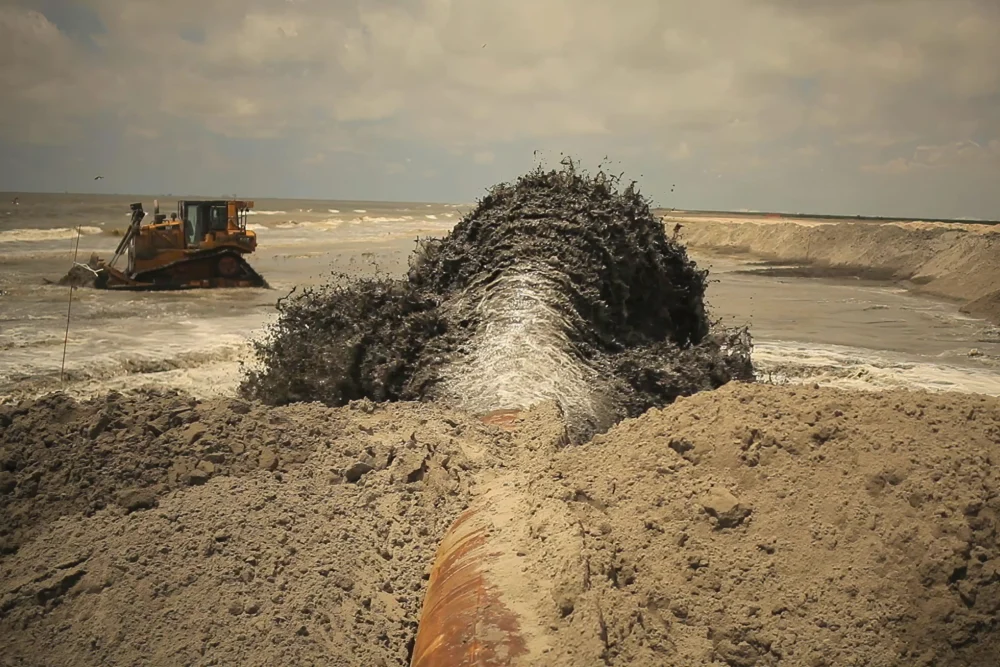
The vibrant, centuries-old fishing culture of the Isleños in Shell Beach, a small, resilient community nestled 30 miles southeast of New Orleans in St. Bernard Parish, faces an existential threat as Louisiana’s precious coastal wetlands vanish at an alarming rate. For generations, this tight-knit community, descendants of Canary Island immigrants, has woven its identity into the rhythm of the Gulf of Mexico, but a combination of natural forces and human interventions now jeopardizes their ancestral way of life and the very ground beneath their feet.

A Heritage Forged by the Waters
The story of Shell Beach and its Isleño inhabitants is one of deep connection to the natural world. Brad Robin, whose family lineage in the area stretches back generations, vividly recalls a childhood where "We never had a bike ride in the streets. We had a pirogue battle in the canals," referring to the lightweight canoes essential for navigating the intricate marshlands. This intimate relationship with the water is rooted in their history. Between 1778 and 1783, an estimated 2,000 Canary Islanders, lured by Spanish land grants, homes, and stipends, arrived in New Orleans. Over time, many settled in St. Bernard Parish’s coastal towns, including Shell Beach, forging a distinct cultural identity as "Isleños."

For over two centuries, the Isleños have sustained themselves through commercial fishing, shrimping, and oyster harvesting in southeast Louisiana’s fertile wetlands. This vocation, passed down through generations, created a unique cultural tapestry. William Hyland, an 11th-generation Isleño and St. Bernard Parish historian, emphasizes, "The natural environment has shaped the cultural heritage and legacy of everyone who’s here." This heritage is characterized by a powerful spirit of reciprocity, extending notably to the kitchen, where daily catches are transformed into communal feasts. Traditional dishes like Besugo al Horno (baked red snapper with potatoes), Stuffed Mirlitons (chayote squash with crabmeat), and Gambas al Ajillo (garlic shrimp) are not just meals; they are celebrations of shared bounty and enduring tradition.
The communal spirit remains robust, kept alive by organizations like the Los Isleños Heritage and Cultural Society of St. Bernard. The society hosts annual events such as Santa on the Bayou, holiday bonfires, and seafood fundraisers, all culminating in the beloved Los Isleños Fiesta. This two-day celebration of Louisiana’s Spanish heritage features traditional dances, folk art, and a rich spread of Spanish-Canarian cuisine, underscoring the community’s determination to preserve its roots. Robin fondly remembers Shell Beach as "the best place to grow up. Everyone knew their neighbors, everyone came together. If someone was down or something happened, the whole neighborhood picked them up and took care of them." However, this deeply rooted culture now faces an unprecedented challenge from the eroding landscape that has long been its anchor.

The Accelerating Crisis of Land Loss
The Mississippi River Delta Basin, home to the Isleños, is experiencing one of the world’s most severe rates of coastal land loss. Louisiana loses a football field’s worth of wetlands every 100 minutes, an astonishing statistic that translates to approximately 2,000 square miles of land since the 1930s – an area roughly the size of the state of Delaware. This catastrophic erosion is driven by a complex interplay of factors, both natural and man-made.

Rising sea levels, a direct consequence of global climate change, are a significant contributor. Simultaneously, extensive levee systems built along the Mississippi River, designed to prevent flooding, have inadvertently disrupted the natural sedimentation process. Historically, the river’s annual floods deposited vital sediment into the marshes, replenishing land. The levees now channel this sediment directly into the deep Gulf, starving the wetlands of their natural building blocks. Further exacerbating the problem are the vast networks of access canals dredged through the wetlands by oil and gas companies since the early 1900s. These canals, spanning over 10,000 miles, act as conduits, allowing saltwater to intrude deeper into freshwater habitats. This saltwater intrusion destroys delicate vegetation, weakens the soil structure, and ultimately causes the land to subside into open water.
The consequences for communities like Shell Beach have been profound. Without healthy, functioning ecosystems and natural barriers, residents have been forced to relocate. "Shell Beach had 300 local families at one point," notes Brad Robin. "Now they are down to four original families in the area. The rest of us had to move to Yscloskey and other parts of St. Bernard [Parish]." As these natural protections diminish, Shell Beach becomes increasingly vulnerable to intense storm surges and life-threatening floods, which have become more frequent and powerful due to warming ocean temperatures. Hurricane Katrina in 2005 served as a devastating precursor, wiping out much of the community.

Yet, generations of living with the unpredictable Gulf have instilled a deep, ancestral knowledge of adaptation. William Hyland recalls, "One of the things our people always did, they could read the birds, read the rhythm of the tide. And when they saw the stormbirds, the squalls coming in and out, they knew something bad was going to happen." This inherited wisdom proved critical during Katrina, saving much of the fishing fleet. Charles Robin, a shrimp-boat captain and Brad Robin’s second cousin, encapsulates this resilience: "When a storm comes, we take our boats with us. I can lose my house, but I can’t lose that shrimping boat. That shrimping boat is my whole life."
Economic Fallout: A Decline in Local Shellfish

The erosion crisis has directly impacted the commercial fisheries that form the backbone of St. Bernard Parish’s economy. A healthy marsh ecosystem is indispensable for thriving fisheries, and the pervasive saltwater intrusion has wreaked havoc on an array of marine life. Key species such as blue crabs, crawfish, brown shrimp, oysters, speckled trout, and red drum fish are all suffering. The delicate balance of brackish water essential for many of these species has been irrevocably altered.
For instance, blue crabs and shrimp, which must molt to grow, are particularly susceptible. Changes in salinity and acidity hinder their ability to calcify new shells, leaving them "soft" and vulnerable to predators and exhaustion for extended periods. Rocky Ditcharo, a local seafood wholesaler and owner of Ditcharo D Jr. Seafoods, observes, "I’ve been in the business for 41 years. In that time, we’ve definitely seen a decrease in brown shrimp populations. It’s hard to know if it’s from land loss, but brown shrimp are harder and harder to find."

Oysters, a cornerstone of the regional seafood industry, demand an especially precise balance of fresh and salt water. Too little salinity causes them to close their shells, cease feeding, and die within days, while excessive salinity leaves them vulnerable to parasites and increased mortality. Brad Robin laments, "Lake Borgne [in Shell Beach] was once one of our industry’s best producing spots for oysters. But with the changes in salinity and the tide, no oysters have grown in those waters for ten years." The loss of these oyster beds represents not just an ecological disaster but a profound economic blow to the community.
Compounding these environmental pressures are external economic stressors. High fuel prices, coupled with intense competition from imported seafood, further squeeze the livelihoods of local fishermen. Charles Robin highlights the stark reality: "I still run the boat my dad built in our backyard in 1970. But we don’t get the prices at the docks like we did back then. I made more as a deckhand back in the day than I do now as a boat captain." The confluence of environmental degradation and economic hardship paints a grim picture for the future of commercial fishing in the region.

Searching for Solutions: A Landscape of Debate
The challenges faced by Louisiana’s fishers are not isolated. Coastal communities globally grapple with similar issues. In North Carolina, disappearing marshlands have led to a significant decline in southern flounder, striped mullet, and weakfish, prompting the state to implement "living shorelines" using native plants, sand, and oyster reefs to restore natural coastal barriers. These efforts have yielded positive results, creating over 6,000 feet of new shorelines and showing increased fish populations in some areas. Similarly, in Puget Sound, Washington, erosion has impacted juvenile salmon habitats, leading to decreased yields. A long-term project at Jetty Island, initiated in 1990, uses dredged sediment to build protective berms, creating new estuary habitats for salmon, though ongoing maintenance is required.

For Louisiana, the sheer scale of the required coastal restoration is immense. The Louisiana Coastal Protection and Restoration Authority (CPRA) estimates that 55 to 65 million cubic yards of sediment are needed for statewide marsh creation over the coming decades. The CPRA has historically championed freshwater diversions from the Mississippi River as the most efficient solution, aiming to deposit floating sediment along eroding coastlines. However, this strategy carries significant risks for the state’s delicate seafood industry. Charles Robin explains the dilemma: "Brown shrimp and oysters need brackish water to survive. Too much saltwater can destroy an estuary, but so can too much freshwater."
This conflict came to a head with the proposed Mid-Barataria Sediment Diversion, designed to deliver millions of cubic yards of sediment annually while introducing large amounts of freshwater into the Barataria Basin. Fishers and shrimpers across southeast Louisiana vehemently opposed the project, fearing that freshwater inundation would decimate shrimp and oyster habitats, forcing displaced operations into other areas like Lake Borgne in Shell Beach, thereby increasing competition and overcapitalization. In a significant victory for local communities, the state terminated the diversion in July 2025, citing increasing costs and potential adverse effects on fisheries. Brad Robin articulated the sentiment: "I want to build back the coast of Louisiana just like anyone, but not at our industry’s cost. There are other ways to bring back land and repopulate our [seafood] supply."

Alternative Approaches: Backfilling and Dredging
Other mitigation strategies have been explored. Backfilling the old access canals, using the dirt piled alongside them during their initial excavation, presents a logical solution. These 35,000 canals, many now unused, act as destructive conduits for saltwater intrusion. Kehui (Kevin) Xu, Director of the Coastal Studies Institute at Louisiana State University, likens wetlands to a "sponge" that filters saltwater and maintains natural water balance, while canals act like "razors" that slice through the land. Despite the recognized benefits of restoring natural water flow and reviving fragmented wetlands, such as those successfully backfilled in Jean Lafitte National Historical Park, efforts have been limited. Much of the land is privately owned, and the CPRA has not prioritized backfilling canals in its Coastal Master Plan, opting for larger-scale projects instead. Between 1979 and 1984, only 33 canals were backfilled, with a mere 16 partly restored to wetlands.

In contrast, dredging – the removal of sediment from waterways and nearby seafloors to build new land – has emerged as a more favored and seemingly effective solution. This method, which pumps drier sediment to rebuild barrier islands without altering water salinity, is championed by locals like Charles Robin. "Pumping [drier] sediment can help rebuild the barrier islands that we’ve lost," he states. "It can build the coast while not destroying our shrimp and oyster supply with too much freshwater." Xu further emphasizes the critical role of barrier islands in regulating salinity, calling them "super important" and "extremely efficient."
Dredging has a proven track record in Louisiana, notably in creating entire neighborhoods in New Orleans like Lakeshore through a 1926 project. More recently, the CPRA’s Spanish Pass Project successfully used sediment dredging to add 1,700 acres of new land in one of the world’s most eroded regions. While conservation groups like the Delta Chapter of the Sierra Club raise concerns about potential harm to marine life, including endangered species, experts like civil engineer Dennis Lambert argue for a more controlled approach. "Any change to the ecosystem will threaten current marine populations to some extent, but it’s a question of impact," Lambert explains. "Do you want a large-scale gate diverting massive amounts of freshwater into a brackish environment and killing off dolphins? Or do you want a solution that can introduce changes in a more controlled manner? With dredging and smaller-scale [sediment] diversions, you can lessen negative impacts on marine life." Adhering to "environmental windows" that prevent dredging during periods of heightened risk for sensitive aquatic organisms further safeguards marine ecosystems.

A Glimmer of Hope: The Lake Borgne Marsh Creation Project
Despite the overwhelming challenges, Shell Beach is far from desolate. Isleño descendants continue their daily routines, fishing and shrimping the waters of Lake Borgne. The area has also become a popular hub for recreational fishing camps, contributing significantly to the regional economy. Over the past three decades, Louisiana has intensified its efforts to rebuild shorelines and develop new defenses against future storms. Near Shell Beach, a monumental step was recently taken with the completion of the Lake Borgne Marsh Creation Project, Louisiana’s largest-ever marsh creation endeavor.

This $110 million project, one of six initiatives funded through the Natural Resources Damage Assessment (NRDA) to restore ecosystems damaged by the 2010 Deepwater Horizon Oil Spill, utilized 15 million cubic yards of dredged sediment from Lake Borgne. Completed in December 2025, the project created seven containment dikes with 4 ½-foot walls, restoring over 3,180 acres of wetlands along the lake’s southern shore. This newly restored marsh serves a dual purpose: acting as an inland structural buffer and a crucial defense against storm damage for communities like Shell Beach, while simultaneously providing vital nursery grounds for speckled trout, redfish, blue crabs, shrimp, and oysters.
However, for the Isleño descendants whose lives are intrinsically linked to the complex waterways, the project is met with cautious optimism. Brad Robin acknowledges its benefits for storm protection but remains skeptical about its immediate impact on the region’s beleaguered oyster populations. "It is good for protecting homes from storms, but as for growing oysters, it’s not going to do anything," he states. "The salinity levels and the tides will need to change for that. If we can rebuild the barrier islands, the ones our ancestors used to walk on, they will slow the saltwater coming in and return the estuary back to the state it was in when I was a little kid."

With the Lake Borgne Marsh Creation project only recently completed, its long-term effects on the estuaries are yet to be fully determined. The struggle for the Isleño community is far from over, but their enduring spirit remains unbroken. "I still have a lot of hope," Robin concludes. "Our past best growing areas could be our best growing areas again. I can’t give up that hope. It keeps me going." As shrimp boats return to Shell Beach harbor and locals gather on the docks at day’s end, the community’s determination to preserve their unique heritage, against the backdrop of an ever-changing landscape, continues to define their future. The weekly Saturday concerts in the pavilion, echoing the traditional Isleño gatherings of song and communal meals, symbolize a culture that refuses to yield, steadfast in its hope for a renewed abundance from the waters that have shaped their identity for centuries.