admin
admin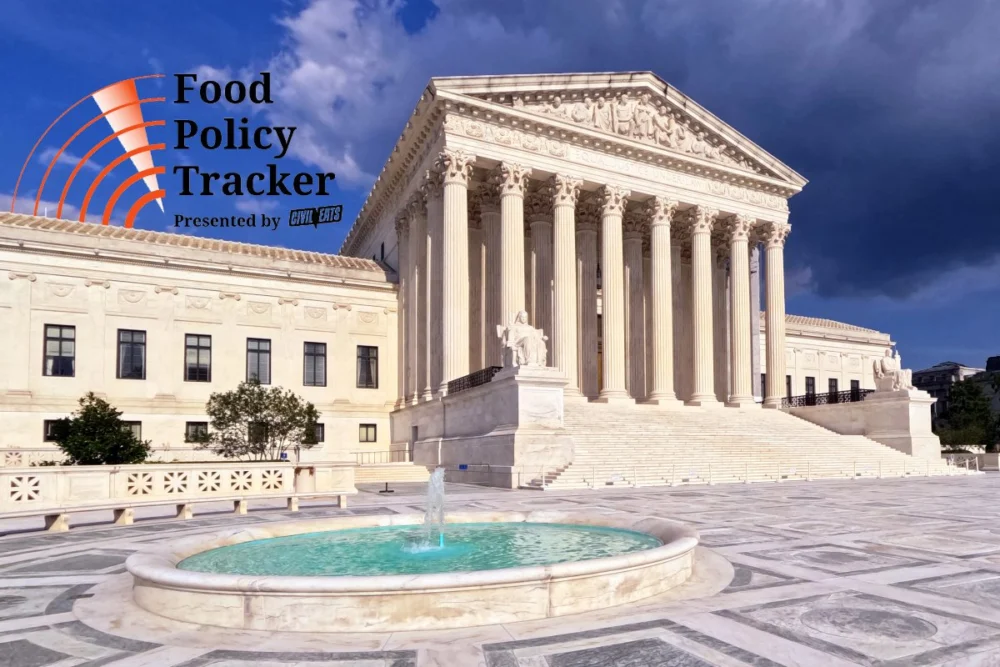
The Trump administration on Tuesday formally urged the Supreme Court to rule in favor of the chemical giant Bayer, arguing that federal pesticide regulations should preempt state-level lawsuits alleging that the company’s glyphosate-based products, like Roundup, cause cancer and other severe illnesses. This intervention, delivered via an amicus brief, signals a firm stance by the executive branch that could dramatically reshape the landscape of product liability law and ignite a firestorm of protest from public health advocates and a key segment of the Republican base.
The high-stakes legal battle, scheduled for oral arguments in April, centers on the intricate balance between federal regulatory authority and states’ rights to protect their citizens through tort law. The administration’s position asserts that the Environmental Protection Agency (EPA)’s approval of pesticide labels, under the Federal Insecticide, Fungicide, and Rodenticide Act (FIFRA), should be considered the definitive word on product safety warnings, thereby insulating manufacturers from claims that their labels were inadequate under state common law. This argument, if upheld by the Supreme Court, could effectively grant broad immunity to pesticide companies, setting a precedent that extends far beyond agricultural chemicals.
The Heart of the Legal Battle: Preemption and Product Liability
At the core of the Supreme Court case (Bayer AG v. Durnell, Docket No. 24-1068) is the legal doctrine of "preemption." Federal preemption occurs when a federal law overrides or "preempts" state laws on the same subject. In the context of product liability, this means that if a federal agency, such as the EPA, has approved a product’s label, a company might argue that state laws requiring different or additional warnings are preempted. The Trump administration’s brief champions this interpretation, contending that allowing state juries to determine the adequacy of warnings would create a "confusing patchwork" of regulations, undermining the EPA’s uniform federal scheme.
This argument is not new; it has been a recurring theme in pharmaceutical and medical device litigation, with varying outcomes. However, its application to pesticides, particularly one as ubiquitous and controversial as glyphosate, carries immense implications. Plaintiffs’ attorneys and consumer advocacy groups argue that federal minimum standards should not negate a company’s responsibility under state law to adequately warn consumers about known or knowable risks, especially when scientific understanding evolves or when the federal agency’s stance itself is debated. They contend that common law tort claims serve as a crucial backstop, incentivizing companies to prioritize safety and providing a mechanism for victims to seek justice when federal oversight falls short.

The Durnell Case: A Microcosm of Thousands
The specific case before the Supreme Court involves John Durnell, a Missouri gardener who developed non-Hodgkin’s lymphoma after decades of using Roundup. In 2023, a jury found Bayer liable for failing to warn Durnell of the product’s risks, awarding him $1.25 million. This verdict, like many others against Bayer, underscored the belief that the company had a duty to inform consumers about the potential link between glyphosate exposure and cancer, a link that has been debated by scientific bodies globally.
Bayer, which acquired Monsanto in 2018 for approximately $63 billion, inherited thousands of such lawsuits. The acquisition proved to be a significant financial burden, with the company facing a deluge of litigation. To date, Bayer has settled a vast majority of these claims, paying out billions of dollars to resolve an estimated 100,000 cases. However, a significant number of cases remain active, and the company has consistently sought to appeal adverse judgments, often pinning its hopes on the preemption argument to end the wave of litigation. The Missouri Supreme Court declined to hear Bayer’s appeal in the Durnell case, leading the company to petition the U.S. Supreme Court, which agreed to review the preemption question.
Glyphosate: A Global "Flashpoint"
Glyphosate, the active ingredient in Roundup, is the most widely used herbicide in history. Introduced by Monsanto in the 1970s, it became a cornerstone of modern agriculture, particularly with the advent of "Roundup Ready" genetically modified crops designed to withstand the chemical. Its widespread use, from large-scale farming to residential gardens, means millions of people have been exposed to it over decades.
The controversy surrounding glyphosate intensified dramatically in 2015 when the International Agency for Research on Cancer (IARC), a specialized cancer agency of the World Health Organization (WHO), classified glyphosate as "probably carcinogenic to humans." This classification was based on "limited evidence of carcinogenicity in humans for non-Hodgkin lymphoma" and "sufficient evidence of carcinogenicity in experimental animals."
Conversely, the EPA has consistently maintained that glyphosate is "not likely to be carcinogenic to humans" when used according to label instructions. This stark divergence between IARC and EPA assessments has fueled the legal and public debate, creating a significant challenge for companies like Bayer and a complex regulatory environment. The EPA’s stance forms the bedrock of Bayer’s defense and the Trump administration’s preemption argument: if the federal regulator says it’s safe and doesn’t require a cancer warning, then the company cannot be held liable for not providing one.

Political Crossroads: The MAHA Coalition and the Administration
The administration’s explicit siding with Bayer in December 2025, now affirmed and elaborated upon in the amicus brief, has put the White House at a political crossroads with a powerful segment of its base: the "Make America Healthy Again" (MAHA) coalition. MAHA is a grassroots movement, often aligned with conservative and populist ideologies, that advocates for stricter food safety regulations, transparency in chemical use, and a reduction in what they perceive as corporate influence over public health policy.
This coalition, including prominent social media influencers and activists like Vani Hari (known as "The Food Babe"), has been a vocal supporter of President Trump on many issues. However, their stance on chemical safety, particularly regarding glyphosate, often places them at odds with traditional Republican pro-business, deregulation policies.
The tension became particularly evident in late February when President Trump signed an executive order directing the U.S. Department of Agriculture (USDA) to boost domestic production of glyphosate. While Secretary Kennedy defended the order as a move to enhance national agricultural self-sufficiency and reduce reliance on foreign supply chains, many MAHA supporters viewed it as a betrayal of their health-focused agenda.
The Supreme Court case, however, represents an even more explosive point of contention. The idea of granting legal immunity to companies whose products are alleged to cause severe health harms resonates deeply with MAHA’s anti-corporate sentiment. Vani Hari, leveraging her millions of social media followers, has declared the planned April 27 rally in front of the Supreme Court as "the largest food movement rally America has ever seen." She emphasized, "Companies that are spraying our food with poison do not get immunity," directly challenging the administration’s legal position. This impending demonstration underscores the growing political pressure on the administration to reconcile its pro-business policies with the public health concerns of a significant part of its political base.
Broader Implications: A Precedent for Corporate Accountability
The Supreme Court’s decision in Bayer AG v. Durnell will have ramifications far beyond the agricultural sector. A ruling in favor of Bayer and the Trump administration could significantly strengthen the preemption defense for manufacturers across various industries, making it more challenging for consumers to sue companies for harm caused by products with federally approved labels. This could include pharmaceuticals, medical devices, and other consumer goods regulated by federal agencies.

Legal experts suggest that such a ruling could fundamentally alter the balance between federal regulatory oversight and states’ traditional role in protecting public health through tort law. It could be seen as a victory for corporate interests, reducing potential liability and perhaps disincentivizing manufacturers from investing in additional safety measures beyond minimum federal requirements. Conversely, critics argue it could diminish consumer protection, leaving individuals with fewer avenues for redress when products cause harm, even if those harms become evident years after federal approval.
From an economic perspective, a definitive ruling in Bayer’s favor would undoubtedly provide substantial relief to the company, potentially ending years of costly litigation and billions in settlement payouts. It would also offer a degree of certainty to the broader agricultural chemical industry, which has closely watched the glyphosate litigation. However, this economic benefit might come at the expense of public trust and perceived corporate accountability.
Public health advocates fear that such a decision could embolden industries to prioritize regulatory compliance over comprehensive safety, especially when federal agencies’ assessments differ from those of independent scientific bodies. They argue that a robust system of common law torts serves as an essential check on corporate behavior, ensuring that companies remain accountable for the safety of their products throughout their lifecycle.
The Path Forward
As April 27 approaches, the legal and political stakes will only intensify. The Supreme Court justices will hear arguments from Bayer, the Durnell legal team, and the Trump administration, along with numerous amicus briefs from various interest groups on both sides. Their decision, expected later in the year, will not only determine the fate of thousands of pending glyphosate lawsuits but will also cast a long shadow over the future of product liability law in the United States. It will be a pivotal moment, shaping the boundaries of corporate responsibility, federal regulatory power, and the avenues available for ordinary citizens seeking justice for alleged harm.