admin
Environmental activist, author, and speaker Robin Greenfield has successfully concluded a remarkable year-long endeavor, living exclusively on foraged food and medicine, without purchasing or cultivating any resources. The project, which wrapped up on October 8, 2026, served as a profound exploration into self-sufficiency and a living critique of the global industrial food system. Greenfield, known for his radical acts of ecological advocacy, embarked on this intensive journey from his home base in Northern Wisconsin, demonstrating the potential for humans to thrive in harmony with natural ecosystems. His experiment aimed to not only provide for his own sustenance but also to inspire others to reconsider their relationship with food sources and the environment.
The Experiment Unveiled: A Year of Wild Sustenance
Greenfield’s latest project commenced in late 2025, setting an ambitious goal: to source 100 percent of his nutritional and medicinal needs directly from the wild. This undertaking pushed the boundaries of his previous food-related experiments, eliminating even the option of growing his own produce. The rationale behind this stringent approach was deeply rooted in his disillusionment with the conventional food system, which he describes as "incredibly destructive to the Earth, people, plants, and animals." For Greenfield, the year of foraging was a tangible method of "seeing if it’s possible to live outside of this broken system, and provide for ourselves in a way that is harmonious with the Earth and beneficial to ecosystems."
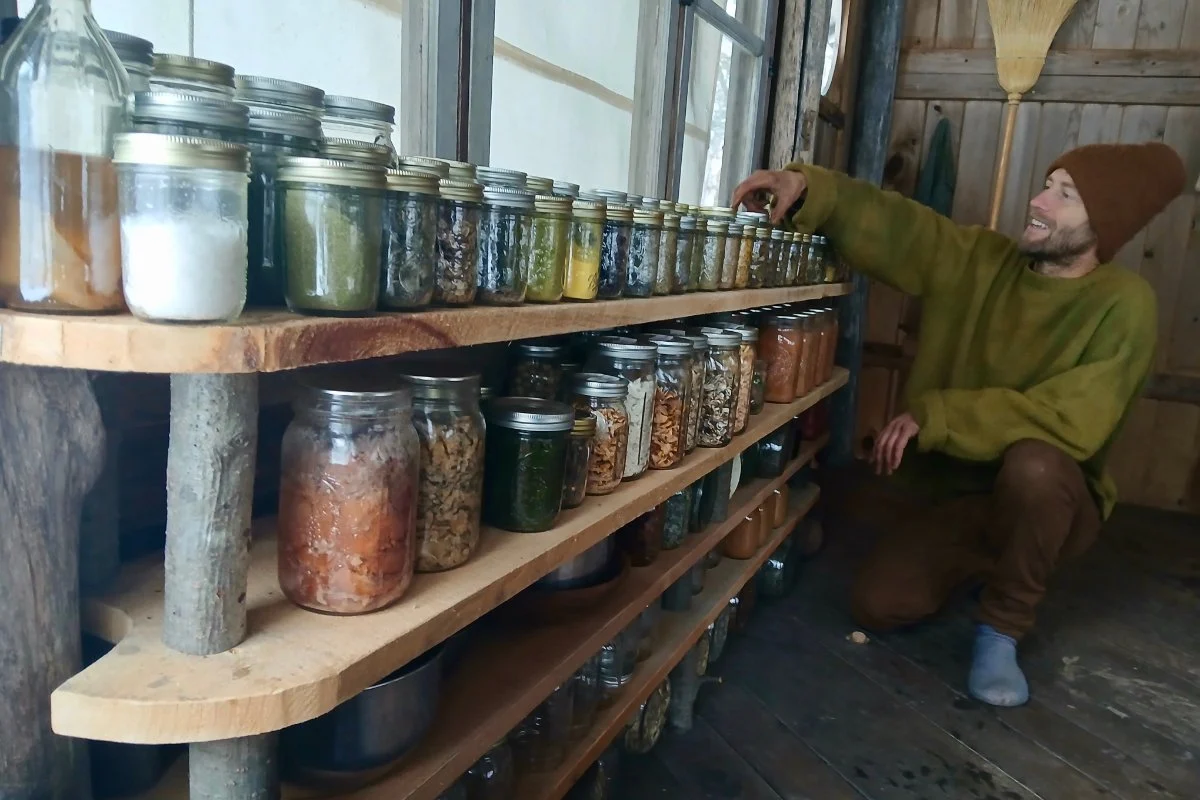
Throughout the year, Greenfield’s diet was a testament to the abundance of nature, consisting of staples like wild rice and acorns, supplemented by venison and fish. His pantry also boasted a variety of wild fruits preserved as sauces, including applesauce, plum sauce, and pear sauce. Mushrooms such as maitake and chicken of the woods provided essential nutrients, while greens like watercress, stinging nettle, and basswood were regular components of his meals. Medicinal teas were brewed from wild plants like elderberries and various herbs, and even his seasoning was wild-sourced, with salt harvested from the ocean. He embraced foods rarely considered by the mainstream, such as nutrient-dense chokecherries and basswood, showcasing the diverse edible landscape available.
A Deeper Dive into Greenfield’s Philosophy
Greenfield’s advocacy extends beyond personal practice; it is fundamentally about challenging the prevailing "illusion of separateness" between humanity and the Earth. He believes that foraging is a powerful tool for dissolving this illusion, fostering an intimate understanding of our dependence on natural systems. "I am dependent upon this Earth for my existence, and that the Earth can provide us with what we need," he states, articulating a philosophy centered on belonging, meaning, and purpose derived from a direct connection with nature. His work serves as a peaceful protest against the industrial food system, which he views as not only environmentally damaging but also socially alienating. By actively engaging with the wild, he seeks to demonstrate a viable alternative, empowering individuals to reclaim their food sovereignty and cultivate a profound sense of "being at home here on this Earth." This perspective aligns with broader movements advocating for food justice and ecological restoration, highlighting the potential for individual action to drive systemic change.

From Wisconsin Woods to Coastal Shores: A Forager’s Pantry and Journey
While Northern Wisconsin served as Greenfield’s primary foraging ground, his commitment to sharing his message took him across the United States. He embarked on tours to the West Coast, Southeast, and Midwest, transforming his "pantry of foraged foods" into a mobile educational exhibit. During these travels, he engaged with communities through foraging walks, lectures, and full-day immersion programs, demonstrating practical skills and sharing the philosophy behind his lifestyle. His daily routine, whether at home or on the road, defied conventional scheduling. Some days were dedicated entirely to intensive foraging, such as wild ricing, while others involved processing large quantities of harvested foods—shelling acorns, making applesauce—or managing his non-profit organization with a team of five. Even amidst extensive travel and administrative duties, time for connecting with nature, swimming, and interacting with hosts remained integral to his experience. This blend of activism, education, and subsistence underscores the multifaceted nature of his year-long commitment.
A Chronology of Commitment: Greenfield’s Path to Food Freedom
Robin Greenfield’s journey toward complete food autonomy is not a recent development but rather an evolution of his long-standing commitment to environmentalism. His initial significant foray into alternative food sourcing began in 2018, when he embarked on a year-long project to grow and forage every single item he ate. This foundational experience, detailed in his book Food Freedom: A Year of Growing and Foraging 100% of My Food, published in 2024, left him in "exceptional health and high spirits." The success of this first venture laid the groundwork for his more ambitious undertaking.
In late 2025, Greenfield escalated his commitment, initiating the experiment to exclusively forage 100 percent of his food and medicine. This marked a significant departure from his previous project by removing the option of cultivation, relying solely on wild resources. The year-long challenge saw him engaging in various educational activities, including sharing tea with students at a Foraging School in Florida in January 2026, as captured in an accompanying photograph. This period was characterized by extensive travel to disseminate his message, harvest diverse wild foods, and continuously adapt to the seasonal availability of resources. The culmination of this rigorous project was on October 8, 2026, marking a full year of living off the land, a testament to his dedication and resilience.
Looking beyond the immediate conclusion, Greenfield has articulated a phased transition plan. For at least one month post-experiment, he intends to continue eating 100 percent foraged food, but with a crucial distinction: opening it up to food foraged by others, fostering a community-centric approach. Subsequently, he plans to integrate homegrown food from his garden, followed by locally grown produce from small farms. His ultimate aspiration is to spend the "rest of my life supporting food that is truly beneficial to the Earth and local communities, and to largely or completely live outside the global industrial food system." This long-term vision indicates a sustained commitment to ecological food systems, moving beyond individual acts to inspire collective change.
Beyond Personal Sustenance: Addressing Food Insecurity and Nutritional Access
One of the most compelling aspects of Greenfield’s experiment lies in its potential implications for tackling food insecurity. He emphasizes that foraging provides access to "a lot of the most nutritious and delicious food that exists on Earth," much of which grows "right outside of our doors." While acknowledging that foraging may not address the caloric needs of individuals facing severe food insecurity—due to the time and skill required—he strongly advocates for its role in enhancing nutritional access.

In many areas affected by food deserts, where fresh, healthy produce is scarce, wild greens, herbs, and antioxidant-rich fruits offer a vital, accessible source of nutrition. Greenfield points out that many edible wild plants, such as Autumnberry and chokecherry, are often overlooked or mistaken for weeds, despite their significant health benefits. "I see greens, herbs, and fruits as some of the absolute keys for helping reduce food insecurity in this country," he asserts. He highlights the efficiency of harvesting, noting that "a multiple month’s supply often in just an afternoon" can be gathered for some fruits. While recognizing the time constraints faced by individuals working multiple jobs—a common challenge for those experiencing food insecurity—Greenfield firmly believes that "there are many people who become less food insecure because of foraging," underscoring its practical utility as a supplemental strategy for improving dietary quality and resilience in communities.
The Broader Implications: Reconnection, Resilience, and Community
Greenfield’s year of foraging has yielded profound personal transformations, extending beyond mere physical sustenance. He describes a fundamental shift in his perception, where "it’s absolutely normal to go outside and harvest my food and medicine." This new normal has dissolved the "illusion of separateness," fostering a deep sense of connection, belonging, and wholeness. He notes a significant reduction in "yearnings and cravings and desires," leading to a state of contentment and completion. This internal shift, he explains, is largely attributable to "developing relationships with the plants," a sentiment echoed by many foragers and growers who report a similar sense of peace and purpose through their connection with the natural world.
The experiment also highlights themes of ecological resilience. In a world increasingly vulnerable to supply chain disruptions and climate change impacts on industrial agriculture, understanding and utilizing wild food resources offers a pathway to greater local food security and self-reliance. It demonstrates that communities, through collective knowledge and practice, can build robust food systems that are less dependent on globalized markets and more attuned to local ecosystems. This fosters a sense of collective responsibility and empowers individuals to become active stewards of their environment.
Expert Perspectives on the Foraging Movement
Greenfield’s radical approach resonates with various groups advocating for sustainable living and food system reform. Environmental advocates and conservationists would likely laud his efforts as a powerful, lived demonstration of ecological principles, providing a tangible model for reducing human impact on the planet. His work aligns with calls for regenerative practices and a shift away from resource-intensive industrial agriculture.
Public health experts, while acknowledging the exceptional nutritional value of many wild foods, might also emphasize the critical importance of accurate plant identification to avoid toxic look-alikes. They would likely stress the need for education and guidance from experienced foragers to ensure safety and efficacy, especially when foraging for medicinal purposes. However, the potential for wild foods to combat micronutrient deficiencies in underserved populations would be an area of significant interest.

Food sovereignty activists and proponents of localized food systems would view Greenfield’s experiment as a powerful testament to community-based food security. His post-experiment plan to integrate community-foraged and locally farmed foods directly mirrors the goals of these movements: decentralizing food production, empowering local economies, and ensuring equitable access to healthy, culturally appropriate food.
Furthermore, Greenfield’s deep connection to the land and its provisions echoes the ancestral wisdom of Indigenous communities worldwide. For millennia, these communities have practiced sophisticated foraging and land stewardship techniques, living in reciprocal relationships with their environments. Greenfield’s work, though a modern interpretation, taps into this profound human heritage, reminding us of the extensive knowledge embedded in traditional ecological practices and the importance of respecting and learning from these enduring traditions.
Looking Ahead: A Future Rooted in Local and Foraged Foods
The conclusion of this year-long, intensely personal experiment marks not an end, but a transition for Robin Greenfield. While the time commitment required for exclusive foraging is significant, potentially limiting its indefinite continuation for someone with a public advocacy role, his intention to largely or completely detach from the global industrial food system remains steadfast. "My intention is to break free from the global industrial system forever," he states, acknowledging the social complexities of this commitment, particularly when engaging with friends and family whose lives are intertwined with conventional food sources.
His post-experiment plans – transitioning from solely personal foraging to community-sourced foraged foods, then integrating homegrown produce, and finally incorporating items from local small farms – illustrate a nuanced, pragmatic approach to sustainable living. This phased strategy aims to balance his ecological principles with the realities of modern life and social interaction, potentially making his lifestyle more replicable for others. He contemplates another full year completely outside the industrial food system, this time leveraging local farms to ease the burden of exclusive foraging, demonstrating a pathway for broader community engagement in sustainable food practices.
A Call to the Wild: Starting Your Own Foraging Journey
Robin Greenfield’s ultimate message is one of empowerment and accessibility. He encourages individuals not to be overwhelmed but to begin simply: "learn about one plant at a time. You only need to know one plant in order to eat one plant." He suggests common, easily identifiable plants like dandelion, plantago, mulberries, or elderberries, which can be found in urban and suburban environments. "Food and medicine are growing freely and abundantly all around us," he reminds us. The cumulative effect of this small step can be transformative: "If you learn just one plant per month for a year, that’s 12 plants. That’s life-changing for a lot of people." His journey stands as a powerful testament to the resilience of nature and the human spirit, urging a reconnection that promises not just sustenance, but a deeper sense of belonging and purpose in an increasingly disconnected world.