admin
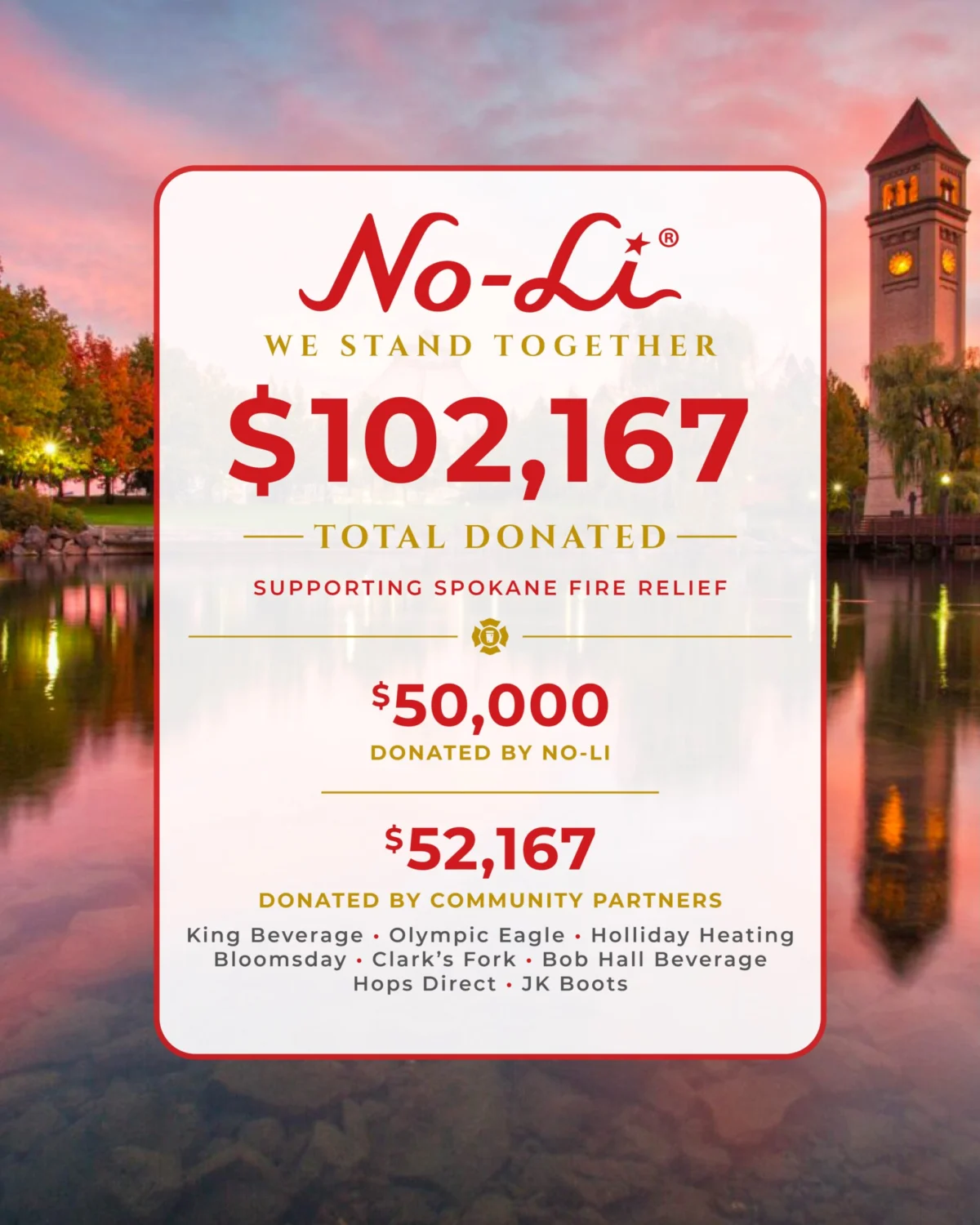
The Pacific Northwest has faced one of its most grueling wildfire seasons in recent memory during the summer of 2026, with the Inland Northwest city of Spokane, Washington, emerging as a primary focal point of the devastation. As catastrophic blazes swept through the region’s timberlands and residential outskirts, the resulting destruction prompted a massive humanitarian response from the local private sector. At the forefront of this effort, Spokane-based No-Li Brewhouse spearheaded a rapid-response fundraising campaign that ultimately generated $102,167 in direct financial assistance for displaced families. The initiative, which combined corporate philanthropy with grassroots community participation and business-to-business partnerships, has become a benchmark for corporate social responsibility in the craft brewing industry.
The scale of the crisis in Spokane County cannot be understated. According to regional emergency management reports and climate data from August 2026, a series of three major fires converged to create a humanitarian emergency. The infernos resulted in the damage or total destruction of more than 900 homes, effectively erasing entire residential blocks and forcing the emergency evacuation of approximately 70,000 residents. The speed with which the fires moved, fueled by record-high temperatures and erratic wind patterns, left many families with only minutes to flee, resulting in the loss of nearly all personal belongings and permanent housing for hundreds of households.
The Genesis of the Relief Campaign
Recognizing the immediate need for liquid capital to assist those in the aftermath of the evacuation orders, No-Li Brewhouse announced a significant philanthropic commitment on August 4, 2026. The brewery pledged to donate 100% of its business sales, up to a cap of $50,000, specifically for fire relief efforts. This "all-in" approach was designed to leverage the brewery’s high foot traffic and distribution network to convert consumer spending into emergency aid.
The response from the Spokane community was instantaneous. In the days following the announcement, the brewery’s taproom saw a surge in patrons, while local grocery stores reported increased velocity in the sale of No-Li products. This consumer-driven momentum allowed the brewery to meet its $50,000 matching goal within a condensed timeframe. However, the scope of the project expanded when several other small and family-owned businesses, both within the Spokane metro area and across the United States, petitioned to join the effort.
A Network of Corporate Solidarity
While No-Li Brewhouse provided the initial platform and the first $50,000, the final total of $102,167 was made possible by a coalition of regional and national business partners. These organizations contributed an additional $52,167, demonstrating a unified front among sectors as diverse as beverage distribution, HVAC services, and athletic event management.
Key contributors to the fund included:
- King Beverage and Olympic Eagle: Major regional distributors who play a critical role in the Pacific Northwest supply chain.
- Holliday Heating: A local service provider deeply embedded in the Spokane residential community.
- Bloomsday: The organizers of Spokane’s iconic road race, representing the city’s athletic and civic spirit.
- Clark’s Fork and Bob Hall Beverage: Regional entities that provided logistical and financial support.
- Hops Direct and JK Boots: Industry-adjacent partners that underscored the national reach of the fundraising appeal.
This collaborative model ensured that the relief fund grew beyond the capacity of a single business, reflecting a broader regional commitment to "neighbors helping neighbors." Jack Bryant, Brand Director at No-Li, noted that the speed of the response was a testament to the region’s resilience. "This is what community looks like," Bryant stated. "People all around the region answered the call. Businesses stepped up without hesitation, and together we turned a $50,000 donation into more than $102,000."
The H.O.M.E. Starts Here Fund and Municipal Oversight
To ensure that the funds were distributed equitably and reached those with the greatest need, the total amount was donated to the H.O.M.E. Starts Here Fund. This fund is administered through the City of Spokane’s Department of Neighborhoods, Housing, and Human Services. By utilizing an established municipal framework, the donors ensured that the money would be subject to rigorous screening processes to identify families most impacted by the fires.
One of the most critical aspects of this specific fund is its efficiency. City leadership confirmed that 100% of the $102,167 will go directly to impacted families. There is no administrative overhead or "middle-man" fee deducted from the total, meaning every dollar spent at the brewery or donated by a partner business is converted directly into housing assistance, clothing, or essential supplies for fire victims. This level of transparency has been cited by analysts as a key factor in the campaign’s success, as it built high levels of public trust during a period of high social anxiety.
Chronology of the Disaster and Recovery
The timeline of the 2026 Spokane fire season highlights the volatility of the situation and the necessity of the rapid-response fundraising model:
- Late July 2026: Record-breaking heatwaves and dry lightning strikes ignite several small fires in the hills surrounding Spokane County.
- August 1–3, 2026: Wind shifts cause three separate fires to merge and jump containment lines, moving toward densely populated residential areas. Evacuation orders are issued for nearly 70,000 people.
- August 4, 2026: No-Li Brewhouse officially launches its 100% sales donation campaign.
- August 5–10, 2026: A coalition of eight major business partners joins the effort, doubling the initial fund goal.
- August 12, 2026: The fundraising total surpasses $100,000.
- Mid-August 2026: Firefighters gain 60% containment on the primary blazes, allowing some residents to return to assess the damage. The H.O.M.E. Starts Here Fund begins the screening process for emergency disbursements.
Broader Implications for the Craft Brewing Industry
The actions taken by No-Li Brewhouse reflect a growing trend in the craft brewing industry where breweries serve as "third places"—community hubs that provide social cohesion during times of crisis. Historically, craft breweries have been deeply rooted in their local geographies, but the 2026 Spokane fires have shown that these businesses can also serve as effective financial conduits during natural disasters.
From an economic perspective, the ability of a mid-sized brewery to mobilize over $100,000 in less than ten days suggests that local brands possess significant "social capital." This capital can be deployed more quickly than federal or state aid, which often involves lengthy application processes and bureaucratic delays. For a family that has lost their home, the immediate availability of funds from a municipal source—backed by local business donations—can be the difference between finding temporary shelter and facing homelessness.
The Long Road to Reconstruction
While the immediate threat of the fires has begun to subside as of mid-August, the structural and psychological impact on the Spokane community will persist for years. The destruction of 900 homes represents a significant blow to the local housing inventory, which was already under pressure prior to the 2026 season.
"The fires may no longer be the headline every day, but for the families who lost homes, the road forward is just beginning," Jack Bryant remarked. "Now comes rebuilding, healing, and continuing to show up for one another."
The $102,167 raised by the No-Li-led coalition is intended to be a "bridge" for these families. While it cannot replace the total value of lost properties, it provides the essential liquidity needed for security deposits, immediate grocery needs, and the replacement of essential documents and tools for work.
As Spokane transitions from the emergency response phase to the recovery phase, the city continues to accept donations for the H.O.M.E. Starts Here Fund. Local officials emphasize that while the initial surge of support has been historic, the long-term needs of 70,000 displaced residents will require sustained civic engagement. The success of the No-Li Brewhouse initiative serves as a reminder that in the face of environmental catastrophe, the coordination between local government, private enterprise, and the general public remains the most effective tool for regional resilience.