admin
admin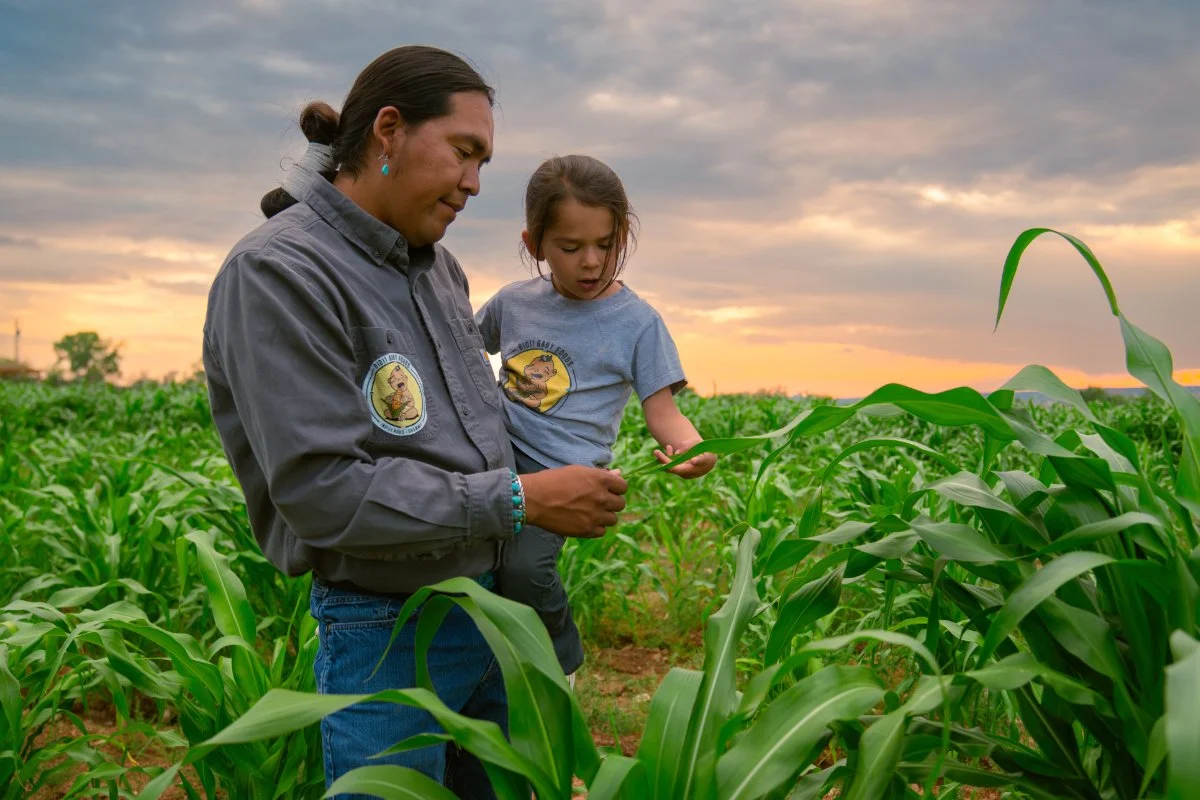
In a significant stride towards Indigenous food sovereignty and community health, Zachariah Ben, a sixth-generation Navajo (Diné) farmer, alongside his wife Mary, has pioneered Bidii Baby Foods, an enterprise dedicated to providing fresh, culturally significant, and organic baby food. Born from a personal desire to nourish their first child, Yabiito Yehoshzho, with wholesome, unprocessed options, Bidii Baby Foods has evolved into a vital force addressing food insecurity and promoting traditional agricultural practices within the Navajo Nation and beyond. The company’s journey highlights both the profound challenges of operating an Indigenous-led business on tribal lands and the innovative solutions forged through resilience, cultural preservation, and strategic partnerships.
The Genesis of Bidii Baby Foods: A Personal and Cultural Imperative
The catalyst for Bidii Baby Foods emerged during the uncertain early months of the COVID-19 pandemic in 2020, when Zachariah and Mary Ben faced the impending birth of their son, Yabiito, in March 2021. This period of widespread scarcity, even for basic necessities like toilet paper, prompted a critical question: "What is our child going to eat?" The couple’s subsequent exploration of the commercial baby food market revealed a landscape dominated by heavily processed, packaged products. For families residing on the Navajo Nation, a vast expanse of over 27,000 square miles designated by the USDA as a food desert with only 13 grocery stores, access to healthy, organic alternatives was virtually non-existent. This stark reality galvanized the Bens to take matters into their own hands, leveraging Zachariah’s deep ancestral roots in farming near Shiprock, New Mexico.
Zachariah Ben, whose family has cultivated the land for generations, had always viewed staples like corn, beans, and squash primarily as cash crops or for ceremonial use. However, the arrival of Yabiito, whose name means "water of the sky," transformed his perspective. He began to understand these heritage foods not just as commodities, but as essential building blocks for everyday nutrition and cultural continuity. This shift marked the true genesis of Bidii Baby Foods, making it one of the country’s only Indigenous baby food companies. The first season of farming in 2021 was dedicated entirely to their son, serving as a foundational "human case study" for what would become a revolutionary approach to food. The Bens recognized that the most profound act of parenthood extended beyond providing food to involving their children in its cultivation, fostering a deep connection to the land and their heritage.
Addressing a Food Desert: Health and Cultural Imperatives
The mission of Bidii Baby Foods is deeply intertwined with the urgent public health and food security challenges facing Native communities, particularly the Navajo Nation. The region grapples with alarmingly high rates of type 2 diabetes and other diet-related illnesses. Conventional medical advice often directs patients to adopt diets reliant on specialty grocery stores like Whole Foods or Trader Joe’s, which are often hours away from reservation communities. Such recommendations are impractical and unrealistic for many families, especially those in homes without consistent electricity or running water.
Zachariah Ben explains the inherent flaw in this approach: "Coming from homes that sometimes don’t have electricity or running water, that’s just not a realistic option. Plus, those diets are usually about eliminating certain foods." Instead of further restricting food options for communities already facing scarcity, Bidii Baby Foods sought to expand them. By reintroducing traditional, nutrient-dense foods, the company aims to shape children’s palates from a young age, thereby improving long-term health outcomes for families across the reservation. This approach represents a proactive, culturally informed strategy that contrasts sharply with reactive, externally imposed dietary solutions.

From Shovel to Scale: Business Growth and Traditional Methods
The initial operations of Bidii Baby Foods were humble, beginning with "only a shovel and some seeds" in 2021, without the aid of a tractor. That first year, the Bens planted two acres. Through sheer determination, borrowing equipment, and leasing additional farmland, including Zachariah’s grandmother’s 16 acres, the enterprise steadily expanded. Over the years, Bidii Baby Foods has diversified its cultivation, growing various types of corn (white, yellow, blue, and green), summer and winter squash, watermelon, cantaloupe, casaba melons, beans, and amaranth.
A cornerstone of their production involves the ancestral Diné process for corn. After harvest, the corn is steamed in underground pits for 12 hours, utilizing local wood and water to create a natural pressure-cooking environment. This is followed by a week-long dehydration process on drying racks. This meticulous method not only preserves the nutritional integrity and flavor of the corn but also honors centuries-old traditions. Following their initial season, production rapidly scaled, with Bidii Baby Foods now producing approximately two tons of dehydrated corn, cornmeal, and corn-based cereals annually. This significant output demonstrates the viability of traditional agricultural practices at a commercial scale, while maintaining cultural fidelity.
Navigating the Market: New Mexico Grown and Institutional Partnerships
Despite the high demand for their products from the outset, direct-to-consumer sales proved challenging due to the complex regulatory environment on the reservation, including issues related to water rights, outdated irrigation infrastructure, and jurisdictional complexities. Major retailers like Whole Foods and Trader Joe’s, and even the popular television show Shark Tank, expressed interest, but Bidii Baby Foods was initially unable to guarantee a consistent supply due to these foundational issues, particularly water access.
A pivotal turning point arrived in their third year with the discovery of the New Mexico Grown program. This state-funded initiative is designed to bolster local farmers, ranchers, and producers by offering essential support such as food safety training, inspections, and technical assistance. The program facilitates sales to New Mexico institutions, including schools, childcare facilities, food banks, and eldercare facilities. This partnership not only provided Bidii Baby Foods with a stable market and helped establish it as a sustainable business but also aligned perfectly with its core values: prioritizing children and vulnerable populations who rely on institutional meal programs. Through New Mexico Grown, Bidii Baby Foods has been able to feed tens of thousands of children annually, reinforcing its commitment to community well-being.
Infrastructure Challenges and the Quest for a Commercial Kitchen
The growth spurred by the New Mexico Grown program, while positive, highlighted significant infrastructural gaps. A critical need arose for a commercial kitchen and manufacturing facility equipped with modern processing equipment. The Navajo Nation, remarkably, lacks a publicly accessible, FDA-registered commercial kitchen. Furthermore, the absence of robust food safety regulations, enforcement mechanisms, and resources on the reservation makes it exceedingly difficult for Navajo farmers and food producers to obtain the necessary certifications for retail and institutional sales.
For four arduous years, the Bens undertook a grueling schedule. Their nearest accessible commercial kitchen was off the reservation in Gallup, New Mexico, a two-hour drive each way. This meant growing, harvesting, steaming, drying, and cleaning their crops near Shiprock, then transporting them four hours roundtrip every other day to Gallup for milling and packaging. This immense logistical challenge took a toll, even requiring a truck transmission rebuild due to the mileage and heavy loads. However, this unwavering dedication allowed them to secure a food manufacturing permit through the state of New Mexico, underscoring their commitment to quality and compliance despite overwhelming obstacles. In 2023, the family welcomed their daughter, Nadaaʼtsʼoosí Yidehaya, whose name, meaning "yellow corn, she emerged," reflects her traditional birth in their cornfield, a powerful symbol of their enduring connection to the land and its bounty.

Overcoming Bureaucracy: Water Rights and Tribal Governance
The operational hurdles for Bidii Baby Foods extended beyond infrastructure to the complex and often frustrating landscape of tribal governance and resource management. The Navajo Nation is engaged in ongoing legal battles with surrounding states over the allocation of Colorado River water, a critical lifeline for the arid Southwest. While Indigenous peoples possess senior water rights, the lack of developed agricultural land on the reservation means these opportunities often "flow by us," as Zachariah Ben laments. This critical issue directly impacts farmers; last year, Bidii Baby Foods lost a significant portion of its crops due to water issues, including outdated or sabotaged irrigation lines and denied access to water.
Further complicating matters, individual farmers on the Navajo Nation face a unique challenge regarding crop insurance. When Ben attempted to secure a policy, he was informed that the Navajo Nation government holds a blanket policy for all grazing and agricultural lands, collecting annual payouts due to drought. These funds, however, do not "trickle down" to individual farmers, leaving them vulnerable. "Without water, we’re not able to grow our food. Without food, we’re not able to grow ourselves as a people; we’re not able to flourish. This is why we need land reform and water rights," Ben asserts, highlighting a systemic issue that stifles agricultural development and self-sufficiency.
Moreover, the Bens encountered what they describe as "lateral violence" within the reservation’s political structure, characterized by bureaucracy and nepotism. A poignant example involved Zachariah’s grandmother’s attempt to transfer her 16 acres of farmland to him. Despite preparing all necessary documentation, the transfer was repeatedly blocked by farm board officials at community meetings. This experience illustrates a broader issue rooted in intergenerational trauma, where systemic barriers can lead to a "crab in a bucket" mentality, hindering the progress of younger generations. This observation led Bidii Baby Foods to adopt a policy of employing individuals under the age of 30, advocating for empowering youth with opportunities that may have been denied to their predecessors.
A New Horizon: The CHIYAAN Facility and Community Hub
Despite the formidable obstacles, a significant turning point arrived. In a moment of serendipity, Zachariah and Mary Ben discovered a 47-acre property off the reservation in a border town, complete with a 1,900-square-foot food manufacturing facility. What initially seemed like a distant dream became a necessity, driven by the escalating "lateral violence" and even threats of gun violence experienced on the reservation. Through the collaborative support of organizations like Mad Capital, New Mexico Climate Investment Center, New Mexico Community Capital, Rooted Relative Fund, 1st Sovereign Capital, and Roanhorse Consulting, the Bens successfully closed on the property on January 15, 2026.
This new facility, named CHIYAAN (the Navajo word for "food," also an acronym for "Child Health Improvement through Youth Aggregated Ancestral Nutrition"), represents a profound victory. It now serves as the primary location for Bidii Baby Foods’ farming and processing operations, as well as the home for their Farmer-in-REZidence Program. CHIYAAN is envisioned as the central traditional Indigenous food production and manufacturing hub for the region, fostering economic opportunities and a communal space for local farmers.
Beyond its economic function, CHIYAAN offers a safe and nurturing environment for children. Since moving in March 2026, the facility has welcomed over 300 visitors, many of them youth, from schools on the reservation. Zachariah Ben emphasizes the importance of this environment: "Our kids get to run out into the cornfield safely here. We have a playground here." This contrasts sharply with the challenges faced on tribal lands, where securing long-term investments is difficult due to the nature of tribal trust land and limited 25-year leases for small businesses, which fail to provide the "equity" needed for financing. The positive energy and connection to the land at CHIYAAN are believed to enhance the quality of their food, reflecting the Diné belief that "the corn loves being surrounded by children, because the corn are children themselves."

Cultivating Future Generations: The Farmer-in-REZidence Program
Central to Bidii Baby Foods’ long-term vision is its Farmer-in-REZidence Program, launched in 2023. This incubator initiative, inspired by the Bens’ experience teaching their own children, trains Indigenous farmers aged 30 or younger in developing sustainable agricultural businesses, utilizing both on- and off-reservation resources. Each year, a select group of young entrepreneurs gains access to crucial resources: piped irrigation, heavy equipment, heirloom seeds, mentorship, and traditional ecological knowledge.
The program aims to cultivate a robust network of young farmers who can mutually support each other, share resources, and collectively develop aggregate markets. To date, six farmers have been supported, with three more joining the current cohort. Many continue to work in agriculture; two have established their own successful farm businesses (ReRooted Farm and Skoden Farm), two are now full-time employees at Bidii Baby Foods, and one has even contributed to developing the program’s curriculum, which is slated to be offered as a course at Navajo Technical University in Fall 2026. This initiative is a powerful testament to Bidii Baby Foods’ commitment to fostering self-sufficiency and empowering the next generation of Indigenous agricultural leaders.
Broader Implications: Indigenous Food Sovereignty and Economic Development
The journey of Bidii Baby Foods offers a compelling case study for the broader movement of Indigenous food sovereignty. It demonstrates that reclaiming traditional food systems is not merely about nutrition but also about cultural revitalization, economic empowerment, and self-determination. By creating a successful enterprise that prioritizes community health and cultural practices, Zachariah and Mary Ben are modeling a path forward for other Indigenous communities facing similar challenges.
Their experience also underscores critical policy implications regarding land reform and water rights on tribal lands. The existing bureaucratic structures and the lack of individual land tenure and water access rights are significant impediments to economic development and food security. The success of CHIYAAN, located off-reservation, highlights the need for tribal governments to create more supportive environments for internal entrepreneurship and agricultural investment. The lessons learned from Bidii Baby Foods can inform strategies for developing tribal policies that empower individual farmers and businesses, fostering a more resilient and self-sufficient future.
Conclusion: Redefining "Bidii" and Nurturing Humanity
For Zachariah Ben, the ultimate goal of Bidii Baby Foods extends beyond feeding families; it is about "re-establishing humanity" on a global scale. Drawing from the Diné understanding of themselves as "the people" for all of humanity, the farm is seen as a microscopic model for nurturing connections. Visitors, from schoolchildren to college students and community members, engage directly with the land, taste the food, and forge meaningful bonds with the crops. "People walk away with their minds full but also with their bellies full. That’s the best feeling in the world," Ben explains, evoking the universal comfort of a grandmother’s hospitality.
The name "Bidii" itself, meaning "always hungry" in Navajo, carries a deeper, more nuanced meaning in this context. While colloquially referring to someone who loves food, a thousand years ago, being "bidii" signified someone who was skilled at hunting and providing for their community. Today, Bidii Baby Foods embodies this ancient spirit: an abundance mindset focused on taking care of themselves and their community. The true measure of their success, Zachariah Ben believes, will be when their children, and by extension, future generations, are "bidii" – not just physically nourished, but spiritually, mentally, and culturally connected to their food, their land, and their heritage.