admin
admin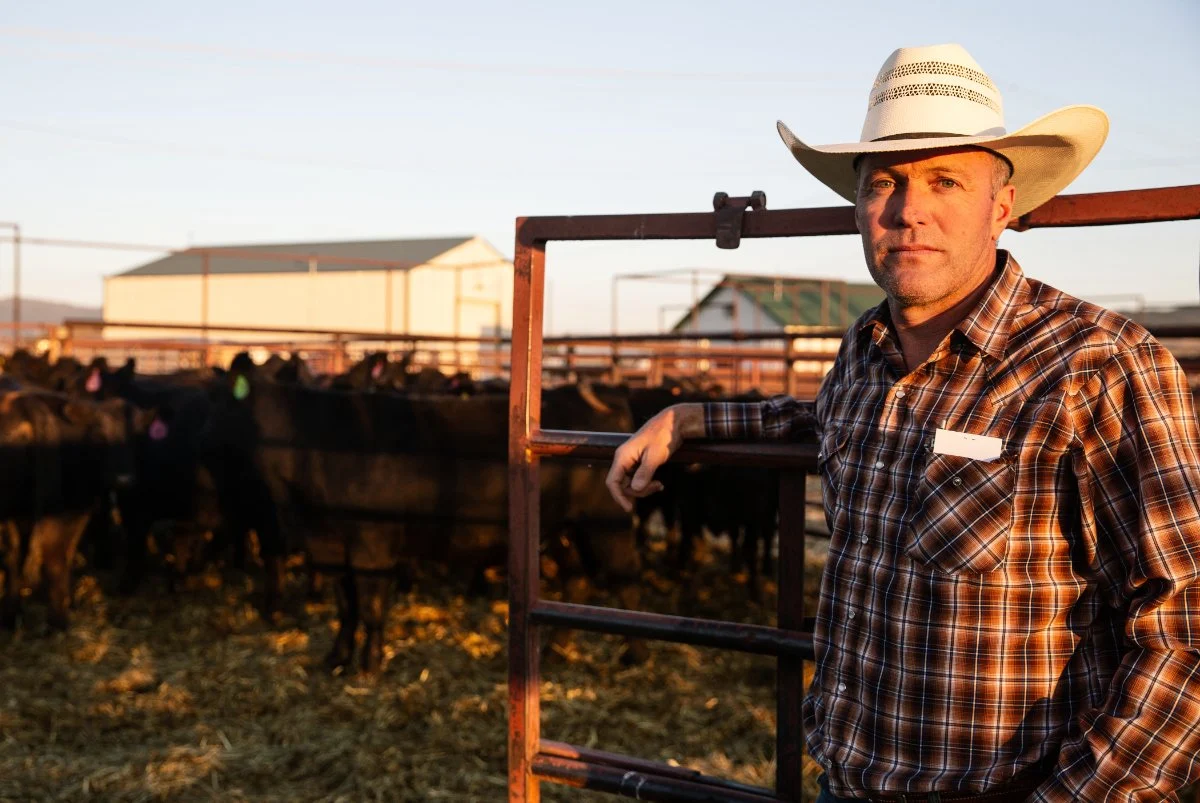
In the critical weeks leading up to the upcoming midterm elections, the Trump administration has embarked on a complex and politically charged initiative, unveiling a series of policy announcements aimed at simultaneously alleviating persistently high beef prices for consumers and bolstering the struggling domestic cattle industry. These actions, coming less than two months before voters head to the polls, underscore a delicate balancing act designed to address cost-of-living concerns without alienating a crucial segment of the Republican base: America’s ranchers. However, the efficacy and long-term impact of these measures remain highly uncertain, drawing both cautious optimism and considerable skepticism from industry experts and stakeholders.
A Flurry of Executive Actions and Industry Reactions
The administration’s recent push began on August 21st with a significant announcement from President Donald Trump, revealing a plan to permit the import of 300,000 tons of ground beef at a reduced tariff rate. The stated condition for these imports was a guaranteed 25 percent lower market price, an overt move to directly impact consumer costs. This initial policy, however, immediately ignited a wave of backlash from domestic ranchers and several Republican members of Congress, who voiced concerns that increased imports, even at lower tariffs, would ultimately undercut domestic producers already grappling with tight margins. Agriculture Secretary Brooke Rollins defended the decision, framing it as a necessary step to address consumer affordability.
Recognizing the political ramifications and the need to address the deep-seated grievances of the ranching community, the administration quickly followed up with a series of additional initiatives. On September 4th, President Trump signed two executive orders specifically targeting challenges within the ranching industry. These orders were complemented by the USDA’s launch of a "Ranchers First Initiative," designed to facilitate herd rebuilding through new risk-management tools, enhanced disaster assistance, and efforts to expand regional beef-processing capacity. Concurrently, the Department of Justice (DOJ) expanded its ongoing investigation into beef prices, issuing requests for information from top retailers to probe potential anti-competitive practices further down the supply chain. These subsequent actions appeared to be a direct response to the initial blowback, attempting to demonstrate a comprehensive approach to the complex issues facing the beef sector.
The Precarious State of the U.S. Cattle Herd
A central tenet of the administration’s strategy is the purported goal of incentivizing ranchers to rebuild their herds, which currently stand at a 75-year low nationwide. Yet, industry experts largely contend that the import policy, far from encouraging expansion, is more likely to depress domestic beef prices, thereby disincentivizing ranchers from making the significant investments required to grow their operations. The decline in cattle numbers is not a recent phenomenon but the culmination of several years of compounding challenges. Data from the USDA indicates a stark 17 percent reduction in the number of cattle operations between 2017 and 2022, signaling a broader contraction within the sector.
The domestic cattle industry was severely impacted by a widespread drought in late 2020, which forced many ranchers to cull their herds prematurely due to soaring feed costs and dwindling forage. While there have been intermittent periods of higher prices for live cattle since then, these upticks have primarily served to help ranchers recover from previous losses and marketplace challenges rather than providing sufficient capital or confidence for significant expansion. Operating expenses—including feed, veterinary care, and labor—have escalated dramatically in recent years, further squeezing producer profitability. This environment, coupled with persistent vulnerability to major price swings in what a rancher receives per head of cattle, makes long-term investment in herd rebuilding a high-risk proposition.

Bill Bullard, CEO of the independent ranchers’ advocacy group R-CALF, articulated this sentiment, telling Civil Eats that without greater certainty and transparency in future beef markets, ranchers are understandably reluctant to invest in expanding their herds. He characterized the current state of the cattle industry as facing an "extremely imbalanced" supply and demand dynamic, rendering traditional market mechanisms for price regulation ineffective. This imbalance, he and other experts argue, is exacerbated by structural issues within the supply chain, particularly the high degree of consolidation in the meatpacking sector.
The Enduring Shadow of Industry Consolidation
At the heart of the challenges facing both ranchers and consumers is the pervasive issue of consolidation across the beef supply chain. The "Big Four" meatpacking giants—Tyson Foods, Cargill, JBS, and National Beef—collectively control an estimated 85 percent of the beef market. This concentration of power extends to the retail sector as well, where large grocery chains dominate market share. The result, critics argue, is a system where producers have limited options for selling their livestock, and consumers often see little benefit from fluctuations in wholesale prices.
Sarah Carden, senior director of research and policy at the nonpartisan watchdog group Farm Action, underscored this point, explaining that despite lower wholesale beef costs at times, retail beef prices have continued to climb, indicating a widening margin for packers and retailers. She stated, "There’s been a little bit of give and play between the big retail and big packers on who gets the most cut, but what is clear is that consumers and farmers continue to lose in that equation." Carden further emphasized that even with the import of cheaper beef, the highly consolidated nature of the processing and retail industries provides no guarantee that these savings will be passed on to consumers. With minimal competition at these crucial junctures, the incentive to lower prices is diminished. This systemic issue effectively turns any short-term influx of cheaper product into a potential windfall for intermediaries rather than a direct benefit for the end-user or a long-term solution for market imbalances.
Scrutinizing the Administration’s Proposed Solutions
The administration’s executive orders and initiatives, while acknowledging long-standing issues, have met with mixed reactions regarding their practical effectiveness.
One key aspect of Trump’s September 4th executive orders was the directive for the USDA to increase state participation in programs like the State Meat and Poultry Inspection Program, the Cooperative Interstate Shipment Program, and the Talmadge-Aiken Cooperative Inspection Program. The goal is to facilitate more direct-to-consumer sales and bolster regional processing capacity. The orders also mandated the development of technical assistance and training programs for smaller meat processors. While these measures are intended to empower ranchers and circumvent the dominance of the "Big Four," skepticism abounds. Rob Levitt, an executive chef and butcher in Chicago who collaborates with local ranchers, highlighted the significant practical hurdles. He explained that most small farms lack the necessary space, logistics, storage, and electrical infrastructure required to finish, process, package, and sell their own meat on a large scale. The substantial investment needed for such infrastructure often makes it an unviable option for many producers, suggesting that these policies might offer limited widespread benefit. Bullard from R-CALF, while cautiously optimistic that these measures "may increase competition," also recognized the inherent limitations for most producers to adopt such integrated models.
Another significant element of the executive orders touched upon Mandatory Country of Origin Labeling (MCOOL), a policy domestic ranchers have long championed for market transparency. MCOOL for beef was repealed by Congress in 2015, following rulings by the World Trade Organization (WTO) that deemed it a violation of trade obligations. In the interim, both the Biden and Trump administrations have worked to promote a voluntary "Product of the USA" label, with a Biden-era rule tightening its requirements earlier this year. However, voluntary labeling, Bullard argued, does not address the core issue: meatpackers can charge identical prices for cheaper imported meat and domestically raised beef in the absence of mandatory labels. MCOOL, he contended, would provide consumers with critical information, allowing domestic producers to genuinely compete. Trump’s recent order instructs the USDA and the U.S. Trade Representative to review legal authorities that could allow for MCOOL and to study its economic impacts. While Bullard praised the president’s "acknowledgment" of MCOOL as significant, he noted that the order itself does little to immediately alter the existing system. Carden suggested that MCOOL could potentially be advanced through ongoing trade negotiations with Canada and Mexico, the two countries historically involved in its repeal.

The orders also sought to address consolidation and anti-competitive behavior by instructing the USDA to enhance resources and capacity within the Packers and Stockyards division and to prioritize investigations into potential violations. The Packers and Stockyards Act, enacted in the early 20th century, has seen inconsistent enforcement over the decades. Notably, while the Biden administration had attempted to strengthen protections against unfair practices, many of these policies were subsequently rolled back by the new Trump administration, leading to questions about the consistency and genuine commitment to aggressive enforcement.
Political Maneuvering and the Call for Congressional Action
The timing and nature of the administration’s actions are undeniably intertwined with the looming midterm elections. Facing considerable political headwinds, the Trump administration appears to be attempting to assuage consumer frustration over high food prices while simultaneously showing support for the ranching community—a key demographic. However, the perceived inconsistency of initially promoting beef imports only to follow up with pro-rancher executive orders has led to skepticism among some watchdogs. Sarah Carden of Farm Action remarked, "I do think that the administration appears to really have an interest in appeasing and supporting farmers and ranchers. But they need to put further action behind it to support those interests." Given the administration’s previous actions, particularly on issues like consolidation and competition, Carden expressed difficulty in taking this recognition entirely seriously without more substantive follow-through.
Consequently, many within the cattle industry and advocacy groups are now looking to Congress for more durable and impactful legislative solutions. The president’s public support for MCOOL and small-scale processing is hoped to galvanize congressional efforts. For instance, Representatives Chellie Pingree (D-Maine) and Thomas Massie (R-Kentucky) have repeatedly introduced the Processing Revival and Intrastate Meat Exemption (PRIME) Act over the past decade. This bill seeks to create exemptions from federal inspection requirements for locally processed meats sold within the same state, addressing the bottleneck caused by the scarcity of USDA-certified facilities. A pilot program aligning with the PRIME Act was included in the House-passed version of the 2026 farm bill, though it did not advance in the Senate version.
Similarly, Senators Cory Booker (D-New Jersey) and John Thune (R-South Dakota) have reintroduced the American Beef Labeling Act, aiming to reinstate MCOOL for beef. This legislation was successfully included as an amendment in the Senate version of the farm bill, which passed out of committee on September 16th, though it still requires full Senate and House votes. Bullard expressed optimism that with President Trump’s endorsement, the legislative path for MCOOL might finally become more fruitful.
Despite these legislative efforts and administrative gestures, industry experts largely concur that these measures, while potentially helpful, ultimately serve as "Band-Aids" if the fundamental issue of market concentration remains unaddressed. Carden succinctly summarized the prevailing sentiment: "Until we tackle the industry concentration . . . all of these are Band-Aids. It’s just too much of a David-and-Goliath situation." Meaningful, systemic reforms to combat consolidation and foster genuine competition across the beef industry are seen as the most effective and lasting solution for both American ranchers striving for fair prices and consumers seeking affordable, transparently sourced beef. The administration’s current approach, while politically astute, faces the formidable challenge of proving its capacity to deliver such transformative change.