admin
The landscape of global entertainment is set for a transformative month in December 2026 as major streaming platforms and traditional broadcasters prepare to release a slate of high-budget adaptations, long-awaited sequels, and prestige dramas. This winter season is characterized by a significant industry shift toward "safe-bet" intellectual properties (IP), with major studios investing hundreds of millions of dollars into reimagining literary classics and expanding established television universes. As the streaming wars reach a mature phase, providers such as Netflix, HBO Max, and Paramount+ are increasingly relying on star-studded casts and proven showrunners to capture a fragmenting global audience.

The Reimagining of Literary and Cinematic Icons
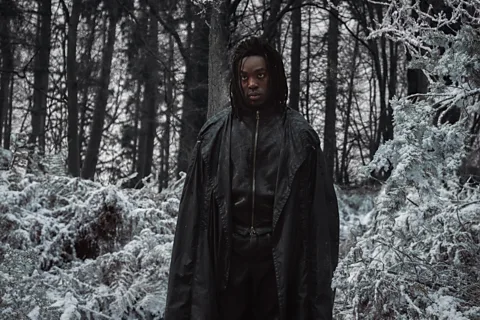
The most anticipated event of the television calendar is undoubtedly the premiere of Harry Potter and the Philosopher’s Stone on HBO and HBO Max. Following years of development and casting speculation, the series aims to provide a more granular, faithful adaptation of J.K. Rowling’s seven-volume saga than the original film franchise allowed. Scheduled for release on Christmas Day, the first season introduces Dominic McLaughlin as the titular wizard, supported by a cast of industry veterans including John Lithgow as Albus Dumbledore and Janet McTeer as Minerva McGonagall.
Industry analysts suggest that HBO’s decision to reboot the franchise is a strategic move to secure long-term subscriber loyalty. Unlike the films, which were constrained by two-hour runtimes, the episodic format allows for the inclusion of subplots and characters previously relegated to the cutting-room floor. This "generational shift" has been noted by original star Daniel Radcliffe, who expressed satisfaction that a new generation will have a version of the story independent of his own portrayal. The inclusion of Paapa Essiedu as Severus Snape and Nick Frost as Rubeus Hagrid indicates a desire to blend prestige acting with fan-favorite characterizations.

Simultaneously, Netflix is venturing into the world of Jane Austen with a new adaptation of Pride and Prejudice, premiering December 3. Written by Dolly Alderton, the series seeks to modernize the perspective of the 1813 novel without sacrificing its period setting. Alderton has publicly stated her intention to rehabilitate the character of Mrs. Bennet, played by Olivia Colman, portraying her matchmaking not as a comedic flaw but as a desperate survival strategy in a patriarchal society. With Jack Lowden as Mr. Darcy and Emma Corrin as Elizabeth Bennet, the production is positioned to capitalize on the enduring "Austen-mania" that has fueled successful adaptations for decades.
Political Intrigue and the Rise of the "Sheridan-Verse"
In the realm of high-stakes thrillers, December 1 marks the international premiere of Trinity on Netflix. Created by Jed Mercurio—the creative force behind the critically acclaimed Line of Duty and Bodyguard—the series explores the volatile intersection of military command and political maneuvering. Gugu Mbatha-Raw stars as Katherine Decker, a high-ranking officer on a U.S. nuclear submarine, while Richard Madden portrays U.S. Secretary of Defense Webb Preston. Mercurio’s involvement suggests a narrative defined by narrative "rug-pulls" and procedural realism. The series enters a market where political thrillers are experiencing a resurgence, driven by global anxieties regarding maritime security and international diplomacy.

On December 18, Paramount+ will expand its "Tulsa King" franchise with the spinoff Frisco King. Starring Samuel L. Jackson as Russell Lee Washington, the series is the latest production from Taylor Sheridan, who has become one of the most prolific creators in modern television. Jackson’s character, a former mob hitman, relocates to Frisco, Texas, to establish a new criminal enterprise. The series exemplifies the "interconnected universe" strategy popularized by Marvel, where guest appearances—in this case, by Sylvester Stallone—serve to bridge different shows and maintain a consistent viewership across the platform.
True Crime and Social Dramas: Fact vs. Fiction
The true-crime genre continues to dominate streaming metrics, and Netflix’s The Murder of JonBenét Ramsey, premiering December 10, is expected to be a major cultural talking point. The series revisits the unsolved 1996 killing of the six-year-old beauty pageant contestant in Boulder, Colorado. Featuring Melissa McCarthy as Patsy Ramsey and Clive Owen as John Ramsey, the drama is written by Richard LaGravanese.

The production faces the challenge of navigating a case that has been the subject of intense media scrutiny for three decades. By focusing on the period leading up to the murder and the subsequent investigation, the series aims to provide a psychological profile of a family under siege. Critics and legal analysts will be watching closely to see how the narrative handles the 2008 DNA evidence that cleared the Ramsey family, an event that remains a cornerstone of the case’s complex legal history.
For viewers seeking a more contemplative experience, Unaccustomed Earth (December 17, Netflix) offers an adaptation of Jhumpa Lahiri’s celebrated short stories. Showrunner Madhuri Shekar has woven together disparate characters from the source material to create a cohesive narrative about the Indian diaspora in the United States. Freida Pinto stars as a woman returning to Massachusetts for cancer treatment, a journey that forces a confrontation with her past and her cultural identity. The series represents a growing trend of "prestige literary" adaptations that prioritize character interiority over high-concept plots.

Returning Favorites and Franchise Extensions
The final month of 2026 also sees the return of several established hits. Only Murders in the Building moves its production to the United Kingdom for its sixth season, premiering December 8 on Hulu and Disney+. The central trio—Steve Martin, Martin Short, and Selena Gomez—find themselves investigating a death in London, allowing for a fresh influx of British guest stars including David Tennant and Olivia Colman. The show’s ability to pivot its location while maintaining its core comedic chemistry is a testament to its robust writing and the enduring appeal of the "cozy mystery" subgenre.
On Christmas Eve, Netflix will release the sixth and final season of Emily in Paris. Starring Lily Collins, the series has been a polarizing but undeniable success for the platform, influencing fashion trends and boosting tourism in the French capital. The final season expands the show’s geography to Greece and Monaco, promising a conclusion to the long-running romantic tensions between Emily and her various suitors.

The BBC, meanwhile, is doubling down on its most successful period properties. The Other Bennet Sister, a spinoff of Pride and Prejudice focusing on Mary Bennet (Ella Bruccoleri), returns for a three-part holiday special. Additionally, the long-running Call the Midwife franchise introduces a prequel series, Sisters in Arms, set during the London Blitz of World War II. By exploring the origins of beloved characters like Sister Julienne, the BBC aims to sustain the brand’s relevance while offering a historical perspective on the foundations of the National Health Service.
Broader Impact and Industry Implications
The December 2026 slate reflects several broader trends in the global television industry. First, there is a clear emphasis on "location-based" storytelling, with multiple series moving their narratives to London, Paris, and Mumbai to appeal to international markets. This globalization of content is a response to the slowing growth of domestic subscriber bases in North America and Western Europe.

Second, the reliance on high-profile casting—featuring Academy Award winners like Meryl Streep, Olivia Colman, and Samuel L. Jackson—highlights the "feature-filmization" of television. As the barrier between cinema and streaming continues to erode, the ability to secure A-list talent has become the primary differentiator for platforms seeking "must-watch" status.
Finally, the month’s schedule illustrates the strategic use of the holiday season. By staggering releases from the beginning of December through Christmas Day, streaming services aim to minimize "churn"—the phenomenon of subscribers canceling their services after watching a single show. With a mix of family-friendly fantasy, intense thrillers, and nostalgic period dramas, the industry is betting that a diverse content portfolio will keep audiences engaged through the end of the year and into 2027.

As these series premiere, the critical and commercial reception will likely dictate the commissioning trends for the late 2020s. If reboots like Harry Potter succeed, the industry may see an even more aggressive pursuit of legacy properties. Conversely, the success of original visions like Mercurio’s Trinity or Shekar’s Unaccustomed Earth would signal that there is still a significant appetite for new narratives amidst the sea of established brands.