admin
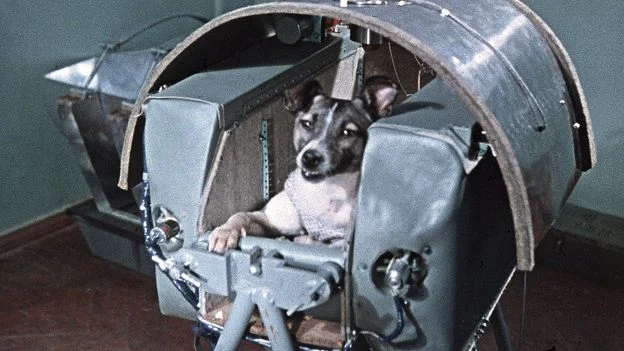
On November 3, 1957, the Soviet Union launched Sputnik 2, a mission that would forever change the course of human history and the ethics of scientific exploration. Inside the cramped, pressurized cabin of the spacecraft sat Laika, a stray mongrel found on the streets of Moscow, who became the first living creature to orbit the Earth. While her journey proved that biological life could survive the launch and the weightlessness of space, it was a mission defined by both groundbreaking achievement and profound tragedy. The Soviet leadership, driven by the intense geopolitical pressures of the Cold War, had authorized a mission they knew from the outset would be a one-way trip. Nearly seven decades later, the story of Laika remains a poignant reminder of the human cost of the Space Race and the complex legacy of the animals that preceded humans into the cosmos.
The Geopolitical Catalyst: Khrushchev’s Mandate
The launch of Sputnik 2 was not merely a scientific endeavor; it was a calculated political maneuver. Following the stunning success of Sputnik 1 on October 4, 1957—the world’s first artificial satellite—Soviet Premier Nikita Khrushchev sought to capitalize on the momentum. The global reaction to Sputnik 1 had been one of shock, particularly in the United States, where the "Sputnik crisis" triggered a massive overhaul of educational and military priorities.
Khrushchev, sensing an opportunity to humiliate his Western rivals further, demanded a second "space spectacular" to coincide with the 40th anniversary of the Bolshevik Revolution on November 7, 1957. This gave the Soviet space program, led by the "Chief Designer" Sergei Korolev, less than four weeks to design, build, and launch a significantly more complex spacecraft. Korolev, a visionary who had spent years reverse-engineering Nazi V-2 rocket technology to create the R-7 Semyorka—the world’s first intercontinental ballistic missile—was forced to abandon more methodical plans in favor of speed.
The haste of the mission meant that many safety protocols and technical developments were bypassed. Most significantly, the technology required to return a spacecraft safely through the Earth’s atmosphere had not yet been perfected. Consequently, the decision was made that whatever passenger Sputnik 2 carried would inevitably perish in orbit.
The Selection Process: Why Moscow Strays?
The choice of a dog as the first orbital passenger was rooted in decades of Soviet physiological research. While American scientists favored primates—monkeys and chimpanzees—for their biological proximity to humans, Soviet researchers, influenced by the Nobel Prize-winning work of Ivan Pavlov, had an extensive understanding of canine physiology.
The search for the ideal candidate led scientists to the streets of Moscow. Stray dogs were preferred because researchers believed they possessed superior stamina and the ability to endure extreme stress, cold, and hunger—traits developed through the struggle for survival in an urban environment. The selection criteria were stringent: the dog had to be female (for easier waste management in a space suit), weigh between 6 and 7 kilograms, and possess a calm, even temperament.
Laika, originally named Kudryavka (Little Curly), was chosen from a pool of candidates that included dogs named Albina and Mushka. Vladimir Yazdovsky, the lead scientist for the medical side of the program, described Laika as "placid" and "affectionate." Her intelligence and ability to remain calm under pressure made her the primary choice for the mission, while Albina served as her backup.

Rigorous Training and Human Connection
Before being bolted into the capsule of Sputnik 2, the canine candidates underwent months of intensive training. To simulate the cramped conditions of the spacecraft, the dogs were kept in progressively smaller cages for periods of up to 20 days. They were placed in centrifuges to simulate the high G-forces of launch and exposed to the deafening noise of rocket engines.
Despite the clinical nature of the research, the scientists involved formed deep emotional bonds with the animals. Viktor Yazdovsky, the son of Vladimir Yazdovsky, recalled in a 2017 interview with the BBC that his father brought Laika home to play with his children just days before the launch. "Dad thought that she needed this experience of being at home before the flight," Viktor noted, highlighting the quiet guilt felt by those who knew the dog’s fate.
Mission Timeline: 3 November 1957
The launch took place at the Baikonur Cosmodrome in the Kazakh Soviet Socialist Republic. As the R-7 rocket ascended, sensors attached to Laika’s body transmitted vital data back to Earth.
- 02:30 UTC: Sputnik 2 launches. During the peak of the acceleration, Laika’s respiration increased to three to four times its pre-launch rate.
- T+ 5 Minutes: Her heart rate, which was 103 beats per minute before launch, spiked to 240 beats per minute.
- Orbit Attainment: After reaching weightlessness, it took three hours for Laika’s pulse to return to its baseline level—three times longer than it had during ground-based centrifuge tests. This indicated the extreme stress she was experiencing.
- Telemetry Loss: For several hours, the Soviet media reported that Laika was performing well. However, the technical reality inside the capsule was deteriorating rapidly.
Technical Failure and the True Cause of Death
For decades, the Soviet government maintained a narrative that Laika lived for several days in orbit, eventually dying painlessly after consuming a pre-planned portion of poisoned food to prevent a slow death from oxygen deprivation. This version of events remained the official history until the early 21st century.
In 2002, at the World Space Congress in Houston, Texas, Dimitri Malashenkov, a scientist from the Institute for Biological Problems in Moscow, revealed the grim truth. Due to the rushed nature of the construction, the thermal control system of Sputnik 2 had malfunctioned. A portion of the thermal insulation had been torn away during the separation of the rocket’s core stage from the payload.
Temperatures inside the cabin soared to over 40 degrees Celsius (104 degrees Fahrenheit). Within five to seven hours of the launch—during her fourth orbit of the Earth—Laika died from hyperthermia and acute stress. Sputnik 2 continued to orbit the Earth for another five months, completing 2,570 orbits before finally re-entering the atmosphere and burning up on April 14, 1958.
International Outrage and Ethical Shifts
The announcement of Laika’s mission and the subsequent realization that she was never intended to return sparked an unprecedented wave of international protest. While the Soviet Union celebrated a technological triumph, animal welfare organizations in the West condemned the mission as an act of cruelty.
In the United Kingdom, the National Canine Defence League called on all dog owners to observe a minute of silence. Protesters gathered outside the United Nations building in New York. The backlash was so significant that it forced space agencies to reconsider the ethics of animal testing. While animals continued to be used in space research, the focus shifted dramatically toward recovery.

Subsequent Soviet missions, such as the flight of Belka and Strelka in August 1960, were equipped with ejection seats and landing capsules. These two dogs became the first living creatures to orbit the Earth and return safely, proving that the lessons learned from Laika’s tragic end had been integrated into the program’s engineering.
Data and Technical Specifications of Sputnik 2
| Feature | Specification |
|---|---|
| Launch Mass | 508.3 kg (1,120.6 lb) |
| Orbit Type | Elliptical |
| Perigee | 212 km (132 mi) |
| Apogee | 1,660 km (1,031 mi) |
| Orbital Period | 103.7 minutes |
| Life Support | Oxygen generator and CO2 absorber |
| Instrumentation | Solar and cosmic ray detectors; biotelemetry |
Analysis: The Scientific and Cultural Legacy
The scientific justification for Laika’s death remains a subject of debate among historians and ethicists. Supporters of the mission argue that it provided the first definitive proof that a living organism could withstand the transition to microgravity, paving the way for Yuri Gagarin’s historic flight in 1961. Without the data from Sputnik 2, they argue, the risks to human cosmonauts would have been unacceptably high.
However, even some of the mission’s architects later expressed regret. Oleg Gazenko, the senior scientist who trained Laika, spoke candidly in 1998: "Work with animals is a source of suffering to all of us. We treat them like babies who cannot speak. The more time passes, the more I’m sorry about it. We shouldn’t have done it… We did not learn enough from this mission to justify the death of the dog."
Culturally, Laika has been transformed from a laboratory subject into a global icon. She has been featured on stamps, in literature, and in film. In 2008, the Russian government unveiled a monument to her near the military research facility in Moscow where she was prepared for her flight. The statue depicts a dog standing atop a rocket that morphs into a human hand.
Conclusion: A Milestone Written in Sacrifice
The story of Laika is an inseparable chapter of the 20th century’s most ambitious technological race. It reflects a time when the boundaries of science were pushed by the relentless demands of ideology and national prestige. While her life was cut short by the limitations of 1950s technology and the haste of political mandates, her contribution to the human exploration of the stars is undeniable.
Laika was the pioneer who proved that the "ocean of space" was not inherently lethal to biological life. Her sacrifice forced a global conversation about the ethics of exploration and ensured that when humans finally followed in her footsteps, they did so with the systems in place to bring them home. Today, she stands not just as a "tragic national hero" of the Soviet Union, but as a symbol of the profound debt humanity owes to the animals that led the way to the heavens.