admin
In the autumn of 1888, a series of brutal homicides in London’s East End transfixed a nation and gave birth to the world’s most enduring criminal legend. While the historical reality involved the tragic deaths of five marginalized women in the impoverished district of Whitechapel, the figure of "Jack the Ripper" quickly evolved into something far more abstract and terrifying. Recent historical analysis, bolstered by archival reviews from the BBC and cultural historians, suggests that the inability to solve the case was not merely a failure of Victorian policing, but a byproduct of a media landscape that prioritized gothic narrative over forensic fact. By the time the investigation concluded, the line between a real-world predator and a fictional monster had been irrevocably blurred by tabloid sensationalism, political agendas, and a public imagination fueled by the rise of the gothic novel.
The Canonical Five: A Chronology of the Whitechapel Murders
The period known as the "Autumn of Terror" is defined by the deaths of five women, collectively referred to by historians as the "canonical victims." Each woman lived in the direst of circumstances, forced into itinerant lifestyles and occasional prostitution by the systemic poverty of the Victorian East End.
- Mary Ann "Polly" Nichols (August 31, 1888): Discovered in Buck’s Row, her death marked the beginning of the intense public scrutiny. The severity of her injuries suggested a killer with a specific, albeit macabre, intent.
- Annie Chapman (September 8, 1888): Found in the backyard of 29 Hanbury Street. Her murder heightened local panic and introduced the theory that the killer possessed anatomical knowledge.
- Elizabeth Stride (September 30, 1888): Discovered in Dutfield’s Yard. Unlike the other victims, she had not been mutilated, leading to the "Double Event" theory that the killer was interrupted.
- Catherine Eddowes (September 30, 1888): Found in Mitre Square less than an hour after Stride. The proximity and timing of this murder suggested a bold, escalating audacity.
- Mary Jane Kelly (November 9, 1888): The final and most gruesome murder, occurring indoors at 13 Miller’s Court. The nature of this crime brought the active police investigation to a fever pitch before the killings abruptly ceased.
While other murders occurred in the area between 1888 and 1891, these five are generally accepted as the work of a single individual due to the specific signature of the crimes.
The Literary Context: Gothic Fiction as a Reality Filter
To understand why the Ripper remains an enigma, one must look at the cultural zeitgeist of 1880s London. The murders did not occur in a vacuum; they coincided with a golden age of gothic horror and detective fiction. In 1886, Robert Louis Stevenson published The Strange Case of Dr Jekyll and Mr Hyde. By August 1888, a stage adaptation starring American actor Richard Mansfield was playing at the Lyceum Theatre. Mansfield’s performance was so visceral and his transformation so convincing that some members of the public wrote to Scotland Yard suggesting he might actually be the killer.
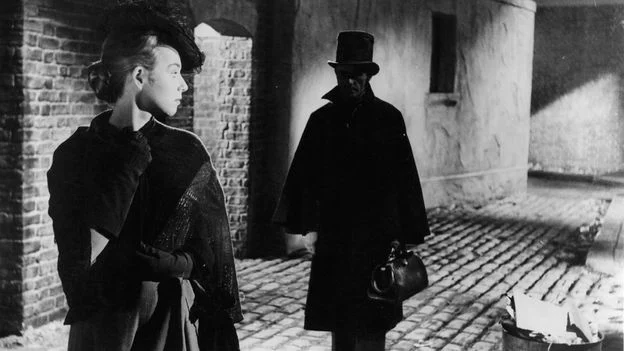
At the same time, Arthur Conan Doyle’s Sherlock Holmes had recently debuted in A Study in Scarlet (1887), creating a public expectation for "rational" detective work that the Metropolitan Police were ill-equipped to provide. Bram Stoker, the future author of Dracula, was working as the business manager for the Lyceum Theatre during the height of the murders. Christopher Frayling, a professor of cultural history, noted in a 1988 BBC retrospective that the "Jack the Ripper" of public consciousness was a composite of these literary archetypes—a top-hatted, dark-cloaked figure emerging from the fog, more akin to a vampire or a "Mr. Hyde" than a local laborer.
The Rise of Tabloid Sensationalism and W.T. Stead
The 1880s saw the birth of "New Journalism," a precursor to modern tabloid media characterized by sensationalist headlines and investigative crusades. At the center of this movement was W.T. Stead, the editor of the Pall Mall Gazette. Stead was a reformer who used his platform to highlight social ills, but he was also a master of narrative manipulation.
Stead had a personal and political vendetta against Sir Charles Warren, the Metropolitan Police Commissioner. Following the "Bloody Sunday" protests of 1887, where police used force against demonstrators, Stead sought every opportunity to embarrass the force. The Whitechapel murders provided the perfect catalyst. By framing the police as incompetent and the killer as an "aristocratic predator" or a "mad doctor," the Gazette and its competitors turned the investigation into a daily morality play.
This media frenzy had tangible consequences. It was during this period that the Central News Agency received the infamous "Dear Boss" letter, signed "Jack the Ripper." Most modern historians and many contemporary police officers believed the letter was a forgery created by a journalist to keep the story alive. However, the name "caught on" with the public, transforming a sordid series of slum murders into a brand.

The Macnaghten Memo and the Myth of the Three Suspects
By 1894, the case was officially closed, though it remained unsolved. Sir Melville Macnaghten, who joined Scotland Yard after the murders, wrote a confidential memorandum naming three primary suspects. Frayling and other historians argue that these suspects reflect the prejudices and media myths of the time rather than hard evidence.
- Montague Druitt: A barrister and schoolmaster from a "good family" who disappeared shortly after the final murder and was found drowned in the Thames. His status as a "gentleman" fit the narrative of the upper-class deviant.
- Aaron Kosminski: A Polish Jewish immigrant who was later institutionalized. His inclusion reflected the era’s xenophobia and the conservative media’s tendency to blame the "foreign element" in the East End.
- Michael Ostrog: A Russian convict and physician. His background as a doctor tapped into the "anatomical skill" theory that had been popularized by the press.
Frayling suggests that these names were not the result of a rigorous manhunt but were instead the "gossip of the clubs," influenced by the very "Penny Dreadful" tropes that the media had been peddling for years. The police, under immense pressure to provide answers, may have looked for characters that fit the public’s preconceived notions of a villain.
Socio-Economic Implications: Prostitution and the Moral Panic
The Ripper murders served as a grim spotlight on the "Submerged Tenth"—the portion of the British population living in abject poverty. Professor Judith Walkowitz, author of City of Dreadful Delight, argues that the murders were used by moral reformers to campaign against vice. The victims were not seen as individuals but as symbols of the "social evil" of prostitution.
W.T. Stead had previously gained notoriety for his "Maiden Tribute of Modern Babylon" expose, which documented child prostitution. He used the Ripper case to argue that the "sexual delectation of upper-class gentlemen" was the root cause of the East End’s misery. This narrative further fueled the "Gentleman Jack" myth, suggesting the killer was a "toff" who descended from the West End to prey on the poor, a theory that persists in popular culture despite a lack of evidence.
The Timewatch Investigation and Modern Analysis
In 1988, a century after the crimes, the BBC’s Timewatch program revisited the original Home Office and police files. The investigation revealed that the files were cluttered with hundreds of "crank letters" and false leads generated by the media circus. The analysis concluded that the "legend" had effectively buried the truth.
Modern criminal profiling suggests that the killer was likely a local resident of Whitechapel, someone who could move through the labyrinthine streets without attracting attention. The image of the cloaked stranger with a doctor’s bag was likely a fabrication of the press. By creating a monster that was "larger than life," the Victorian media made it nearly impossible to catch a man who was likely "smaller than life"—a mundane, local predator who blended into the shadows of the slums.
Legacy: The Invention of True Crime
The Whitechapel murders did more than just haunt London; they established the template for the modern true crime genre. The case demonstrated that murder could be used as a commodity to sell newspapers and influence political policy. It also highlighted the dangers of "narrative-driven" investigations, where the desire for a compelling story overrides the search for factual truth.
Today, "Ripperology" remains a global phenomenon, with thousands of books and films dedicated to unmasking the killer. However, as Frayling and Walkowitz emphasize, the real tragedy lies in the fact that the five women—Nichols, Chapman, Stride, Eddowes, and Kelly—were largely forgotten by a society more interested in the myth of the monster than the reality of the victims. The "Jack the Ripper" who haunts the public imagination is not a man, but a cultural construct born from the intersection of gothic fiction and the birth of the tabloid press. In the end, the killer was never identified because the world was looking for a character that didn’t exist, while the real murderer remained hidden behind the very headlines he inspired.